REVIEW · WARSAW
From Warsaw: Auschwitz-Birkenau Tour by Car
Book on GetYourGuide →Operated by AB Everest Travel · Bookable on GetYourGuide
Auschwitz is heavy. This day trip makes it manageable, with a small group and door-to-door transport that gets you there on time. I like how the setup is simple: pick-up in Warsaw, then a guided museum visit that moves at a human pace without you worrying about logistics. You also get an English-speaking driver who helps the long day feel less exhausting.
Two things I really like: the guided time inside Auschwitz and Birkenau (3.5 hours total) and the fact you’re not dealing with transfers or train schedules. The Auschwitz I and Auschwitz II visit is structured—so you get key places like Block 11 and the Birkenau Gate of Death without wandering around confused.
One drawback to keep in mind: your pick-up time may shift. That’s because it depends on the museum entrance timing, so you might be picked up earlier than what you first expect after booking.
In This Review
- Key things to know before you go
- Warsaw to Auschwitz by car: why this day trip works
- The early start, changing pickup time, and what you must bring
- Auschwitz I: how the tour explains the machinery of persecution
- Block 11 and the gas chamber: what to expect emotionally
- Birkenau (Auschwitz II): understanding the scale at the Gate of Death
- The 3.5-hour guided rhythm: pacing you can handle
- Lunch break: keep your energy steady for the drive back
- Getting back to Warsaw: the long-day logistics, simplified
- Price and value: is $265 a fair deal?
- Who should book this Auschwitz tour from Warsaw?
- Should you book this Auschwitz-Birkenau by-car tour?
- FAQ
- What time will I be picked up in Warsaw?
- How long is the full day trip?
- Is the tour in English?
- How big is the group?
- How long is the guided tour inside the camps?
- What’s included with the price?
- What do I need to bring, and what’s not allowed?
Key things to know before you go
- Car transfer from Warsaw keeps the day straightforward and comfortable, especially for a long early start.
- Small group cap (up to 8 people) makes questions easier and keeps the experience more orderly.
- 3.5-hour museum guidance covers both Auschwitz I and Auschwitz II, including the most important sites.
- English-speaking driver plus English guide helps you follow the story clearly throughout the day.
- Lunch break is built in, so you don’t end up starving between two very intense visits.
Warsaw to Auschwitz by car: why this day trip works
This tour is built around one idea: you shouldn’t spend your energy figuring out transport on a day like this. The car/van picks you up from your accommodation in Warsaw early in the morning, then drives straight to the Auschwitz-Birkenau Memorial and Museum area. For many people, that matters as much as the sites themselves, because the distance is real and the start is early.
You’re also not stuck in a huge group. With a limit of 8 participants, you can hear the guide, ask questions, and keep your bearings as you move from Auschwitz I to Auschwitz II. It also helps with the flow at the entrance and the handoffs inside the museum area, which can get complicated when groups are large.
One underrated benefit: the English-speaking driver is part of the experience, not just a hired taxi. In the past, drivers like Kishan, Jack, Maciej, Maciek, Kasper, Mateusz, Dominik, and Kris have been praised for punctual pickups and smooth driving on the long route. If you’re the type who needs the day to run cleanly, that kind of reliability is a huge plus.
Other Auschwitz day trips from Warsaw



The early start, changing pickup time, and what you must bring
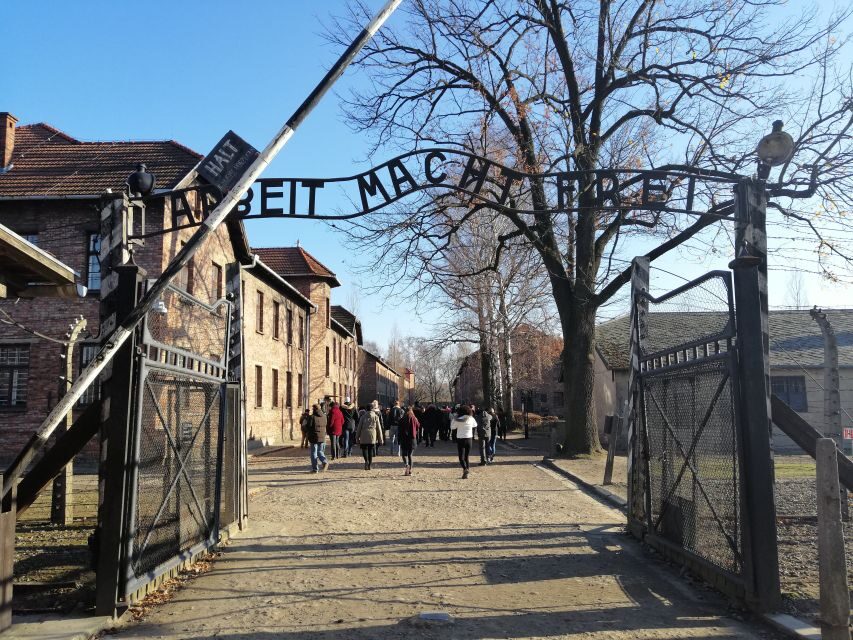
Plan on an early morning. The tour starts with pick-up from Warsaw, and the exact timing depends on the museum entrance time, which can mean your scheduled call time shifts compared with what you first think.
Because Auschwitz tickets are tied to names, you need to treat paperwork like part of the trip. You’ll be required to provide your full name and contact details as part of booking, and entrance may be refused if the name doesn’t match your ID exactly. Also bring a passport or ID card for entry.
What to wear is simple: comfortable shoes. The ground inside the museum area can be uneven, and you’ll do a lot of walking in an emotionally demanding setting. If you’re sensitive to long days, you’ll feel better if your footwear is ready for hours—not just “looks good in photos.”
There’s another practical note: luggage or large bags aren’t allowed, so travel light.
Auschwitz I: how the tour explains the machinery of persecution
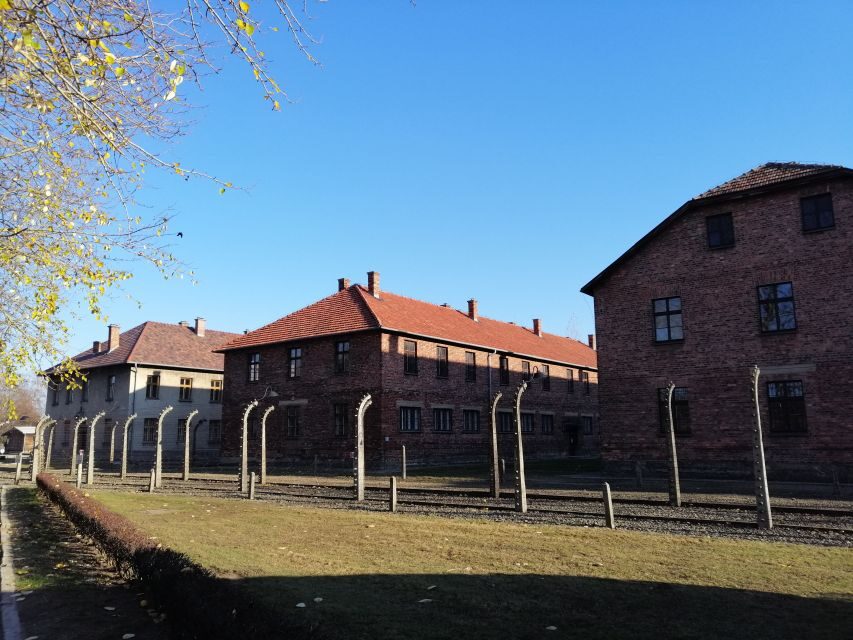
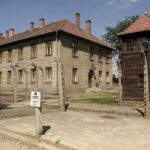
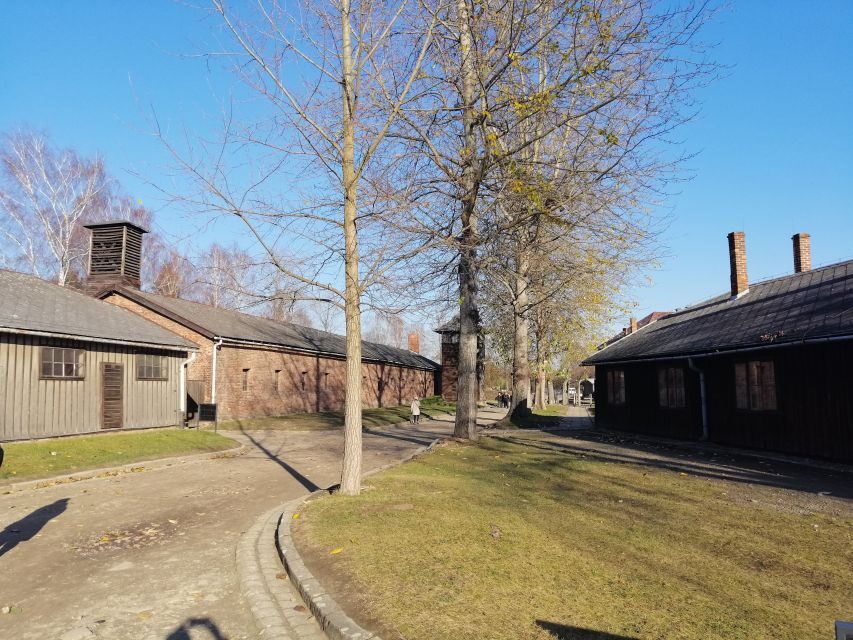
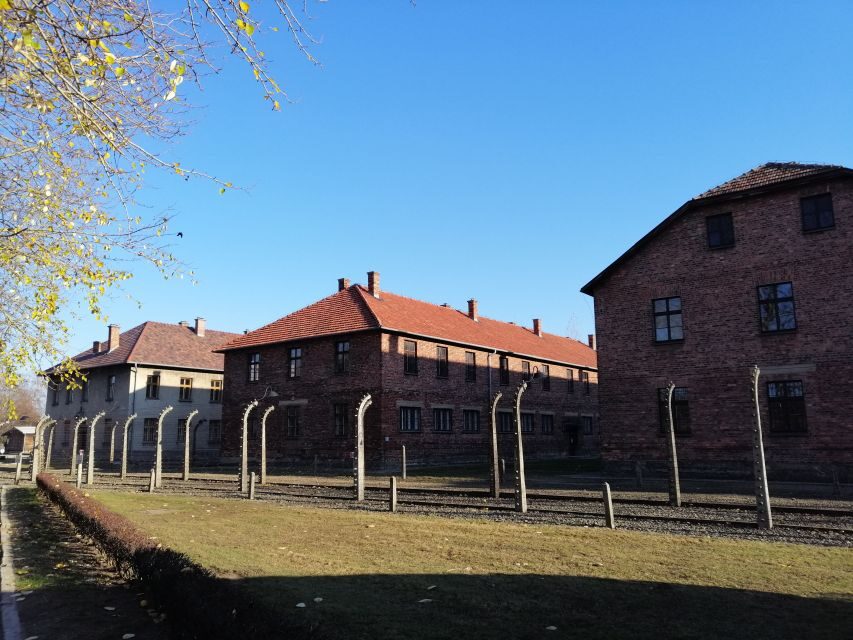
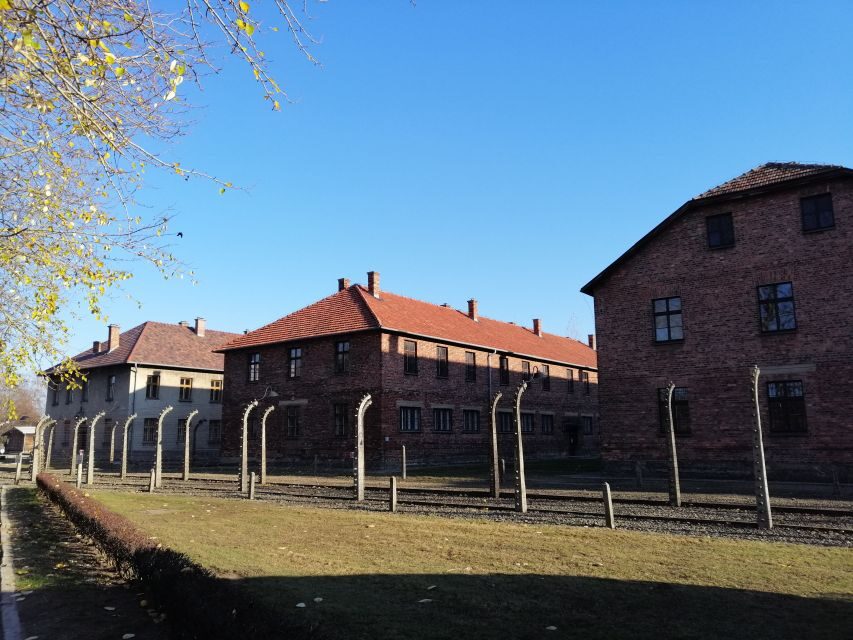
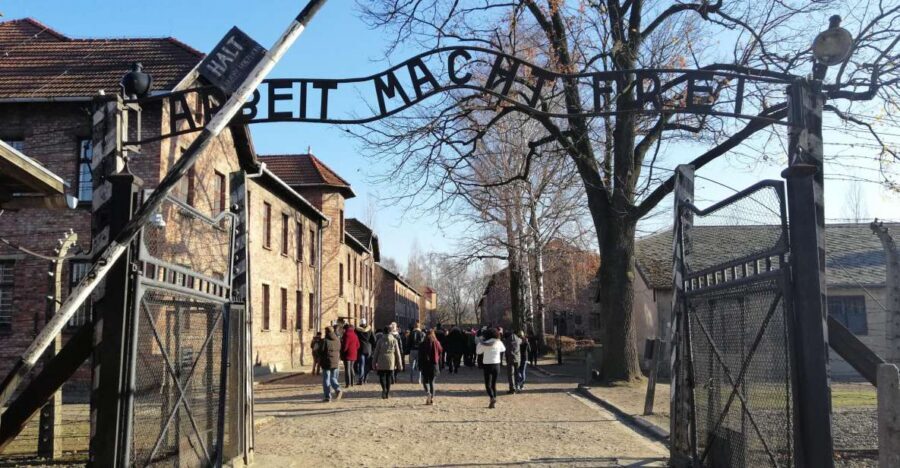
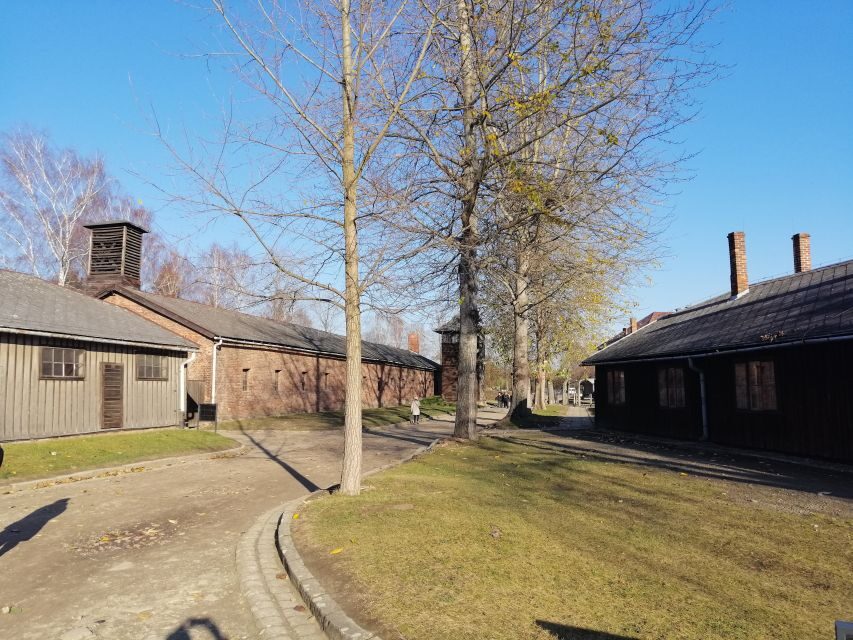
Your visit begins at Auschwitz I, the original camp. This portion is guided and lasts about 2 hours in the overall Auschwitz-and-Birkenau plan. The guide starts with how the camp was established by German Nazis on the outskirts of Oswiecim in 1940, and then builds toward what you’ll see inside.
One reason this part works well on a group tour is that the guide keeps you oriented. You’re not just looking at artifacts—you’re being taught how to connect the details to the system: registration, prisoner life, and the brutal use of violence.
Expect to focus on several major areas:
- Block no. 11 (Death Block), known for murders carried out at the Wall of Death
- The museum setting after the war, where evidence of the genocide is displayed
- The gas chamber site, with the tour describing deaths occurring in 1940–1943 (the tour info gives the figure of 70,000 people)
There’s also a film made after liberation shown in different language versions inside the museum. Even if you think you’ve read enough about Auschwitz, this is often the moment that turns information into something harder to ignore.
This is not the kind of site where “sightseeing” is the main goal. Still, a guided visit helps you process it without losing the thread. It’s easier to keep going when someone is mapping the story for you.
Block 11 and the gas chamber: what to expect emotionally
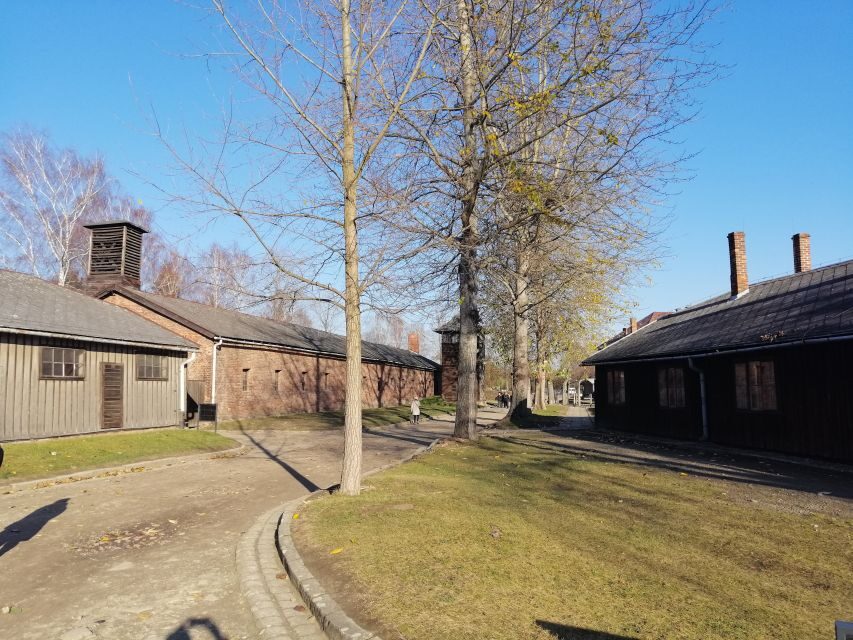
Auschwitz I can hit fast. That’s normal. When you’re led toward places like Block 11, you’ll notice how quiet a group gets. People tend to go still. The physical layouts can feel shocking even when you know the history.
I’d treat your first 20–30 minutes as a settling period. If you try to absorb everything at once, you’ll miss details because your brain is busy reacting. The guided approach is helpful here because it gives you structure: you’re looking at what matters, in the order it matters, not randomly.
The gas chamber stop is similar. You’ll be told what happened there and why it sits at the core of the Holocaust story. The tour information includes the timeframe and number given above. Whether you already know those figures or not, the purpose of the stop is the same: to connect the place to the planned killing of millions.
Birkenau (Auschwitz II): understanding the scale at the Gate of Death
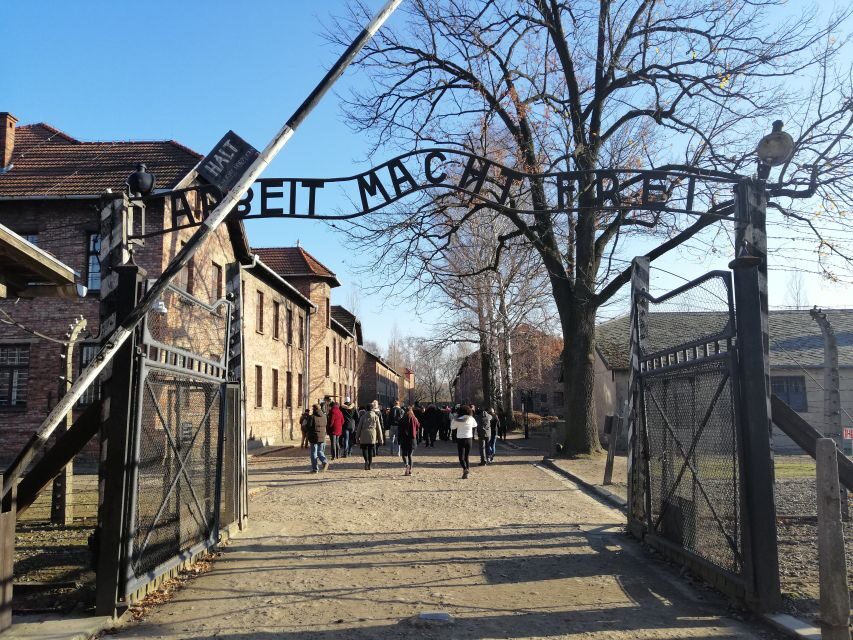
After Auschwitz I, you’ll head to Auschwitz II-Birkenau, about 3 km from Oswiecim, in the former village of Brzezinka. This is the larger, more open site—and it changes how you feel, because the scale becomes part of the story.
Your Birkenau guided portion is shorter—about 1 hour within the overall 3.5-hour museum time—but it’s built around key themes and locations. The tour explains that the Nazis established Birkenau in 1941, and that about 1.5 million people lived and died there from 1942 to 1945. The info provided also gives a breakdown: roughly 90% Jews, plus Poles, Roma (listed here as Gypsies), Russians, prisoners from 28 European countries, and people of many political and religious backgrounds.
One of the most important moments you’ll cover is the Gate of Death. Starting in 1944, transports entered directly through that gate. Even without extra dramatics, knowing that this is where prisoners were processed into forced imprisonment and murder makes the area feel intensely specific.
A big reason to come with a guide here: Birkenau can look confusing if you’re alone. You might see barracks and pathways, but it’s hard to understand what each section meant in practice. The guide ties what you’re looking at to the lived reality of imprisonment and the logistics of extermination.





The 3.5-hour guided rhythm: pacing you can handle
The overall museum time is about 3.5 hours with an English-language guide. In a day that can last up to 13 hours, that’s a smart balance. You get real time in both Auschwitz I and Birkenau, but you don’t get stuck there until your brain shuts down.
Here’s what this pacing does for you:
- You can follow a clear story from camp origin to genocide.
- You get key sites without turning the visit into a rushed checklist.
- You still have time for lunch and the drive back to Warsaw.
In practice, you’ll do a lot of walking, and some parts require standing or moving slowly. You’ll be outside much of the time. If you’re visiting in cooler months, dress for cold and damp. If it’s warm, plan for the opposite problem: staying hydrated without turning your attention into survival mode.
Lunch break: keep your energy steady for the drive back
After the museum visit, you’ll have time to eat lunch at a local restaurant. The schedule allows about 1 hour for the break. This isn’t just a kindness for your stomach. It’s also a psychological reset, which matters after spending hours in a site that changes how you think.
If you’re unsure what to order, choose something simple and filling. The goal is not a food adventure; it’s keeping your energy stable so the return drive feels safe and manageable.
Some past travelers have highlighted that lunch has been good and that it’s a chance to eat more authentically than you’d get with a prepackaged stop.
Getting back to Warsaw: the long-day logistics, simplified
Once the tour ends, you’ll be picked up again and returned to Warsaw, with drop-off at your accommodation in the evening.
A few practical points:
- Expect a long day. Even though Auschwitz I and Birkenau are the headline, the time on the road is significant.
- Many drivers have included comfort stops along the way (bathroom and coffee breaks). You should treat those stops as part of the plan, not as an optional bonus.
- You won’t be scrambling to find transport. The car/van handles it.
If you’re worried the whole experience will feel exhausting, that’s the real advantage of this format. You can focus on the museum instead of playing transit whack-a-mole.
Price and value: is $265 a fair deal?
At $265 per person, this isn’t a bargain tour. But it also isn’t just a ticket to Auschwitz. You’re paying for:
- Hotel pick-up and drop-off in Warsaw
- Transport with an English-speaking driver by car/van
- Entrance tickets
- A guided tour inside both Auschwitz I and Birkenau
- Water, plus time for lunch during the day
So the value question is simple: do you want to keep the day organized and reduce stress? If yes, the price makes sense. If you already have your own transport planned and you’re confident building your own itinerary, you might spend less on paper elsewhere. But on this kind of visit, “less money” often comes with more friction and more mental load.
The other value layer is the small group. It’s not a sightseeing crowd. It’s closer to a managed experience where you can hear the guide and keep up with the story.
I’d call the price fair if your priority is a smooth, guided, no-stress day trip with real time inside the memorial.
Who should book this Auschwitz tour from Warsaw?
This is a great fit if you:
- Want door-to-door comfort without train connections
- Prefer a small-group guided experience in English
- Care about hearing the story clearly and staying oriented at major sites
- Are traveling from Warsaw and want the simplest logistics possible for a long day
You might think twice if:
- You hate very early mornings and long drives
- You’re hoping for lots of free time to wander without guidance (the guided structure is the point)
- You need to travel with large bags or luggage (they’re not allowed)
Should you book this Auschwitz-Birkenau by-car tour?
Yes, if you want an organized, English-guided Auschwitz I and Birkenau visit that starts with pickup in Warsaw and ends with drop-off back at your accommodation. The price is easier to justify when you add up transport, entrance tickets, and guided time—plus the comfort of a private car/van format.
My advice: commit to the essentials. Bring ID, travel light, wear real walking shoes, and give yourself permission to feel affected. The guide and the schedule help you do that with less confusion and more respect for what you’re seeing.
FAQ
What time will I be picked up in Warsaw?
You’ll be picked up early in the morning. The exact pick-up time can vary because it depends on the Auschwitz-Birkenau entrance time.
How long is the full day trip?
The entire tour lasts up to 13 hours.
Is the tour in English?
Yes. The experience is available in English by default, and it can also be offered in other languages on request.
How big is the group?
It’s a small group, limited to up to 8 participants.
How long is the guided tour inside the camps?
You get a guided group tour covering Auschwitz and Birkenau for about 3.5 hours total.
What’s included with the price?
Hotel pick-up and drop-off in Warsaw, transport with an English-speaking driver, entrance tickets, guided tour in the museum, and water. Lunch time is also included during the day.
What do I need to bring, and what’s not allowed?
Bring a passport or ID card and comfortable shoes. Luggage or large bags are not allowed. You also need to provide your full name and contact details, and the name on your booking must match your ID.