REVIEW · WARSAW
Skip-the-Line Polin Museum Warsaw Jewish History Tour
Book on Viator →Operated by Rosotravel - Things to do in Warsaw · Bookable on Viator
Warsaw teaches in layers. This tour strings POLIN Museum with key Warsaw Ghetto landmarks so you see history in the right order and on the right streets.
What I really like is the mix of museum time plus street-level stops, led by a licensed, English-speaking guide. You also get practical help with the skip-the-line museum ticket, which cuts down one big hassle.
One thing to consider: the experience length changes what you see—on the shorter option, you may not cover the full ghetto walking route, and some places like Nożyk Synagogue have entry rules and aren’t included.
In This Review
- Key things to know before you go
- Why POLIN and the Ghetto Walk Fit Together
- Start at Palace of Culture and Science: Big Warsaw Energy
- Pomnik Bohaterów Getta: A Memory Marker with Real Weight
- Jewish Cemetery (Cmentarz Żydowski): Marble, Symbols, and Janusz Korczak
- Fragment of Ghetto Wall: Touching What’s Left
- Warsaw Ghetto: Scale of a Small Area, Scale of a Forced Life
- Nożyk Synagogue: A Surviving Place of Worship
- Jewish Historical Institute: Records That Don’t Let Go
- Prozna Street and Grzybowski Square: Street History in Plain Sight
- POLIN Museum: Two Hours That Keep the Timeline Straight
- Price and Value: What You’re Paying For
- Timing, Tickets, and How the Day Flows
- Who This Tour Suits (and Who Might Not)
- Should You Book This Skip-the-Line POLIN and Warsaw Ghetto Tour?
- FAQ
- Is this tour offered in English?
- How long is the tour?
- What’s included at the POLIN Museum?
- Does skip-the-line mean you skip security checks?
- Do I get to walk the Warsaw Ghetto?
- Is the Jewish cemetery included?
- Can I enter Nożyk Synagogue?
- Where does the tour start?
- What if I need to cancel?
Key things to know before you go
- Skip-the-line is for the ticket office, not the museum entrance and security checks
- Your museum time is built in (about 2 hours at POLIN for the main exhibition and related areas)
- The cemetery stop includes meaningful context, including Janusz Korczak’s symbolic grave
- You’ll touch and observe at a ghetto wall fragment, a rare hands-on moment
- Synagogue access may require a request, and admission isn’t included
- Choose your duration carefully if you want a longer ghetto walking segment
Why POLIN and the Ghetto Walk Fit Together
I like tours that don’t treat history like a slideshow. This one works because it pairs indoor storytelling at POLIN Museum with outdoor landmarks tied to the Nazi-established Warsaw Ghetto.
Inside POLIN, you follow a timeline about Jewish life in Poland across centuries—how communities formed, lived, and changed. Then you step outside and the streets start doing the explaining. The forced-ghetto story becomes less abstract when you’re standing near the places where it happened.
You’ll also get an expert guide who can connect the museum’s chronology to what you’re seeing on the walk. That matters because Jewish history in Poland isn’t one straight line—it’s cycles of growth, persecution, resilience, and loss. A good guide keeps those threads from turning into a blur.
Other POLIN and Jewish heritage tours in Warsaw



Start at Palace of Culture and Science: Big Warsaw Energy

The tour kicks off at Ludwika Zamenhofa 11, and you’ll first pass by the Palace of Culture and Science. It’s Poland’s highest building and a major piece of Warsaw’s skyline—monumental, even if you don’t love the style.
The architecture works as an orientation tool. Warsaw is a city of layers: old streets, destroyed neighborhoods, rebuilt spaces, and political symbols in stone. Seeing this landmark early helps you understand the modern city you’re walking through while the tour explains the past underneath it.
Practical tip: take a moment to look at the building from outside. You’re not here for a long photo stop, but a quick scan helps you “wake up” your sense of place.
Pomnik Bohaterów Getta: A Memory Marker with Real Weight

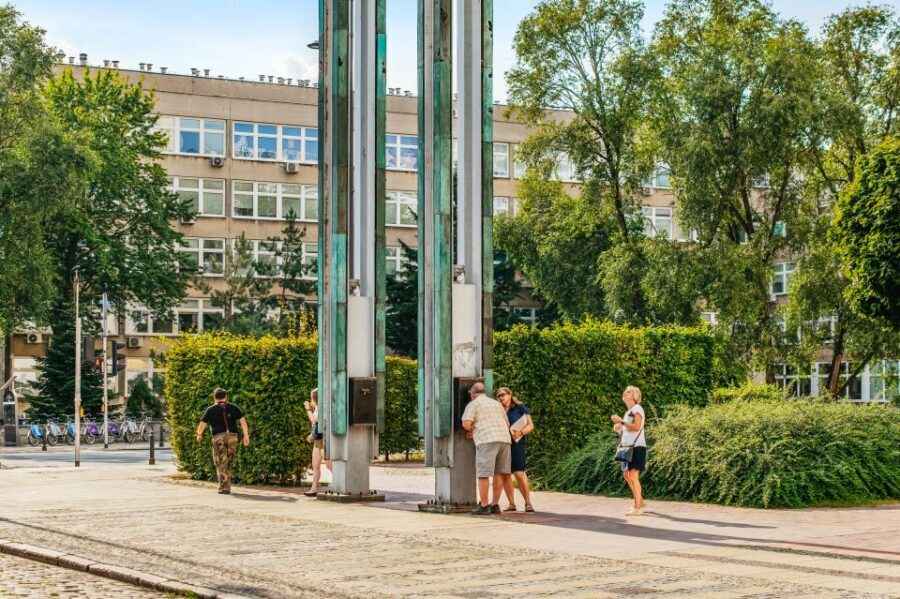
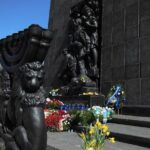
Next comes Pomnik Bohaterów Getta, a powerful monument honoring Polish Jews and the persecution and German occupation during WWII. It’s the kind of stop where you’ll likely want to slow down instead of rushing for the next location.
This is a good early checkpoint. It signals that the tour isn’t just about dates and artifacts—it’s about human suffering and survival, tied to Polish Jewish history.
Because it’s short (around 15 minutes), it’s best used for listening and internalizing the framing your guide gives you.
Jewish Cemetery (Cmentarz Żydowski): Marble, Symbols, and Janusz Korczak

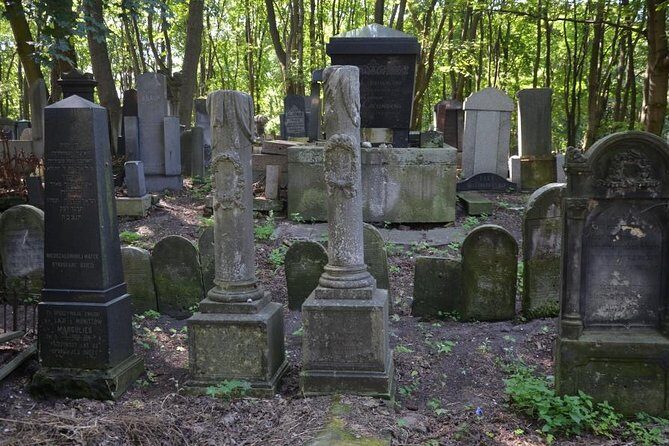
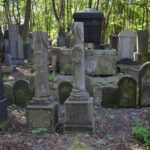
One of the most moving parts is the Jewish Cemetery stop. The cemetery dates to roughly 1799–1806, and the grounds have a reflective feel—historic but also personal. You’ll see marble and sandstone tombstones called masebas, often with delicately carved symbols and ornaments.
What makes this stop stand out is the way it connects to named individuals. You’ll also visit the symbolic grave of Janusz Korczak, the famous writer and teacher who died in Auschwitz. That name lands harder after you’ve heard the broader context, so the cemetery doesn’t feel like a random “side site.”
Time here is about an hour. That’s enough to walk the grounds, pause for key explanations, and still stay on schedule.
Practical tip: cemeteries are quiet places. Wear something comfortable, and keep your phone use respectful—especially around memorial moments.
Fragment of Ghetto Wall: Touching What’s Left
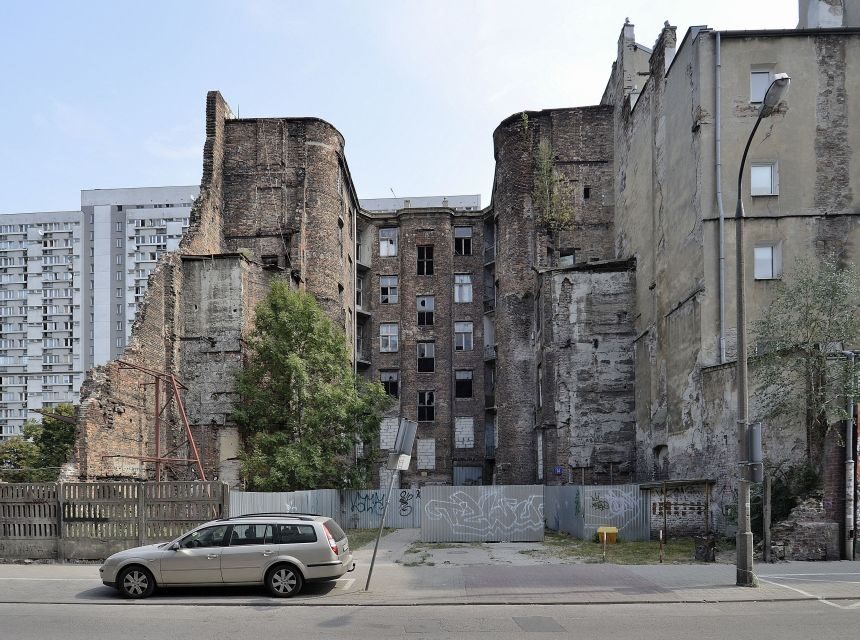
Then you’ll reach a Fragment Of Ghetto Wall, one of the best “you are here” experiences on the route. The tour description is literal: it’s an opening to begin exploring the remains of the Ghetto. You can see its height, touch the construction, and listen to the sounds of life going on on the other side—while the story is about people trapped within.
That sensory contrast is exactly why this stop works. It turns history into a physical reality, not just an idea.
This part is brief (about 15 minutes). Don’t treat it as a quick photo break—let the guide’s explanation do the heavy lifting.
Other historical tours in Warsaw




Warsaw Ghetto: Scale of a Small Area, Scale of a Forced Life
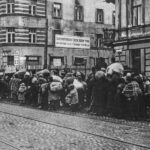
After the wall fragment, you’ll walk through the Warsaw Ghetto area itself. The ghetto was established in October–November 1940. It covered only about 2.4% of Warsaw’s land area, yet over 450,000 Jews were forced by the Germans to live in extremely crowded conditions.
Hearing those numbers while standing in the neighborhood helps your brain grasp proportion—how a small slice of the city held an enormous human population under brutal constraints.
This stop is short (around 20 minutes), but it’s positioned at just the right moment: after the wall and before the museum’s deeper explanation.
If you’re choosing between tour lengths, and ghetto walking time matters to you, pick the longer option. The shorter option doesn’t always include the full ghetto walk segment.
Nożyk Synagogue: A Surviving Place of Worship
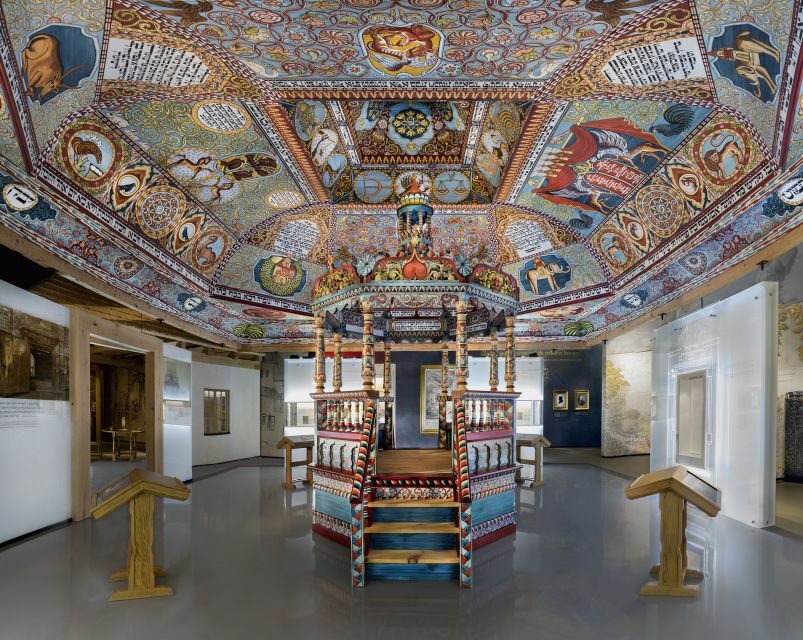
Next is Nożyk Synagogue. It’s described as the only surviving synagogue out of about 400 that existed in Warsaw before the war. Today it’s refurbished and is a functioning synagogue.
This is the kind of stop that shifts the story from WWII-only to ongoing Jewish life. It reminds you that the community didn’t only exist in historical photos—religious and cultural life continues.
The tour notes that entry may be possible for request. Admission to the synagogue is not included, so plan for that. If you can go inside, it’s worth it. If you can’t, you still get the significance from outside.
This stop is about 30 minutes, so you’ll have time to ask questions through your guide and check what’s possible.
Jewish Historical Institute: Records That Don’t Let Go
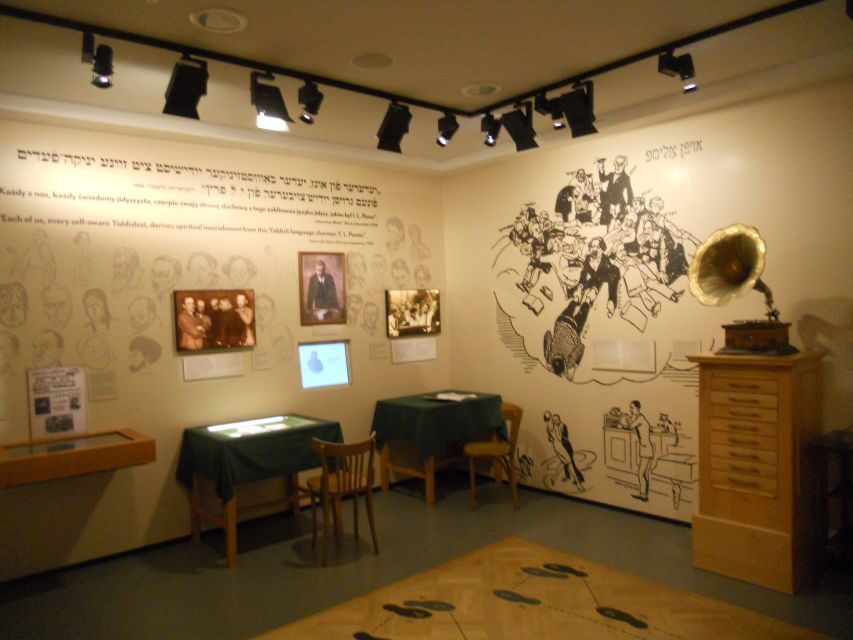
You’ll then visit the Jewish Historical Institute. This museum holds records, photographs, videos, and artifacts connected to the Warsaw Ghetto during the Nazi occupation. It’s presented as a stop directly related to this tour, not a general add-on.
This is a good “facts and evidence” moment. The museum helps balance emotion with documentation—what was recorded, what survived, what can still be studied.
Admission here is listed as free, which is a nice bonus on a tour that already covers a lot of paid sights.
Prozna Street and Grzybowski Square: Street History in Plain Sight
After the institute, you’ll pass by Prozna Street (Ulica Prozna). It’s positioned on the route to the uprising museum, and the tour framing highlights it as part of the Nazi occupation and Holocaust story. This kind of street stop is short (around 20 minutes), but it keeps the walk grounded.
Then comes Grzybowski Square. During WWII, this area was part of the Jewish Ghetto. Around the square you may find newer Jewish theater, and in the middle there’s a memorial garden plus a fountain.
This is one of those “pause and process” locations. A fountain and a garden might sound too calm for what you’ve been learning, but that contrast can be powerful: it shows how Warsaw holds memory while continuing to live.
The square stop is about 15 minutes—enough for reflection without turning the tour into a slow crawl.
POLIN Museum: Two Hours That Keep the Timeline Straight
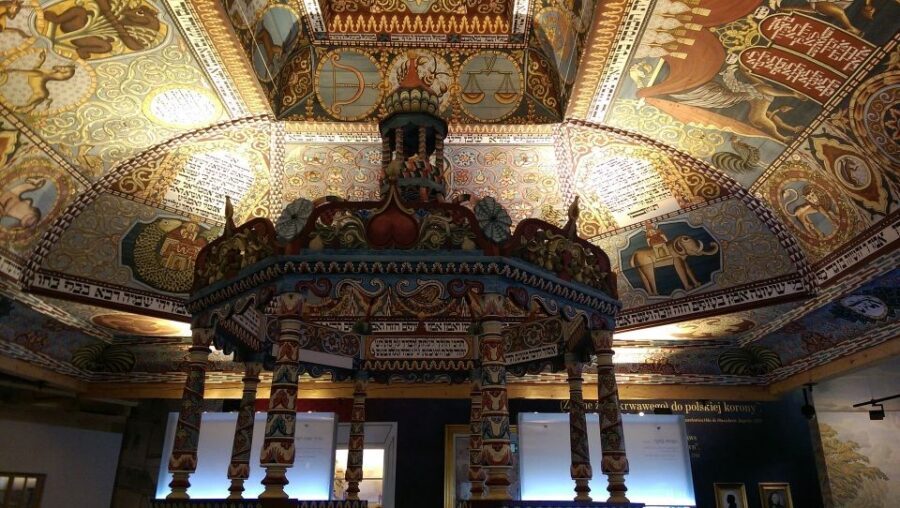
The day’s centerpiece is POLIN Museum of the History of Polish Jews. It’s described as the first and only museum dedicated to restoring the memory of the civilization created by Polish Jews in the course of a millennium.
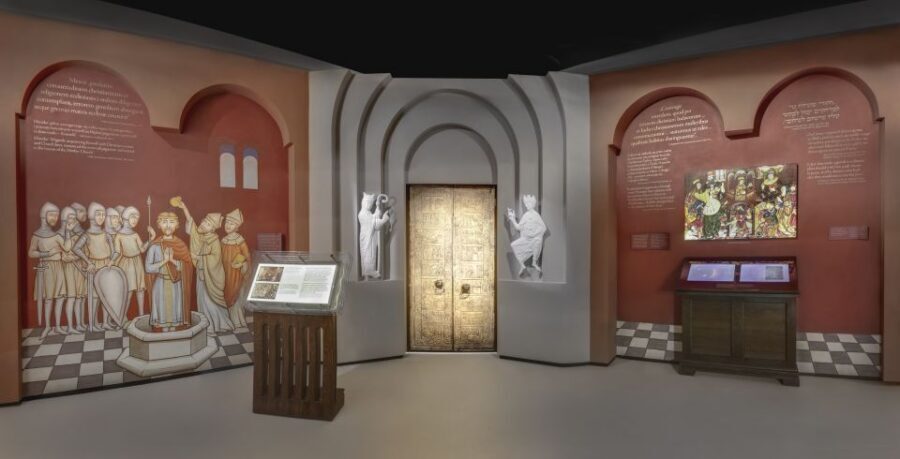
Here’s what you can expect in the included time (around 2 hours): a chronological path through Polish history intertwined with Jewish history in Poland. The museum is organized and visually engaging, with interactive touches—like drawers you can open, screens, and objects you can handle. You’ll also see artifacts, photographs, documents, and films.
A key reality check: if you want to read and listen to everything carefully, it would take a whole day. But the guided approach (and the way the museum is structured) helps you follow the main story arc without needing a full day.
Skip-the-line details are also worth knowing. Your skip-the-line ticket helps you skip the ticket office, but it does not skip entrance and security checks. Your admission covers the main exhibition, the ongoing temporary exhibition, and the Heritage Gallery.
Practical tip: since security checks can still slow you down, arrive ready to move. Wear shoes you can stand in, and keep your phone battery charged.
Price and Value: What You’re Paying For
At $167.97 per person, this isn’t a cheap morning stroll. You’re paying for a private tour format, a licensed English-speaking guide, skip-the-line access to POLIN (ticket office only), and museum-related admissions that are listed as included—plus cemetery admission.
What makes it feel like value is the structure. You get:
- expert commentary over multiple stops (not just museum time),
- about 2 hours at POLIN Museum,
- and a ghetto walking segment that’s included on the longer option.
If you tried to DIY this, you’d still need to plan museum timing, figure out what to prioritize inside POLIN, and connect outdoor WWII landmarks into a coherent narrative. The guide is what stitches it together.
Also, the tour is booked on average 51 days in advance. That’s a sign that popular time slots can fill up. If your dates are set, book sooner rather than later.
Timing, Tickets, and How the Day Flows
Duration ranges from about 2 to 4 hours. The big decision is whether you want the full walking component of the ghetto.
- In the 4-hour option, the walking tour of the ghetto is included.
- In the 2-hour option, the tour description says you will not see the Warsaw Ghetto.
So even if you love museums more than walking, check the option you’re booking. The museum alone is excellent, but the pairing is the whole point of this experience.
A few stops also have “ticket free” designations. Others don’t. Nożyk Synagogue is specifically noted as not included, with possible entry upon request. That means you may need to pay separately depending on access.
The tour uses a mobile ticket, and it’s near public transportation. If you’re meeting at Ludwika Zamenhofa 11, plan to arrive a few minutes early so you start with a calm pace.
Who This Tour Suits (and Who Might Not)
This is a strong fit if you want:
- a guided walkthrough that keeps the story chronological and readable,
- meaningful stops like the Jewish Cemetery and a ghetto wall fragment,
- and a mix of museum evidence plus real-world landmarks.
It’s also a good choice for people who travel with kids or family—because the museum time is structured and the guide’s job is to turn complex history into clear takeaways. One parent-friendly sign here: the tour runs on shorter, manageable segments instead of forcing a single long museum session with zero pacing.
You might choose something else if you:
- want total independence with no guided structure,
- are strictly limited on walking time and can’t do a neighborhood route,
- or are only interested in POLIN Museum and nothing else.
Should You Book This Skip-the-Line POLIN and Warsaw Ghetto Tour?
Yes—if you want the most efficient way to connect Warsaw’s Jewish history with the physical reality of WWII-era sites, and you prefer a guide to do the organizing. The skip-the-line access helps, the cemetery and ghetto landmarks add weight, and POLIN’s interactive exhibits make the museum time feel more than just reading panels.
Just be sure you pick the right duration for your goals. If you care about the ghetto walk, choose the 4-hour option. If you only want POLIN and a shorter route, confirm what’s included for the 2-hour version. Also remember that Nożyk Synagogue entry isn’t included, so don’t count on getting inside without a separate plan.
If you want a Warsaw day that’s structured, respectful, and genuinely educational, this is a smart way to do it.
FAQ
Is this tour offered in English?
Yes. The guide is fluent in the language selected when booking, and English is one of the offered languages.
How long is the tour?
It runs from about 2 to 4 hours, depending on the option you select.
What’s included at the POLIN Museum?
The tour includes skip-the-line tickets to POLIN Museum for the main exhibition, the ongoing temporary exhibition, and the Heritage Gallery. It also includes about 2 hours at the museum.
Does skip-the-line mean you skip security checks?
No. Skip-the-line here allows you to skip the ticket office line. You still need to go through entrance and security checks.
Do I get to walk the Warsaw Ghetto?
On the 4-hour tour, yes—there’s a walking tour of what used to be the Warsaw ghetto. On the 2-hour tour, the ghetto walking part is not included.
Is the Jewish cemetery included?
Yes. Admission for the Jewish Cemetery (Cmentarz Żydowski) is included, and the stop lasts about an hour.
Can I enter Nożyk Synagogue?
Possible, but it’s not guaranteed. Entry is described as possible for request. Admission to Nożyk Synagogue is not included.
Where does the tour start?
The meeting point is Ludwika Zamenhofa 11, 00-153 Warszawa, Poland.
What if I need to cancel?
Free cancellation is available. You can cancel up to 24 hours in advance for a full refund; cancellations within 24 hours are not refunded.