REVIEW · WARSAW
Private Tour: Warsaw’s Jewish Heritage by Retro Fiat
Book on Viator →Operated by WPT1313 Warsaw Private Tours · Bookable on Viator
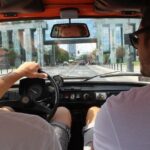
A vintage car meets Warsaw’s Jewish past. This private 4-hour ride in a Retro Fiat 125p (or a vintage minivan for groups of 4+) strings together the Nożyk Synagogue, ghetto landmarks, memorials, and the Muranów area, with a driver-guide speaking English. It’s a smart way to cover sites that are spread out, while still getting real context instead of just photo stops.
I love the hotel pickup and drop-off included, especially in a city where you don’t want to waste time guessing buses or walking in the wrong direction. I also like the flexibility of a private format: you can point out what you care about, whether that’s WWII focus or film locations connected to The Pianist.
One thing to consider: entry to the synagogue and the cemetery can be limited because they close Friday evening through Saturday for Sabbath observance. If your dates fall around those hours, plan for “see from outside” time and keep your expectations tidy.
In This Review
- Key highlights at a glance
- A Retro Fiat ride through Warsaw’s Jewish layers
- How the tour flows: ghetto wall to Muranów
- Ghetto memory stops: Chłodna Street and Warsaw Ghetto landmarks
- Nożyk Synagogue and what it means to visit an active synagogue
- Jewish Cemetery and the Ghetto Heroes Monument
- Muzeum POLIN: seeing Poland’s Jewish story with optional entry
- Where WWII shows up: Treblinka departure point, suicide memorial, and a surviving street
- Private guide power: tailoring questions and film-location details
- Price, timing, and value of a 4-hour private heritage drive
- Practical tips: head coverings, Sabbath closures, and pacing
- Who should book this Retro Fiat Warsaw heritage tour
- Should you book this tour or DIY it?
- FAQ
- How long is the Warsaw Jewish Heritage private tour?
- Is this tour private?
- What’s the meeting point for the tour?
- Do you offer hotel pickup and drop-off?
- Is the tour in English?
- What parts of the tour require extra tickets?
- Are all sites included for entry during the tour?
- Do I need head covering?
- Can I cancel for a full refund?
Key highlights at a glance
- Door-to-door convenience with hotel pickup and drop-off in the city center
- Retro Fiat 125p experience (or vintage minivan for groups of 4+)
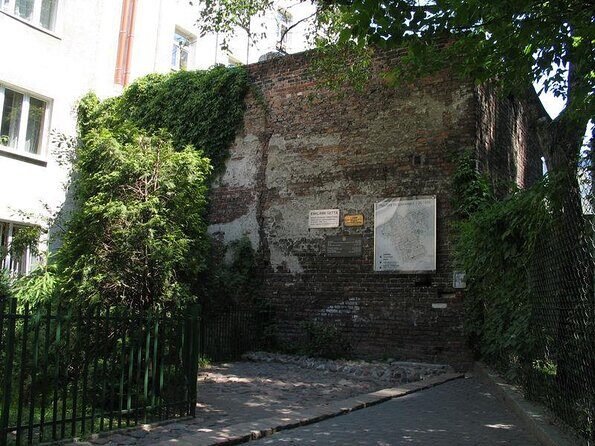
- Ghetto Wall fragments and plaques for tangible, specific memory
- Nożyk Synagogue visit to see one of the only surviving prewar synagogues
- Jewish Cemetery and the Ghetto Heroes Monument for WWII-era remembrance
- POLIN Museum option (outside view, with help adding entry if you want)
A Retro Fiat ride through Warsaw’s Jewish layers
This is one of those tours where the transport actually helps the story. Instead of hopping between far-flung stops on your own, you’re on a fixed route with a driver-guide. The Retro Fiat 125p makes the ride memorable, but the real value is what you get between the stops: short, guided explanations that connect names, places, and eras.
The tour runs about 4 hours, and it’s private, meaning you’re not squeezed into someone else’s pace. That matters with Jewish heritage history in Warsaw, because context is everything. A good guide can also slow down when something looks confusing at first glance—like a building, a plaque, or a gap where you expected something else.
If you’re traveling as a small group, this format often feels more personal than group walking tours. You can ask a question and get a straight answer right away, rather than waiting for the next stop.
Other private tours in Warsaw

How the tour flows: ghetto wall to Muranów
The day starts with the kind of evidence you can’t fake: a fragment of the Ghetto Wall with commemorative plaques. This first stop is short—around 15 minutes—but it sets the tone fast. You’re looking at physical remains tied to the 1940 creation of the Warsaw Ghetto, when more than 400,000 Jews were imprisoned there.
From there, the route moves toward the broader Warsaw Jewish experience and what changed over time. Next comes Chłodna Street, including the area known for a “Footbridge of Memory” and a building associated with Adam Czerniaków, leader of the Jewish Community council (the Judenrat). Even if you’ve read about the ghetto before, seeing these specific streets and references helps the story feel less like a textbook.
Then you reach the former “Large Ghetto” area in Muranów, which is now a modern district—think apartment blocks, daily life, and street art. That contrast is not just visual. It’s a point your guide can use to explain how the city re-inhabited and re-shaped itself after catastrophe.
Ghetto memory stops: Chłodna Street and Warsaw Ghetto landmarks
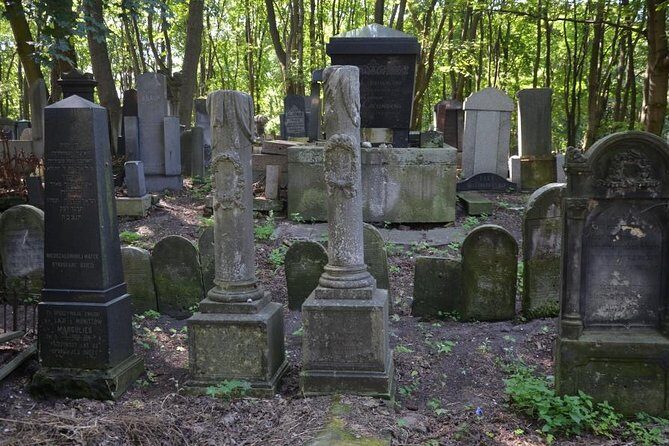
Chłodna Street is one of those places where the city looks normal until you know what you’re standing on. The “Footbridge of Memory” reference is the kind of local detail that turns a broad WWII narrative into something specific. And Czerniaków’s connection adds weight, because it ties a named person to Warsaw’s administrative and human realities during the Nazi occupation.
From there, you move into the Warsaw Ghetto area around Muranów for about 30 minutes. This stop is about walking the feeling of the neighborhood now, while your guide connects it to what that geography meant during the ghetto years. You’ll also get a chance to process the fact that this is not a distant ruin. It’s a lived-in city—overlaid with the past.
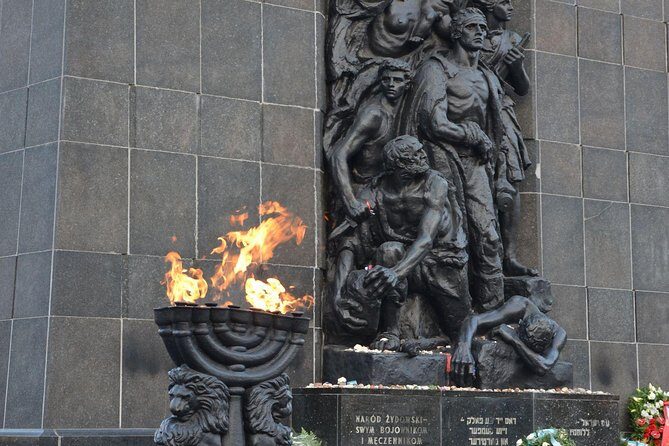
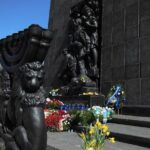
After that, you head to the Monument to the Ghetto Heroes. This memorial is tied to the Warsaw Ghetto Uprising of 1943. A stop like this is brief (about 15 minutes), but it gives you a focal point: resistance, survival, and the long shadow of what happened. If you want to understand the WWII story beyond dates and numbers, this is the kind of anchor you’ll appreciate.
Nożyk Synagogue and what it means to visit an active synagogue
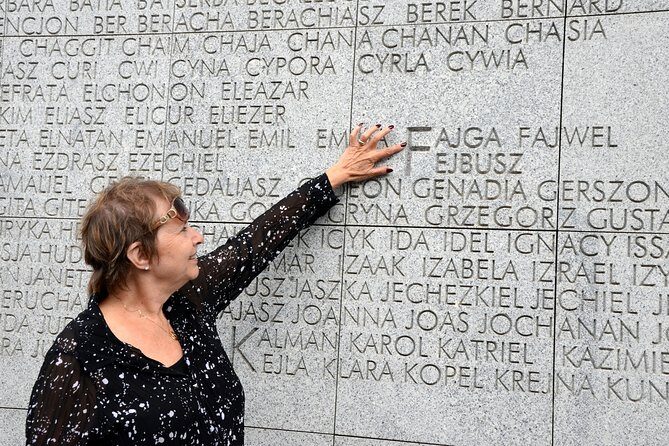
The highlight for many people is Nożyk Synagogue, described here as the only surviving prewar Jewish house of prayer in Warsaw. The big practical point: it’s active today. That means you’re not just visiting a memorial building; you’re stepping into a living religious space.
The tour time allotment is about 30 minutes for the synagogue stop, but the most important thing is the opening schedule. The synagogue is closed from Friday evening through Saturday due to Sabbath observance. If your trip lands on those days, you may get less or no interior access.
Also note the tour’s head-covering reminder. You’ll be required to cover your head at some Jewish sites. It’s easy to handle if you plan ahead, and it’s part of respectful site etiquette.
If you care about continuity—how Jewish worship and community life persisted and re-started after the war—this stop is a strong emotional and historical bridge.
Jewish Cemetery and the Ghetto Heroes Monument
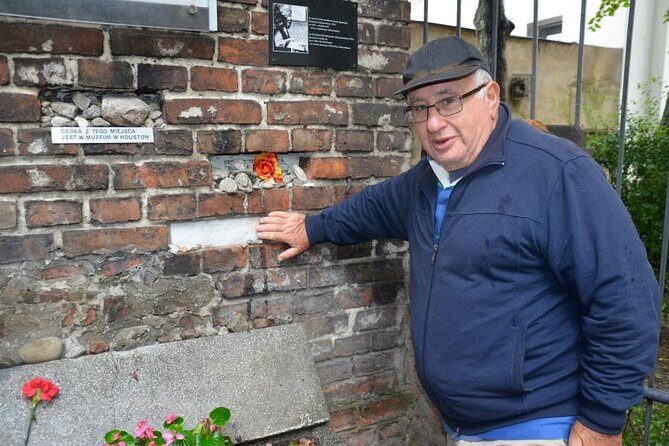
Next up is a stop that often changes how people feel about Warsaw’s WWII history. The Jewish Cemetery includes remains of graves of over 200,000 people, including spiritual and political leaders, creators of Jewish culture, and countless unnamed victims. It’s also noted that Jews from many generations of Warsaw were buried there.
The cemetery visit is about 30 minutes, and it comes with another Sabbath-related timing issue: it’s closed from Friday evening through Saturday. If you’re hoping for an in-depth visit, it’s smart to schedule earlier in the week.
Even in a short time, this kind of stop does something powerful: it moves the story from “events” to “people.” A memorial can do that, but a cemetery does it in a different, harder way.
Then there’s the Ghetto Heroes Monument, earlier in the route, which focuses on the 1943 uprising. Together, these stops create a balance: resistance and remembrance, side by side.
Other POLIN and Jewish heritage tours in Warsaw



Muzeum POLIN: seeing Poland’s Jewish story with optional entry
You’ll see POLIN Museum of the History of Polish Jews from the outside during the tour. The listed time for this stop is about 15 minutes, and museum entry is not included.
That matters because the museum can take much longer than a quick look—so think of it as a “set up your visit” moment. If you want to go inside, the guide can leave you there after the tour. This is a useful option because it prevents the classic problem of spending museum time when you’re still exhausted from WWII-heavy sites.
POLIN’s role in this itinerary is basically to connect the dots: Warsaw Jewish history is part of a much bigger Polish Jewish story, spanning long timelines. Even from outside, you get the sense of a serious, modern space built for interpretation.
If you’re short on time in Warsaw, outside-view-only still gives you direction. If you have the stamina, adding entry can turn the whole day into a full historical arc.
Where WWII shows up: Treblinka departure point, suicide memorial, and a surviving street
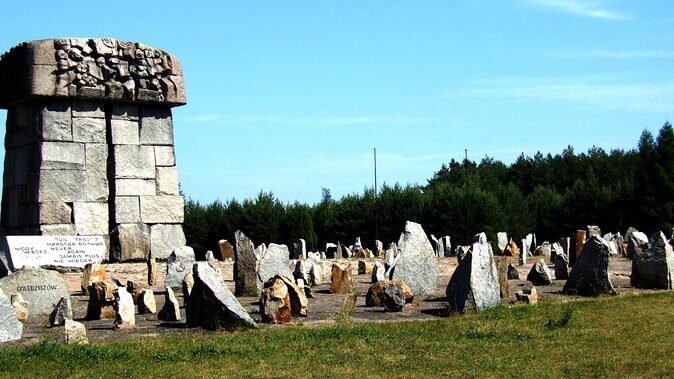
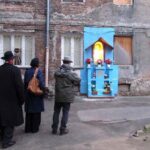
This tour includes several stops tied to the brutal mechanics of the occupation and the ghetto uprising aftermath. One of them is a departure point to Treblinka extermination camp with gas chambers. Another is a memorial for a group suicide during the Ghetto Uprising. There’s also mention of a street that survived from both sides in the whole ghetto area.
These are not “fun facts” stops. The value is that you’re seeing markers of decisions and tragedies in the real spaces where they happened—or where they were remembered. A good driver-guide can help you understand what you’re looking at without turning it into cold trivia.
Because some sites are more interpretive than scenic, plan for a slower mental pace. Bring water. Expect a mix of shock and clarity. And if you’re the kind of person who likes to ask, ask—this format is built for it.
Private guide power: tailoring questions and film-location details
Private tours are only worth it when the guide actually works like a guide, not like a driver with a script. Here, the guide role is central. You’re picked up and driven between stops, yes, but you’re also getting an in-depth attention to the history and the meaning of what you see.
The tour also allows you to steer the conversation. If film is part of how you learned, you can mention The Pianist locations. That’s a smart way to connect entertainment imagery to real street geometry and WWII context.
You’ll likely meet guides with strong command of English and history storytelling. Names that show up in the guide descriptions include Alex/Alec, Max, Konrad, Karol, Marcin, and Martin. The common thread across them is clear explanations and patience with questions.
If you want a tour that respects your curiosity—family-history questions, WWII timelines, or how Warsaw rebuilt afterward—private format is the reason this works.
Price, timing, and value of a 4-hour private heritage drive
At $108.28 per person for about 4 hours, the price can feel steep until you break down what’s included. You get:
- Hotel pickup and drop-off
- A professional driver-guide
- Transport in a private retro Fiat 125p (or a vintage minivan for groups of 4+)
In a city like Warsaw, where distances can eat time, transportation plus guided interpretation is a real cost saver. You’re also paying for a route that links multiple WWII and community-history sites without you needing to map everything yourself.
Timing also matters. The tour is noted as commonly booked about 38 days in advance, which suggests people plan it as a priority experience. If you know your Warsaw dates, it’s worth booking early so you can match your schedule to synagogue and cemetery opening times.
If you’re visiting Warsaw just once or twice, a tour like this can deliver more understanding than piecemeal self-guided walking—especially for people who want the story in a guided sequence.
Practical tips: head coverings, Sabbath closures, and pacing
Two practical rules can affect your experience: head covering and Sabbath closures.
- Head covering: you’ll be required to cover your head at some Jewish sites. Bring a light scarf or consider a foldable option before you go.
- Sabbath closures: both the Nożyk Synagogue and the Jewish Cemetery close from Friday evening through Saturday. If you’re traveling over that window, you may still visit key areas, but don’t assume full interior access.
Pacing is another “quiet” practical point. Several stops are short (often 10–15 minutes), while the heavier emotional stops like the synagogue and cemetery get about 30 minutes each. That structure helps you avoid the burnout that comes from trying to do everything at once.
Finally, since this is a private tour with hotel pickup and drop-off, it’s easiest if you can keep your schedule flexible enough to return where you started. The route ends back at the meeting point after the final stops.
Who should book this Retro Fiat Warsaw heritage tour
This tour fits best if you:
- Want Jewish heritage history in a guided sequence, not a scattered checklist
- Appreciate WWII context tied to actual streets and buildings
- Like the comfort of private pickup and a car when distances or weather are an issue
- Prefer asking questions to just taking in sights
It’s also a great match if you’re a history enthusiast, but it doesn’t require you to be an expert. A good guide can turn names and events into a clear timeline.
If you’re traveling with kids or extended family, consider how they handle heavy topics. The sites are meaningful and serious. The pacing helps, but it’s still an emotional education.
If you’re in a group of 4+, you’ll be moved into a vintage minivan for the ride, which can still feel special while keeping everyone together.
Should you book this tour or DIY it?
Book it if you want your Warsaw Jewish heritage day to feel organized, explained, and respectful—without you stitching together logistics on your own. The included pickup/drop-off and the private driver-guide factor make it strong value for most visitors.
DIY might work if you already have a deep grasp of the WWII timeline and you don’t mind figuring out timing around site hours. But if you want your experience connected to geography, plaques, memorials, and living places like Nożyk Synagogue, this private format does the hard work for you.
If your dates include Friday evening through Saturday, treat that as your main planning fork: it can change what you can enter. With that in mind, this is one of the most practical ways to understand Warsaw’s Jewish past—while the city still has it written into its streets.
FAQ
How long is the Warsaw Jewish Heritage private tour?
The tour lasts about 4 hours.
Is this tour private?
Yes. It’s a private tour, so only your group participates.
What’s the meeting point for the tour?
The tour starts at the Palace of Culture and Science, pl. Defilad 1, 00-901 Warszawa, Poland, and ends back at the meeting point.
Do you offer hotel pickup and drop-off?
Yes. Hotel pickup and drop-off are included, and pickup is offered from your hotel lobby if you’re in the city center pickup area.
Is the tour in English?
Yes. The tour is offered in English.
What parts of the tour require extra tickets?
Admission for POLIN Museum entry is not included, and admission tickets for Nożyk Synagogue and the Jewish Cemetery are also not included.
Are all sites included for entry during the tour?
Some sites have entry limits tied to Sabbath observance. The synagogue and the cemetery are closed from Friday evening through Saturday, so entry may not be possible during those times.
Do I need head covering?
Yes. You’ll be required to cover your head when visiting some Jewish sites.
Can I cancel for a full refund?
Yes. You can cancel up to 24 hours in advance for a full refund. If you cancel less than 24 hours before the start time, the amount paid isn’t refunded.