REVIEW · WARSAW
Warsaw for WWII Buffs – private tour with hotel pickup
Book on Viator →Operated by Warsaw Behind the Scenes · Bookable on Viator
WWII in Warsaw can feel like a blur of dates. This private tour turns it into a clear route you can actually follow.
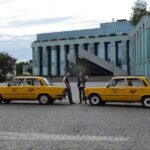
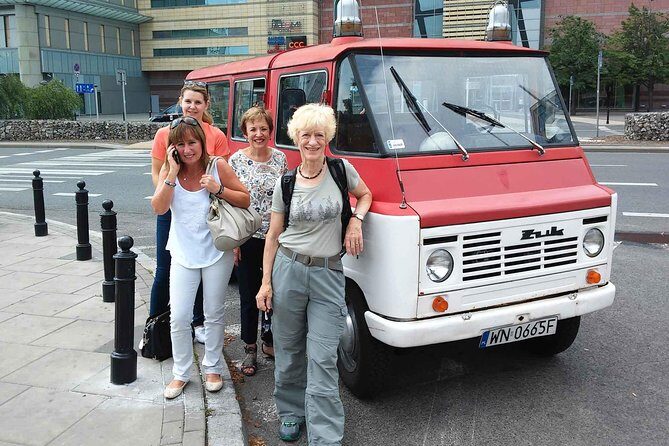
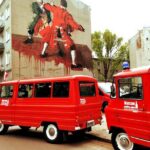
I especially like the retro Żuk minibus touch. It makes the drive feel like a living time machine, while still being practical for covering a lot of ground in just about three hours. And I like that the experience is built around hotel pickup in central areas, so you spend less time herding yourself across town.
One thing to plan for: the vintage vehicles don’t have modern comfort. Expect a bumpy ride sometimes, no air-conditioning, and seating that may not be ideal if you’re dealing with mobility or you’re very sensitive to comfort.
In This Review
- Key things to know before you go
- A retro Żuk minibus and a tight 3-hour WWII story
- From late-1930s tension to the double occupation of Poland
- Waliców wall fragments: where the Warsaw Ghetto still cuts through the city
- Chłodna Street’s bridge: the weird logistics of separation
- The Waliców tenement house: the ghetto’s last ghost
- Muranów and the POLIN/Past-to-present remembrance zone
- The Soviet attack and the Monument to the Fallen and Murdered in the East
- The Warsaw Uprising Monument: independence hopes and the city’s destruction
- Price and value: what $169.38 gets you in real-world terms
- Comfort, timing, and how to dress for a history-heavy route
- Who this Warsaw WWII tour fits best
- Should you book this Warsaw for WWII buffs tour?
- FAQ
- How long is the Warsaw for WWII Buffs private tour?
- Is this tour private?
- Do you pick up from my hotel?
- What language is the tour offered in?
- Can children join?
- Is there free cancellation?
Key things to know before you go
- Retro Żuk transport that keeps the tour moving and fun, even between heavy subjects.
- A tight, chronological story from late-1930s tension to the Warsaw Uprising and the Soviet takeover.
- Ghetto sites you can only “get” with a guide, including preserved wall fragments tucked between buildings.
- Chłodna Street’s bridge shows how the occupation rewired everyday movement.
- Two big remembrance areas in the same arc: the Ghetto heroes/POLIN zone and the East memorial.
- Private group format with room for questions and customization to your interests.
A retro Żuk minibus and a tight 3-hour WWII story
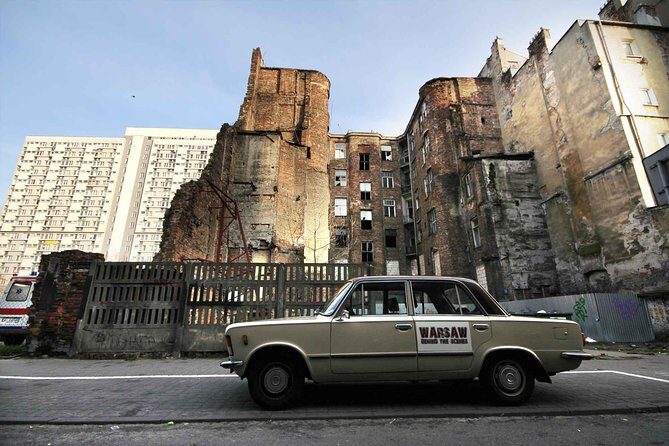
This is the kind of tour that works when you want real history, but you don’t want to lose half a day. You’re out for roughly three hours, yet the route still covers the core chapters of Warsaw’s WWII experience: invasion, ghetto life and boundaries, armed resistance, and what came after.
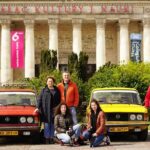
The transport matters more than you’d think. Being driven in a vintage communist-era Żuk minibus lets you move efficiently between neighborhoods that can feel disconnected if you’re navigating on your own. Add short walks at each stop and you get a “see it, understand it, remember it” rhythm.
Because it’s private, your guide can keep the pace comfortable and adjust what to emphasize. If you’re an absolute WWII nerd, you’ll get room for follow-up questions. If you’re here with family or first-timers, you’ll get clarity instead of an overwhelming lecture.
Other private tours in Warsaw
From late-1930s tension to the double occupation of Poland
You start in central Warsaw, where the city still carries WWII scars in its layout. The drive is part of the education. You get oriented quickly, and you’re able to place what you’ll see next in the wider story.
Early in the tour, your guide sets the scene: the political climate of the late 1930s, the German invasion of Poland in 1939, and the simultaneous Soviet occupation of eastern Poland. That double occupation is key to understanding why resistance and survival looked the way it did in Warsaw—people weren’t just reacting to one occupier. They were dealing with a brutal reshaping of daily life from more than one direction.
This opening section is also about mindset. You’re being primed for the idea that Warsaw didn’t just “happen” to suffer. It was pulled into major geopolitical events that changed what was possible for civilians.
Waliców wall fragments: where the Warsaw Ghetto still cuts through the city
Next comes one of the hardest parts of Warsaw history, handled with care and focus. The tour moves to Waliców, centering on the tragedy of the Jewish population persecuted and murdered by Nazi Germany.
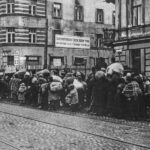
Your guide gives the numbers that make the scale real. Before the war, Poland had roughly three million Jews, with about 300,000 in Warsaw. In 1940, the Nazis created the Warsaw Ghetto, forcibly confining nearly half a million people behind walls—an engineered cage inside a major city.
What you’ll actually see today is striking: preserved fragments of the Ghetto wall remain hidden between buildings and along pre-war property lines. Those wall pieces don’t look dramatic. They look like they were simply left behind. That’s exactly why they hit so hard. They show how the “border” wasn’t only an idea—it was built into streets, addresses, and ordinary paths.
Chłodna Street’s bridge: the weird logistics of separation
If you want a single “how could this possibly exist?” moment, this is it. In 1941, the Ghetto was divided into two parts by Chłodna Street. That street wasn’t just a line on a map—it became a working corridor for the occupation, used for East-West transfer traffic.
Your guide explains how a wooden bridge was built near the intersection of Chłodna and Żelazna streets to link the two sides of the ghetto. It reached up to the third floor of buildings, allowing “Aryan” trams, German military transports, and cars to pass beneath.
This is one of those historical details that stays with you, because it reveals the occupation’s priorities. Control wasn’t only about confinement. It was about keeping traffic moving for the occupiers while separating people in the most absurdly physical way possible.
The Waliców tenement house: the ghetto’s last ghost
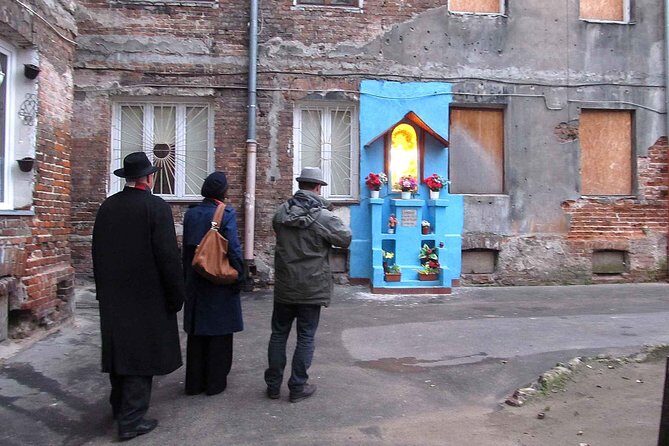
Right after the bridge lesson, you return to Waliców for another ghetto-related landmark: the Waliców street tenement house. The ruin remains, and that’s the point. It’s described as the last “ghost” from the ghetto because it still stands as a damaged remnant rather than a polished memorial.
Alongside the tenement house, there’s also a preserved fragment of the Ghetto wall in the same area. Seeing both together helps you understand what ruins do best: they don’t just tell you a story. They show what survived long enough to be pointed at today.
If you’re short on time in Warsaw, this stop is valuable because it gives you something you can’t really fake with a photo from a distance.
Other Warsaw tours with hotel pickup
Muranów and the POLIN/Past-to-present remembrance zone
After the ghetto-specific sites, you move to Muranów. At first glance, it can read like a normal neighborhood—blocks of flats, streets, everyday urban life. But your guide helps you see how much of that ordinary surface hides underneath.
This is where Warsaw becomes a conversation across time. Your route heads toward the area of the Monument to the Ghetto Heroes and the POLIN Museum of the History of Polish Jews. These are major symbolic sites tied to the Warsaw Ghetto.
Your guide also connects the location to the first armed clashes of the 1943 Ghetto Uprising. That matters, because it keeps the story from feeling like it’s only about confinement and suffering. The uprising was action, planning, and courage under impossible conditions.
The area today represents decades of dialogue and remembrance among Polish, Jewish, and German communities. Even if you don’t go into the museum itself, the way your guide frames the surroundings makes the space feel intentional rather than just scenic.
The Soviet attack and the Monument to the Fallen and Murdered in the East
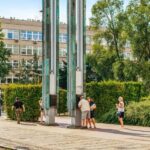
Then the tour widens its frame to the Soviet occupation and its brutal aftermath. You visit the Monument to the Fallen and Murdered in the East, tied to what happened on September 17, 1939—two weeks after WWII broke out in Europe.
At that moment, Poland was attacked by the Soviet Union, and the eastern part of the country was lost forever. Later monuments were raised to honor Poles deported to Gulags in Siberia, those killed in executions, and victims associated with the Katyń massacres.
This stop is emotionally intense, but it’s also important for context. A lot of WWII travel in Europe focuses mostly on the Western Allied front. Here, you see how Poland’s tragedy became layered: one occupation after another, with civilians caught in systems of deportation, execution, and erasure.
The Warsaw Uprising Monument: independence hopes and the city’s destruction
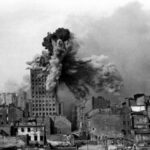
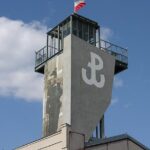
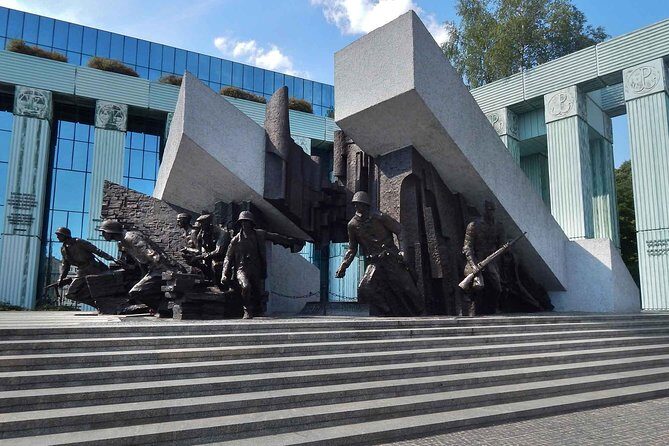
The final “chapter” is the Warsaw Uprising Monument. In 1944, the Warsaw Uprising was the city’s last attempt to regain independence before the arrival of the Red Army.
Your guide explains what happened next: the uprising was defeated, and Nazi forces systematically destroyed most of Warsaw. Then, in January 1945, the Soviet army entered the ruins and a new era of communist rule began.
This ending is the emotional hinge of the whole tour. It ties together why the ghetto uprising mattered, why resistance spread, and why liberation didn’t arrive as a simple happy ending. It also sets you up to understand later Warsaw—because the city you walk through today is the product of that wreckage and rebuilding.
Price and value: what $169.38 gets you in real-world terms
At $169.38 per person for about three hours, this isn’t a cheap add-on. But it’s priced like a “local guide + transport + private routing” experience, not a hop-on hop-off tour.
Here’s the value logic that matters: you’re paying for (1) a professional English-speaking local guide, (2) transportation by a vintage communist-era minibus, and (3) hotel/apartment pickup and drop-off within a 3 km radius of the city center.
That pickup piece is practical. With WWII sites scattered across neighborhoods, the time cost of getting there is real. The tour operator also notes that transfer time counts as part of your tour time. So if your hotel is on the edge of that 3 km zone (or access is tricky), you might find it’s smarter to meet a bit closer to the center to avoid spending your history hours stuck in traffic.
Comfort, timing, and how to dress for a history-heavy route
The vehicles are vintage. Some don’t have seat belts (historic vehicles can be like that), and none of them should be expected to have modern air-conditioning. Winter heating is included, though, so colder months are more manageable.
Plan your body for short walks between stops. The tour uses the minibus for transfers, but you’ll be stepping out repeatedly. Wear comfortable footwear and dress in layers, since you’ll be spending time outdoors while your guide points out details at street level.
Also, it’s worth noting the group size structure: each minibus fits up to eight passengers, and the provider has several minibuses. Since this is private, you won’t be mixed with strangers, but it’s still smart to ask about vehicle specifics if you’re very sensitive to stairs, entry/exit, or cramped seating.
Who this Warsaw WWII tour fits best
This is ideal for you if you want the Warsaw story to make sense fast—especially if you’re into the Warsaw Ghetto, the 1943 uprising, and the 1944 uprising. It’s also a strong choice for families and teens, since the format is narrative-driven and can be tailored to interests.
If you’ve already seen a few major landmarks and you want the “how” behind the city’s WWII shape—street divisions, preserved fragments, and memorial logic—this gives you that behind-the-scenes layer.
And if you’re planning a longer stay, this tour becomes a foundation. After it, it’s easier to choose which museums or deeper sites you want to add next, because you understand what you’re looking at.
Should you book this Warsaw for WWII buffs tour?
Yes—if you want a guided, chronological route that connects the ghetto, resistance, and postwar shifts without wasting your precious time. The blend of transport, short on-foot stops, and an English narrative is the winning formula here.
I’d think twice if you’re extremely concerned about vehicle comfort, because vintage means no air-conditioning and potentially less-than-modern seating or entry space. If that’s your situation, reach out ahead of time and confirm what vehicle you’ll use.
If you’re the type who likes history with specifics—street-level borders, preserved wall segments, and monuments tied to real dates—this tour is built for you.
FAQ
How long is the Warsaw for WWII Buffs private tour?
The tour lasts about 3 hours.
Is this tour private?
Yes. It’s a private tour/activity, and only your group participates.
Do you pick up from my hotel?
Pickup and drop-off are available within a 3 km radius of the city center. If your place is farther or hard to reach by car, the operator will suggest a closer meeting point. Transfer time counts in the total tour time.
What language is the tour offered in?
The tour is offered in English.
Can children join?
Adults and children over 150 cm (4 ft 9 in) can book. For children under 150 cm, you need to contact the tour operator in advance because seat boosters are mandatory under Polish law.
Is there free cancellation?
Yes. You can cancel up to 24 hours in advance for a full refund. If you cancel less than 24 hours before the start time, the amount paid is not refunded.