REVIEW · WARSAW
Warsaw Behind the Scenes – small group tour with hotel pickup
Book on Viator →Operated by Warsaw Behind the Scenes · Bookable on Viator
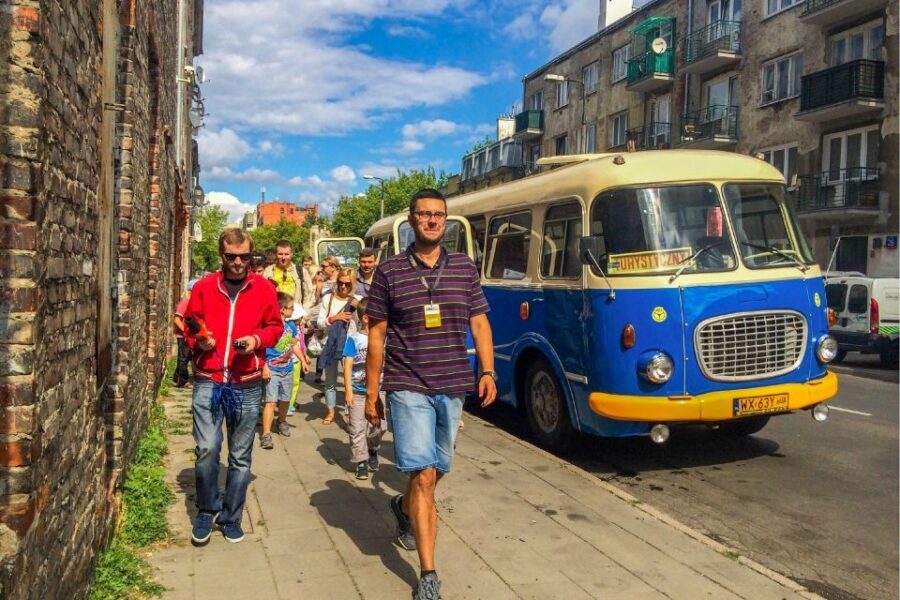
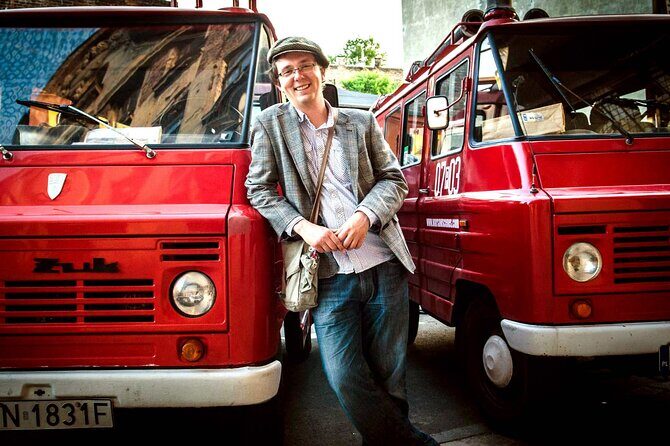
A Zuk van rolls you into Warsaw’s darker past. This small-group tour with hotel pickup turns famous names—like the Warsaw Ghetto and the Warsaw Uprising—into real street corners you can actually stand on. I especially love how guides (Tom and Marcin are just two examples I heard praised) use visuals and clear storytelling to help the city make sense fast.
One thing to consider: the classic minibuses are not air-conditioned, and some don’t have seat belts. If it’s hot, cold, or rainy, you’ll want to dress smart and keep expectations realistic about comfort.
In This Review
- Why This Warsaw Tour Works in Just 3 Hours
- Key Stops That Make This “Behind the Scenes” Tour Feel Real
- Ride Like It’s 1970s Warsaw: The Zuk Minibus Experience
- The WWII Story Gets Tighter When You Walk It, Not Just Read It
- Muranów: Where Ordinary Streets Sit on Unthinkable Ground
- The Ghetto Bridge Corner: Chłodna and Żelazna
- Nowolipki: The 1943 Uprising in the Middle of Today’s Warsaw
- Bielańska: From Occupation to Soviet Control and the Warsaw Uprising of 1944
- Praga Polnoc: Cross the Vistula to a District With a Different Rhythm
- Śródmieście: Rebuilding Warsaw Under Soviet Ideology
- 1989 and the Big Turn: Solidarity, John Paul II, and a New Warsaw
- Price and Value: Is $133.08 a Good Deal for This Tour?
- Who Should Book This Tour (and Who Might Prefer Something Else)
- Should You Book Warsaw Behind the Scenes?
- FAQ
- How long is the Warsaw Behind the Scenes tour?
- Do I get hotel pickup and drop-off?
- What language is the tour offered in?
- Is admission included for the stops?
- What vehicle do you use?
- Is the minibus air-conditioned and do seats have seat belts?
- What should I know for children?
Why This Warsaw Tour Works in Just 3 Hours
This isn’t a checklist ride. It’s a guided walk that stitches together the way Warsaw changed—over and over—because of war, occupation, rebuilding, and politics. You get the big story without drowning in dates.
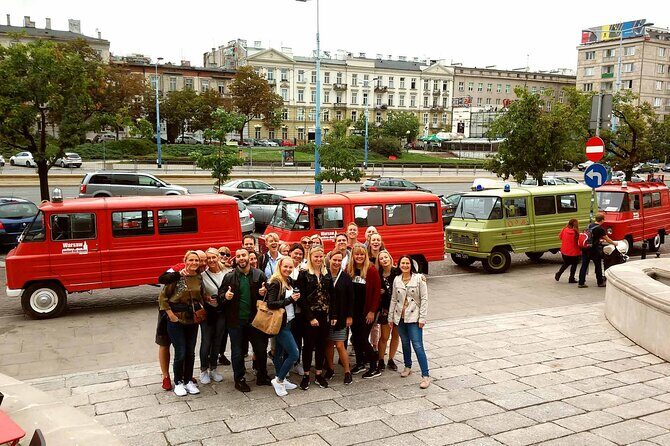
The group size matters here. With minibuses that carry up to 8 passengers, you’re less likely to feel like cargo. Guides also have room to answer your questions and adjust the pace, which shows up again and again in the strong 5-star feedback.
You’ll spend most of the time walking in short segments, with transfers by minibus between neighborhoods. That’s a practical way to cover ground without rushing through the meaning of each stop.
Key Stops That Make This “Behind the Scenes” Tour Feel Real
- Muranów’s ghetto layers: postwar housing built over Nazi-era imprisonment ground
- The Chłodna–Żelazna corner and the wooden ghetto bridge: famous from The Pianist, explained in place
- Uprising sites and commemoration: how 1943 resistance is remembered today
- Praga Polnoc across the Vistula: a wartime survivor vibe with a creative, local feel
- Central Warsaw reconstruction: rebuilding after 1945 shaped by Soviet politics
Other Warsaw tours with hotel pickup
Ride Like It’s 1970s Warsaw: The Zuk Minibus Experience
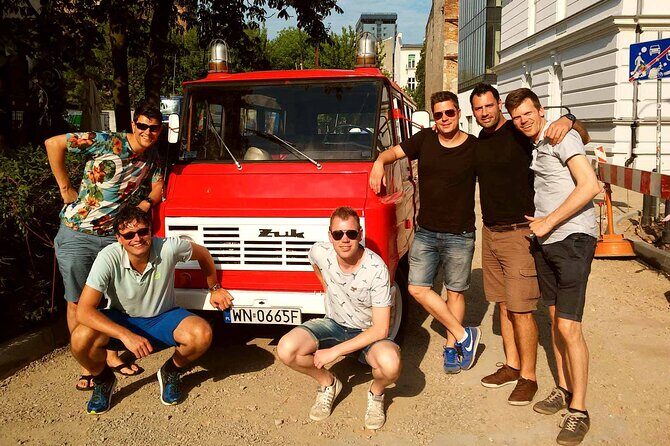
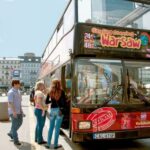
You start with pickup, then you’re off in a small vintage minibus. Many tours like this rely on modern buses. Here, the vehicle is part of the point: a Zuk-style ride that feels like you’re traveling with the city’s past, not just around it.
Expect heating for winter travel, but not air-conditioning. Some vehicles also don’t have seat belts, and that’s allowed because they’re historic vehicles. Translation: bring your patience, and dress for the weather.
One more practical perk: because you’re not navigating logistics on your own, you can spend your energy on the story. That’s a big deal on a first day in Warsaw when you’re still learning which way everything goes.
The WWII Story Gets Tighter When You Walk It, Not Just Read It
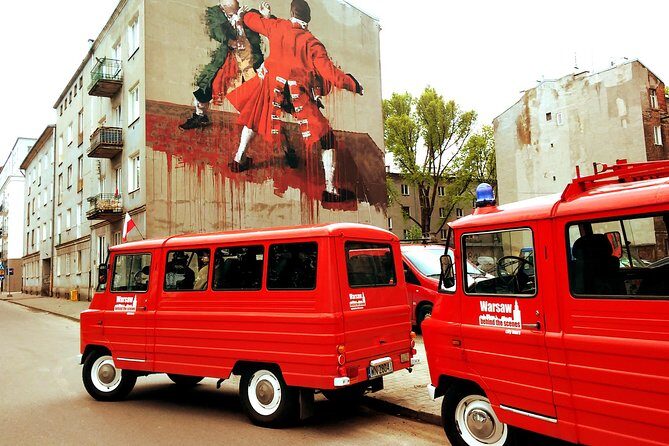
Warsaw can feel contradictory: grand avenues and memorials right beside everyday life. This tour leans into that. Instead of treating WWII as distant history, you see how it sits under modern neighborhoods.
Guides walk you through context before each cluster of sights, so you’re not just looking at plaques. The tour’s structure is built for orientation: start with the broad arc of Warsaw and Poland, then move into the ghetto story, then expand into the wider war and the Soviet era.
If you care about history, you’ll likely notice one theme across the stops: Warsaw wasn’t only damaged. It was reshaped. The city you see now grew out of destruction plus forced political decisions.
Muranów: Where Ordinary Streets Sit on Unthinkable Ground
Muranów is the first major stop, and it’s powerful because the neighborhood looks like it belongs to the present. You’ll stand where the Jewish Ghetto was established by Nazi Germany in 1940, then learn how the area was destroyed and later reconstructed.
That contrast is the whole experience. It’s not about spotting one dramatic ruin. It’s about realizing that the landscape you walk on carries layers—sometimes invisible ones—of what happened beneath.
The time here is short, so don’t expect a museum-depth visit. Instead, think of Muranów as your first “mental map” of ghetto-era Warsaw. You’ll leave better prepared for everything else you’ll read or see later in town.
The Ghetto Bridge Corner: Chłodna and Żelazna
Next comes a spot that’s famous for a reason: the location of the iconic wooden ghetto bridge at the intersection of Chłodna and Żelazna Streets. The bridge is known from The Pianist, but the tour goes beyond the movie reference by explaining how it worked—connecting sealed parts of the ghetto while allowing traffic to move underneath.
This is one of those corners where photos and diagrams help a lot. And because you’re seeing it at street level, the explanation lands quickly. You stop imagining it as a set piece and start understanding it as a control system built into the city’s daily movement.
Practical note: this is mostly street-facing and visual. If it’s raining, you’ll want a hood or compact umbrella, because you’ll be outside for the explanations.




Nowolipki: The 1943 Uprising in the Middle of Today’s Warsaw
At Nowolipki, the focus turns to the Warsaw Ghetto Uprising of 1943. You’ll hear how Jewish resistance fighters launched a final stand against deportation and how the ghetto was ultimately razed.
This stop matters because it answers a question many people have when they first learn about the ghetto: what did resistance look like in a place designed to crush people? Here, you get the story of the uprising and, importantly, how commemoration shows up in the modern city.
Time is limited, so you won’t leave with every detail in your head. But you should leave with a clearer sense of why the uprising is remembered and why those streets feel heavy today.
Bielańska: From Occupation to Soviet Control and the Warsaw Uprising of 1944
Then the story widens. At Bielańska, you shift from the ghetto to the broader sweep of World War II and Poland’s political future.
You’ll cover the grim agreements between the Western Allies and Stalin that placed Poland under Soviet control. After that, the tour reaches the Warsaw Uprising of 1944—described as the city’s last major effort to change the outcome.
This is where the scale hits. After the uprising collapsed, Nazi forces destroyed roughly 85% of Warsaw. Later, the Red Army entered the ruins in January 1945. Those numbers are hard to hold, but the walking format helps. You’re not just memorizing facts; you’re seeing how the city’s layout reflects what was rebuilt and what was erased.
Praga Polnoc: Cross the Vistula to a District With a Different Rhythm
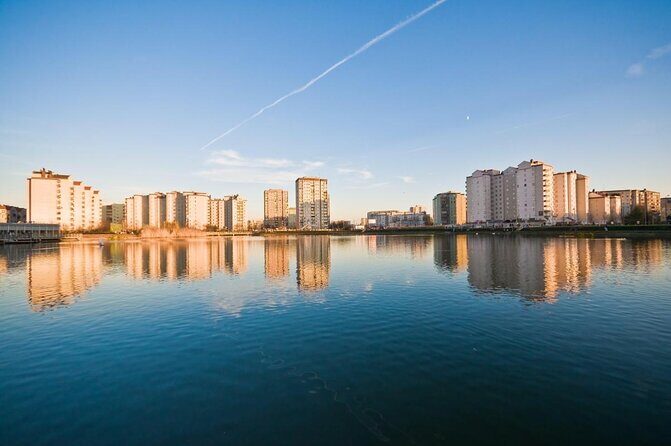
After the heavy WWII sections, you cross the Vistula River to reach Praga Polnoc. This part of the tour is a balance point: you get views along the riverbank, then a look at an area that survived the war largely intact.
Praga preserves more of a prewar atmosphere, with Belle Époque buildings and traditional courtyards, plus a strong local identity. It also has a creative, up-and-coming reputation, and the tour’s pacing lets you experience that without getting funneled through mass tourism.
It’s a smart move to end the WWII-focused narrative with a neighborhood that still feels like a living place. It’s a reminder that history isn’t only memorials. It’s the present, too.
Śródmieście: Rebuilding Warsaw Under Soviet Ideology
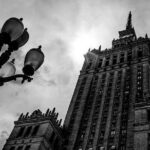
Back in central Warsaw, you’ll stop near the former Polish Communist Party headquarters. This is where the tour shifts from wartime destruction to postwar rebuilding—then to the political constraints shaping that rebuilding.
You’ll hear how communist authorities faced the challenge of recreating a ruined capital after 1945. The key detail is that architectural visions for a modern functional city had to fit Soviet-inspired ideological demands. Walking near this zone helps you see how politics can shape sidewalks, not just speeches.
This stop is also a good mental break. The tour has been emotionally heavy. Here, you start seeing how systems affect everyday life in quieter ways—through planning, design, and power.
1989 and the Big Turn: Solidarity, John Paul II, and a New Warsaw
The tour closes with the turning point of 1989. You’ll learn how the Solidarity movement and Pope John Paul II played key roles in ending communist rule in Poland.
This matters because the tour doesn’t treat Warsaw as frozen in WWII. It treats the city as a work in progress—again and again. By the end, you should feel a clearer link between the past you saw at the ghetto sites and the newer Warsaw built after democracy and capitalism arrived.
If you’re wondering what changed for ordinary people, this final section helps you connect the dots.
Price and Value: Is $133.08 a Good Deal for This Tour?
At about $133.08 per person for roughly 3 hours, the value comes from three things:
First, you get hotel pickup and drop-off, which can be the difference between feeling relaxed and feeling behind schedule.
Second, the format is small-group. Up to 8 passengers per minibus, with a maximum of 39 travelers total, is a sweet spot for guided walking in a dense city.
Third, the stops are not random. You move through a focused chain: ghetto sites, uprising context, WWII aftermath, then the Soviet rebuilding era, and finally the 1989 transition. That arc is why you’re paying for interpretation, not just transportation.
If you want a deep museum day, you’ll still need museums. But for a first or second day orientation with meaning, this pricing is hard to beat.
Who Should Book This Tour (and Who Might Prefer Something Else)
This is a strong fit if you:
- want a first-day Warsaw orientation that also takes WWII seriously
- like walking through history with clear context, not just looking at monuments
- appreciate guides who adapt and answer questions (several guides were singled out for engagement and flexibility)
It might be less ideal if you:
- can’t handle emotionally heavy topics like antisemitism, ghetto confinement, and wartime destruction
- are extremely sensitive to weather, since the vintage vehicles lack air-conditioning
- expect a mostly scenic tour with light storytelling
Should You Book Warsaw Behind the Scenes?
I think you should—especially if it’s your first time in Warsaw. The route gives you a coherent understanding of why the city looks the way it does, not just what happened there. And the mix of ghetto history, Praga Polnoc’s living neighborhood feel, and the shift to 1989 makes the tour more than a single-theme lecture.
One simple tip: wear comfortable shoes and plan to stand outside for short explanations. If you do that, the “3 hours” fly by, and you’ll leave with a much better sense of how Warsaw carries its past.
FAQ
How long is the Warsaw Behind the Scenes tour?
It runs for about 3 hours.
Do I get hotel pickup and drop-off?
Yes. Pickup and drop-off are available for hotels listed by the operator. If your hotel isn’t listed, you’ll need to contact the operator to set the most comfortable pickup point.
What language is the tour offered in?
It’s offered in English.
Is admission included for the stops?
Admission tickets are listed as free for the stops on this tour.
What vehicle do you use?
You ride in small minibuses (minivan-style) that can accommodate up to 8 passengers. The fleet includes 5 minibuses.
Is the minibus air-conditioned and do seats have seat belts?
The vintage minibuses are not equipped with air conditioning. Some do not have seat belts, and the vehicles do have heating for winter.
What should I know for children?
Adults and children over 150 cm (4 ft 9 in) can join. For children under 150 cm, seat boosters are mandatory under Polish law, so you should contact the operator to check availability.