REVIEW · WARSAW
Warsaw: City Sightseeing Hop-On Hop-Off Bus Tour
Book on GetYourGuide →Operated by City Sightseeing Europe · Bookable on GetYourGuide
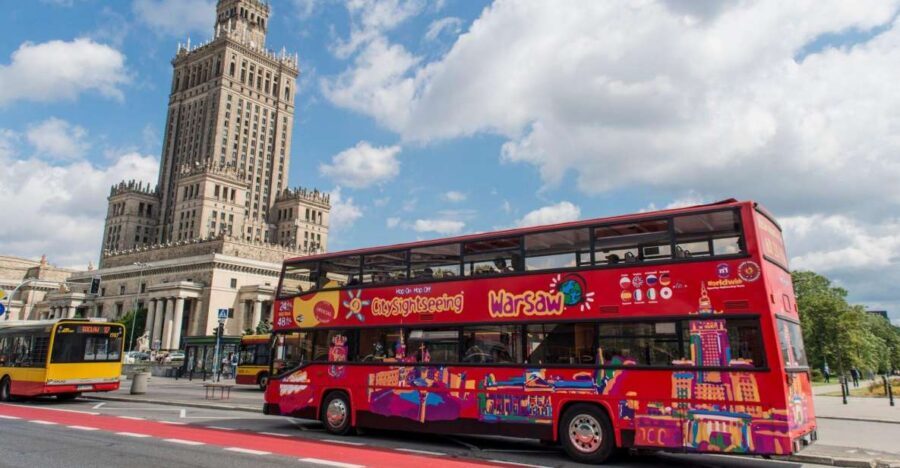
Warsaw opens up fast from a bus seat. This hop-on hop-off tour gives you open-top views plus 11-language audio so you can understand what you’re seeing as you roll past the big sights. One thing to plan around: the bus runs on a stretched timetable, so you can end up waiting between stops if you hop off too often.
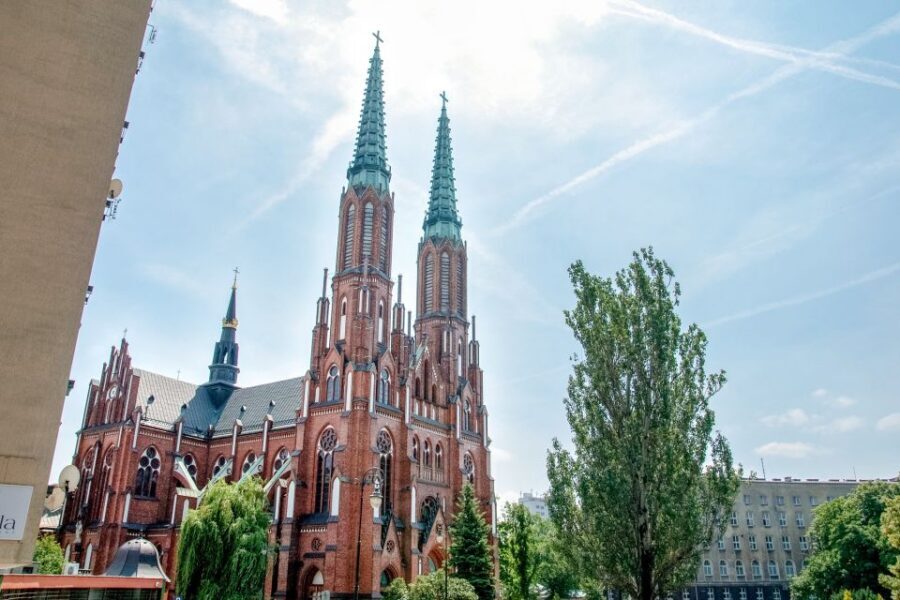
I really like that it starts at the giant Palace of Culture and Science, where you get the best “this is Warsaw” perspective before you start exploring on your own. The routes also angle you toward places like Old Town, Warsaw University Library, and the Lazienki area, which makes this feel more like a guided orientation than a random drive.
The two colors (Red and Blue) make it easy to mix-and-match, but the experience depends on timing and how well the audio is working on the day you go. Keep a backup plan if a speaker crackles or an audio channel won’t start right away, and bring your own headphones just in case.
In This Review
- Key points worth knowing
- Warsaw from the window: why this hop-on bus works
- Meet your starting point: Palace of Culture and Science views
- Red Route: museums, neighborhoods, and Old Town on a 70-minute loop
- Palace of Culture and Science (Dworzec Centralny 12)
- Grzybowski Market Square (Plac Grzybowski 1)
- Old Town (Stare Miasto 05)
- Warsaw University Library (Biblioteka Uniwersytecka 01)
- Copernicus Science Center (Metro Centrum Nauki Kopernik 03)
- National Stadium (Most Świetokrzyski 04)
- Praga (Okrzei 02)
- Multimedia Fountain Park (Bolesc 02)
- Museum of Polish Jews History (Nalewki Muzeum 02)
- Warsaw City Hall (Plac Bankowy 03) and Downtown (Centrum 06)
- Blue Route: Old Town plus the big hitters in art and memorials
- Norblin Factory Museum
- Warsaw Rising Museum
- Old Town (Stare Miasto 05) and Castle Square (Plac Zamkowy 01)
- Chopin Museum (Ordynacka 01)
- Zacheta Gallery (Zacheta 01) and National Museum (Foksal 01)
- Three Crosses Square (Plac Trzech Krzyzy 03)
- Lazienki Royal Park (Lazienki Krolewski 01)
- Constitution Square (Plac Konstytucji 02) and Downtown (Centrum 06)
- Frequency and wait times: the part that decides your day
- Audio guide and headphones: helpful, but test it early
- Vouchers, boarding, and the small things that save time
- Where the value shows up: $41 and what you really get
- Who this tour is best for (and who should skip it)
- Should you book this Warsaw hop-on hop-off bus?
- FAQ
- How long is the Warsaw hop-on hop-off bus tour?
- Can I start and end the tour at any stop?
- Are tickets to attractions included?
- Is the audio guide included, and how many languages are offered?
- What are the main routes and where do they go?
- How often do buses run on each route?
- Where is the meeting point?
- What rules should I follow on the bus?
Key points worth knowing
- Open-top panoramic bus with city-wide sightlines and a simple hop-on plan
- Two routes with 20+ stops, and multiple shared stops so you can change strategies
- Audio guide in 11 languages with headphones included
- Major museum stops like Warsaw Rising Museum and the National Museum
- Longer waits are possible because the bus frequency isn’t super tight
Warsaw from the window: why this hop-on bus works
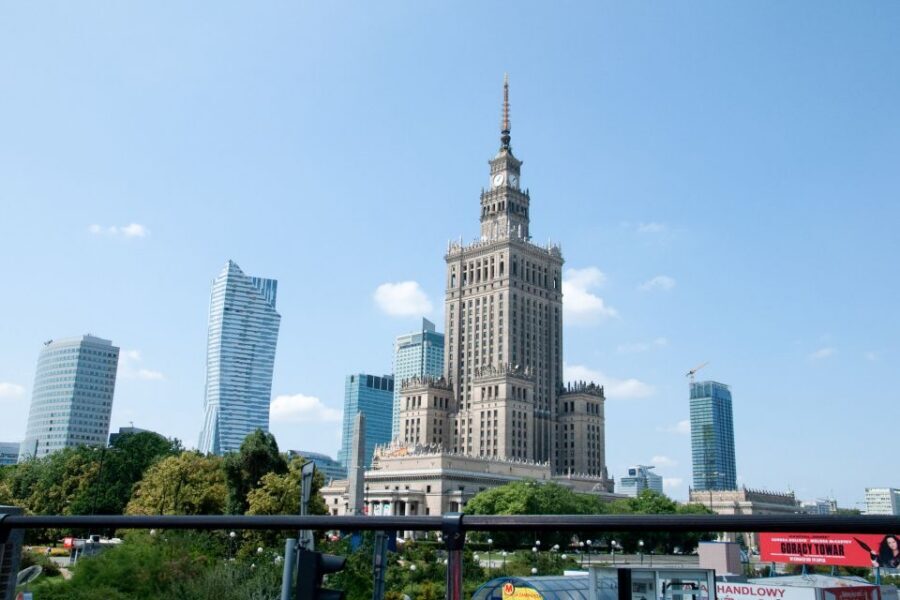
Warsaw can feel big on day one. This tour helps because you don’t have to master transit, map apps, or street finding. You ride, listen, and then choose when to get off for walking time and photos.
I like that the bus is built for sightseeing: you see a lot without committing to one long museum day. You also get the kind of “story in motion” effect that’s harder to recreate with a single guided walking tour.
The main drawback is also simple: when the bus interval is wide, your freedom shrinks a bit. This is still a great overview, but you’ll get the best day if you treat it like a rolling sampler, not a stop-by-stop taxi.
Other Warsaw bus and coach tours



Meet your starting point: Palace of Culture and Science views
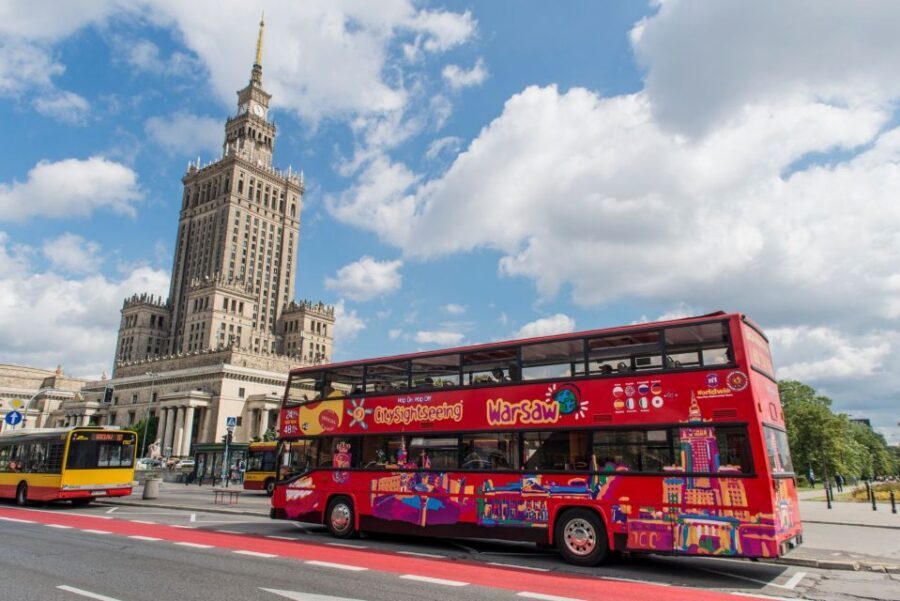
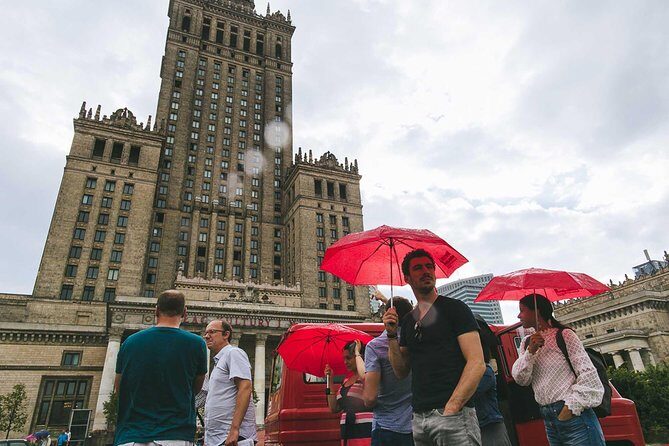
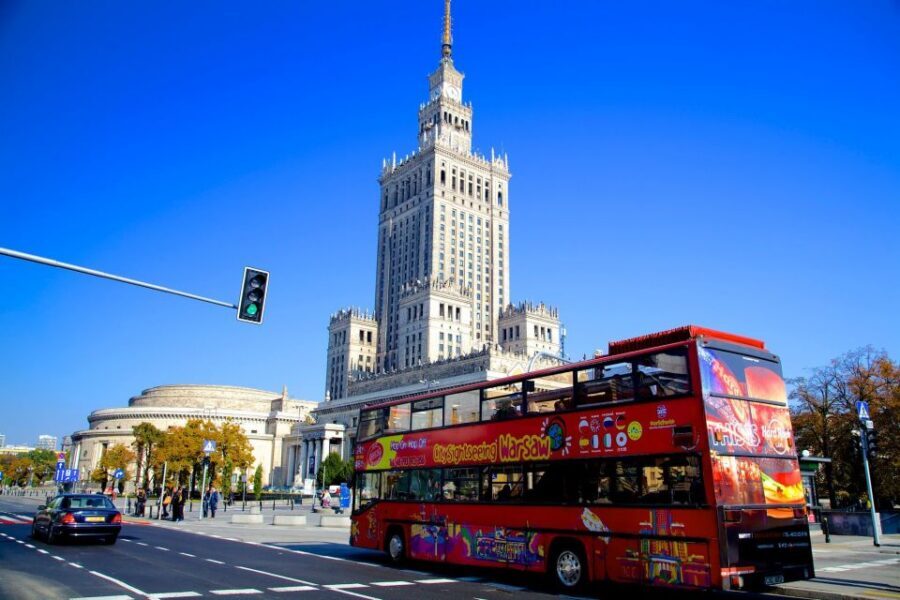
The tour starts at the Palace of Culture and Science at Dworzec Centralny 12. It’s the kind of landmark that instantly gives you scale, and it’s also a logical hub if you’re new to the city.
Before heading out, you can enjoy views from the 30th floor. Even if you don’t plan to do every museum, this first moment matters because it sets your mental map. From up high, you can spot where the historic core sits relative to newer districts.
This is also a helpful stop if you want to start late morning. You can jump on at the start, listen to the audio on the first leg, and then decide how much walking you want to do when the route reaches the most central areas.
Red Route: museums, neighborhoods, and Old Town on a 70-minute loop
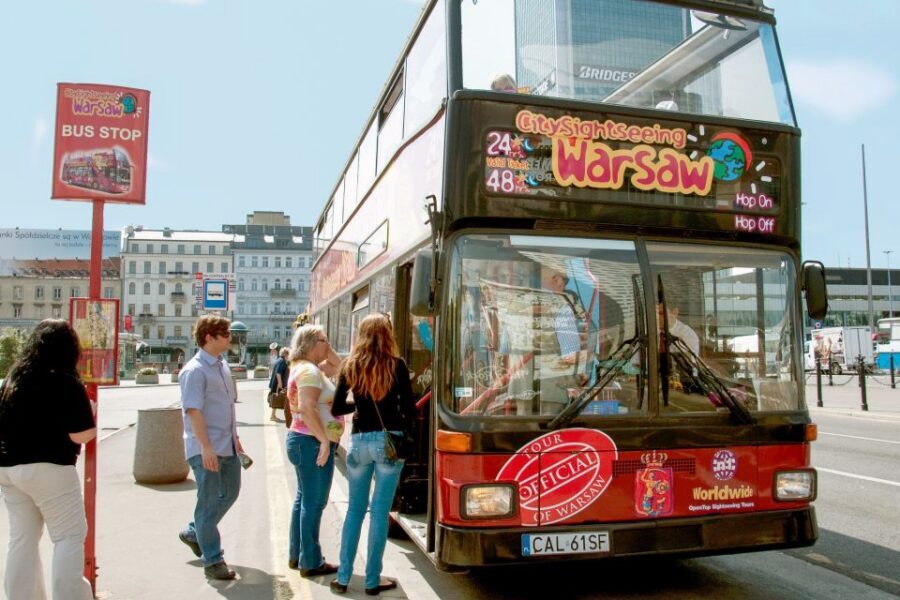
The Red Route runs for about 70 minutes per full pass. It covers a strong mix of classic sights and “Warsaw beyond postcard photos,” including several stops where you can get off for walking and then return later.
Palace of Culture and Science (Dworzec Centralny 12)
Start here or rejoin here. If you’re short on time, doing the Red Route first can help you decide what you want to revisit later on foot.
Grzybowski Market Square (Plac Grzybowski 1)
This stop puts you in an active central area. It’s a good get-off point if you want a break from buses and a chance to simply watch local life for a while.
Other city tours we've reviewed in Warsaw

Old Town (Stare Miasto 05)
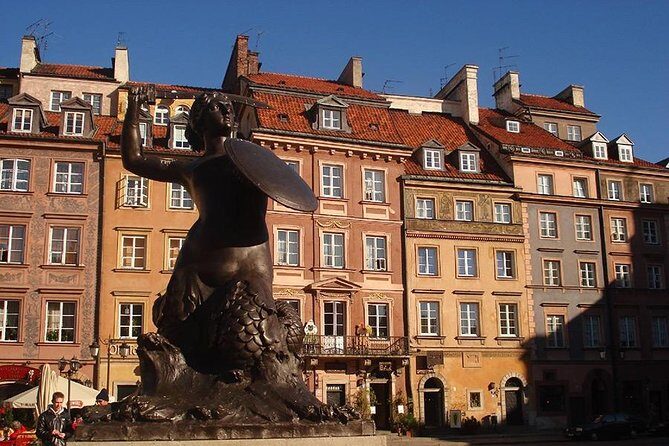
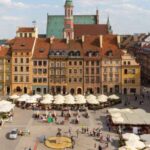
Old Town is one of the best payoff stops. You’ll get that historic center atmosphere, and you can spend time wandering streets and viewpoints without rushing. The bus is a practical way to reach it if your day includes both history and modern city blocks.
Consideration: Old Town can be busy, so plan your walk time earlier rather than right at peak crowds.
Warsaw University Library (Biblioteka Uniwersytecka 01)
This is a modern landmark in the mix. It’s a smart stop if you want Warsaw to feel like more than just the Old Town story.
Copernicus Science Center (Metro Centrum Nauki Kopernik 03)
This is the stop that’s especially useful if you’re traveling with kids or you want something lighter than pure history. It’s an easy “get off and do a timed visit” kind of stop.
National Stadium (Most Świetokrzyski 04)
You’ll see the stadium area, which is great for photos and for understanding how far the city stretches beyond the historic core.
Praga (Okrzei 02)
Praga is a different mood. This stop helps you compare Warsaw’s sides instead of only staying in the most famous zone.
Multimedia Fountain Park (Bolesc 02)
It’s a named focal point in the route. If you’re going near evening hours, you might catch more going on, but you should still treat this as a “check it out in person” stop rather than something you can guarantee from the bus.
Museum of Polish Jews History (Nalewki Muzeum 02)
This is a strong history stop and a respectful one. If you’re the type who likes to slow down for context, plan longer here than you think you’ll need.
Warsaw City Hall (Plac Bankowy 03) and Downtown (Centrum 06)
These stops make it easy to re-center. Downtown is your practical “I’ll regroup here” option if you’re bouncing between routes.
Blue Route: Old Town plus the big hitters in art and memorials
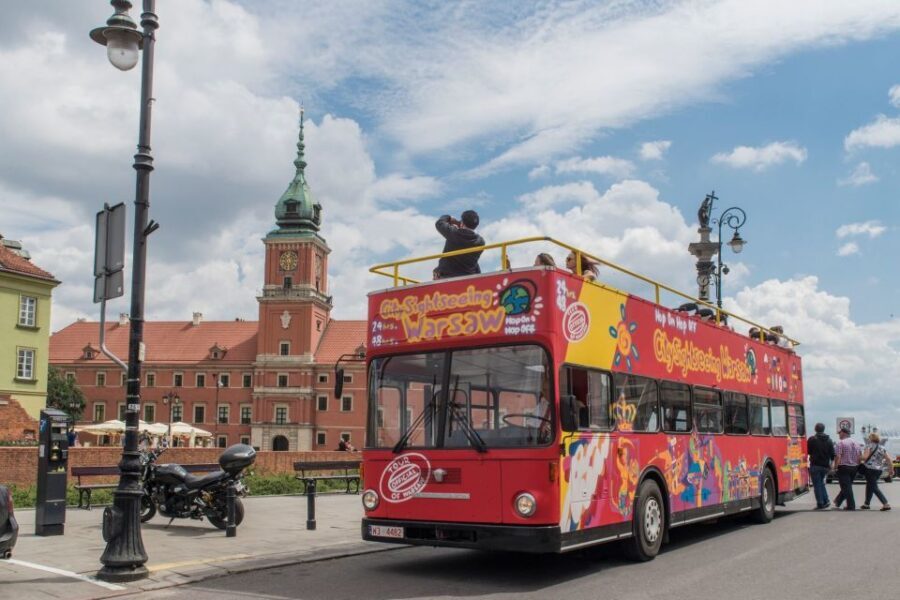
The Blue Route is about 60 minutes per full pass. It’s the more museum-forward route, with stops that connect well if you want a compact day of culture without planning every minute in advance.
Norblin Factory Museum
This is a stop that signals something different from the classic landmarks. If you like places that show the city’s evolution through a museum lens, it’s worth using as your first or second get-off.
Warsaw Rising Museum
This museum is described as having more than 1,000 exhibits. It’s the kind of place where audio or guided reading helps you make sense of what you see, so if you care about history and personal stories, give it time rather than just a quick look.
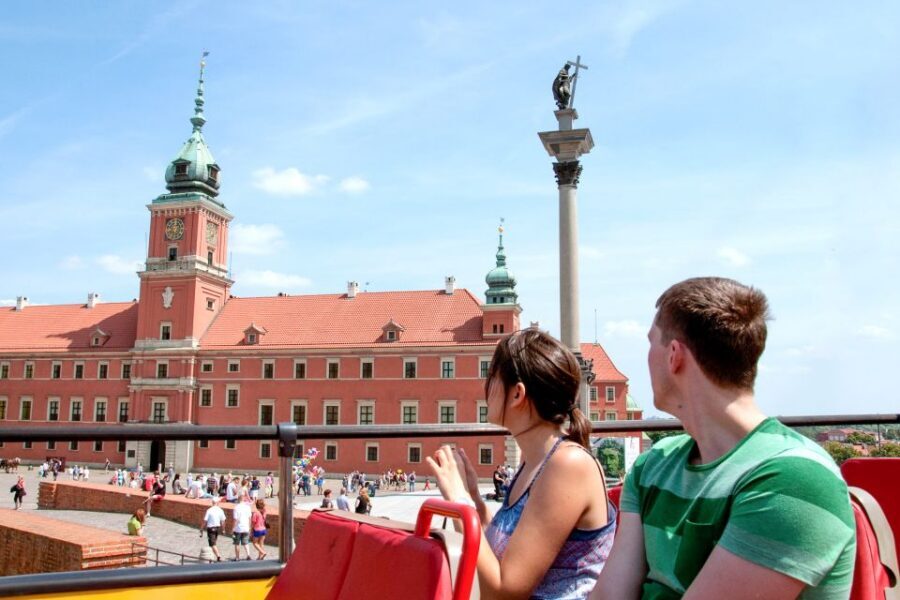
Old Town (Stare Miasto 05) and Castle Square (Plac Zamkowy 01)
The Blue Route lines you up for Old Town again, plus Castle Square. This is the route pattern that works well if you want the historic core as your walk centerpiece and the rest of the day as flexible add-ons.
Chopin Museum (Ordynacka 01)
A music-focused stop is a welcome change if you’ve already hit a couple history points. Even if you don’t go inside, the stop helps you shape a day around Polish cultural icons.
Zacheta Gallery (Zacheta 01) and National Museum (Foksal 01)
The National Museum stop is a big one: it’s described as containing over 400 works by Poland’s greatest artists. If you want art that feels central to the country’s story, this is the stop to prioritize.
Zacheta Gallery gives you another art option without making your day strictly museum-heavy.
Three Crosses Square (Plac Trzech Krzyzy 03)
This square is a recognizable landmark area. It’s a good “photo and orientation” stop, especially if you want a break from interiors.
Lazienki Royal Park (Lazienki Krolewski 01)
Lazienki is highlighted for its palace architecture. This stop helps you shift from urban squares to a calmer, park-and-palace feel, which is a great contrast after you spend time in dense historic areas.
Constitution Square (Plac Konstytucji 02) and Downtown (Centrum 06)
These stops bring you back into the city’s main flow. They’re useful if you want to end your day near a central area where getting dinner or a taxi is simpler.
Frequency and wait times: the part that decides your day
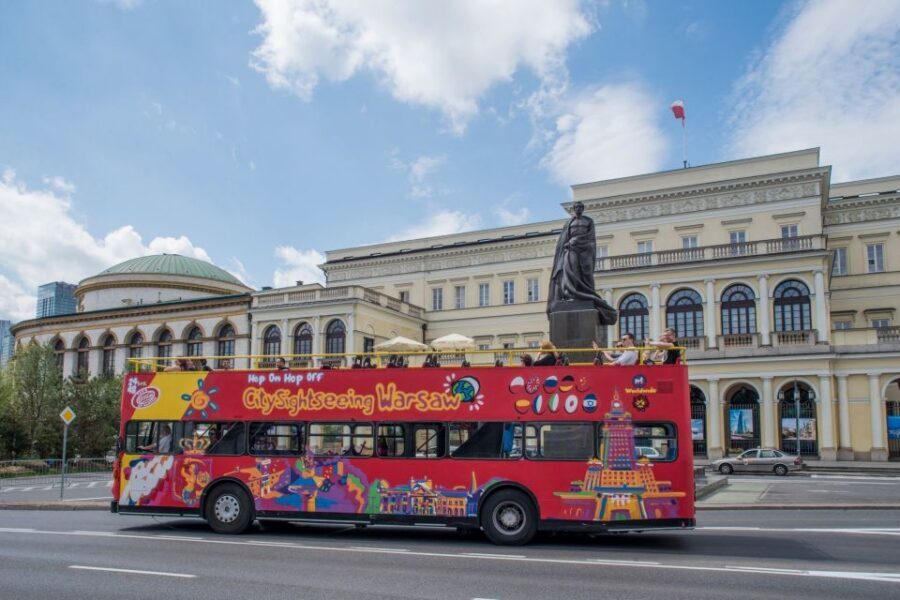
Here’s the practical truth: this tour is easiest when you’re flexible. Bus intervals change by time of day, and traffic can also shift things.
For the Blue Route, buses run every 160 minutes between 10:30am and 12:40pm, then every 190 minutes between 12:40pm and 3:50pm. The Blue Route ride is about 60 minutes.
For the Red Route, buses run every 160 minutes between 10am and 12:40pm, then every 190 minutes between 12:40pm and 3:50pm. The Red Route ride is about 70 minutes.
What I recommend: choose fewer “deep” get-offs and cluster your walking time. For example, if you want Old Town and a museum, don’t get off at every single major stop. Use the bus as your transfer tool, not as a constant shuttle.
If you’re hoping for frequent hops, you’ll be happier starting early and planning your key museum stop so you’re not stuck waiting in the middle of peak time.
Audio guide and headphones: helpful, but test it early
The audio guide is included with headphones, and it covers 11 languages: Spanish, English, French, German, Italian, Japanese, Polish, Russian, Hebrew, and Chinese.
This is a real advantage because Warsaw’s landmarks have context, and the bus route keeps you moving while you learn. I especially like audio on the first pass, because it helps you recognize what you’re seeing when you step off later.
That said, some days don’t run perfectly. Sound can fail on the early segment, some headphone ports may not work, and the narration timing can be a bit off. One smart move: test your headphones right away, and have a plan to swap if something’s not working.
Also keep an eye on stop awareness. Some people found it hard to follow which stop number they were at because the recording didn’t clearly label them. If you’re counting stops, make a quick note when you get on: route color and the stop you boarded.
Vouchers, boarding, and the small things that save time
You can start and end at any allocated stops, so you don’t have to commit to a single boarding time at the first location.
Mobile and printed paper vouchers are both accepted. Vouchers can also be accepted at any of the tour stops, not just the initial pickup point. And if you’re using a voucher from booking, you should use it within 12 months of the selected travel date.
A simple tip: have your voucher ready before the bus arrives. When boarding is busy, being ready avoids delays at the door and helps you actually leave on time.
Rules are also straightforward: no pets and no smoking. If you’re traveling with small kids or you want a quieter ride, it’s wise to keep your group organized before you board.
Where the value shows up: $41 and what you really get
At about $41 per person, the value depends on how you use the pass. If you treat it like “one route, one day, then done,” you might feel like it’s pricey. If you use it to string together multiple areas over 24, 48, or 72 hours, it becomes a cost-effective way to cover a lot of Warsaw.
The real value comes from three things:
- You get orientation quickly from a vehicle with strong sightlines.
- You can reach major museums and neighborhoods without piecing together transit.
- You can pace your day without burning energy on navigation.
This is why it’s a solid option if you have limited time and want to avoid decision fatigue. The bus is also handy when weather changes, since riders have found it useful when rain starts.
For me, the best use case is a short visit where you want to decide what deserves your best walking hours. Do the full loop, learn the story from the audio, then go back on foot for one or two places you truly care about.
Who this tour is best for (and who should skip it)
This tour is a good fit if you want an easy overview and you like structure without strict schedules. It’s especially useful if you’re traveling with kids (science and family-friendly stops are part of the route plan) or if you’re mixing history, art, and city neighborhoods.
If you’re the kind of traveler who loves spontaneous wandering with no plan, the low bus frequency could feel limiting. In that case, you might prefer a walking-focused day with local transit. Still, even then, the bus can help you bridge across neighborhoods when you’re tired.
Also consider your tolerance for audio tech issues. Most of the time it’s helpful, but testing headphones and being ready to adjust makes the ride smoother.
Should you book this Warsaw hop-on hop-off bus?

Book it if you want a fast orientation and two flexible routes that hit major landmarks like Old Town, major museums, and the Lazienki area. It’s also a smart choice when you’re short on time and want to cover lots of ground without constantly checking transit.
Skip or rethink it if you hate waiting around for transportation. The interval schedule means you’ll need to plan your key stops and avoid trying to hop off at every single location. If you’re someone who expects frequent arrivals every 15–20 minutes, this won’t feel like that.
If you do book, use a simple strategy: pick one or two “main” get-offs per route pass, ride to reposition, and then return later for a second look. You’ll get the best Warsaw experience with the least stress.
FAQ
How long is the Warsaw hop-on hop-off bus tour?
The tour duration is listed as 1 to 3 days. Each full loop is about 60 minutes on the Blue Route and about 70 minutes on the Red Route.
Can I start and end the tour at any stop?
Yes. You can start and end at any allocated stop, and vouchers are accepted at any tour stop along the routes.
Are tickets to attractions included?
No. Entry tickets to attractions are not included.
Is the audio guide included, and how many languages are offered?
Yes. The audio guide commentary is included with headphones and is available in 11 languages.
What are the main routes and where do they go?
There are two routes: the Red Route and the Blue Route, each with more than 20 stops. They both include stops such as Palace of Culture and Science and Old Town.
How often do buses run on each route?
The schedule changes by time of day. For the Blue Route, buses run every 160 minutes from 10:30am to 12:40pm, then every 190 minutes from 12:40pm to 3:50pm. For the Red Route, buses run every 160 minutes from 10am to 12:40pm, then every 190 minutes from 12:40pm to 3:50pm.
Where is the meeting point?
Stop 1 is Palace of Culture and Science at Dworzec Centralny 12.
What rules should I follow on the bus?
Pets are not allowed, and smoking is not allowed.