REVIEW · WARSAW
Communist Warsaw: private tour by retro minibus with hotel pickup
Book on Viator →Operated by Warsaw Behind the Scenes · Bookable on Viator
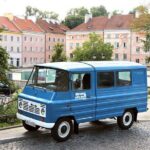
Communism in Warsaw looks better from a bus. This private 3-hour ride uses a retro minibus with hotel pickup, so you can focus on what you’re seeing instead of constant walking and navigation. I love the way you get a tight, guided storyline across the key parts of postwar Warsaw, all in one smooth outing.
What really makes it work is the guide. On my tour, Tom laid it out in clear, human terms, tying communist-era decisions to the buildings and even the statues you pass. That kind of attention is easier when it’s just your group and you’re driving between stops instead of spreading out.
One thing to plan for: these classic minibuses are not set up like modern cars, with no air conditioning and sometimes no seat belts. If warm weather bothers you, or you’re sensitive to vehicle comfort, bring something light to layer and be ready for a slower, older-school ride.
In This Review
- Key things to know before you go
- The big idea: why communist Warsaw makes sense on wheels
- Price and value: what you’re paying for at $134.43
- Hotel pickup that actually affects your timing
- Palace of Culture and Science: the Soviet “gift” you can’t ignore
- Muranów: planned reconstruction as a social experiment
- The Old Town area pass on the way to Praga
- Praga Polnoc: where decline became survival
- Śródmieście: socialist realism meets the government machine
- The retro minibus experience: fun ride, plan for the car details
- Who this tour is best for
- Practical planning tips so the day feels easy
- Should you book Communist Warsaw with retro minibus pickup?
Key things to know before you go
- Private group focus with professional English guidance, so you can ask follow-ups
- Retro minibus transfers between stops, with walking segments at each location
- Palace of Culture and Science without the terrace stop, even though it’s a major landmark
- Muranów’s planned socialist neighborhood built on wartime ruins, explained in plain terms
- Praga Polnoc’s everyday survival economy: currency exchange, Western music trading, and missing-goods searches
- Śródmieście’s mix of prewar modernism and socialist realism, plus a surprising anecdote about a party HQ
The big idea: why communist Warsaw makes sense on wheels
Warsaw’s communist past can feel like random monuments if you’re on your own. This tour gives it a shape you can hold in your head. You start at the most famous landmark, then move through neighborhoods that show different answers to the same question: how do you rebuild society after war?
The format is also smart. Each stop includes short walking, but the minibus handles the in-between sections. With this kind of city layout, that matters. You’ll spend time learning instead of timing traffic lights or figuring out which streets cut through fastest.
And because it’s private, your guide isn’t splitting attention across strangers. That’s not a small thing. When you’re dealing with political history, details are what keep it from turning into slogans. Tom’s approach, for example, tied the visible parts of the city to the ideas behind them, so the streets feel less like a museum and more like evidence.
Other private tours in Warsaw

Price and value: what you’re paying for at $134.43
At $134.43 per person, this isn’t a bargain-tour price. But it does include several cost-heavy items that add up fast if you price them separately: hotel pickup and drop-off, transportation in a retro minibus, and a professional English-speaking local guide.
You also get admission covered for the main stops, with tickets marked free for the time you’re there. That means you’re not stuck at each location checking fees and working around your budget.
Another value point is time. The tour runs about 3 hours, and that includes the transfer time linked to hotel pickup. If you’re staying a bit far from the center, you may need to plan around that so you don’t feel rushed. (More on where meeting in the city center can help in practical terms below.)
Hotel pickup that actually affects your timing
Pickup is included, which is a win if you hate the hunt for meeting points. Just know how the clock works. Transfer from and to your hotel counts into the total tour time. So if your hotel is out past where most people base themselves, you might spend more of your 3 hours on driving than you’d like.
There’s a practical workaround: if your pickup location isn’t in the operator’s selection box, you can send your address, but also consider meeting in the city center if it saves time. That’s especially helpful if you want the guide’s stories at full volume rather than watching the city blur past on the way in.
Palace of Culture and Science: the Soviet “gift” you can’t ignore
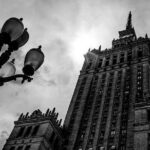
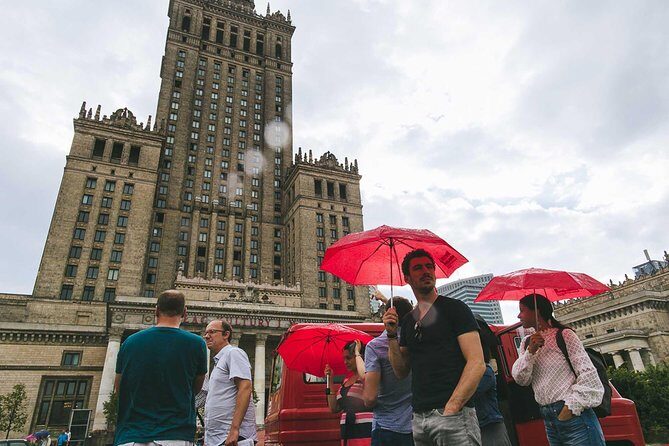
Your first stop is the Palace of Culture and Science, Warsaw’s most recognizable communist landmark. It’s also controversial, even today. Built between 1952 and 1955 as a Soviet-era “gift,” the building still dominates the skyline and keeps sparking debate about what it represents.
The tour is timed to keep things moving: you spend about 20 minutes at this stop, and it’s a good length for getting context without feeling like you’re stuck waiting for views. One important detail: you do not visit the terrace at the top. If you were hoping for that skyline look, you’ll need a different plan for views.
What you’ll get instead is the interpretive angle. Tom’s style on this tour is to connect why the building was put where it was, what Soviet influence meant in daily life, and why locals can hold such mixed feelings about the same structure. Even if you’ve seen photos, standing near it with commentary helps you understand why it became such a symbol.
Tip for your comfort: dress for the weather. You’ll be outside around the landmark area, and you’ll want shoes that don’t punish you if the ground is uneven.
Muranów: planned reconstruction as a social experiment
Next comes Muranów, a residential district that grew out of postwar reconstruction. Before World War II, Warsaw had a more traditional capitalist European layout with dense tenements. After 1945, communist authorities and modernist architects saw reconstruction as a way to reshape society.
Here’s the key idea you’ll learn on the ground: Muranów wasn’t just about rebuilding buildings. It was about creating a model neighborhood on wartime ruins, with green residential planning as part of that promise.
You’ll have around 20 minutes here, which works well because the point isn’t to do a long walking tour. The time is designed for you to grasp the planning concept, notice the style differences, and then move on before you lose the thread.
What can feel tricky is that “model” neighborhoods sound tidy in theory but come with political baggage in real life. A good guide helps you hold both truths at once: the physical rebuild effort and the social control angle that often sat underneath it.
Other Retro Fiat city tours in Warsaw


The Old Town area pass on the way to Praga
After Muranów, you’ll pass through the Old Town area on the way to Praga. The story connects the surface of Warsaw with what sits below it, and that’s where this tour scores points.
You’ll hear how the reconstruction of Old Town was paired with a major traffic route built with help from Soviet engineers linked to the Moscow metro project. It’s a detail that sounds technical, but it’s actually a clue: even when Warsaw looked “historic,” the rebuilding carried modern transport logic stamped by Soviet expertise.
You won’t have long stop time here. This is more of a guided transition, letting you understand why the city looks the way it does as you move from planned housing to more troubled districts.
Praga Polnoc: where decline became survival
Praga Polnoc is where communist Warsaw starts to feel less like monuments and more like lived reality. This district was largely neglected by state investment, and the result was a rise in informal and illegal activity.
You’ll spend about 30 minutes in this area, and the guide’s job is to explain what those stories meant without turning them into sensational trivia. The tour focuses on practical survival behaviors people used when goods and currency systems were distorted. You’ll hear about residents exchanging foreign currency, trading Western music, and searching for items that weren’t available through normal channels.
This is one of the stops I’d call emotionally balanced. It’s not only about suffering, and it’s not only about policy failures either. It shows how ordinary people adapted. That’s the part that sticks after you get back on the minibus: survival creativity under constraint.
Comfort note: expect more time on foot than in a pure drive-by. Wear shoes you trust.
Śródmieście: socialist realism meets the government machine
The tour ends in Śródmieście, the government district. This is the part of Warsaw where you get a front-row view of prewar modernist architecture alongside monumental socialist realism. The contrast is part of the message: the city is physically showing you two eras arguing with each other.
You’ll have about 45 minutes here, so it’s your longest stop. That extra time helps because the district is more complex to read. The guide can point out why certain styles got favored, how official architecture was meant to project power, and how political messaging became stone.
There’s also an anecdote that really helps the story land. The leader of communist Poland reportedly refused to move into the new party headquarters, saying it looked more like a capitalist bank than the office of a workers’ party. It’s a small story, but it reveals something big: even the people building the system could feel uneasy about how it looked.
If you like your history with a sense of irony and human inconsistency, this is the stop that delivers.
The retro minibus experience: fun ride, plan for the car details
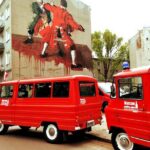
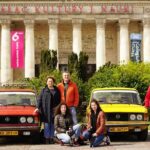
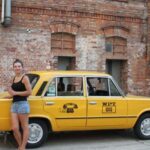
The transport is part of the point. You’re in a classic vintage minibus designed for transfers between the city’s key points, not for a comfortable all-day city hop.
A few facts you should know so you can dress and plan right:
- Classic vehicles are not equipped with air conditioning.
- Some minibuses may not have seat belts. This is permitted for historic vehicles.
- Heating is available for winter season.
- There’s a small walking segment at each stop, so comfortable clothing and footwear matter.
Each minibus fits up to 8 passengers, and the operator has a fleet of 5 minibuses available. That means even when dates are busy, you’re less likely to feel packed in like a standard group bus.
The upside? The ride stays intimate. The downside? You’re in a historic vehicle. Treat it like you would a museum exhibit on wheels: charming, older, and best enjoyed with the right expectations.
Who this tour is best for
I’d point you toward this experience if you want communist Warsaw explained through real streets and architecture, not just dates and names. It’s also a smart choice if you’d rather sit with a guide for 3 hours than try to self-tour multiple districts while reading everything off your phone.
It’s especially good for:
- First-timers who want an organized overview of several neighborhoods
- People who like architecture and public symbols
- Travelers who value comfort and convenience (hotel pickup and drop-off help a lot)
- Families with kids over 150 cm who can fit the standard setup
For kids under 150 cm, you’ll need to contact the operator ahead to check booster seat availability, since boosters are mandatory under Polish law.
Practical planning tips so the day feels easy
A few small choices make a big difference with this format.
Wear shoes you can walk in for short stretches. Each stop has walking, and the tour is designed with transfers in mind, not long hikes.
Bring a light layer. Even with heating available in winter, you’re going to be in and out of the minibus, and retro vehicles can swing temperature fast.
If you’re staying far from the center, think about pickup timing. Since transfer counts into the tour’s total time, a center meeting point can leave you with more story time at the stops.
Finally, go in ready to accept that communist history isn’t just one theme. Warsaw shows more than one strategy: Soviet influence, planned housing, neglected neighborhoods, and government architecture. This tour keeps those threads connected.
Should you book Communist Warsaw with retro minibus pickup?
Book it if you want a clear, guided path through communist-era Warsaw without doing the heavy lifting of self-planning across multiple districts. The private setup, Tom’s storytelling style, and the mix of symbolic landmarks with everyday survival details make it feel like the city is explaining itself.
Skip or rethink it only if you’re very sensitive to comfort in older vehicles (no air conditioning, sometimes no seat belts) or if you specifically want to visit a high terrace at the Palace of Culture and Science. This tour doesn’t include the terrace, so you’ll need a separate add-on if that view is your goal.
If your priority is understanding how communism shaped neighborhoods, buildings, and daily life in Warsaw, this is a strong, practical choice.