REVIEW · WARSAW
Retro Fiat Self-Drive Undisovered Tour in Warsaw
Book on Viator →Operated by WPT1313 Warsaw Private Tours · Bookable on Viator
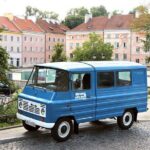
Warsaw is a city best seen with your feet, but this tour adds something fun. You drive a classic Fiat while a guide handles the navigation, so you can focus on the stories and the sights instead of staring at your phone. I especially like the fast, no-stress pace and the live on-board commentary that turns each stop into a quick lesson.
I also like the mix of recognizable landmarks and places you might never spot on your own, like Jazdów hidden in a park and the rooftop garden at the University of Warsaw Library. The main thing to consider: you need to be comfortable with self-driving (valid license) and meeting the tour’s moderate fitness expectation while you follow the route for the full 2 hours 30 minutes.
In This Review
- Key highlights worth caring about
- A classic Fiat plus a guide: the easiest way to cover Warsaw fast
- Pałac Kultury i Nauki: starting with Warsaw’s most famous symbol
- Brama Straceń: the prison gate tied to the 1830 uprising
- Osiedle Przyjazn and Stare Bielany: housing districts that tell human stories
- Praga-Północ and Brzeska Street: prewar architecture and street art
- Jazdów in the park: the wooden neighborhood you would miss
- The University of Warsaw Library rooftop garden and panorama
- Price and value: what $59.13 buys you (and why it can make sense)
- Who this Retro Fiat tour fits best
- Should you book this Retro Fiat self-drive tour?
- FAQ
- How long is the Retro Fiat self-drive tour?
- What is the price per person?
- Is the tour guided, or do I drive on my own?
- Where does the tour start?
- What language is the tour offered in?
- Do I need a driver’s license?
- Is there a security deposit?
- Is there alcohol included?
- Are admission tickets required at the stops?
- What is the cancellation window?
Key highlights worth caring about

- A guide joins you so you do not get lost while you concentrate on the drive
- Classic Fiat self-drive turns sightseeing into an actual activity, not just photo stops
- Short, well-timed stops keep the tour moving while covering multiple neighborhoods
- Free entry at each listed stop means you only pay for your tour price
- Vodka shot + emailed souvenir photos add a memorable wrap-up
A classic Fiat plus a guide: the easiest way to cover Warsaw fast
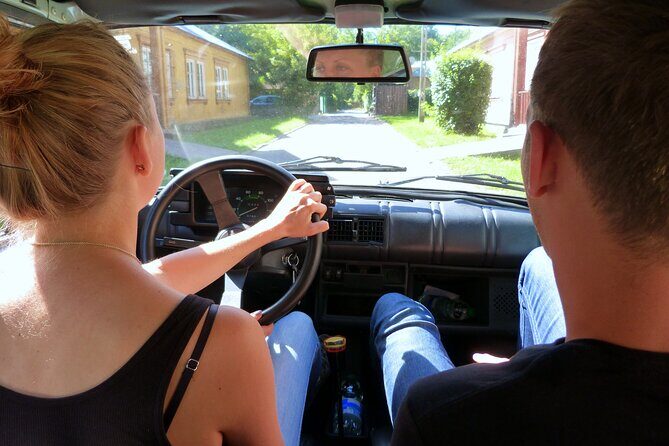
This is a self-drive tour, but it is not a do-it-yourself scavenger hunt. A professional guide rides along and helps you navigate, so you avoid the usual Warsaw challenge: figuring out turns and timing while also trying to read history in real time. The result is a tour that feels quick and light, but still guided.
The car factor matters. Driving a classic Fiat makes the experience feel playful without sacrificing structure. And the live commentary helps you understand what you are seeing instead of just passing it. Guides you may meet on similar runs include Hania, Martin, and Pavel, and they are described as friendly and engaging—like the tour is built for real conversation, not recitation.
One more practical note: this works best if you are ready to keep moving. The itinerary is built from multiple short stops. If you want slow wandering and long museum time, this format may feel tight.
Other Retro Fiat city tours in Warsaw
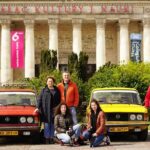

Pałac Kultury i Nauki: starting with Warsaw’s most famous symbol
The meeting point is right at the Palace of Culture and Science area, by the Warsaw Tourist Information at Pałac Kultury i Nauki, plac Defilad 1. You start with an easy landmark that most first-timers can find, and that helps the whole tour click quickly.
Stop 1 is at Palace of Culture and Science, a hulking symbol of Warsaw’s communist era. It is also the city’s most recognizable building, so it is a perfect first anchor. The stop is about 10 minutes with free admission, which means you are mostly using it for orientation: get your bearings, learn what the building represents, then roll on to the older and more specific stories that follow.
Why this works: communist-era Warsaw is often hard to place when you arrive cold. Starting here gives you a framework. You understand later references to power, influence, and how different regimes shaped the city.
Brama Straceń: the prison gate tied to the 1830 uprising
Next you head to Brama Straceń, part of the Warsaw Citadel area. This is a 19th-century fortress with a heavy purpose. It was built after the suppression of the 1830 November Uprising to strengthen imperial Russian control, and it served as a prison into the late 1930s.
The tour gives you about 20 minutes here. That is enough time to appreciate the scale and the gravity without turning the stop into a full historical seminar. The key value is the connection: you learn how one period of conflict leads to infrastructure meant to control the city for decades.
If you are the type who likes your history to have names, dates, and consequences, this stop is a payoff. It is not just a pretty structure; it is a reminder that Warsaw’s layers were built through real pressure and real punishment.
Osiedle Przyjazn and Stare Bielany: housing districts that tell human stories
After the citadel, the tour shifts from major power symbols to everyday life. Stop 3 is Osiedle Przyjazn, described as a wooden housing district where the constructors of the Palace of Culture and Science used to live. Think of it as the workers’ side of the story. A communist-era landmark did not appear out of nowhere; people built it, and they lived somewhere too.
You get about 30 minutes here, and admission is free. Even if you are only seeing the outside and street-level details, the takeaway is strong: Warsaw’s history is not only in official monuments. It is also in practical neighborhoods that housed the people who made big projects happen.
Then you move to Stop 4: Stare Bielany, Warsaw, an interwar-era housing district. The highlights include gas lanterns (noted as the last ones in the city) and some modernist architecture nearby. The stop is also about 30 minutes, free admission again.
What I find useful about this pairing: it shows a timeline without you having to do the work. Wooden builder housing links to a major state project. Interwar housing with gas lanterns and modernist touches shows what Warsaw looked like as the city evolved in the years between larger political storms.
Praga-Północ and Brzeska Street: prewar architecture and street art
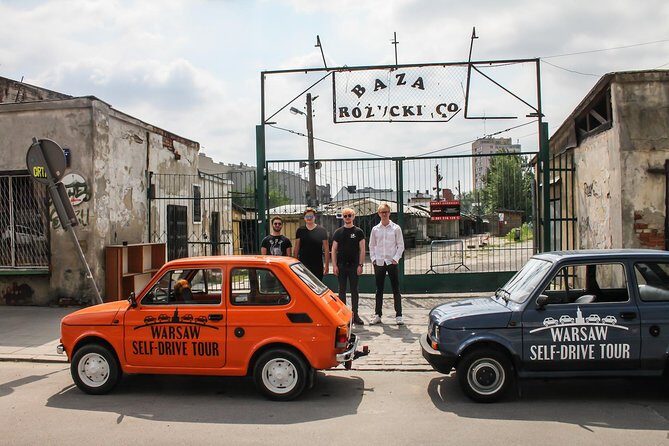
Stop 5 is Praga Polnoc, an “exotic” side of Warsaw in the sense that it is different in character from the core areas many visitors first chase. You are given about 20 minutes, with free admission.
This part of the tour points you toward specifics you can actually spot:
- prewar architecture you can admire
- street art on Brzeska street
- Różycki’s Bazaar
Why this matters: street art can feel random if you do not know where to look. Here, you get a target (Brzeska street) and a setting (Praga-Północ) that makes it easier to understand why the area feels distinct. Even on a tight schedule, you can capture the visual mood and the local texture.
Also, because you are driving, you see how neighborhoods connect. You get the sense of geography, not just isolated photo stops.




Jazdów in the park: the wooden neighborhood you would miss
Stop 6 is Jazdów, where the tour leans into the “you wouldn’t find this alone” idea. This is a wooden housing area that is hidden in a park. The guide’s role is huge here: without them, it is easy to walk right past it and never realize it is there.
You get about 20 minutes with free admission. That is enough to understand the concept and take in the atmosphere from the right angles, especially since the stop is brief and timed to keep the drive moving.
This is also one of the places where the tour’s “no getting lost” promise really pays off. The value is not just that the route is planned. It is that the planned route includes spots that are naturally hard to discover.
The University of Warsaw Library rooftop garden and panorama
Stop 7 ends with a visual reward: University of Warsaw Library. You get about 10 minutes, and admission is free.
The standout detail is the rooftop garden. If you have not seen a garden on top of a library before, this is a quick chance to change that. The other payoff is the view: you can admire a Warsaw panorama from above.
Even though the stop is short, it is a smart ending. After all the moving, driving, and neighborhood switching, you get a calmer moment and a wider perspective. It helps your brain assemble the pieces of the city you saw earlier.
Price and value: what $59.13 buys you (and why it can make sense)
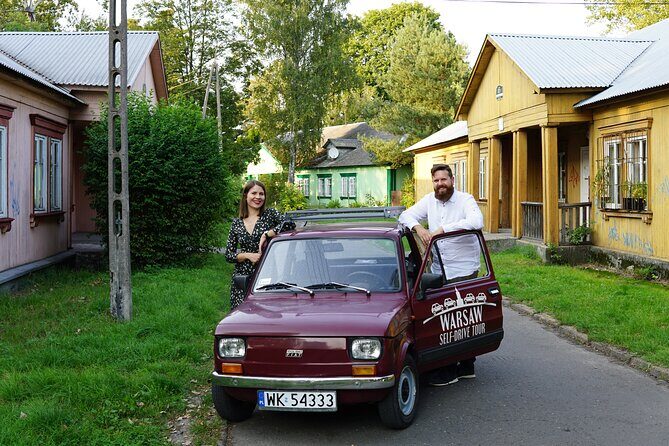
The tour price is $59.13 per person, and it runs about 2 hours 30 minutes. At first glance, it might sound like you are paying mostly for the car. In practice, you are paying for three combined advantages:
1) Time efficiency
Multiple neighborhoods and landmark areas in one guided loop is hard to replicate on your own without spending a lot of energy on route planning.
2) The guide while you drive
You get live commentary and navigation help in one package. That reduces friction and makes the stops feel purposeful, not scattered.
3) Extra touches that extend the memory
After the tour, you get a shot of vodka, and you also receive souvenir photos emailed to you after the experience.
There is also a practical cost side to know. You will need a valid driver’s license, and a security deposit of 500 PLN is required and refunded after the tour. So you are not totally “friction-free” like a walking tour. But for many visitors, the payoff is worth it because you are driving and learning at the same time.
One more small detail that affects value: all listed stops have free admission, so you are not paying separate entry fees during the route.
Who this Retro Fiat tour fits best
This is built for people who want to do something more active than walking. You should book it if you:
- enjoy driving and want an unusual way to see Warsaw
- like history that connects to physical places fast
- prefer short stops with clear guidance rather than long museum time
It also fits pairs and small groups. The tour requires at least 2 people per booking and has a maximum of 15 travelers, so it stays relatively manageable.
A couple considerations before you commit:
- Minimum age is 18, so it is adult-focused.
- You should have moderate physical fitness since you will be making multiple short walks and movements during stops.
- If you do not want to drive, this type of experience is likely not your best match.
Should you book this Retro Fiat self-drive tour?
If you want a Warsaw highlight mix without the stress of navigation, I think this is a strong choice. The self-drive format keeps it fun, and the guide-led narration turns each location into a quick, understandable story—from communist symbolism at the Palace of Culture and Science to the prison history of Brama Straceń, then onward to housing districts and the rooftop view.
Book it if you like moving through a city quickly and you are happy with a guided structure and short stops. Skip it if you want hours of slow exploration, or if driving is a deal-breaker for you.
FAQ
How long is the Retro Fiat self-drive tour?
It runs for about 2 hours 30 minutes.
What is the price per person?
The price is $59.13 per person.
Is the tour guided, or do I drive on my own?
You drive, but a professional guide joins you to help with navigation and provides live commentary on board.
Where does the tour start?
The meeting point is Warsaw Tourist Information at Pałac Kultury i Nauki, plac Defilad 1, 00-901 Warszawa, Poland.
What language is the tour offered in?
The tour is offered in English.
Do I need a driver’s license?
Yes, a valid driver’s license is required.
Is there a security deposit?
Yes. A security deposit of 500 PLN is required and is refunded after the tour.
Is there alcohol included?
Yes, there is a shot of vodka after the tour.
Are admission tickets required at the stops?
The listed stops include free admission.
What is the cancellation window?
Free cancellation is available up to 24 hours in advance for a full refund.