REVIEW · WARSAW
Warsaw: WWII Private Tour by Retro Minibus with Hotel Pickup
Book on GetYourGuide →Operated by Warsaw Behind the Scenes · Bookable on GetYourGuide
Warsaw’s WWII story is close-up and personal. You get expert guide storytelling tied to preserved bullet-marked sites and archival photographs you can match to what stands today. The trade-off is the subject matter is heavy, so plan for an emotionally intense few hours.
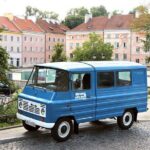
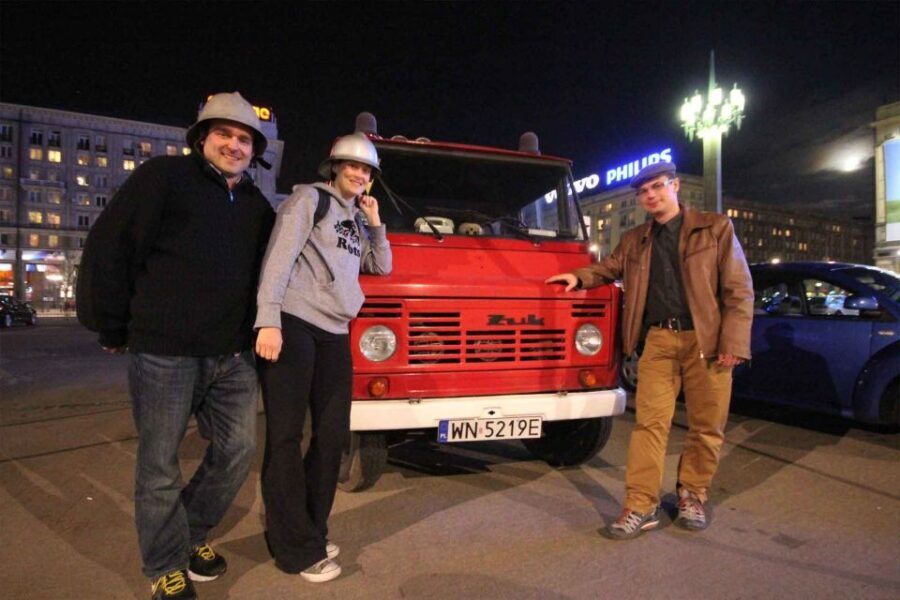
I like that the tour keeps moving without rushing. You ride a retro Żuk minibus, then you walk short stretches between stops, so you actually get time to look, not just pose for a photo and move on.
One more consideration: these vintage vehicles are not built for comfort the way modern cars are. Some don’t have seat belts, there’s no air conditioning, and you’ll be in the weather a bit, so dress and wear good shoes.
In This Review
- Key things that make this tour worth your time
- A private 3-hour route through Warsaw’s WWII fault lines
- How the guide frames 1939: invasion, Soviet occupation, and daily life
- The Ghetto Wall and Waliców Street tenement: history you can stand beside
- The wooden bridge over Chłodna Street: how the ghetto was engineered
- Muranów on wartime rubble: POLIN, the Ghetto Heroes, and remembrance with context
- Soviet crimes in Warsaw: deportations, Katyń, and the monument site
- The Warsaw Uprising of 1944: last independence attempt and deliberate destruction
- Bullet-marked buildings and archival photo matching: why this method works
- The retro Żuk minibus: small-group comfort with real-world trade-offs
- Price and value: what $165 buys you in Warsaw context
- Who should book this WWII private tour
- Practical tips before you go
- Should you book it? My honest take
- FAQ
- How long is the Warsaw WWII private tour?
- Do they pick up from hotels?
- Is the tour private and how big are the minibuses?
- Is this tour suitable for children?
- What’s included in the price?
- Is food or drinks included?
- Is the retro minibus air-conditioned?
Key things that make this tour worth your time
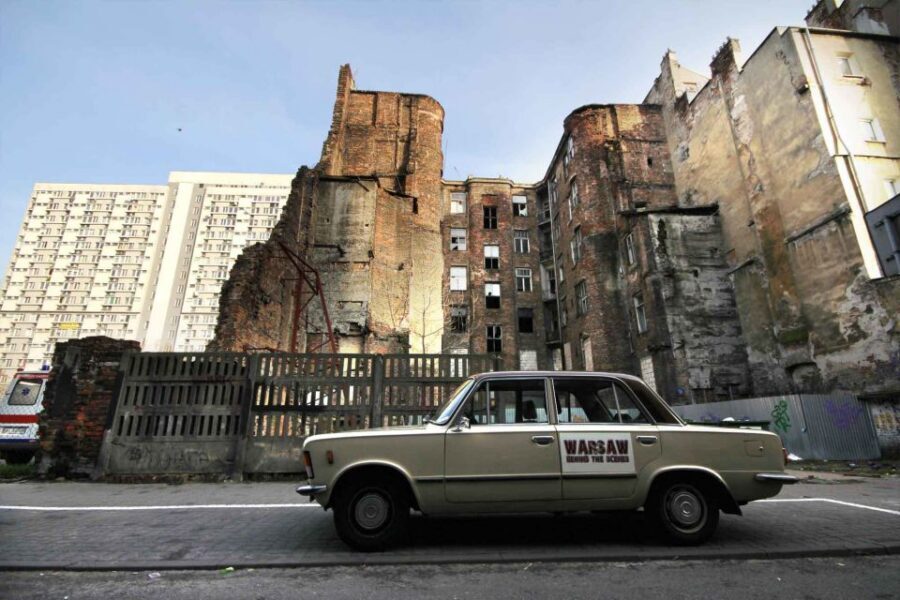
- Retro Żuk minibus transport that turns commute time into part of the atmosphere
- Archival photo comparisons that help you read the city, not just visit points on a map
- A preserved fragment of the Ghetto Wall plus intentionally unrestored buildings like the Waliców Street tenement
- The wooden ghetto bridge over Chłodna Street, built high to work around street traffic
- Muranów district on wartime rubble and remembrance near the Monument to the Ghetto Heroes and POLIN
- A clear through-line from Nazi occupation to Soviet repression, deportations, Katyń, and the 1944 Uprising
A private 3-hour route through Warsaw’s WWII fault lines
This is a focused private WWII tour in about 3 hours, with hotel pickup for stays within 3 km of the city center. In a short window, you get the kind of context that makes the city make sense: what happened, why it happened, and how people lived through it. It’s not a sightseeing loop. It’s a guided reading of Warsaw as it was forced to change under occupation and terror.
Because you’re in a small group setting, the guide can shape the pace to your questions. In the past, guides such as Konrad have been praised for mixing sharp facts with humor and a human tone, even when there’s a quieter teenager in the group. That matters here, because the material can feel bleak, and you still want your guide to keep your brain engaged.
One practical note that affects your experience: the total time includes pickup and drop-off. If your hotel is right near the center, you’ll spend more of the tour outside the minibus. If it’s closer to the 3 km edge, you may lose some minutes to transfer time, so it can be smarter to meet nearer the center if your schedule is tight.
Other private tours in Warsaw
How the guide frames 1939: invasion, Soviet occupation, and daily life
The tour starts with the wider picture before the first headlines you’ll recognize. You’ll get the international situation before 1939, then the German invasion of Poland. You’ll also learn about the simultaneous Soviet occupation of eastern territories and what that meant for Polish citizens.
That framing is more than background. It helps you understand why Warsaw became a key stage for resistance, and why the later shift in control did not bring stability. The tour connects the political moves to daily life: where power moved, what fear looked like on ordinary streets, and how resistance movements formed and grew under pressure.
You’ll also notice how the guide uses a cause-and-effect style. You don’t just hear dates. You hear how one event changed the rules for surviving the next one. It’s the difference between collecting facts and building a mental map of the era.
The Ghetto Wall and Waliców Street tenement: history you can stand beside
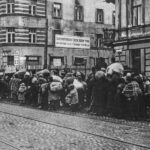
The Jewish tragedy at the center of Warsaw’s occupation is handled in a direct, grounded way. Before the war, the city had around 300,000 Jews. In 1940, Nazi authorities created the Warsaw Ghetto, trapping hundreds of thousands of people in inhumane conditions.
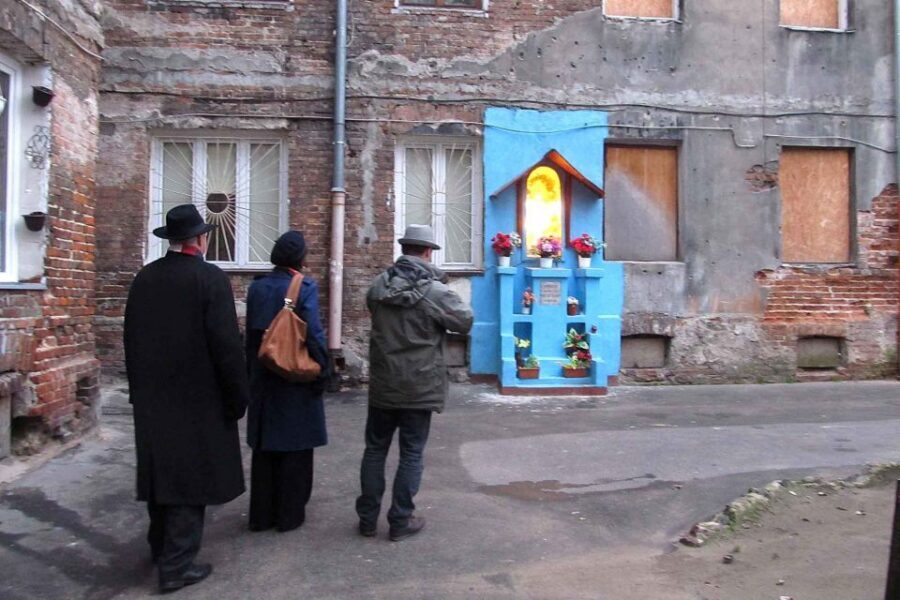
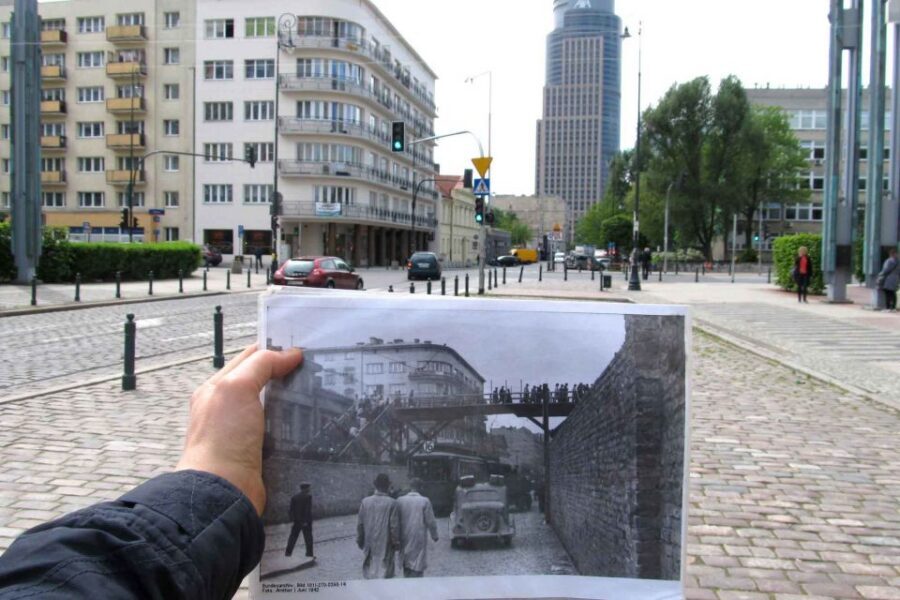
One of the most powerful segments is the visit to a preserved fragment of the former Ghetto Wall. Even as a partial remnant, a wall like this communicates the scale of confinement better than a photo ever will. You can see the idea made physical: a barrier that dictated movement and life.
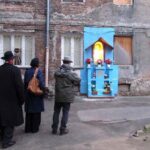
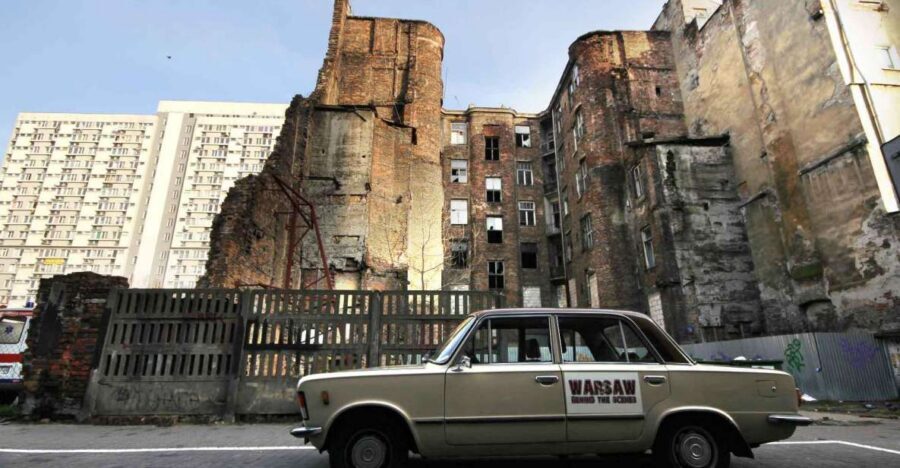
Then you’ll go to Waliców Street, where you can see one of the last ruined tenement houses left intentionally unrestored. This is the kind of stop that changes the tone of the whole tour. The building isn’t trying to look neat. It’s refusing to pretend the past ended neatly.
Why this matters: Warsaw’s WWII story isn’t only about big monuments. It’s also about damage that was never erased, because the damage is the evidence. Seeing it in place makes the rest of the tour’s comparisons feel real, not abstract.
The wooden bridge over Chłodna Street: how the ghetto was engineered
Next comes a detail that’s both practical and chilling: the wooden ghetto bridge over Chłodna Street. You’ll learn how it was built high above street traffic to connect sealed sections of the ghetto.
This is one of those features that makes you stop and think. A bridge like that signals control at a level beyond fences. It’s infrastructure shaped by segregation, designed so people could be moved while public life below stayed uninterrupted. In other words, the system was built to last.
If you’re the kind of traveler who likes to understand the mechanics behind history, this stop will feel satisfying. The guide ties the construction to the confinement, so you see the bridge as a working part of the occupation, not a random curiosity.
Muranów on wartime rubble: POLIN, the Ghetto Heroes, and remembrance with context
The tour then shifts to the Muranów district, described as an area constructed entirely on wartime rubble. That phrase carries weight. It’s a reminder that the city’s postwar form grew out of destruction, brick by brick, street by street, whether anyone wanted it or not.
You’ll also spend time around the Monument to the Ghetto Heroes. From there, you’ll visit the area near POLIN Museum of the History of Polish Jews, located close to where the first armed clashes of the 1943 Ghetto Uprising took place. Today, this area functions as both remembrance and dialogue, but you’ll learn why it became a meaningful location in the first place.
What I like about this part is the balance. You’re not only looking at marks in stone. You’re learning about people resisting a system designed to crush them. And you’re learning how memory is handled in public space now, which affects how you read the city when you leave the tour.
If you want a gut-punch emotional experience, expect this section to hit. It’s historically important, and the location helps you understand why.
Other Retro Fiat city tours in Warsaw


Soviet crimes in Warsaw: deportations, Katyń, and the monument site
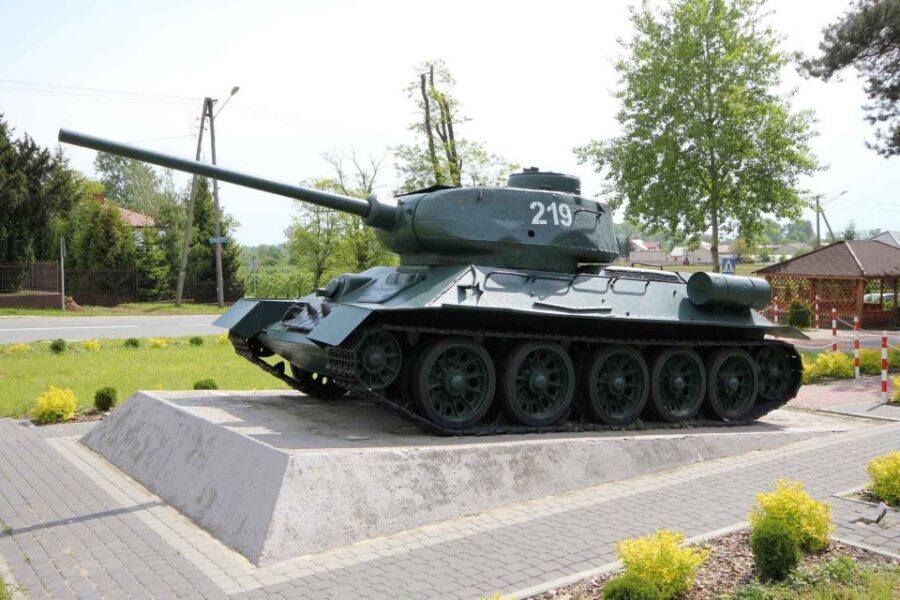
Warsaw’s WWII story doesn’t end with the German occupation. The tour covers Soviet crimes against Polish citizens, including mass deportations to Siberia and the Katyń massacres.
You’ll see commemoration at the Monument to the Fallen and Murdered in the East. That stop gives you a place to anchor the second wave of trauma. It’s also where the tour’s broader message becomes clear: the suffering was not limited to one side of the conflict, and the Polish experience included more than what Western Europe heard in the same time frame.
This section can be uncomfortable for people who came in expecting only Nazi-related history. But the tour’s value is in giving you the full Polish wartime picture it was built to explain.
The Warsaw Uprising of 1944: last independence attempt and deliberate destruction
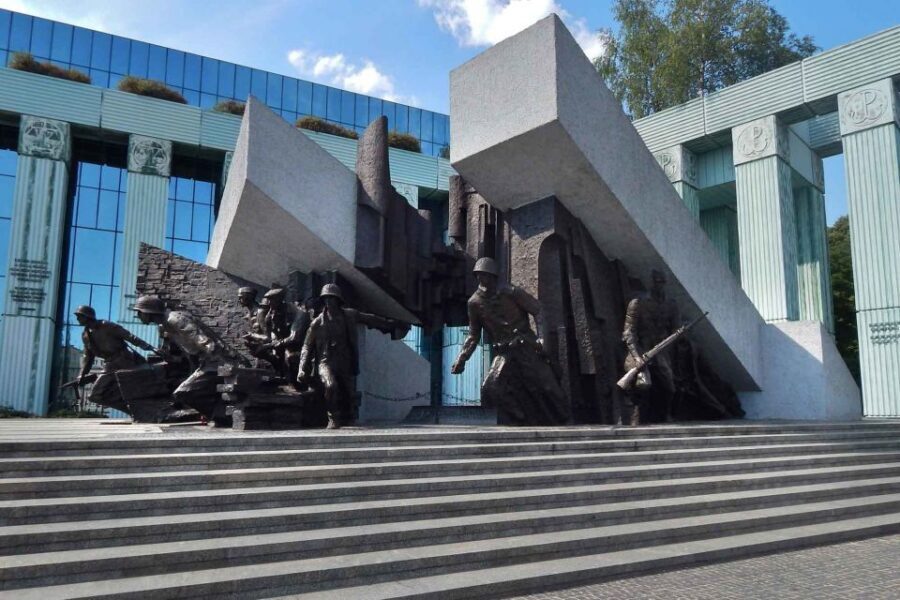
The final major chapter focuses on the Warsaw Uprising of 1944. You’ll learn how it was the city’s last attempt to regain independence before the arrival of the Red Army.
After the uprising was defeated, Nazi forces deliberately destroyed most of Warsaw. The tour then links that devastation to what happened next: the Soviet army entered the ruins in January 1945, starting a new political era.
This ending matters because it changes how you view everything you saw earlier. The ghetto story, the resistance story, the violence and the forced movement of people all connect back to the idea that Warsaw was treated as something to be broken, remade, and controlled.
If you’ve ever visited WWII sites and felt they ended mid-sentence, this structure helps. You don’t leave with only defeat. You leave with the afterlife of occupation, including how the city’s future got shaped by what came next.
Bullet-marked buildings and archival photo matching: why this method works
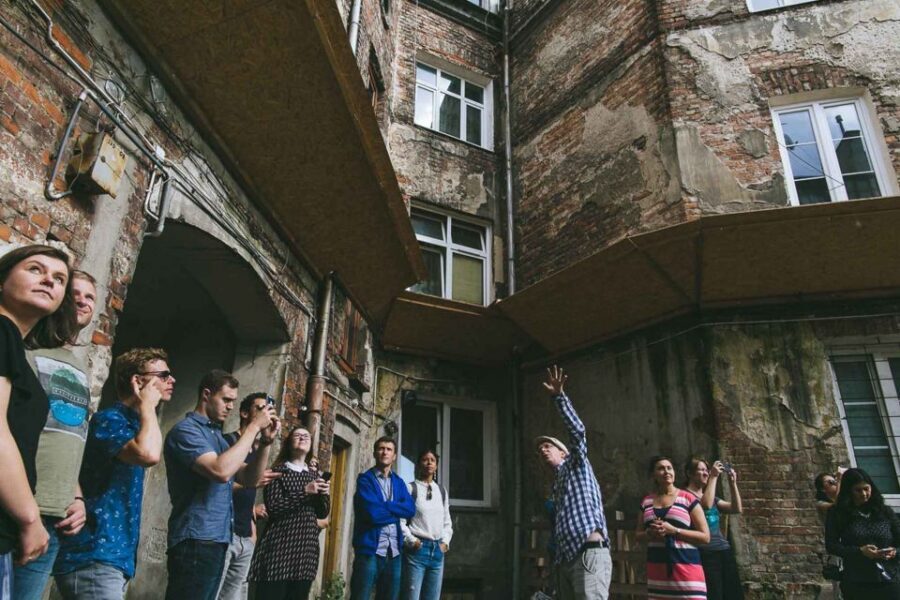
A key ingredient throughout is the use of archival photographs. You’ll compare wartime images with today’s streets, and that comparison is where the tour becomes more than a lecture.
Here’s the practical reason it works: your brain needs reference points. If you only hear the story, it can blur. If you can match the old street view to the current one, the story gains edges and texture. It’s easier to remember, and it’s easier to understand the scale of change.
The highlights also include preserved ruins and bullet-marked buildings. Those details aren’t there for shock value. They’re evidence, and they help you see that many sites survived because someone preserved them or because the damage was too obvious to erase.
The retro Żuk minibus: small-group comfort with real-world trade-offs
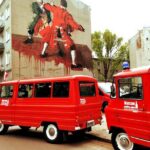
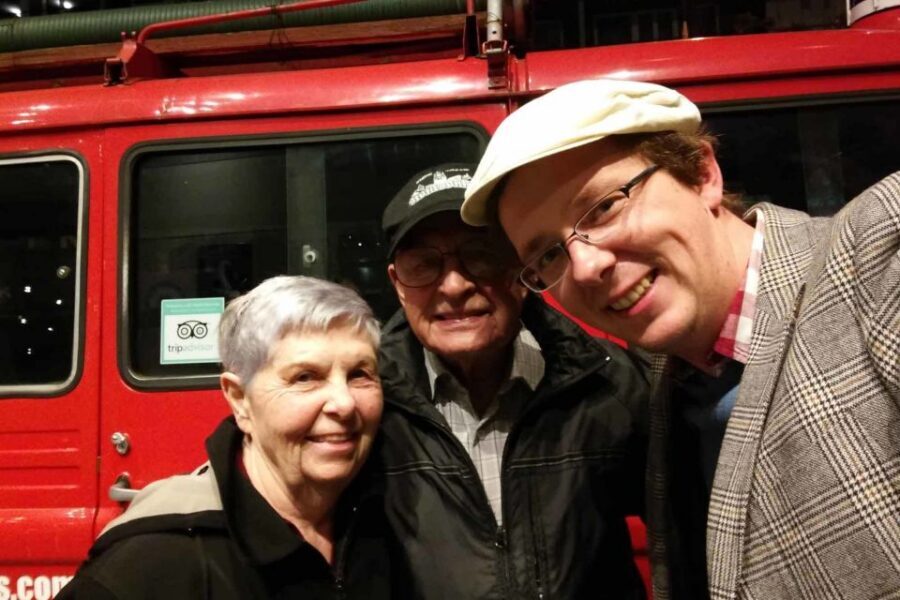
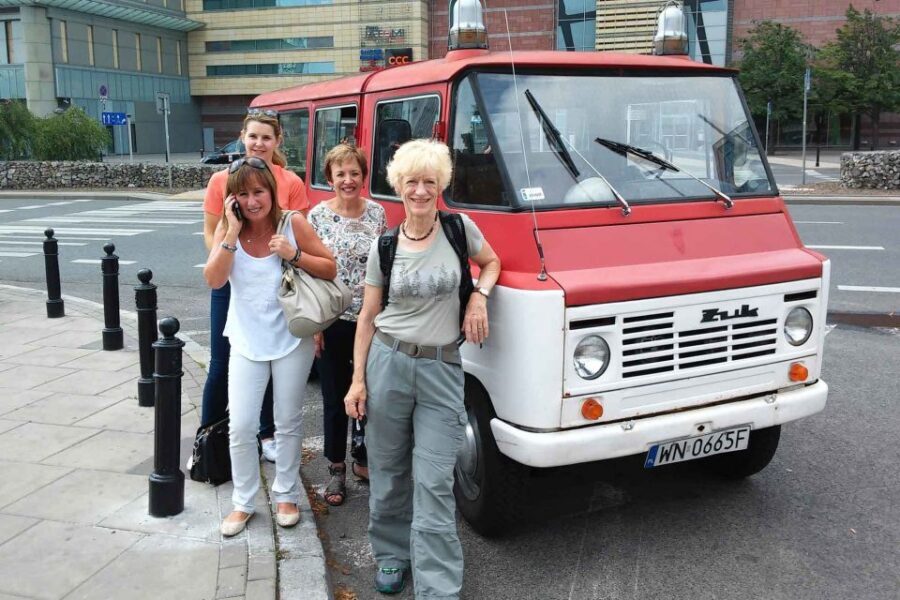
Your ride is part of the experience. You’ll travel by a retro communist Żuk minibus. It adds atmosphere and makes it easier to cover more ground than a fully walking tour.
But don’t assume modern comfort. The vehicles are used primarily for transfers between locations, and there are walking segments at each stop. You should plan on comfortable clothing and suitable footwear.
Also, the vehicles are not equipped with air conditioning, and some do not have seat belts. Heating is available in winter season. If you’re traveling in hot months, dress for a warmer ride. If you’re traveling in colder months, bring layers for warmth during stops outside.
A useful operational detail: each minibus accommodates up to 8 passengers, and there’s a fleet of 5 minibuses available. That small capacity helps keep the experience personal instead of turning it into an overcrowded group shuffle.
Price and value: what $165 buys you in Warsaw context
At $165 per person for 3 hours, this is not a budget museum ticket. But it also isn’t just transport and a few stops. You’re paying for a professional English-speaking local guide, a private-group format, and pickup/drop-off within 3 km of the city center, plus the retro minibus that gets you between sites efficiently.
If you’ve ever tried to piece together WWII Warsaw on your own, you know the hidden cost: time and confusion. Sites connect to each other in specific ways, and the guide’s role is to connect dots you might miss. That connection is the real value, especially when the tour includes places tied to events like the 1943 uprising and the post-invasion shift in control.
It does not include food or drinks, so factor in a pre- or post-tour snack plan. Since the tour is only 3 hours, you might be fine without a long meal, but you’ll want water if it’s warm.
Who should book this WWII private tour
You’ll likely love this if:
- You want context, not just monuments and photos.
- You care about how daily life changed under occupation.
- You prefer a guide who tells the story with places, including preserved walls and intentionally unrestored ruins.
- You appreciate small-group pacing and direct explanations in English.
It’s also a good fit if your group includes teenagers. In past experiences, guides like Konrad have been praised for keeping young people engaged without talking down to them.
You should think twice if:
- You’re expecting a light, casual history walk. This tour deals with occupation, ghetto confinement, uprisings, mass atrocities, deportations, and deliberate destruction of the city.
- You’re traveling with a child under 15. This tour is not suitable for children under 15, and kids must also meet the height/seat booster rules mentioned at booking.
Practical tips before you go
- Bring weather-appropriate clothing. Stops involve some time outside.
- Wear comfortable shoes. The tour includes walking segments at each stop.
- Leave space for restrictions: luggage or large bags are not allowed.
- If you’re traveling with minors, note that unaccompanied minors are not allowed.
- For families, pay attention to the child rules: booking is available for children over 150 cm, but if a child is under that height, seat boosters are mandatory by Polish law and you’ll need to check availability in advance.
- Since the minibus has no air conditioning, plan for temperature and ventilation.
Should you book it? My honest take
Book this tour if you want WWII Warsaw explained through the city’s surviving scars. The strongest part is the combination: preserved sites, bullet-marked details, and archival photographs that help you read what’s in front of you. It also helps that the guide approach can be warm and human, not just textbook.
Skip it if you’re looking for a relaxed overview. This is an emotionally heavy, historically detailed route, and it works best when you’re ready to focus.
If you match the right mindset and you’re okay with a short ride plus walking stops, this is one of those tours that leaves you seeing Warsaw differently for the rest of your trip.
FAQ
How long is the Warsaw WWII private tour?
It lasts 3 hours, including the time for hotel pickup and drop-off within the specified area.
Do they pick up from hotels?
Yes. Pickup and drop-off are included for hotels and apartments located within a 3 km radius of the city center. Transfer time is counted in the 3-hour total.
Is the tour private and how big are the minibuses?
It is a private group experience. The retro minibus can carry up to 8 passengers, and there is a fleet of 5 minibuses available.
Is this tour suitable for children?
Children must be over 15 years old to join. Booking for children over 150 cm is available, and children under 150 cm require seat boosters under Polish law, which need to be checked with the operator.
What’s included in the price?
Included are professional English-speaking local guiding, transport by the retro communist minibus, and pickup/drop-off within the 3 km radius.
Is food or drinks included?
No. Food and drinks are not included, so you’ll need to plan your own water and snacks.
Is the retro minibus air-conditioned?
No. The classic vintage minibuses are not equipped with air conditioning, though they do have heating for winter season. Some vehicles may not have seat belts.