REVIEW · WARSAW
Warsaw: Jewish History Guided Walking Tour in English
Book on GetYourGuide →Operated by Walkative Tours · Bookable on GetYourGuide
Two streets, one vanished world.
This walking tour pairs famous names from Warsaw’s Jewish past with the actual city blocks where the Second World War changed everything, from Chłodna Street to Waliców Street. You’ll finish at the Nożyk Synagogue, the only surviving pre-war synagogue in Warsaw, which gives the story a rare, physical anchor.
I love how the stops aren’t just “points on a map.” You also get the human thread: pre-war Jewish life, the centuries of community and culture, and then the scale of destruction—without turning the tour into a list of dates.
One drawback to plan for: you’ll be outside the whole time, often in cold weather, and the topic is heavy.
In This Review
- Key highlights to look for
- Walking Through Jewish Warsaw’s Turning Points
- Grzybowski Square and the Practical Stuff That Matters
- Chłodna Street: The Ghetto’s Geography in Human Terms
- Waliców Street and the Ghetto Border Story
- Nożyk Synagogue: The Pre-War Anchor You Can Still Visit
- How the Guide Builds Context Without Turning Heavy Facts Into Noise
- Interwar Jewish Warsaw: Why This Tour Starts Before the War
- Price and Value: What $26 Buys in a City With Real Pain
- Who Should Book This Walking Tour (and Who Might Want a Different Fit)
- Tour Etiquette Tips for Getting the Most Out of Every Stop
- Should You Book This Warsaw Jewish History Guided Walk?
- FAQ
- How long is the Warsaw Jewish History Guided Walking Tour?
- Where do I meet for the tour?
- Is the tour offered in English?
- What stops are included?
- What’s included in the price?
- Is hotel pickup or drop-off included?
- Is there a free cancellation window?
- Can I reserve now and pay later?
- What should I do if I want a private, smaller tour?
Key highlights to look for
- Nożyk Synagogue: the only surviving pre-war Warsaw synagogue, a powerful anchor for the whole walk
- Chłodna Street bridge site: connected parts of the ghetto, a key piece of the ghetto’s geography
- Waliców Street: once a ghetto border, tied to the story of the Warsaw Uprising
- 19th-century resistance and Polish uprisings: the Jewish story here is not only Holocaust-era
- Guides who keep it moving and invite questions: expect back-and-forth, plus photos or maps in the explanation
Walking Through Jewish Warsaw’s Turning Points

Warsaw’s Jewish history isn’t a single chapter. It’s centuries of life alongside centuries of pressure, shifting borders and shifting rules, and then the rupture of Nazi occupation and the Holocaust. This tour is built around that reality: you don’t just hear about what happened—you walk through the streets where those events played out.
The route lasts about 150 minutes (about two and a half hours). That’s a sweet spot: long enough to connect ideas, short enough that you’re not dragging yourself across the city while emotional fatigue builds.
You’ll start with the idea that Warsaw was once the second-largest Jewish city in the world before the war. From there, the guide threads together a big picture you can hold in your head: Jewish participation in Warsaw’s civic life in good times, involvement in struggles against occupying powers in the 19th century, and then the Interwar years when Jewish cultural life in the city was especially intense.
The tone is respectful and factual, but it doesn’t try to soften the subject. You should come prepared for the weight of it.
Other walking tours we've reviewed in Warsaw

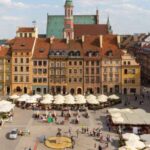

Grzybowski Square and the Practical Stuff That Matters
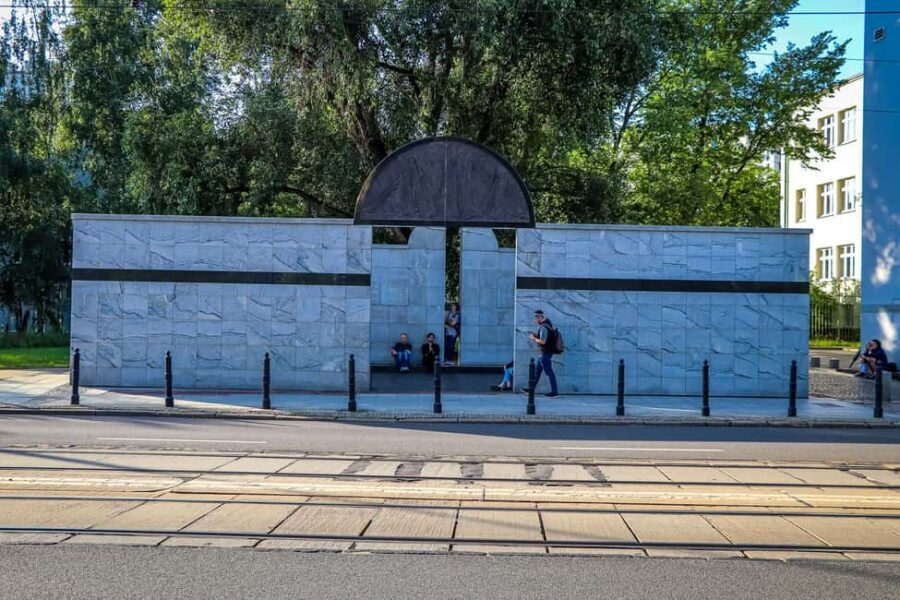
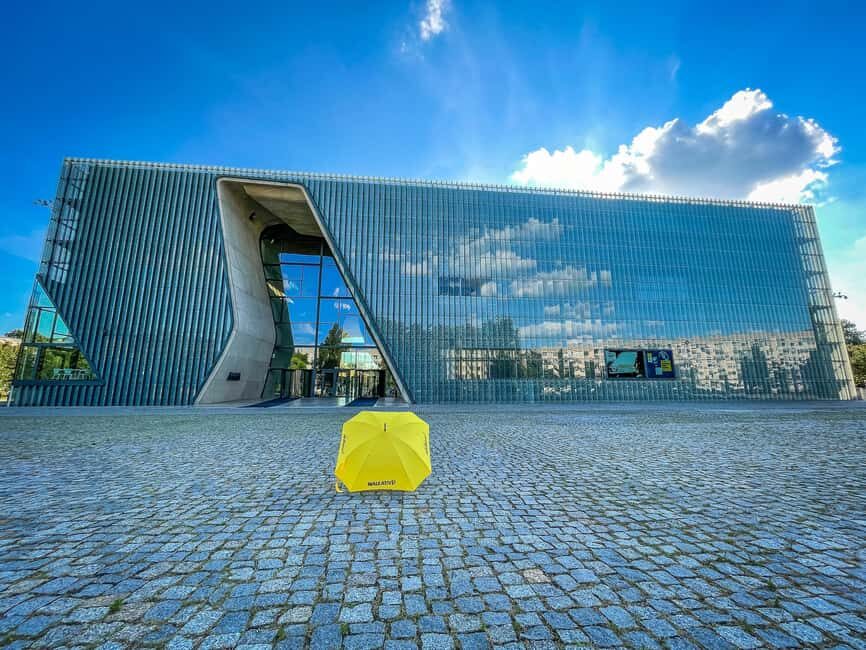
You meet next to the All Saints Church at Grzybowski Square, and the easiest way to spot the group is the yellow umbrella. Arrive a few minutes early so you’re not rushing when the tour starts.
Because the walk is entirely outdoors, dressing for real street weather is not optional. People mention freezing conditions, and that makes sense: you’re outside for the full 2.5 hours, not popping in and out of heated rooms.
Also, remember this is a guided walking tour with a local guide—not a bus tour with frequent stops for comfort. Wear shoes that handle cobblestones and uneven sidewalks.
Finally, a quick reality check on expectations: this tour joins a general group walking tour. The price you pay covers the reservation fee and the guide’s payment. If you want a smaller private experience, you can contact the supplier after booking to arrange it.
Chłodna Street: The Ghetto’s Geography in Human Terms
One of the most important stretches is Chłodna Street. The tour treats this street as more than a name—you learn how the city’s physical layout shaped life during the ghetto period.
A standout stop is the site of the bridge on Chłodna Street, described as joining parts of the ghetto. Bridges sound like small details until you understand what they meant here: they connected areas that were forcibly separated, and that connection mattered for movement, access, and how the ghetto functioned day to day.
As you walk, you’ll likely notice the challenge for guides: much of the original ghetto landscape is no longer fully there. That’s why the explanation matters. With photos or maps (and clear narration), you can “see” what has vanished, instead of just staring at an unchanged street and guessing.
This is where the emotional impact becomes clearer. When you learn what the bridge connected, the street stops being an ordinary urban corridor. It becomes a working part of a system of confinement.
Waliców Street and the Ghetto Border Story
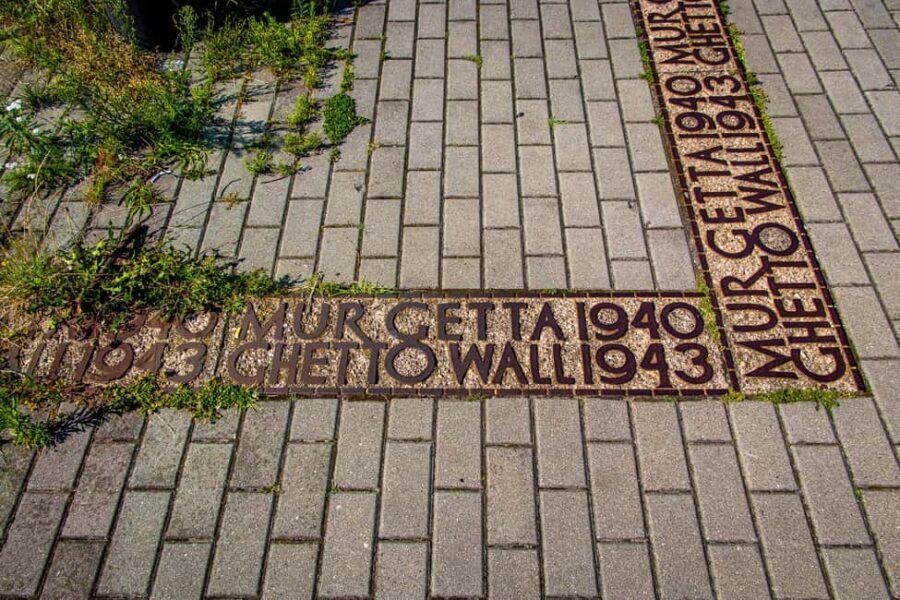
The tour shifts to Waliców Street, once a ghetto border. Borders do something specific: they turn everyday actions into choices loaded with risk. A street border isn’t just a line on a plan—it changes where people can go, what can be traded or carried, and who can cross.
Waliców Street is also tied into the story of the Warsaw Uprising. That connection helps you avoid a common mistake: treating the ghetto as only a closed chapter with an ending date. Instead, you see it as part of the broader wartime struggle in Warsaw—where resistance, desperation, and survival collided.
This stop is a good reminder of why the tour starts earlier than you might expect. You’re not only learning about the Holocaust. You’re building context for how resistance and civic life looked before the total collapse, and how that spirit was tested to the breaking point.
Nożyk Synagogue: The Pre-War Anchor You Can Still Visit
The emotional “anchor” for the whole experience is the Nożyk Synagogue. It’s highlighted because it’s the only surviving pre-war Warsaw synagogue—which means it’s not just a historical marker. It’s a rare piece of continuity in a city where so much was erased.
Even if you’ve read about Warsaw’s Jewish neighborhoods before, this stop changes the way you picture them. Buildings like this don’t just represent history; they hold the idea that Jewish life was not invented during the war. It existed, built habits, built institutions, and built community long before the occupation.
This is also a moment where the guide’s approach matters. Many participants mention that guides use facts and visuals—photos and maps—to help you understand what you’re seeing relative to what’s gone. That makes a big difference at the synagogue, because you’re standing in the present while processing the distance from the past.
If you’re someone who needs a mental “anchor” before moving deeper into hard stories, plan to focus here. Let the building do its work.
Other POLIN and Jewish heritage tours in Warsaw


How the Guide Builds Context Without Turning Heavy Facts Into Noise
A strong walking guide can handle two jobs at once: teach history and keep the group steady through it. This tour is designed for that balancing act, and the feedback you’ll hear about it points to a few patterns.
First, guides consistently encourage questions. That matters on a subject like this. People learn better when they can ask, pause, and adjust their understanding in real time.
Second, the explanations tend to stay factual and objective. You’ll hear about Jewish life in Warsaw across different periods, including the Interwar Period, when Jewish artists, actors, writers, and journalists helped create a cultural scene described as unmatched for that time and place. That context matters because it makes the destruction harder to understand in the right way: not as abstract tragedy, but as the collapse of a real community with real output.
Third, there’s room for honesty and even a light touch of humor at times—always in a respectful way—because it helps people keep listening. Several guides are described as funny or engaging, which helps the tour avoid the “lecture-only” trap.
Guides also vary by person. Names you might encounter include Andrzej, Jacek, Luke, Andrei, Yatzic, Agneska, Ana, Christopher, Olivia, and Tomasz. The common thread is that the presentation tends to stay clear, in English, and responsive.
Interwar Jewish Warsaw: Why This Tour Starts Before the War
The tour doesn’t treat the Holocaust as a standalone event that drops from nowhere. It spends time on what came before, because that’s how you understand scale.
In the 19th century, the story includes Jewish participation alongside other Warsaw residents in struggles against occupying powers, including participation in Polish uprisings. That gives you a sense of belonging and civic involvement, not just victimhood.
Then you move to the Interwar Period, when Jewish Warsaw flourished and drew hundreds of creatives—artists, actors, writers, and journalists. That cultural life is presented as something genuinely extraordinary for the era, and it’s exactly the sort of detail that helps you comprehend what was lost.
If you’ve visited museums before and felt the facts hit you but didn’t settle in, this is a good antidote. The pre-war context helps your brain organize the tragedy so it feels real, not random.
And yes, the tour still covers the scars of the Second World War and the Holocaust. The difference is that you’re prepared to understand why the loss was so total.
Price and Value: What $26 Buys in a City With Real Pain
At $26 per person for about 150 minutes, this tour is priced like a deal, especially when you factor in the quality of guided storytelling and the fact that you’re seeing major, specific sites connected to the ghetto and Warsaw’s Jewish life.
You’re also paying for more than walking. The guide’s job is to translate missing buildings and vanished streets into an understandable narrative. That’s a skill, and it’s hard to recreate on your own from street level.
Because you’re joining a general group, it’s not positioned as a private, customization-heavy tour. Still, the duration and the focus are strong. Two and a half hours is enough time to connect the bridge story on Chłodna Street, the border story on Waliców Street, and the significance of the Nożyk Synagogue into one coherent picture.
If you want value, this is the kind of tour that pays you back twice: once while you’re walking, and again when you picture the city later from memory.
Who Should Book This Walking Tour (and Who Might Want a Different Fit)
This tour is best for you if:
- you want to understand Jewish Warsaw’s history across multiple periods, not just WWII
- you like walking tours with specific street-based sites
- you’re okay with an emotional subject and want it handled in a structured way
It may be less ideal if:
- you hate long outdoor walks in cold weather
- you want purely uplifting themes, because the focus includes persecution and destruction
The good news is that the guide-led format gives you a way to absorb the material responsibly. You’re not on your own trying to interpret everything from placards.
Tour Etiquette Tips for Getting the Most Out of Every Stop
Bring a small notebook or notes app. When a guide explains the bridge connection on Chłodna Street or the border role of Waliców Street, the details matter, and it’s easy to lose them if you’re multitasking.
Come with at least one question you genuinely want answered. The format encourages questions, so you’ll likely get better learning when you’re not waiting until the end.
Finally, give yourself permission to slow down mentally at the Nożyk Synagogue stop. It’s the one place in the tour that is both history and still physically present. Let it be a pause point, not just another photo.
Should You Book This Warsaw Jewish History Guided Walk?
I think you should book this tour if you want a street-level way to understand Warsaw’s Jewish past, with the Nożyk Synagogue as a rare, pre-war anchor and with the ghetto story built through Chłodna Street and Waliców Street. It’s also a strong first stop for people who don’t know the geography of the ghetto yet.
Choose it for the structure, the guided context that connects centuries to the war, and the chance to ask questions in real time. It’s not “light history,” but it’s the kind of history walk that helps you leave with a clearer map in your head and a deeper sense of what the city went through.
FAQ
How long is the Warsaw Jewish History Guided Walking Tour?
The tour lasts 150 minutes (about 2.5 hours).
Where do I meet for the tour?
Meet next to the All Saints Church at Grzybowski Square. Look for a yellow umbrella.
Is the tour offered in English?
Yes. The live tour guide provides the tour in English.
What stops are included?
You’ll see the Nożyk Synagogue, walk Chłodna Street (including the site of the bridge joining parts of the ghetto), and visit Waliców Street (once the ghetto border, with context including the Warsaw Uprising).
What’s included in the price?
The tour includes a local guide and the walking tour.
Is hotel pickup or drop-off included?
No. Hotel pickup and drop-off are not included.
Is there a free cancellation window?
Yes. You can cancel up to 24 hours in advance for a full refund.
Can I reserve now and pay later?
Yes. You can reserve now & pay later and pay nothing today.
What should I do if I want a private, smaller tour?
This tour joins a general walking tour, but if you want a smaller private tour you can contact the supplier after booking to arrange it.