REVIEW · WARSAW
Tour of the Warsaw Ghetto
Book on Viator →Operated by PolinTours · Bookable on Viator
A short walk can carry a long shadow. This tour hits original ghetto sites with a guide who keeps the story clear, and it ends in the POLIN Museum area where Willy Brandt’s Kniefall is part of the landscape. The one thing to plan for: Nozyk Synagogue costs extra (€5).
I like how the route mixes street-level places with key historical context, so you’re not just looking at plaques—you’re piecing together what happened and why it mattered. Expect a steady pace: about 2.5 hours on foot plus roughly 30 minutes using public transport.
Keep one more detail in mind: on Friday afternoons (from 1 p.m.), Saturdays, and Jewish holidays, the tour runs without visiting the synagogue. Also, this is not the full museum visit; you get an orientation near POLIN, and you’ll be pointed toward the main exhibition if you want more.
In This Review
- Key highlights you’ll feel fast
- Price and time: what $102.78 buys you in Warsaw
- Before you go: comfort, tone, and when the synagogue changes
- Starting point and how you’ll actually get moving
- Stop-by-stop Warsaw Ghetto Route (Próżna to POLIN)
- 1) Nozyk Synagogue: the living survivor
- 2) Próżna: last surviving streets and neighborhoods
- 3) Waliców: ghetto wall fragments and the timeline gets real
- 4) Chłodna Street: the bridge symbol and stories you can connect to
- 5) Umschlagplatz: where the final plan was put into action
- 6) POLIN Museum area: uprising context and help from others
- 7) Pomnik Willy’ego Brandta: the exact Kneeling moment
- 8) Memorial at Miła 18: the bunker location
- 9) Pawiak Prison Museum: what imprisonment meant
- The POLIN Museum link: how to get the most from your free time
- The guide factor: why the storytelling style matters here
- Practical considerations: walking, distance, and emotional weight
- Should you book this Warsaw Ghetto tour?
Key highlights you’ll feel fast
- A street-by-street timeline that connects everyday life to the 1943 uprising
- Nozyk Synagogue stop at a site still in operation after World War II
- Umschlagplatz and the Final Solution sites explained with clear symbolism
- Willy Brandt’s Kniefall memorial stops built right into the route
- Photo-and-map support that helps you picture the ghetto before it was destroyed
- A well-paced mix of walking and transit, so you’re not stuck moving nonstop
Price and time: what $102.78 buys you in Warsaw
For $102.78 per person and about 3 hours, you’re buying more than a route. You’re buying someone who can stitch together a lot of hard history into a sequence that makes sense while you’re standing at the exact points where it unfolded.
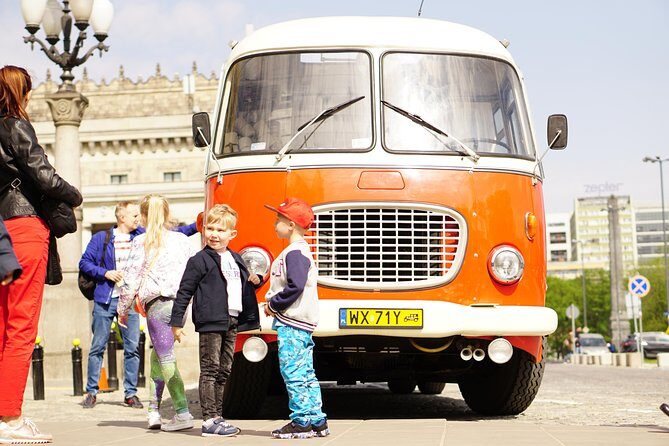
A big practical win is pickup from your city-center hotel (licensed city tour). If you’re staying in an apartment, you’ll wait outside, and the guide shows up with a PolinTours sign. That small convenience matters here because the route covers multiple sites that are easier with a plan than by wandering.
Also, this tour is designed for real-time timing. It’s not only a walking tour; you’ll spend around 2.5 hours on foot and about 30 minutes riding tram/metro/bus, so you’re not burning all your energy on distance.
One “value check” before you book: Nozyk Synagogue is extra (€5). Everything else listed on the route is free on the stops themselves. If you’re cost-sensitive, that fee is the main additional line item you should expect.
Other POLIN and Jewish heritage tours in Warsaw


Before you go: comfort, tone, and when the synagogue changes
This is listed as not suitable for children. That tells you the tone is serious and heavy. Even if you’re an adult traveler who can handle emotional topics, treat the day like a museum visit with a strong emotional weight.
Wear comfortable walking shoes. You’ll be on your feet for a long stretch, including time spent getting your bearings and stopping for explanations. Bring water if the weather is warm, because you’ll be outside through much of the route.
Then watch the calendar. On Friday afternoons from 1 p.m., Saturdays, and Jewish holidays, the tour is conducted without visiting Nozyk Synagogue. If that synagogue stop is a must for you, plan your day for a time when it’s included.
Starting point and how you’ll actually get moving
You meet at Próżna 11, 00-107 Warszawa. The tour ends at POLIN Museum near Mordechaja Anielewicza 6, 00-157 Warszawa. The order of visits is adapted to where your hotel is, which helps reduce backtracking and keeps you on time.
It’s also noted as near public transportation, which is reassuring for timing and getting oriented in Warsaw. The mixed format (walking plus transit) is one of the reasons the tour can stay around that 3-hour window.
Stop-by-stop Warsaw Ghetto Route (Próżna to POLIN)
This route moves through key points that help you understand how the ghetto was created, how daily life operated under pressure, and how resistance shaped the story—especially after the Nazis tightened control.
1) Nozyk Synagogue: the living survivor
You start at Nozyk Synagogue, described as the only synagogue that survived the Second World War and is still in operation. You’ll have about 15 minutes here.
Two things make this stop more than a quick photo moment. First, it anchors the story in a place that didn’t vanish completely. Second, it frames the ghetto story not just as a tragedy in the past, but as part of a living cultural thread.
Cost note: admission is not included and runs €5 per person. If you think you’ll skip it to save time, reconsider; this is one of the stops that turns “history” into a real location you can still experience.
If you’re going on Friday afternoon, Saturday, or a Jewish holiday: this synagogue stop is typically skipped.
Other Warsaw Ghetto tours



2) Próżna: last surviving streets and neighborhoods
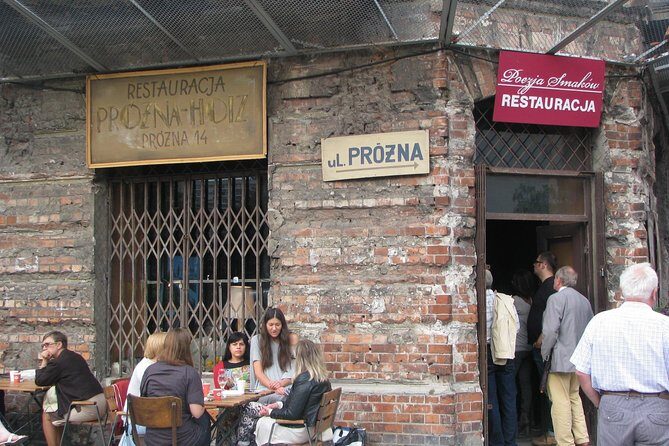
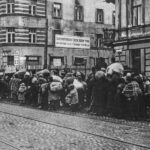
Next is Próżna, where you’ll explore the last surviving streets and neighborhoods within the ghetto. This gets around 20 minutes.
What I like about this kind of stop is the way it forces scale. Even if the buildings you see are not the full original fabric, you’re still walking through a landscape that carries memory. You’re not just reading; you’re watching how the city layout influences what’s possible to understand today.
3) Waliców: ghetto wall fragments and the timeline gets real
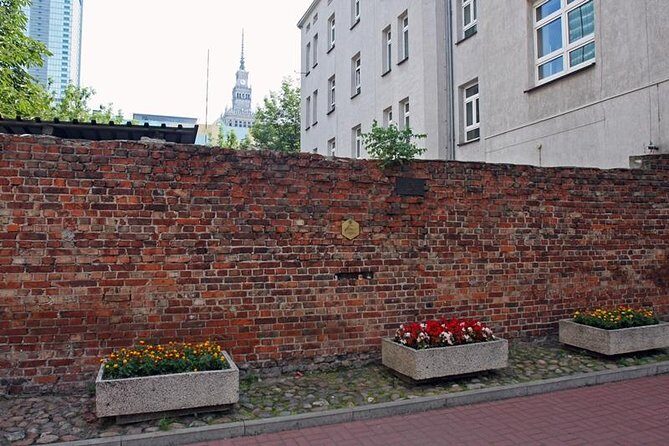
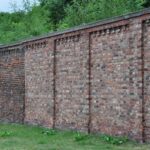
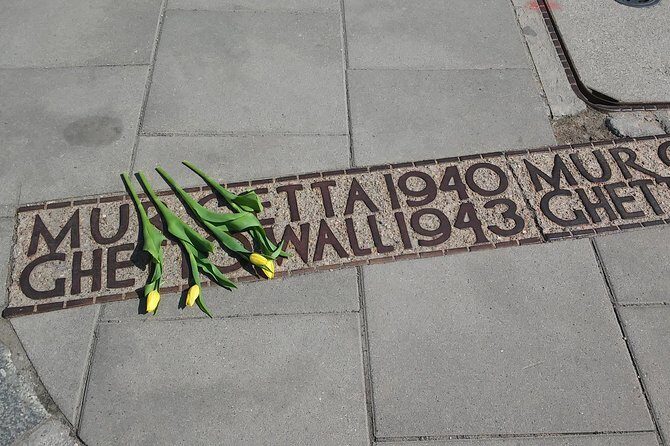
At Waliców, you’ll see fragments of the ghetto wall. The explanations focus on the ghetto’s origins, what daily life was like, and the Warsaw Ghetto uprising in 1943.
You’ll get about 15 minutes here. This is one of the stops where you’re likely to feel the “pattern” of the story: the route isn’t random. It keeps pulling you forward in time and helps you see how the occupation changed from control to catastrophe.
A possible downside: because the topic gets heavy, you might want a moment to pause mentally after this stop. Pace yourself; you don’t have to absorb everything at street level all at once.
4) Chłodna Street: the bridge symbol and stories you can connect to
On Chłodna Street, the tour pauses at the location where the connecting bridge between the Small and Big Ghetto stood. That bridge is treated as a symbol of the ghetto itself.
You’ll also hear links to The Pianist and the testimony tied to Władysław Szpilman (the title hero in Roman Polański’s film). The goal here is to connect popular culture to specific place and avoid the “movie-only” mental picture.
This stop lasts around 20 minutes, which is generous enough to let the guide explain the geography and why that bridge mattered. If you’re a fan of WWII literature or film, this is a satisfying point where fiction and documented history can be compared without getting lost.
5) Umschlagplatz: where the final plan was put into action
At Umschlagplatz, you’ll stand at real places where the Final Solution plan was put into practice. This part focuses on both the symbolic meaning and the practical reality of how the Nazis carried out the plan.
Expect about 15 minutes. The tricky thing with a location like this is that it can feel abstract if you only look at the “what.” The tour pushes you toward the “how” and “why,” so you understand that it wasn’t chaos—it was organization, logistics, and intent.
Emotionally, this is often the stop where you’ll slow down. Let it land.
6) POLIN Museum area: uprising context and help from others
The tour then moves near POLIN Muzeum Historii Żydow Polskich (the Museum of the History of Polish Jews). Here, you’re guided through the times of the heroic uprising and you’ll learn about life in the ghetto, why Jews took up arms, and who helped.
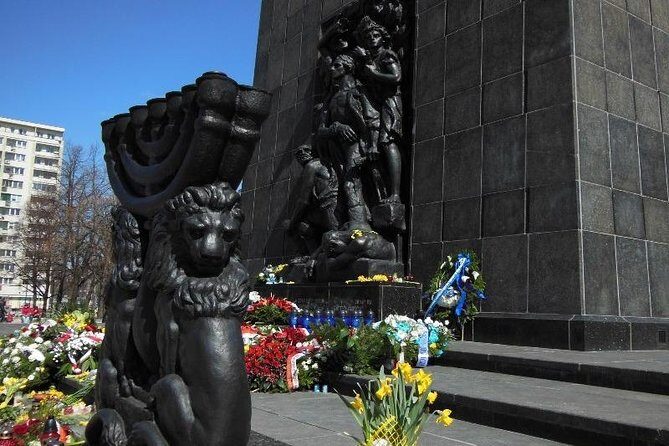
You’ll also get introduced to the symbolism of the Ghettohelden Memorial, where Willy Brandt performed his famous Kniefall, and how that memorial sits in relation to POLIN.
Time here is listed as about 15 minutes. Important: during this tour there’s no visit to the main exhibition inside POLIN Museum. Think of this as an orientation that tells you what to look for if you return on your own.
7) Pomnik Willy’ego Brandta: the exact Kneeling moment
You’ll have a quick stop at Pomnik Willy’ego Brandta, at the spot tied to Willy Brandt’s knees, with 10 minutes allocated.
Short stop, big impact. Even if you’ve seen photos, standing near a memorial is different. It’s one of those moments where the place does work for you, keeping the story anchored in public memory.
8) Memorial at Miła 18: the bunker location
At Memorial at Mila 18, you’ll see the former location of the bunker at Miła Street 18 and learn its eventful history. This is about 10 minutes.
This is a “close to the ground” kind of stop. It helps you remember that resistance happened under extreme limits—people weren’t making speeches in a safe space. They were making choices where survival was always uncertain.
9) Pawiak Prison Museum: what imprisonment meant
Finally, you’ll learn more about Pawiak Prison Museum, also about 10 minutes.
This stop rounds out the picture. If earlier points focus on ghetto life and deportation logistics, Pawiak helps show the broader machinery of occupation and repression. It’s a useful last beat before you move into the POLIN area at the end.
The POLIN Museum link: how to get the most from your free time
This tour is not a full museum day. It’s built to give you the street setting and the key memorial connections, then point you toward deeper context.
If you want the main POLIN experience, plan ahead. The guidance you’ll receive says you should visit the main exhibition with audio guides available in German, and you should allow about 2.5 hours for that visit.
Opening hours are listed as:
- Mo., Do., Fr.: 10:00 am to 6:00 pm
- Tue.: closed
- Wed., Sa., So.: 10:00 am to 8:00 pm
So here’s the practical move: if you finish the tour near POLIN, don’t automatically assume you have time for the full exhibition right away. Use the tour as your setup, then decide based on your energy and the day’s hours.
The guide factor: why the storytelling style matters here
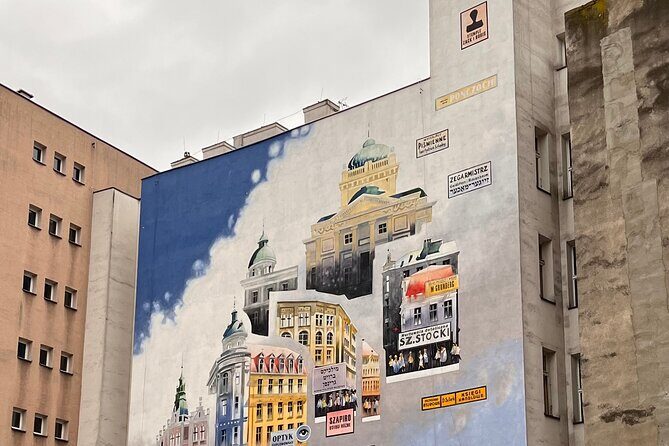
The tour operator shines through in how the guide handles both facts and emotion. In the strongest runs of this experience, guides use photographs and maps to help you visualize what you’re seeing—especially when parts of the original ghetto landscape are hard to picture on your own.
You’ll likely hear the story with careful pacing: questions are welcomed and answered patiently, and the guide keeps you oriented so you can follow the timeline without feeling lost.
Names that have come up with excellent feedback include Marzena (including Marzena Swirska-Molenda) and Olivia. If your booking lets you request or note preferences, it can be worth trying for a guide with that kind of track record. Even then, don’t wait for a “perfect” guide to make it work; the structure of the route helps you regardless.
Practical considerations: walking, distance, and emotional weight
You’ll do a lot of walking, plus short transit segments. Most people can participate, but you should be realistic about your stamina.
The topic is also hard. Even when the guide’s tone is respectful and clear, the places you see are tied to mass suffering. If you get overwhelmed easily, consider giving yourself extra space after the tour—no long, exhausting schedule immediately afterward.
One more logistics detail: the synagogue stop can shift based on timing. That means your experience might not look identical every day, and you should confirm the day’s plan if Nozyk Synagogue is your priority.
Should you book this Warsaw Ghetto tour?
I’d book it if:
- you want a structured route from ghetto origins through the key moments, not a random site tour
- you appreciate place-based history where you learn why each location matters
- you want a guide who can handle heavy material with clarity and respect
- you’re planning at least a small amount of extra time around POLIN Museum afterward
I’d think twice if:
- you want a light, casual activity (this isn’t that)
- you’re traveling with children (it’s listed as not suitable)
- you’re unwilling to pay the €5 Nozyk Synagogue admission when included
If you’re visiting Warsaw for just a short time, this is a strong way to make that time count. It gives you a coherent path across the most meaningful sites—then, if you choose, it sets you up for the deeper museum work at POLIN.