REVIEW · WARSAW
Past Meets Present in Warsaw’s Jewish Ghetto
Book on Viator →Operated by Mona_be_your_guide · Bookable on Viator
Warsaw tells the truth in footsteps. This 2.5-hour Jewish Ghetto walk connects daily life, resistance, and remembrance across key sites in English, guided by Mona_be_your_guide.
I love how the route links what you see today to what happened then, especially at the memorial places where the story becomes personal and unavoidable.
I also like the small-group pace, capped at 10 travelers, with time to stop and read the atmosphere at each point. Free admission to the listed stops keeps the focus on the sites, not your wallet. The one real drawback: it’s not recommended if you have mobility or walking problems.
In This Review
- Key highlights before you go
- Price and group size: what you’re really paying for
- Getting there: the walk starts at Slowackiplac Bankowy
- Stop 1: Zydowski Instytut Historyczny and the idea of documentary memory
- Stop 2 and 3: Długa Nalewki Street’s commerce, then Ogrod Krasinskich’s quiet break
- Stop 4: Polin Museum Square and the Ghetto Heroes Monument
- Stop 5: Mordechaja Anielewicza at Mila 18 and the leaders of the uprising
- Stop 6: Umschlagplatz, the departure point to Treblinka
- Stop 7: Pomnik Willy’ego Brandta and postwar remembrance
- Who this tour suits best
- A few practical pointers for a smoother experience
- Should you book Past Meets Present in Warsaw’s Jewish Ghetto?
- FAQ
- How long is the tour?
- What language is the tour offered in?
- How much does it cost per person?
- What group size should I expect?
- Where do I meet the guide, and where does the tour end?
- Is this tour suitable for guests with mobility issues?
Key highlights before you go
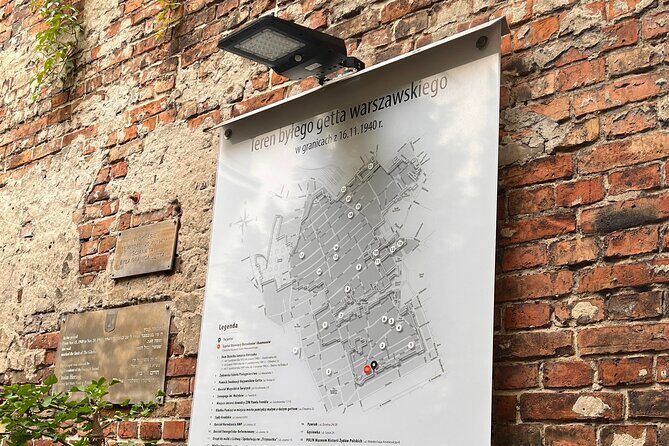
- A certified English guide, Mona_be_your_guide, with a tone that’s both hopeful and brutally honest
- Max 10 travelers, so you get a real conversation, not just head-down marching
- Free entry at every scheduled stop, from the Jewish Historical Institute to Umschlagplatz
- Memorial stops with strong symbolism, including the daffodils placed on the anniversary of the Ghetto Uprising
- A clear arc: everyday life → confinement → uprising leaders → the deportation site → postwar remembrance
- Ends at Willy Brandt Square, with guidance on where to grab coffee nearby
Price and group size: what you’re really paying for
At $112.43 per person for about 2 hours 30 minutes, you’re paying for two things that matter in this part of Warsaw: interpretation and restraint. This isn’t a “see the sights” tour. It’s a guided walk that helps you understand why these corners, buildings, and monuments carry so much weight.
The format is also unusually fair for the price. You travel in a small group of up to 10 people, and you get a certified guide in English. On top of that, admission is free for the scheduled stops, so you’re not stacking extra costs while the topic is already intense.
One more value point: you don’t just hear facts. Mona’s approach, based on what I picked up from the experience itself, leans human. You get room for questions about Jewish life and history, and you leave with a clearer sense of the people behind the dates.
Other POLIN and Jewish heritage tours in Warsaw


Getting there: the walk starts at Slowackiplac Bankowy
You’ll begin at the Monument of Slowackiplac Bankowy (00-142 Warszawa). The starting point is practical: it’s near public transportation, so you can show up without stress. I’d still give yourself a few minutes buffer, because you’re walking into a story where timing, location, and context all matter.
The tour is designed for ordinary walking, not for limited mobility. The experience is marked as not recommended if you have walking issues, so plan accordingly. If you’re comfortable on city sidewalks and can stand for memorial-time, you’ll be fine.
Also, bring a basic question mindset. This tour works best when you let the guide help you connect the dots as you go.
Stop 1: Zydowski Instytut Historyczny and the idea of documentary memory
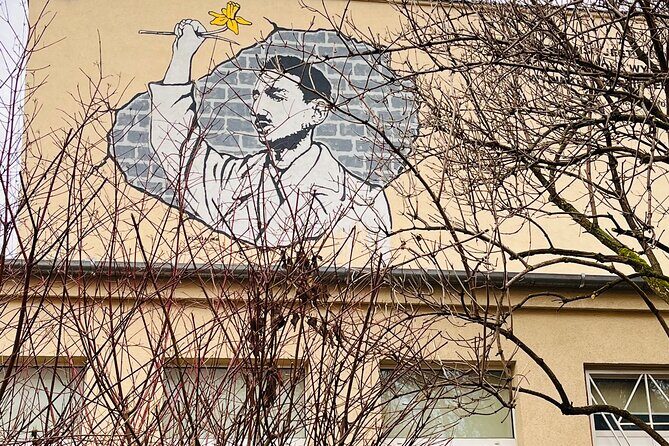
The first stop is Zydowski Instytut Historyczny, where the building once served as a center of Jewish social life during the war. Today, it functions as an archive for Jewish documentary material, and you can feel the shift instantly: the place goes from lived community to preserved record.
This matters because the ghetto story is often told as tragedy plus numbers. Here, you start with something more grounded: people forming lives, meeting, organizing, building community. That first contrast helps later stops land harder, because you know what was being crushed.
You’ll have about 15 minutes here. That’s enough time to get your bearings and absorb the basic context without turning the stop into a museum marathon. Admission is free, so you’re using your time on meaning, not tickets.
Stop 2 and 3: Długa Nalewki Street’s commerce, then Ogrod Krasinskich’s quiet break
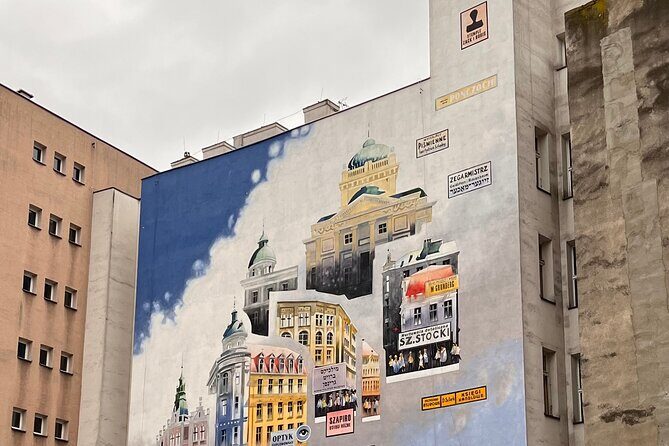
Next you walk to Długa Nalewki Street, at the crossing with Długa Street. During the time when this area was the northern Jewish quarter, it was one of the most lively commercial streets—full of shops, manufactories, and stalls. In other words, this wasn’t just background. It was where daily needs met daily bargaining.
What I like about this stop is that it helps you picture the ghetto as a place of ordinary movement. Even when the world is collapsing, people still go about their routines. You get that sense in a very visual way because the street setting is still a street.
You’ll spend about 10 minutes there. Use it to look up and around: storefront lines, street width, and how many routes you could plausibly take on foot.
Then comes a sharp change of mood: Ogrod Krasinskich. It’s described as an oasis of calm and a place where Warsaw residents can rest. During WWII it was excluded from the ghetto, which makes it a living contrast point—green space and public life beside a world that was being sealed off.
The stop is about 20 minutes, and I’d treat it like a reset. Let your eyes rest. You’re not escaping the topic; you’re letting your brain catch up before the tour turns toward the memorial geography of the uprising and deportations.
Stop 4: Polin Museum Square and the Ghetto Heroes Monument
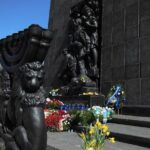
After the quieter break, you arrive at Warsaw Ghetto Square near the Polin Museum, centered on the Monument to the Ghetto Heroes. This is one of the key places for commemorating the Jews of Warsaw. You’ll also learn about a specific ritual: on the anniversary of the Ghetto Uprising, Varsovians place daffodils here.
I like that detail because it anchors remembrance in something tangible and recurring. Daffodils aren’t abstract. They show up every year, and that means the story is still active in public life, not locked away in a guidebook.
You’ll spend around 30 minutes at this part of the route. That’s important. Memorials like this aren’t built for quick glances. Take a moment to read what’s in front of you, then let the guide connect it back to the earlier stops where people still had normal days—even if those days were numbered.
Other Warsaw Ghetto tours
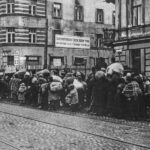



Stop 5: Mordechaja Anielewicza at Mila 18 and the leaders of the uprising
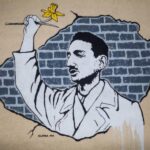
The next stop is tied to Mordechaja Anielewicza, at the Anielewicz Mound near Mila 18. This is the site connected with the leader of the Warsaw Ghetto Uprising.
Here, the mood doesn’t soften. The mound commemorates the deaths of the uprising leaders, so you’re stepping into a place that holds the final cost of a fight that was both desperate and determined. The story is not presented as a neat arc; it’s presented as a real human outcome.
You’ll have about 30 minutes here. If you’re the type who wants context, this is where questions can pay off. One of the strongest themes in the experience is how the guide keeps both emotion and facts in play. The effect is heartfelt without losing clarity.
Stop 6: Umschlagplatz, the departure point to Treblinka
Then you reach Umschlagplatz, where the monument marks the departure point for Jews transported to the Treblinka Extermination Camp. The number given for those killed is around 300,000, and the guide’s framing is meant to stop you from treating this as distant history.
This stop is only about 15 minutes, but it can feel longer because the setting forces you to slow down. Umschlagplatz is one of those places where your body understands what the mind is struggling to process.
Practical tip: don’t rush the monument text. If your brain tries to skip to the next point, consciously anchor on one thing you can read or one detail you can absorb. Let the guide do the interpretation, but give yourself a chance to receive it.
Stop 7: Pomnik Willy’ego Brandta and postwar remembrance
You finish with Pomnik Willy’ego Brandta at Willy Brandt Square. This memorial honors Willy Brandt’s tribute to the murdered Jews of Warsaw and to all victims of World War II.
I like this ending because it connects the Warsaw story to a broader acknowledgment of WWII’s victims, without breaking the link back to what you’ve just walked through. It’s a reminder that remembrance has many layers: local grief, international recognition, and the ongoing work of holding names in public space.
The tour ends here, and you’ll get recommendations where to go for coffee in the neighborhood. After a walk like this, that kind of local suggestion is more useful than you’d think. You’re not looking for distractions. You’re looking for a place to sit, breathe, and let the day settle.
Who this tour suits best
This is a smart fit if you want more than a list of landmarks. You’ll enjoy it if you like guided context, asking questions, and building a clear timeline of how this part of Warsaw changed over the war and after.
It’s also a good match if you’re traveling with someone who appreciates a mix of emotion and honesty. The experience is described as moving and rich, with a guide who manages to be both compassionate and direct.
You might want to choose a different kind of tour if you:
- need a lot of wheelchair-friendly stops (this one is not recommended for mobility/walking problems)
- prefer light, casual sightseeing rather than memorial-focused interpretation
- get uncomfortable with heavy WWII material
A few practical pointers for a smoother experience
- Wear shoes you trust. You’ll be on city sidewalks with memorial pauses.
- Bring curiosity. Mona’s style rewards questions, including questions about Jewish life and history.
- Give yourself permission to slow down. Some stops are meant for quiet reading, not just photos.
- If you want coffee after, plan for it as part of your debrief. You’ll likely want a seat and a warm drink.
Should you book Past Meets Present in Warsaw’s Jewish Ghetto?
If you’re visiting Warsaw and you want a walk that treats the Jewish Ghetto story with care, this is a strong choice. The combination of a small group, free admissions at the scheduled sites, and Mona’s human, thoughtful approach makes the price feel justified. You’re paying for guidance through emotionally complex geography, and the tour gives you time to understand what each place is doing for memory.
If you know you’ll struggle with walking or long standing, you should skip this one. And if you want only upbeat highlights, don’t force this. The tour’s purpose is remembrance and understanding, not mood-lifting.
My advice: book it if you’re ready to learn and you can handle the weight. Then take your time afterward. The best part isn’t just what you see. It’s how clearly you start to understand Warsaw afterward.
FAQ
How long is the tour?
It runs for about 2 hours 30 minutes.
What language is the tour offered in?
The tour is offered in English.
How much does it cost per person?
The price is $112.43 per person.
What group size should I expect?
The tour has a maximum of 10 travelers.
Where do I meet the guide, and where does the tour end?
You start at the Monument of Slowackiplac Bankowy (00-142 Warszawa) and end at Skwer Willy’ego Brandta / Mordechaja Anielewicza (01-999 Warszawa).
Is this tour suitable for guests with mobility issues?
It is not recommended for travelers with mobility or walking problems.