REVIEW · WARSAW
Self-Drive Tour: Communist Warsaw by Retro Fiat “Toddler”
Book on Viator →Operated by WPT1313 Warsaw Private Tours · Bookable on Viator
A tiny car, big political lessons. This Communist Warsaw self-drive tour puts you behind the wheel of a retro Fiat Toddler with live commentary, so you get the story without the stress of finding your way. I especially like that you tick off major stops quickly, including Hotel MDM, without feeling rushed between locations. The one real consideration: you’ll need a valid driver’s license and a 500 PLN refundable security deposit.
In about 2.5 hours, you’ll cover a clear arc of 20th-century power and propaganda in Warsaw—then see where the city’s mood shifted after 1989. You also come away with photos from the tour, which helps you remember details you’d otherwise forget after the day moves on.
This is offered in English, capped at a small group size (up to 15). Expect short walks at a few points, so it helps if you’re comfortable with a moderate level of physical activity.
In This Review
- Key highlights you should know before you go
- How driving the Retro Fiat Toddler changes the whole tour
- Meeting at Warsaw Tourist Information and getting oriented fast
- Stop 1: Palace of Culture and Science, Socialist Realist Warsaw
- Stop 2: Hotel MDM and the austere look of Soviet-era power
- Communist Ministerial District signals and quick context on power
- Monument of the Free Word and Charles de Gaulle’s statue
- Where the old National Stadium lived before the new one
- Różycki Bazaar after 1989: from major market to ghostly echo
- Praga Północ: the more adventurous side with a bohemian edge
- What you get after the tour: vodka shot and photos that help you remember
- Price and value: is $70.81 worth it?
- Should you book the Communist Warsaw retro Fiat tour?
Key highlights you should know before you go
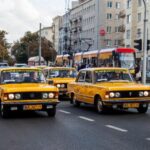
- Drive the retro Fiat Toddler while your guide handles the route and commentary
- No navigation stress: you’re not left to figure out the Communist sights on your own
- Fast stop-and-see lineup in about 2 hours 30 minutes
- Hotel MDM + major monuments tied to censorship, party power, and Soviet-era architecture
- Praga Północ and Różycki Bazaar for a different side of Warsaw beyond the grand buildings
- Photo delivery after the tour plus a shot of Polish vodka at the end
How driving the Retro Fiat Toddler changes the whole tour
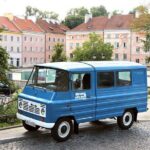
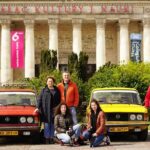
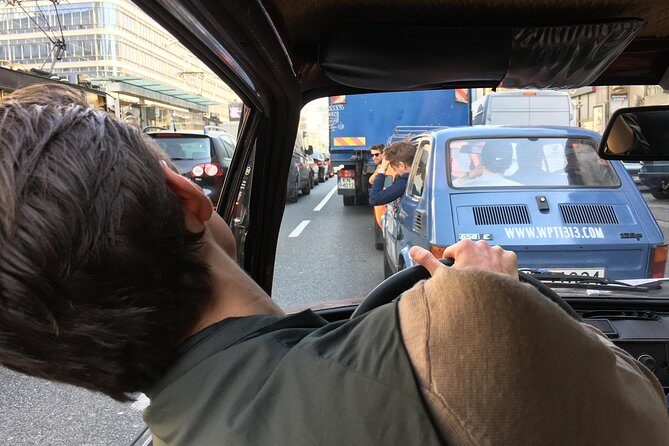
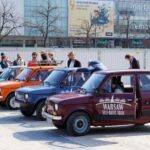
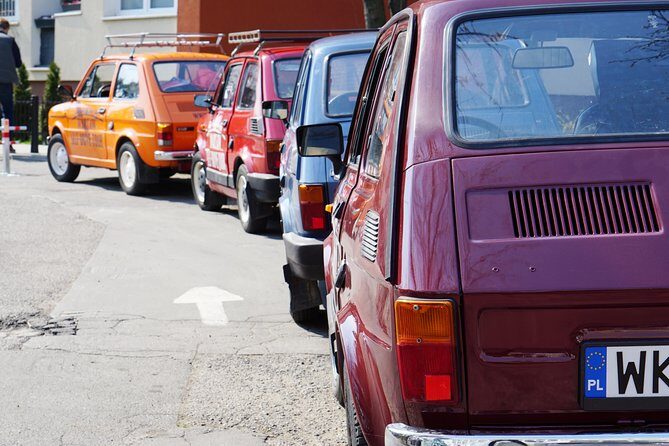
The best part of this experience is how the car turns a lecture into movement. When you’re driving a retro Fiat Toddler through Warsaw streets, you feel the scale of the city and the distance between districts in a way photos alone can’t do. It’s also plain fun—small, classic, and a lot easier than you might expect.
The tour is designed so you’re not stuck “just driving.” You’ll have live commentary on board, and the guide joins you so the story stays connected to what you’re seeing outside. That matters here, because Communist-era Warsaw can feel like a blur of concrete and official buildings if nobody frames it for you.
One practical tip: go in with your full driver focus. You’ll be stopping, starting, and steering through city streets, so try to keep your phone away while you’re behind the wheel unless the guide tells you it’s time. If you’re even a little nervous about driving in a new country, that’s a good reason to arrive early and let the pre-tour moment settle your nerves.
Other Retro Fiat city tours in Warsaw
Meeting at Warsaw Tourist Information and getting oriented fast
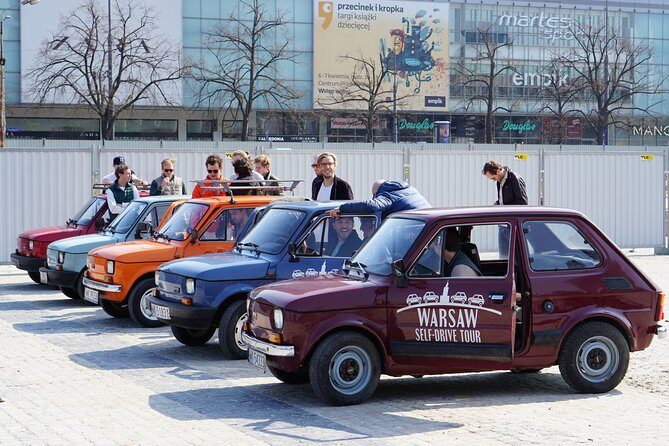
The tour starts right at Warsaw Tourist Information on Plac Defilad 1. I like that you begin in a place that’s easy to spot, and it’s near public transportation, so you’re not relying on a complicated meetup scheme.
You also end back at the same meeting point. That sounds minor, but it affects your whole day plan—no late scramble to get home, no wondering where you’ll be dropped off. It’s a clean loop that suits a short, high-impact tour.
Because you’ll be hitting multiple districts, getting oriented quickly is everything. This experience is built for that: the guide keeps you on track, and the car gives you quick transport between major landmarks rather than spending your time walking long distances.
Stop 1: Palace of Culture and Science, Socialist Realist Warsaw
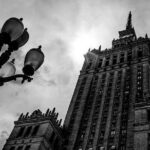
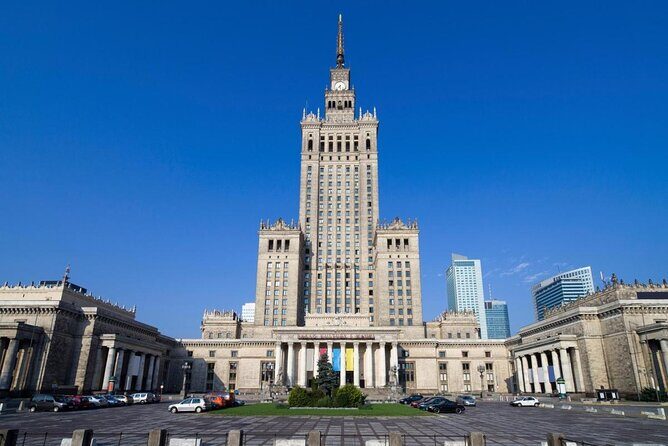
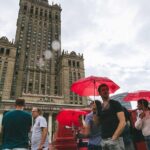
You’ll start at the Palace of Culture and Science, one of Warsaw’s most recognizable buildings. It’s a standout example of socialist realist architecture, and even if you’re not a design nerd, you can’t miss it. The building’s current life is part of the point: today it holds theatres, museums, a cinema, trendy pubs, and more.
You get about 30 minutes here. That’s long enough to take in the big picture from outside and still have time for the guide to explain what made the building powerful in its original context. If you only have a day or two in Warsaw, this is the kind of first stop that helps everything else make sense.
A realistic consideration: since it’s a major landmark, you might notice the area around it is busy. Plan to focus on your photos and the guide’s talking points, not on lingering like you would at a slow museum visit.
Stop 2: Hotel MDM and the austere look of Soviet-era power
Next comes Hotel MDM, with its austere Soviet-era architecture. The feel here is different from the Palace of Culture and Science. Instead of one giant symbol, it’s more about the atmosphere—function, restraint, and the official style that dominated the period.
You’ll have around 20 minutes at this stop. That’s perfect for stepping back from the street noise, taking in the architecture, and letting the guide connect the design to how power wanted to look and operate. It’s also a good moment to ask yourself a simple question: what does a city want you to feel when it designs buildings like this?
This is not a “go inside every room” stop. The value is in seeing the exterior character and understanding why these buildings still shape how Warsaw reads today.
Communist Ministerial District signals and quick context on power
At a key point on the route, you’ll see the Communist Ministerial District. This is where the tour’s speed becomes useful. Instead of you having to research what each district meant, the guide points you toward the idea that Communist rule in Warsaw wasn’t just about one building—it was about systems, administration, and control.
You won’t spend a long time here, but that’s part of the structure. The goal is to help you recognize the patterns: large official zones, designed authority in stone, and how those areas relate to the rest of the city.
If you like your tours with a tight narrative, this stop works well because it’s a bridge. It connects what you saw in the grand architecture to what you’ll see next in the story of speech, censorship, and political messaging.
Other communist-era history tours in Warsaw
Monument of the Free Word and Charles de Gaulle’s statue
Then you’ll hit two short stops that punch above their weight.
First is the Monument of the Free Word, where the guide talks about censorship in Communist Poland. Five minutes may sound brief, but monuments like this are built to be read quickly and discussed clearly. You’ll come away with a sharper sense of how control worked, not just as policy but as a daily reality.
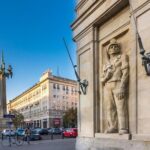
After that, you’ll see the statue of Charles de Gaulle. This stop is presented as a clue point: are you looking for a former Communist Party Headquarters? You’re in the right place. Even without a long visit, the location matters. It helps you understand how political power used prominent addresses—and how those spaces get reinterpreted as decades pass.
Short stops like these are also great for photos. Just be ready to move on when the group does, since the tour schedule is designed for maximum coverage in a limited time window.
Where the old National Stadium lived before the new one
You’ll also discover what was here before the new and modern National Stadium was built. This is a neat reminder that city landmarks aren’t frozen in time. They get rebuilt, replaced, and repurposed, often with layers of politics underneath.
I like this stop because it shifts you from “then vs now” architecture to actual city change. Even when the buildings are different, the city’s habits—where people gather, where crowds gather, where authority stands—stay visible.
Time is limited here, so focus on what the guide tells you about the earlier site. Think of it as a context marker you can carry with you the rest of your Warsaw walk.
Różycki Bazaar after 1989: from major market to ghostly echo
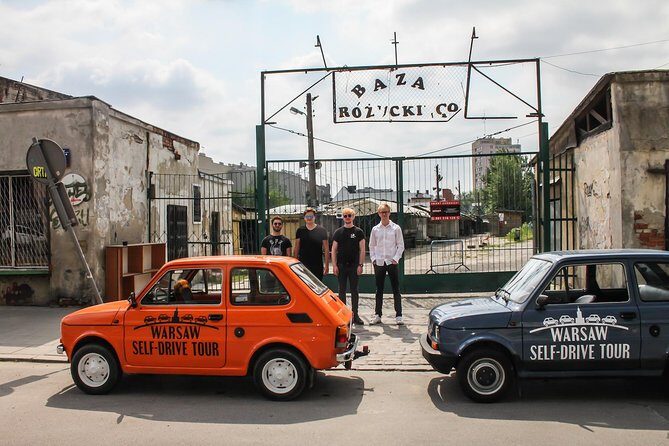
Różycki Bazaar is one of those places where history shows up in plain sight. Once regarded as Warsaw’s premier bazaar, it lost popularity after 1989. The tour frames it as a place that feels like a ghost of its former self.
Here’s the angle that makes it more than just an atmospheric stroll: the bazaar area was also linked to black market trade under both Nazi and Communist governments. That detail gives you a more human understanding of how everyday survival worked under pressure, not just how official slogans looked.
You’ll see it as part of the tour route, with enough time to spot how the space feels today. Don’t expect a full “market” experience. The point is the contrast—how a location that once pulsed with commerce now reads differently.
Praga Północ: the more adventurous side with a bohemian edge
To round things out, the tour moves into Praga Północ, often seen as the more adventurous side of Warsaw. The big takeaway is that Praga survived the war turmoil and is now shaped by bohemian culture and growing investment, including large cultural and housing projects.
You’ll have about 30 minutes here, which gives you time to switch gears. In the first part of the tour, you’re mostly reading architecture and monuments. In Praga, you get to absorb the neighborhood feel—streets, energy, and the sense that the city’s story isn’t only about official power.
This section is also a good mental reset. By the time you reach Praga, you’ve already learned how the Communist era shaped Warsaw. Now you can see how people live in the aftermath, in a district that carries more edge and attitude.
What you get after the tour: vodka shot and photos that help you remember
The included wrap-up is surprisingly practical. You’ll get pictures from the tour after it ends, which is a big help when you’re trying to connect landmarks to details you heard in the moment. I find that especially useful on history-focused tours, where the narration can move faster than your ability to take notes.
You’ll also have a shot of Polish vodka after the tour. It’s a small, fun cultural touch that makes the ending feel like a real finish, not just a stop-and-go sightseeing sprint.
This combination matters: photos help you recall what you saw, and the toast-like ending helps the whole experience stick. It turns the tour into something you can talk about later, instead of a blur of concrete and statues.
Price and value: is $70.81 worth it?
At $70.81 per person, this tour sits in the mid-range for a private-style experience with a small car and multiple major stops. What makes it feel like good value is the package deal: you drive the retro Fiat, you get live commentary on board, and you receive tour photos afterward. Add in the vodka shot, and it’s more than a standard bus-style history trip.
Also, the format saves time. In 2 hours 30 minutes, you’re covering major Warsaw reference points—Palace of Culture and Science, Hotel MDM, censorship and party-power monuments, plus Praga Północ. If you were to do all of that yourself, you’d still spend time figuring out route flow and timing between districts.
Here’s the tradeoff to weigh: you must bring a valid driver’s license and be ready for the 500 PLN refundable deposit. That makes it better for travelers who are comfortable driving and want the extra responsibility that comes with “self-drive.” If you just want to be a passenger and relax, you might prefer a classic guided tour instead.
Should you book the Communist Warsaw retro Fiat tour?
If you want Communist-era Warsaw in a way that feels active, fast, and easy to follow, I’d book it. The drive-your-own retro car angle changes how the story lands, and the fact that a guide stays with you removes the biggest risk of self-guided history tours: getting lost in the details and missing the thread.
I think this is a great fit for:
- First-time visitors who want the key Communist landmarks without planning hours
- People who enjoy photos and want a built-in souvenir recap
- Travelers comfortable driving in a new city and willing to handle a deposit
I’d hesitate if you’re not comfortable driving or if short stops feel frustrating. This tour is built for coverage, not for long museum time inside every site.
If you land on the fence, here’s my simple rule: if you want the narration plus the thrill of driving, go for it. If you want slow wandering and deep indoor time, look for a different style of guided tour.