REVIEW · WARSAW
Private Tour: Warsaw Ghetto with a local Historian
Book on Viator →Operated by Artur Warsaw Guide · Bookable on Viator
Three hours through Warsaw’s most painful streets. What makes this tour stand out is the chance to learn with a local historian born and raised in the area, using real locations—not vague summaries. I especially like how the stops anchor the story at places such as Umschlagplatz, where deportations began, so the details feel concrete.
I also like the small-group, private format, which keeps the pace human and gives you room for questions and quiet moments. One drawback to consider: it’s about a 3-hour walk-and-stop itinerary, so if you’re hoping for a long, inside-only visit to POLIN’s exhibitions, the time here may feel short.
In This Review
- Key highlights worth marking on your day
- Why a local historian matters at Warsaw Ghetto sites
- Private pickup anywhere in Warsaw: how the logistics keep the focus on the story
- Stop 1: Umschlagplatz and the place where transports began
- Stop 2: Mila 18 memorial and Mordehai Anielewicz bunker
- Stop 3: POLIN Museum area walk and how it sets up what you might see later
- Stop 4: The fragment of Ghetto Wall—why small pieces matter
- Stop 5: Praga Północ drive and The Pianist film moments
- The emotional pacing: how to handle a tour like this without shutting down
- Value and price: what $321.68 per group really buys you
- Tour fit: who this is best for (and who may want a different format)
- Tips to get more out of your 3-hour route
- So, should you book this Warsaw Ghetto private tour?
Key highlights worth marking on your day

- Born-and-raised historian perspective that connects events to exact street-level locations
- Umschlagplatz stop at the station tied to deportations to Treblinka
- Mila 18 memorial visit at the bunker site of Mordehai Anielewicz
- POLIN Museum area walk focused on key monuments nearby, not an all-day museum deep visit
- Praga Północ drive-by with locations associated with The Pianist by Roman Polanski
Why a local historian matters at Warsaw Ghetto sites
This type of history can get heavy fast. That’s exactly why I think the guide choice is the difference between a tour that feels like homework and one that helps you understand what happened where. With a historian born and raised there, you get a tone that’s grounded in lived place-memory, not just dates and terminology.
During the walk, the guide’s job is to help you connect multiple layers: the geography of the ghetto, the sequence of events during the Holocaust, and the human meaning behind memorials. I find that when a guide keeps returning to specific spots—platforms, bunkers, wall fragments—it helps you stop treating the ghetto as a distant concept and start seeing it as a real, constrained world.
If you’re coming to Warsaw specifically for Holocaust sites, this format also makes planning simpler. You’re not trying to stitch together half a day of locations on your own. You’re following a route built to explain the story in order, with the right balance of walking and stopping.
Other private tours in Warsaw

Private pickup anywhere in Warsaw: how the logistics keep the focus on the story
The practical side here is solid. Pickup and drop-off can happen anywhere in Warsaw, which matters because public transport around memorial sites can be a bit of a puzzle if you’re not used to the city.
The tour is private, meaning only your group goes. It’s priced per group (listed as up to 4), while the experience notes a private group setup for as many as six people. Either way, you’re looking at a small party compared with bus-group tours, so you won’t be forced into a rigid “follow the leader” rhythm.
You also get bottled water. It sounds small, but for a route that includes several outdoor stops, it’s the kind of detail that keeps you comfortable enough to actually pay attention.
One more point: since the experience is offered in English and uses a mobile ticket, it’s an easier day to manage. You won’t be hunting for paper documents while you’re trying to absorb what you’re seeing.
Stop 1: Umschlagplatz and the place where transports began
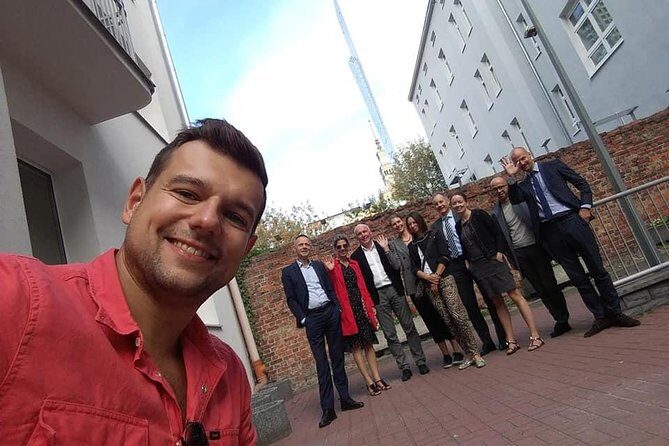
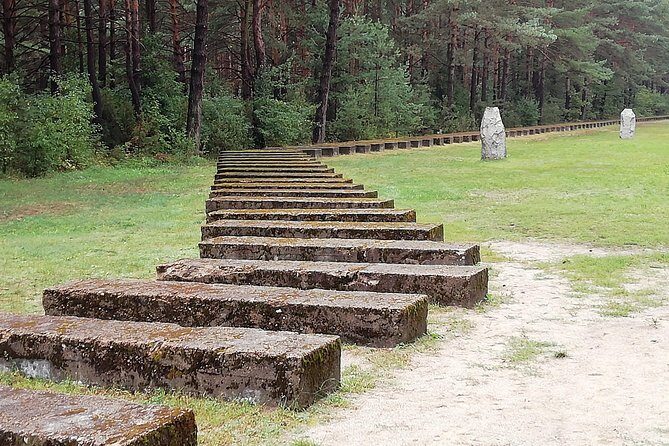
The day starts at Umschlagplatz, the rail station connected to the first transports of Jews to Treblinka. This is one of those locations where the power is obvious even before the guide starts speaking.
Why it works as a first stop: it frames the whole tour. Before you see memorial sites and traces of the ghetto, you get the starting point for how mass deportation happened—organized, mechanical, and brutally systematic. That context makes later stops more than just memorials; they become part of a sequence.
The stop is short—about 5 minutes—and that’s probably intentional. The goal isn’t to linger until you feel numb. It’s to get the key facts in place so the rest of the walk has meaning.
Practical tip: wear comfortable shoes. Even with short stops, the ground and street surfaces around memorial areas can add up over a 3-hour tour.
Stop 2: Mila 18 memorial and Mordehai Anielewicz bunker
Next comes the Memorial at Mila 18, tied to the Mordehai Anielewicz bunker. This is where the tone shifts from deportation logistics toward resistance, survival, and remembrance.
Mila 18 matters because it’s specific. A bunker isn’t an abstract idea; it’s a physical space that helps you grasp what the people inside were facing. A good guide will explain not only what happened, but also why this location became a lasting symbol.
You’ll have about 10 minutes here. That’s often the right amount of time for a stop like this—enough for orientation and key context, without turning it into a long memorial “marathon.”
In at least one group experience, the commentary was highlighted as a big part of the value. That makes sense here: the emotional weight is high, so the guide’s narration helps you process what you’re seeing instead of just passing through.
Stop 3: POLIN Museum area walk and how it sets up what you might see later
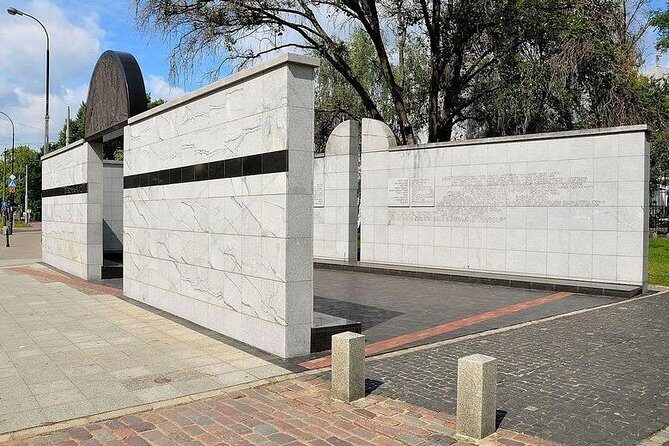
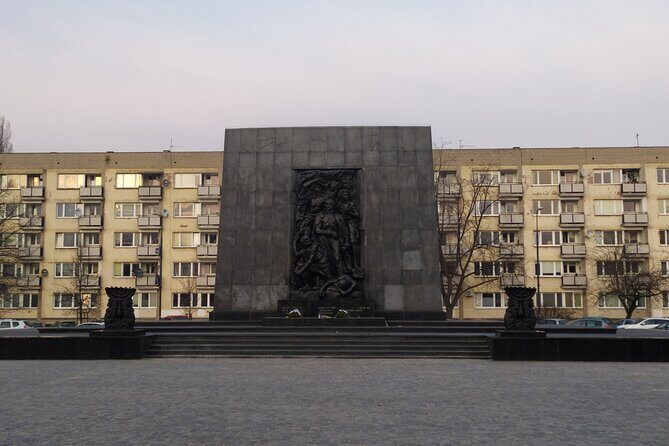
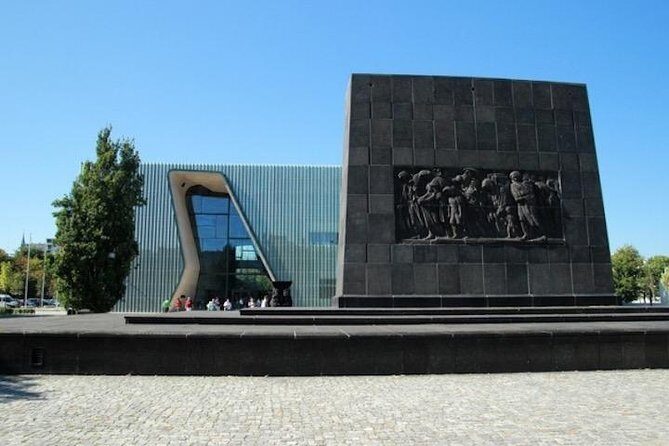
After the memorial, the tour shifts into the POLIN Muzeum Historii Zydow Polskich area. Here, you’re not doing a full museum exhibit session. Instead, you’ll walk around the area and sightsee key monuments nearby.
In about 30 minutes, you’ll get a sense of how the memorial landscape connects to the broader story of Jewish life in Poland and the Holocaust era. I like this approach because it helps you orient yourself. Even if you don’t spend a long time inside the museum that day, you’ll understand why certain nearby points matter.
If you’re someone who wants the full museum experience, plan a separate visit. The museum itself can take hours depending on how you want to experience it. This tour gives you the “place context” version—useful, but not trying to replace a full museum ticket.
Other POLIN and Jewish heritage tours in Warsaw


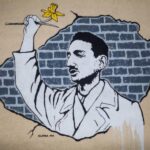
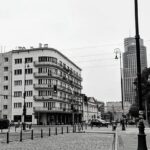
Stop 4: The fragment of Ghetto Wall—why small pieces matter
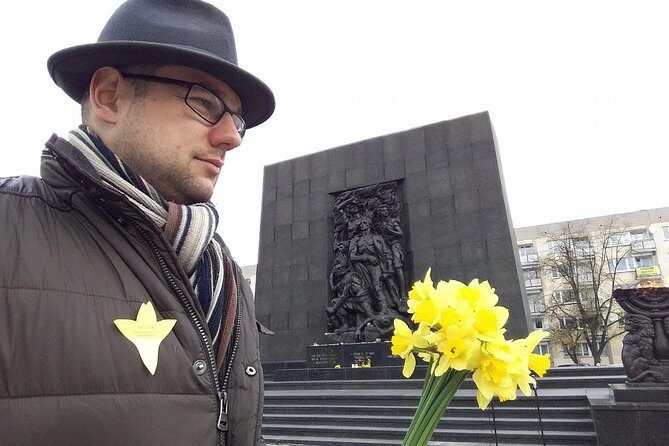
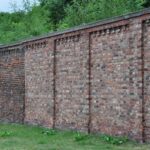
Then you’ll stop at a Fragment of Ghetto Wall, labeled as a very important history place. It’s not the whole wall you might imagine from textbooks. It’s a surviving portion.
That’s exactly why it hits. Surviving fragments become proof—material evidence that the ghetto wasn’t just a concept. When a guide points out where things are located and what the fragment represents, the wall stops being scenery and becomes a physical reminder of confinement, boundaries, and the forced reality of daily life.
This stop lasts about 20 minutes. That’s long enough to let the guide add context and for you to look carefully without rushing. It’s also a good pause in the route: a place to slow your body down and let your mind catch up.
Stop 5: Praga Północ drive and The Pianist film moments
The tour then drives through Praga Północ, a district connected to film scenes from The Pianist by Roman Polanski. This isn’t a cinema screening. It’s more like using a familiar reference point to help you see the city’s geography.
For many visitors, that can make the walk-to-then-walk-again rhythm easier. You get a chance to sit, get oriented, and look at how parts of Warsaw connect across eras.
This stop is about 30 minutes, and the key is what the guide points out from the route: where scenes were filmed, how the district feels in modern Warsaw, and how the area’s layers connect back to wartime realities.
Even if you’re not a film fan, the drive-through angle is practical. It helps break the day into segments so the tour doesn’t feel like constant marching.
The emotional pacing: how to handle a tour like this without shutting down
This tour is built around commemoration. That means your experience isn’t just information-gathering; it also has a slow emotional metabolism.
One thing I advise: don’t try to photograph everything. Take pictures when they genuinely help you remember later, but also give yourself moments where you don’t need the phone. If you’re the type who gets overwhelmed, the private format helps because you can ask for clarification at your own pace.
I also like that the stops are varied: a station-related stop, a memorial bunker, a nearby museum-area walk, a wall fragment, then a district drive. That variety keeps you from feeling stuck in one “mode” the whole time.
In other words, you’re not just hearing about tragedy in one tone. You’re experiencing how different places carry different meanings.
Value and price: what $321.68 per group really buys you
The listed price is $321.68 per group, up to 4 people, for about 3 hours. On paper, that can sound steep if you compare it to public tours. But compare it to what’s included:
- a private historian-led route
- a meaningful sequence of sites tied to the Warsaw Ghetto story
- pickup and drop-off anywhere in Warsaw
- bottled water
- English-language guiding
- admission being listed as free for the stops you visit
What makes the pricing feel more reasonable is the “cost per person in a small group” effect. If you’re traveling as a pair or a tiny group, the per-person number drops quickly compared with a larger group tour that spreads the guide across many people.
There’s also an important value lever: in one experience, an upgrade to include a driver was described as making a major difference because it reduced walking. That group also saw additional sights like the Warsaw Zoo area and original buildings from the Warsaw Ghetto. A driver won’t change the core memorial sites, but it can make the route easier and sometimes allow more time for what you care about.
If you’re choosing between a self-guided version and this private route, I’d choose this if your priority is clarity. You’ll get explanations aimed at linking sites together, not just finding them.
Tour fit: who this is best for (and who may want a different format)
This is a strong fit if you want:
- a structured route through major Warsaw Ghetto-related sites
- a guide who can explain what you’re seeing in plain language
- a small-group setting where questions don’t feel like interruptions
- pickup convenience because you’d rather spend mental energy on history than on transport
It may be less ideal if you want:
- a long, inside-only museum day (POLIN’s full exhibits are not the main focus here)
- a lighter, purely scenic city walk
Also, keep expectations realistic about time. It’s roughly 3 hours. That’s enough for a focused overview and a guided orientation, but not enough to turn Warsaw into a single-day checklist.
Tips to get more out of your 3-hour route
A few practical things will help you enjoy the day more:
- Bring comfortable walking shoes. Even with short stop times, the overall route adds up.
- Plan to stay present at the memorial stops. Let the guide finish explanations before you move on.
- If you care a lot about POLIN, consider using this tour for the area context, then add a separate museum visit.
- If you’re sensitive to long walks, ask about how to minimize it. The driver upgrade is one way groups have made the experience easier.
- Keep your phone charged and your battery habits realistic. You’ll want photos later, but don’t force it during moments that call for quiet attention.
So, should you book this Warsaw Ghetto private tour?
I’d book this if you want an organized, respectful route through key sites, guided by a historian with deep local roots. The strengths are the small-group private format, the pickup convenience, and the way the tour ties major locations together—from Umschlagplatz to Mila 18, then into the nearby POLIN area and onward through Praga Północ.
I’d hesitate only if your top goal is a long interior museum experience. In that case, you’ll likely want this as a foundation and then plan extra museum time separately.
If you’re visiting Warsaw with a serious interest in understanding what happened, this is a straightforward way to get there without getting lost in logistics or turning the sites into a rushed checklist.