REVIEW · WARSAW
Historical Walking Tour of Jewish Warsaw
Book on Viator →Operated by Warsaw UnDiscovered · Bookable on Viator
Warsaw has a way of moving fast, then punching you in the gut. This 3-hour Historical Walking Tour of Jewish Warsaw threads together the places that still tell the story of pre-war Jewish life, the ghetto, and the road to Treblinka. I love how the route is tight but meaningful, with stops like Nozyk Synagogue and Umschlagplatz. I also like the pacing, with lots of small breaks and visual aids to keep the details straight. One thing to plan for: it’s a long walk and, because so much was destroyed, you’ll see memorials and traces more than intact old buildings.
You start at Sienna 53 with a short intro, then move through the Warsaw ghetto area site by site, ending in front of the Umschlagplatz monument. The group stays small (max 10), the tour is in English, and you’ll get a mobile ticket plus an info pack with practical links. If you don’t do well on cobblestones or long distances, this one might be tough.
In This Review
- Key highlights you’ll feel right away
- The real value: a 3-hour route that doesn’t leave gaps
- Start at Sienna 53: where the story begins in modern Warsaw
- Nozyk Synagogue: the surviving thread you can still touch
- A fragment of ghetto wall: what survived when buildings didn’t
- Warsaw Ghetto: the long 2-hour stretch that ties multiple landmarks together
- Laweczka Jana Karskiego: monuments to resistance and moral courage
- Umschlagplatz: the transport point at the end of the story
- Price and logistics: what you’re paying for, and what you must plan
- How to make it comfortable on a walking tour in cobblestones
- Who should book this tour in Jewish Warsaw?
- Should you book it?
- FAQ
- FAQ
- How long is the Historical Walking Tour of Jewish Warsaw?
- What language is the tour offered in?
- Is the ticket mobile?
- Where does the tour start and end?
- Is the Nozyk Synagogue entrance fee included?
- What’s included in the tour price?
- Is the tour in a small group?
- Is it near public transportation?
- Who might find the walking difficult?
Key highlights you’ll feel right away
- Small-group size (up to 10) keeps questions possible and the pace steadier.
- Only surviving Warsaw synagogue after the war is part of the walk: Nozyk Synagogue (entry extra).
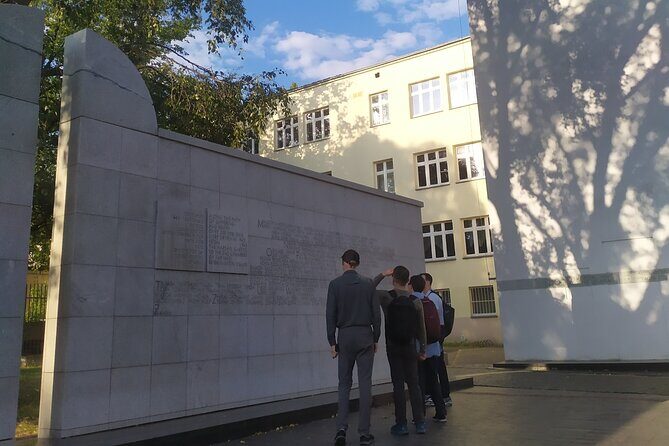
- Real ghetto remains, including a fragment of the ghetto wall, not just plaques.
- A 2-hour ghetto block covers multiple major landmarks in one sweep.
- Umschlagplatz is the emotional finish: the transport point linked to 300,000 people sent to Treblinka.
- Memorials of resistance are built into the route, including Miła 18 (Anielewicz’s Bunker) and reminders connected to Jana Karski.
The real value: a 3-hour route that doesn’t leave gaps
This tour works because it doesn’t treat Jewish Warsaw as a list of unrelated stops. Instead, it builds a line in your head: pre-war Jewish landmarks → ghetto boundaries and remnants → daily life under occupation → resistance and then deportation.
The duration is about 3 hours, which is short enough for many schedules yet long enough to cover multiple neighborhoods and memorial sites. That matters in Warsaw because the city has changed so much. You want context before you start guessing what you’re looking at.
Price is also part of the equation. At $28.87 per person, you’re not paying for museums with big entry fees included. You’re paying for interpretation—someone putting the street-level details in order—plus visual aids and a handy info pack that helps you keep learning after the walk.
Other walking tours we've reviewed in Warsaw


Start at Sienna 53: where the story begins in modern Warsaw
Meet at Sienna 53, on the corner with Jana Pawla II Avenue. The tour kicks off at Baguette Mi – Banh mi bistro, and that first stop is mostly about orientation. You get a short introduction before you start moving through the ghetto area.
Why this is smart: Warsaw’s Jewish history landmarks can feel scattered if you arrive cold. Starting at a clear meeting point with an early overview helps you map what’s coming next. You’ll also be close to public transportation, which is useful if you want to tack on other sights before or after.
Timing tip: arrive a bit early. One of the practical frustrations on walking tours is simply being late, and you’ll want your head in the right place before the heavy history starts.
Nozyk Synagogue: the surviving thread you can still touch
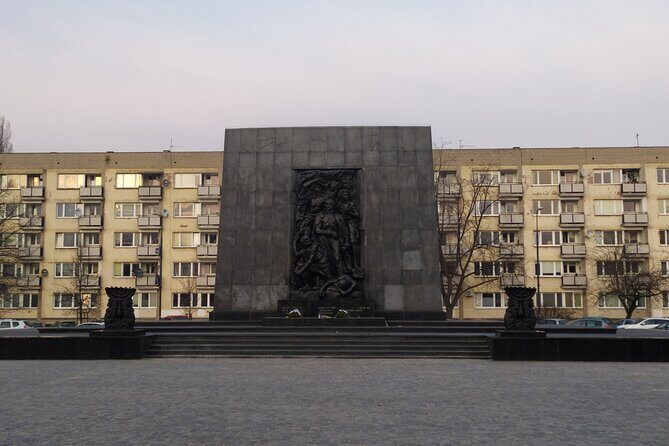
Stop 2 is Nozyk Synagogue. The tour focuses on the fact that it is the only Warsaw synagogue that survived the war and still exists today.
This stop is short (about 10 minutes), but it carries a lot of weight. The synagogue isn’t just a building; it’s a reminder that Jewish life in Warsaw didn’t begin in the ghetto. It existed before the occupation, and it continued—if tragically interrupted—into the modern city you’re walking through now.
Important cost note: the synagogue’s entry fee is 20 PLN and is not included in the tour price. If you want to make the math easy, plan to bring cash or a card that works for local attractions.
A fragment of ghetto wall: what survived when buildings didn’t
At Stop 3 you’ll see a fragment of the ghetto wall. It’s one of the few remaining parts of the ghetto boundary, and that’s exactly why it matters.
When you walk around memorial areas, it’s easy to think in abstractions. A surviving wall fragment forces your brain back into physical space. It helps you picture the ghetto as a bounded place, not just a chapter in a book.
This stop is brief (about 15 minutes), but it sets up the bigger section that follows. If you only remember one thing from this whole walk, it should be this: the ghetto wasn’t just an idea. It was a controlled area with real edges you could see.
Warsaw Ghetto: the long 2-hour stretch that ties multiple landmarks together
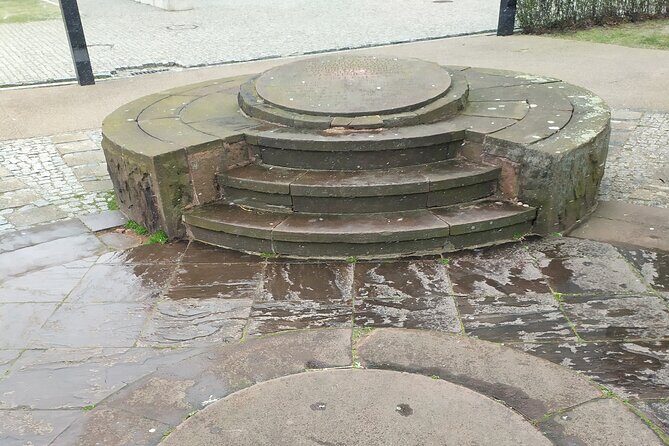
Stop 4 is where the tour does most of the work. You’ll spend about 2 hours and 5 minutes in the ghetto area, connecting several key points:
- the Jewish Ghetto memorial
- the courthouse on Solidarności Street
- Muranów residential district
- the location tied to discovering Ringelblum’s archive
- Church of St. Augustine
- the Heroes of the Jewish Ghetto memorial
- Miła 18 (Anielewicz’s Bunker)
You’ll also encounter additional context tied to the area, including Chłodna street and the pre-war courts mentioned in the route.
Here’s why this part is valuable: in Warsaw, you can look at streets and think they’re just streets. This portion turns the streets into evidence. You learn what happened there and why it matters to the bigger story.
A few practical considerations for this stretch:
- Expect a lot of walking, even though the time is structured with stops.
- Cobblestones can make the pace feel slower than you expect. Sturdy shoes matter.
- Bring an umbrella if rain is likely. The route is outdoors for much of the time.
If you want to get more out of this section, keep a mental checklist. As you move from Solidarności Street to memorials and Miła 18, ask yourself: What changed here? Who lived here? What does this site tell me that a museum caption wouldn’t?
Other POLIN and Jewish heritage tours in Warsaw




Laweczka Jana Karskiego: monuments to resistance and moral courage
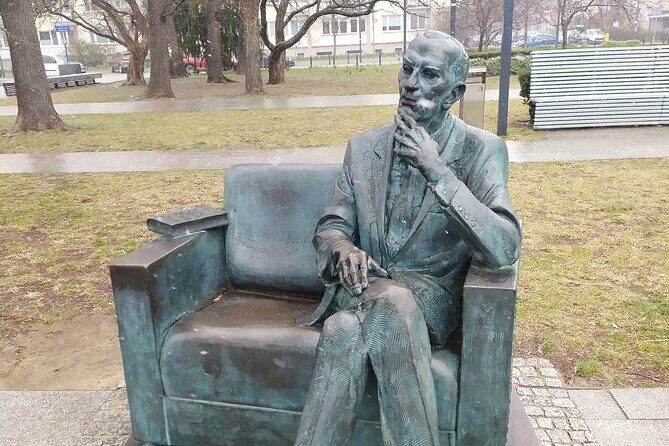
Stop 5 is Laweczka Jana Karskiego. This is a shorter stop (about 15 minutes), but it gives you something the earlier stops don’t: a clearer emotional focus on resistance.
You’ll see several monuments that remind you of the Jews’ heroic struggle within the Warsaw Jewish Ghetto. This matters because it keeps the story from becoming only about suffering. Resistance existed, planning existed, courage existed. You get a more complete picture instead of a single-note tragedy.
If you’re visiting with someone who prefers action to pure memorials, this stop can be a good bridge. You still keep the serious context, but you also leave with a sense that people fought back and tried to change what was possible.
Umschlagplatz: the transport point at the end of the story
Stop 6 is Umschlagplatz, the place from where 300,000 Jews were transported to Treblinka.
This is the finish line. The tour ends in front of the Umschlagplatz monument at Stawki 10. Ending here is deliberate. It closes the loop from earlier sites—synagogue remnants, ghetto boundaries, memorials—into the brutal machinery of deportation.
Even if you know the facts already, this kind of stop still has a way of slowing your step. It forces you to think about scale. The number isn’t abstract when you’re standing at the memorial for the place where it happened.
When you leave this area, you might want to take a moment before moving on to the rest of your day. It’s not a light stop, and you’ll do yourself a favor by not rushing straight into dinner-mode chatter.
Price and logistics: what you’re paying for, and what you must plan
Here’s the practical breakdown of value:
- Tour price ($28.87) covers the guided walking experience, the full info pack before your tour, and visual aids.
- Nozyk Synagogue entry (20 PLN) is the one clear extra cost on the route.
- The tour includes recommendations for more places to visit and where to eat or drink afterward, which helps if you’re building a quick Warsaw plan.
The group size is max 10, which usually means you’re not lost in a crowd. It also helps on a topic like this, where questions and clarification can make a big difference.
Language and ticket format are also convenient. The tour is offered in English, and you’ll get a mobile ticket.
One more logistics point: confirmation is received at the time of booking, and service animals are allowed. The tour is near public transportation, so you’re not stuck far from tram or bus lines.
How to make it comfortable on a walking tour in cobblestones
This is one of those tours where comfort affects your brain. If your feet are miserable, you’ll miss details.
Do this:
- Wear sturdy shoes for cobblestones.
- Bring an umbrella if weather is iffy.
- Bring water. The tour includes short pauses, but it still runs about 3 hours.
Who should skip it (or at least think twice): the tour is not recommended if you have problems with walking long distances. It’s not a sit-and-listen format.
If you’re traveling with mobility concerns, you might still be able to see parts of the area on your own. But this specific guided structure is built around a consistent walking pace.
Who should book this tour in Jewish Warsaw?
Book this walk if you want a street-level orientation to Jewish Warsaw that connects the dots without needing multiple museum days. It’s also a strong choice if you like guides who use photos and maps to help you keep track of where you are and what you’re looking at.
It’s especially good for:
- first-time visitors who want context fast
- people who want to understand the ghetto as a real place, not just a name
- history-focused travelers who appreciate memorials and physical traces
It may not be your best match if you’re expecting lots of intact pre-war buildings. Warsaw’s Jewish ghetto area was heavily destroyed, so you’ll see what remains, plus memorials that mark what’s gone. That approach can feel different—less like sightseeing, more like learning on the ground.
Should you book it?
Yes, I think you should book this tour if your goal is understanding. The route is designed to take you from surviving landmarks like Nozyk Synagogue to the ghetto remains and memorial sites, then end at Umschlagplatz where the deportations began in the documented reality of WWII.
My main cautions are simple: wear good shoes, expect a long walk, and plan for the extra 20 PLN synagogue entry fee. If you can handle that, this is one of the most direct ways to read Warsaw with your eyes open and your facts straight.
FAQ
FAQ
How long is the Historical Walking Tour of Jewish Warsaw?
It runs for about 3 hours (approx.).
What language is the tour offered in?
The tour is offered in English.
Is the ticket mobile?
Yes, the tour includes a mobile ticket.
Where does the tour start and end?
It starts at Sienna 53, 00-820 Warszawa, Poland, and ends in front of the Umschlagplatz Monument at Stawki 10, 00-178 Warszawa, Poland.
Is the Nozyk Synagogue entrance fee included?
No. Entry to Nozyk Synagogue costs 20 PLN and is not included.
What’s included in the tour price?
You get a full info pack about Warsaw prior to your tour (FAQ and useful links), visual aids, and recommendations about more places to visit and where to eat or drink.
Is the tour in a small group?
Yes. The tour has a maximum of 10 travelers.
Is it near public transportation?
Yes, it is near public transportation.
Who might find the walking difficult?
It’s not recommended for travelers who have problems with walking long distances.