REVIEW · WARSAW
From Warsaw: Tour to Malbork Castle and Gdansk or Sopot
Book on GetYourGuide →Operated by AB Poland Travel · Bookable on GetYourGuide
A trip like this hits fast and hard. You go from Warsaw to Malbork Castle and then onto the Hanseatic old town of Gdansk or the seaside air of Sopot. I love that the day is structured around guided highlights, so you spend less time guessing and more time seeing.
Two things I really like: the 3.5-hour guided tour inside Malbork, and the fact that Gdansk or Sopot isn’t just a drive-by. One watch-out: the whole day is packed into 17 hours, so if you want long, slow wandering time in Gdansk, you may feel the clock a bit.
In This Review
- Key points to know before you go
- From Warsaw to the Vistula Delta: A Long Drive with Actual Stories
- Malbork Castle: Touring the Largest Castle Complex in Europe
- What you’ll see inside the complex
- The skip-the-line advantage
- Lunch in a Local Restaurant: Food That Fits a Tight Schedule
- Gdansk Old Town Walk: Amber, Gothic Gates, and Merchant Power
- Begin with city structure
- Amber Museum in the former Prison Tower
- Golden Gate, Long Market, and Green Gate
- Artus Court: where merchants gathered
- The Basilica of the Assumption of the Blessed Virgin Mary
- The main drawback: time pressure
- Sopot Instead: A Seaside Day with Pier-Walk Rewards
- Crooked House and the fun factor
- Long wooden pier and lighthouse history
- Small Group, English-Language Guides, and the Pace That Makes It Work
- Price and Value for a 17-Hour Malbork Plus Coastal Day
- Who This Tour Suits Best (and Who Might Feel Crowded)
- A Few Things to Watch Before You Book
- Should You Book This Warsaw to Malbork and Gdansk/Sopot Tour?
- FAQ
- How long is the tour from Warsaw?
- Where is pickup in Warsaw?
- Do I get to choose between Gdansk and Sopot?
- Is lunch included?
- Is there an entry fee included for Malbork Castle?
- Is Malbork entry line skipped?
- Is the tour limited to a small group?
- Is there a minimum number of reservations required?
- Is the tour wheelchair accessible?
Key points to know before you go
- Malbork Castle guided time (3.5 hours): enough time for the major spaces without it feeling rushed.
- Audio guide at Malbork: built in, in English, and used for an efficient, informative visit.
- Real choices after Malbork: pick either Gdansk for old-town walking or Sopot for a lighter seaside outing.
- Amber Museum and Artus Court in Gdansk: easy, walkable stops that help you understand the city beyond postcard views.
- Small group (up to 8): you get attention without the chaos of a big bus.
- Lunch is included: a straightforward meal with soup, main course, and water, so you’re not hunting food mid-day.
From Warsaw to the Vistula Delta: A Long Drive with Actual Stories
Leaving Warsaw for northern Poland is a commit-yourself day. You’re traveling by car or minibus, and you’re not stuck in silence. In the past, the driver (Jake) has kept things lively with conversation, including history and even politics, which makes the time feel less like lost hours and more like warm-up.
This drive also matters for one simple reason: it positions you for the setting of the day. Malbork isn’t a random stop. It sits near the Vistula River delta in Pomerania, so you feel like you’ve left central Poland behind and stepped into a different historical rhythm.
You’ll start with pickup in Warsaw city center (the meeting point is Marszałkowska 98–100). If hotel pickup is available for your location, you’ll get the convenience of going door-to-door rather than finding the group yourself.
Practical tip: pack something for the road (water helps, and a light layer is smart even in warmer months). A 17-hour day needs comfort more than you think.
If you're still narrowing it down, here are other tours in Warsaw we've reviewed.


Malbork Castle: Touring the Largest Castle Complex in Europe
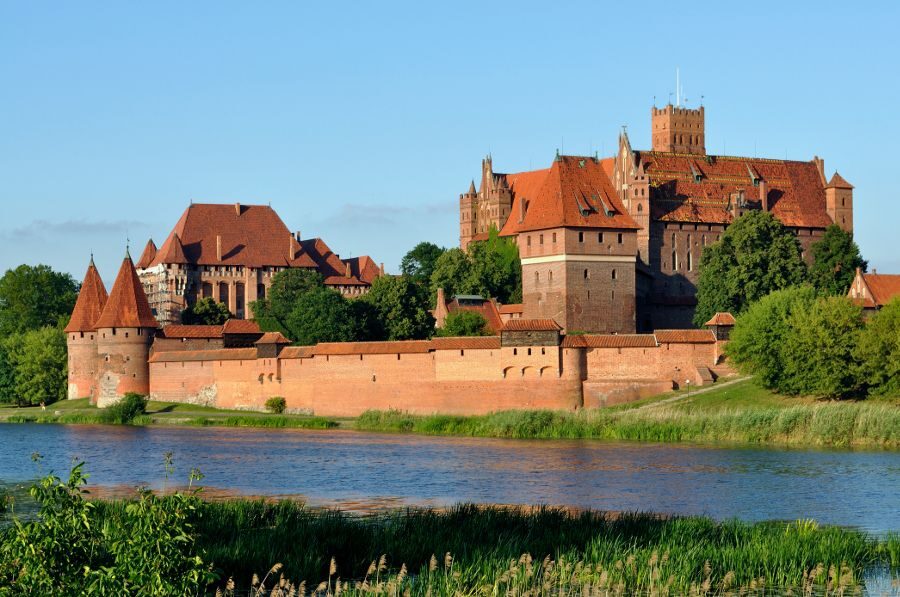
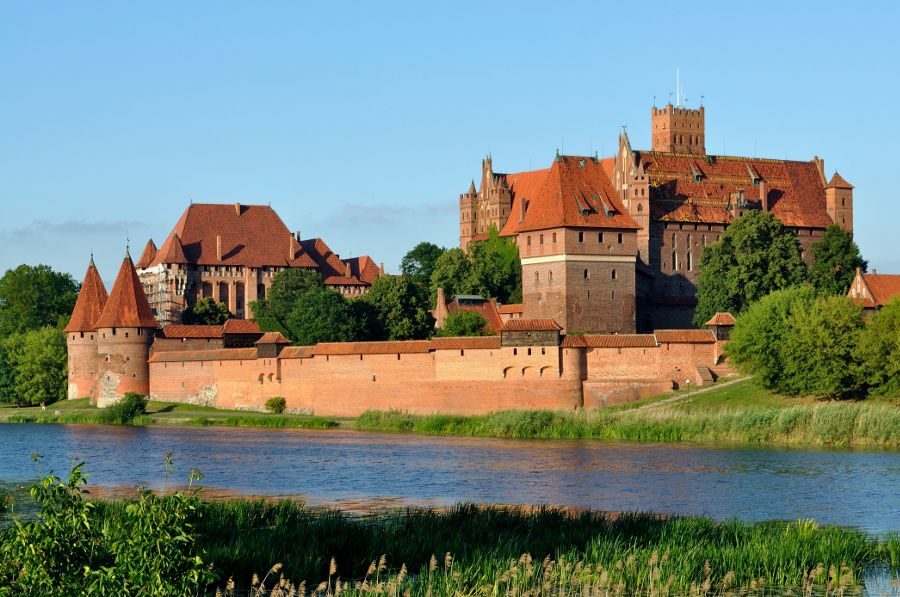
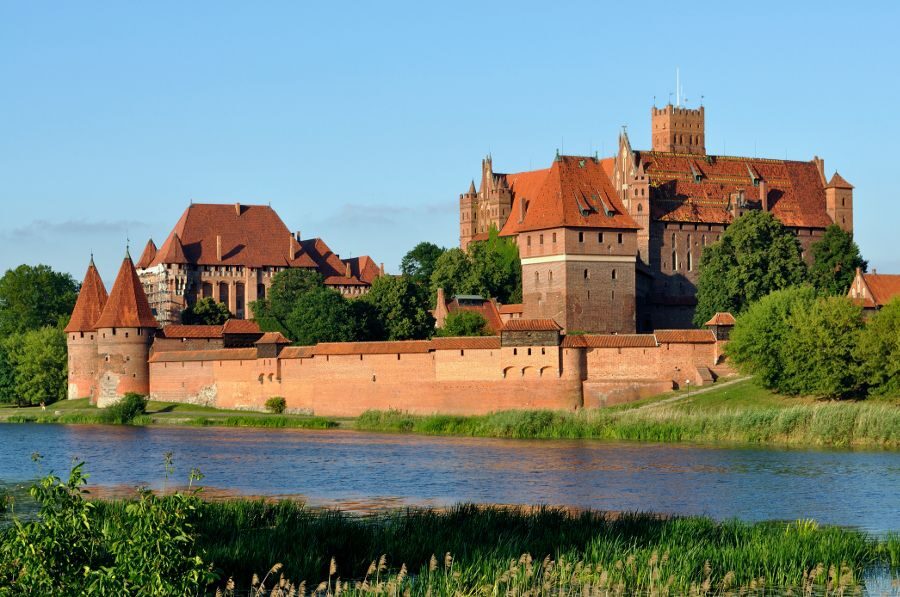
If you only do one thing on this trip, make it Malbork. This is the largest castle complex in Europe by land area, built by the Knights of the Teutonic Order. Even if you’ve seen big castles elsewhere, Malbork works differently. It’s not just impressive walls. It’s a whole system of courtyards, halls, and power.
Your visit includes a guided tour of about 3.5 hours, plus an English audio guide that helps you move efficiently through the spaces. One of the most useful parts of this setup is that you’re not waiting for every explanation, and you still get context when it matters.
What you’ll see inside the complex
Inside the castle complex, the focus is on the key sections that explain how the place functioned:
- High Castle: you’ll admire the courtyard and cloisters, and you’ll get a sense of the daily and ceremonial layout.
- Summer Refectory: this is where feasts were held, so you’re not only looking at architecture—you’re imagining the moments that brought people there.
- Middle Castle and the Grand Masters’ Palace: you’ll look at the Gothic design tied to the authority of the Grand Masters.
These are the kinds of highlights that make the castle readable. Instead of seeing “a lot of rooms,” you start seeing why those rooms existed and how power was organized.
The skip-the-line advantage
You’re also set up to skip the ticket line. That sounds small, but it helps on a long day. When you have one major anchor attraction, saving time right at the entrance gives you more breathing room later.
Practical tip: wear shoes with grip. Courtyard areas and stone surfaces can feel cool even when the sun is out, and you’ll be walking more than you expect inside and around the complex.
Lunch in a Local Restaurant: Food That Fits a Tight Schedule
Lunch is included and designed to keep the day moving. You’ll have soup, a main course, and water in a regular restaurant. It’s not trying to be a culinary event; it’s trying to be reliable fuel.
This is actually a good choice on day trips. When your itinerary includes major walking in Gdansk or Sopot, you don’t want lunch that runs late or leaves you hungry. A set meal also makes it easier for the group to stay on time.
Tip for comfort: if you’re sensitive to long sitting, ask for water refill timing with your meal, and take a quick posture reset before your afternoon walk.




Gdansk Old Town Walk: Amber, Gothic Gates, and Merchant Power
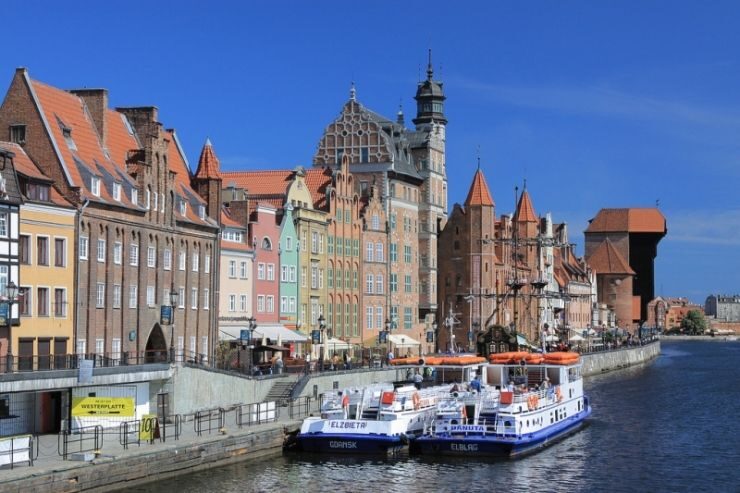
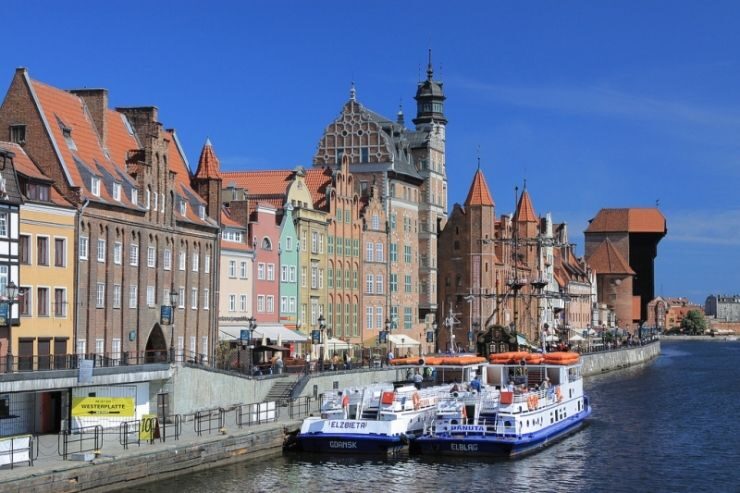
After Malbork, you head to Gdansk, and the vibe shifts from fortified medieval space to trading-city energy. Gdansk’s Old Town is laid out for walking, and your guided portion is about 2 hours, so it’s enough time to get your bearings and hit the most meaningful spots.
Begin with city structure
You’ll pass key landmarks connected to the city’s commercial life, including the Coal Market (Targ Węglowy). This is also where the annual Christmas Market takes place, which signals how old economic spaces still shape modern events.
Then it’s into the historic core with an emphasis on what made Gdansk wealthy and influential.
Amber Museum in the former Prison Tower
One stop that helps you understand local identity is the Amber Museum, housed in the former Prison Tower. It’s the kind of pairing that makes a city feel real: a structure tied to punishment now used for crafts and trade culture.
Golden Gate, Long Market, and Green Gate
You’ll walk through the Golden Gate to enter the Long Market, and the route continues toward the Green Gate. These gates aren’t just decorative. They help you visualize boundaries, entrances, and the choreography of movement through the city.
Artus Court: where merchants gathered
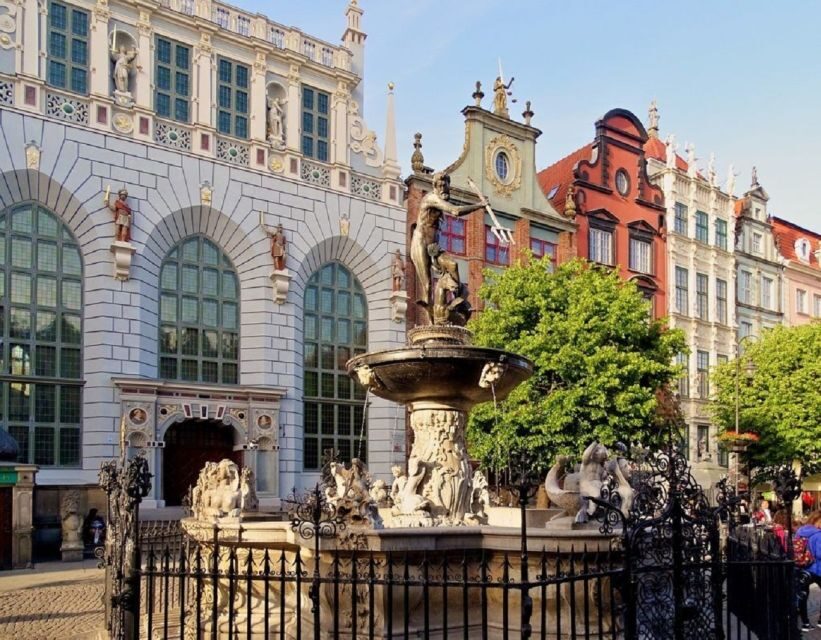
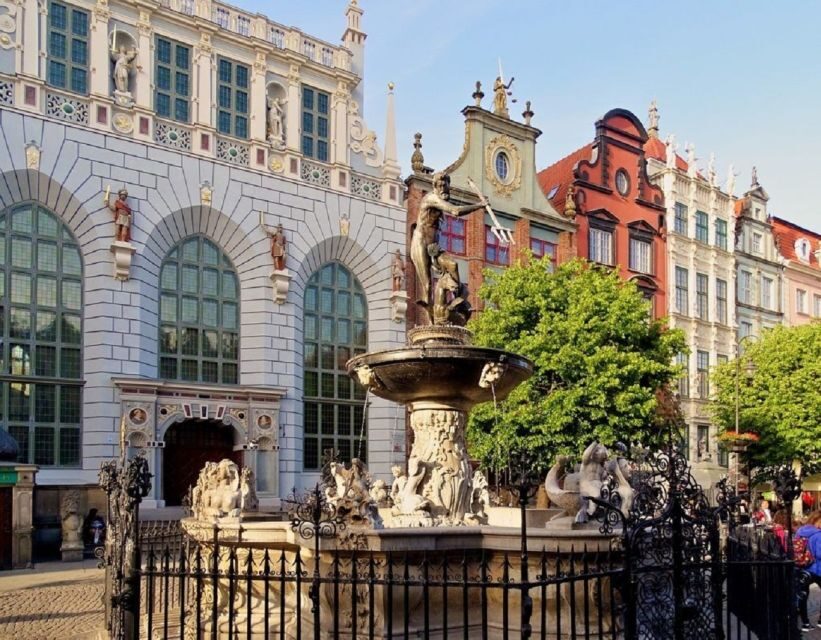
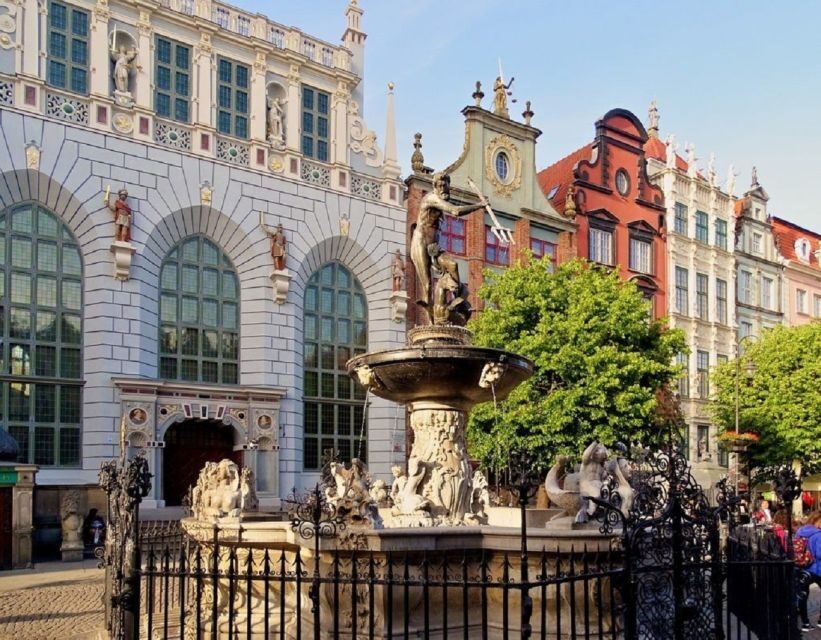
You’ll also visit Artus Court, a meeting place where wealthy merchants used to gather in the evenings. It’s a reminder that politics and trade weren’t separate worlds. In Gdansk, merchants had influence, and spaces like this were built to host that social power.
Nearby, you’ll notice the Dutch House (Dom Holenderski), which adds color to the walk, and you’ll take a break at Neptune’s Fountain at the entrance to Artus Court.
The Basilica of the Assumption of the Blessed Virgin Mary
A big finale is the Basilica of the Assumption of the Blessed Virgin Mary, described as the largest brick church in the world. That superlative is the headline, but the real value is how it anchors your sense of the city. When you’re done with gates, markets, and merchant courts, the church gives you the spiritual scale.
The main drawback: time pressure
Two hours in Gdansk is a good orientation, not a long explore. If you love museums, churches, and side streets equally, you might want a little extra time after the guided part ends.
Still, you’ll come away with a map in your head: you’ll know where things are, what to revisit, and what you might want to photograph differently.
Sopot Instead: A Seaside Day with Pier-Walk Rewards
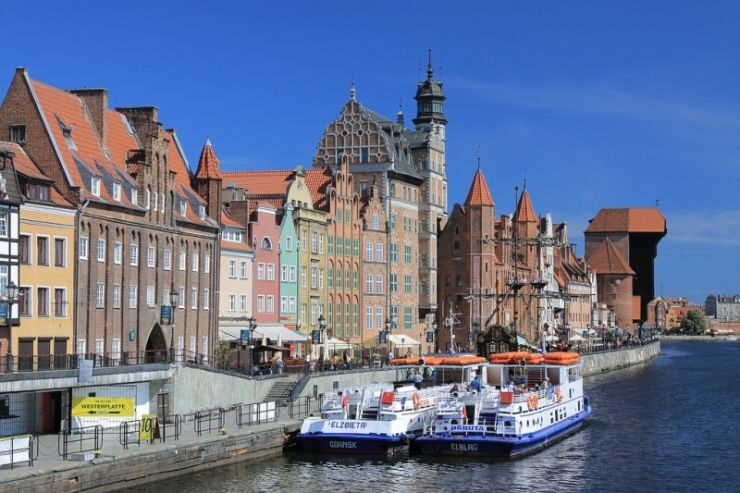
Not every day trip should be all fortress and brick. If you choose Sopot, you’re trading medieval intensity for seaside strolling and sea-air views.
You’ll walk along the pedestrianized promenade of Bohaterów Monte Cassino (often called Heroes of Monte Cassino Street). This is the spine of Sopot’s visitor life: you get movement, people-watching, and an easy pace.
Crooked House and the fun factor
You’ll also spot the famous Crooked House. It’s a quirky stop, but it does something important: it breaks the day’s heaviness after Malbork and gives you a lighter moment without losing the “what is this place” context.
Long wooden pier and lighthouse history
Next comes one of Sopot’s big draws: a stroll along the longest wooden pier in Europe. Walking out toward the water is one of those experiences that doesn’t require deep interpretation. You just enjoy the rhythm and the horizon.
You’ll also admire the Sopot Lighthouse, built in 1903–1904 as part of the Balneological Institute. That detail matters because it ties the lighthouse to the town’s health-and-wellness identity, not just navigation.
Finally, you can go to the top of the lookout tower for views over the city and sea. This is where your “what’s where” understanding locks in visually.
Best fit: choose Sopot if you want a calmer afternoon and prefer coastal scenery over more old-town architecture.
Small Group, English-Language Guides, and the Pace That Makes It Work
This is one of those tours where the structure supports the highlights.
- Small group: limited to 8 participants. That means questions get answered and the group isn’t constantly splitting attention.
- English-speaking driver: helpful for context during the ride, and in past days, that ride conversation has been a major part of the experience.
- English-speaking guide in Gdansk or Sopot: you get live interpretation where it counts.
- Audio guide at Malbork: you’re not dependent on one voice for the whole castle maze, and it helps the visit stay moving.
- Wheelchair accessible: the tour is described as accessible, which is a meaningful plus for planning.
The pace is still full-throttle. But it’s full-throttle with brakes: you’re guided, you’re fed, and you’re not left guessing.
Price and Value for a 17-Hour Malbork Plus Coastal Day
At $477 per person, this isn’t a budget excursion. But it’s also not priced like a “do-it-yourself” day. You’re paying for several concrete things:
- Transportation by car/minibus for a long route from Warsaw and back
- Pickup from Warsaw city center (meeting point is Marszałkowska 98–100)
- Entry fee to Malbork Castle
- Lunch (soup, main course, water)
- Skip-the-ticket-line convenience
- English-language guide support and audio guide at Malbork
- Small group size, which usually costs more than the big-bus option
The best way to think of the value: you’re buying a guided day that strings together three different “modes” of travel—fortress history, merchant-city walking, and either seaside fun or more urban depth—without you doing the logistics.
For history lovers, or for first-timers who want an efficient taste of northern Poland, it can feel like a solid deal. For travelers who prefer fully independent time, it may feel like too much structure for the cost.
Who This Tour Suits Best (and Who Might Feel Crowded)
This day trip is ideal if you:
- Want Malbork Castle as a guaranteed highlight with guided context
- Like walking with a guide, especially in places where details matter (gates, markets, landmark buildings)
- Prefer a small group and clear timing over wandering on your own
- Don’t want to plan transport from Warsaw and coordinate entry and timing at Malbork
It may feel less ideal if you:
- Want a long, free-form day in Gdansk (the guided portion is about 2 hours)
- Prefer slower travel with fewer transitions
- Hate long drives; the day is built around getting from Warsaw to Pomerania and back
A Few Things to Watch Before You Book
Two details to keep in mind:
- It runs only when there are enough bookings. The tour requires a minimum of two reservations for the same date. If your schedule is flexible, that matters less. If you’re locked to a specific day, keep it on your radar.
- You choose the afternoon: Gdansk or Sopot. Pick based on your mood. If you love architecture and merchant-era sites, go Gdansk. If you want open air, sea views, and a fun visual break after Malbork, go Sopot.
Also, think about weather. Outdoor walking is a big part of both options, and the day’s timing can’t slow down just because rain shows up.
Should You Book This Warsaw to Malbork and Gdansk/Sopot Tour?
Yes, if your priority is a well-guided, high-value day that hits a top historical site and then gives you a second cultural flavor.
Book this tour if:
- You want Malbork Castle with real interpretation, not just a ticket
- You like the idea of a small group and an English guide with live commentary
- You’re okay with a packed 17-hour format and want everything handled for you
Skip it or reconsider if:
- You want lots of spare time to wander on your own in Gdansk
- You’d rather do the coastal town at a slower pace, without rushing back to Warsaw
If you’re visiting Poland and only have one day to spare north of Warsaw, this is a strong way to make that day count.
FAQ
How long is the tour from Warsaw?
The duration is 17 hours.
Where is pickup in Warsaw?
Pickup is at Marszałkowska 98–100 in Warsaw city center.
Do I get to choose between Gdansk and Sopot?
Yes. The tour includes a guided visit to either Gdansk or Sopot, depending on your option.
Is lunch included?
Yes. Lunch is included (soup, main course, and water) in a regular restaurant.
Is there an entry fee included for Malbork Castle?
Yes, the entry fee to Malbork Castle is included.
Is Malbork entry line skipped?
Yes, it includes skip-the-ticket-line service for Malbork Castle.
Is the tour limited to a small group?
Yes. It’s a small group limited to 8 participants.
Is there a minimum number of reservations required?
Yes. The tour requires a minimum of two reservations for the same date.
Is the tour wheelchair accessible?
Yes, the tour is listed as wheelchair accessible.