REVIEW · WARSAW
Walk through the Warsaw Old and New Town: like Phoenix from the ashes
Book on Viator →Operated by PolinTours · Bookable on Viator
Warsaw feels reborn in real time. This 2-hour walk links Chopin’s Warsaw to the rebuilt Old Town and the sites tied to the Warsaw Uprising, so you stop seeing landmarks as separate postcards. I like that you get story-first guidance from a licensed city guide, and I also like the pacing of short stops that still manage to cover major places without dragging. The one thing to watch is the timing: some stops are brief, so if you want a slow, stand-around visit inside churches or museums, this style may feel a bit fast.
You’ll start at the Nicolaus Copernicus Monument and finish at the Warsaw Uprising Monument, walking from the Old Town into the New Town. Most entrances are free for tour stops, but the Marie Curie Museum is not included, so plan for that extra cost if you want to go in. Overall, it’s a strong way to get your bearings fast and understand why Warsaw’s center looks the way it does.
In This Review
- Key things you’ll notice on this Old and New Town walk
- What $72.87 buys on a 2-hour Warsaw Old and New Town walk
- Krakowskie Przedmieście to Chopin’s Heart at Holy Cross Church
- University of Warsaw and the Tomb of the Unknown Soldier
- Presidential Palace, Castle Square, and the rebuilt Old Town magic
- From St John’s Archcathedral to the Vistula views and Rynek Starego Miasta
- Marie Curie’s Museum and the Field Cathedral at the Warsaw Uprising Monument
- Should you book this Phoenix-from-the-ashes walk?
- FAQ
- How long is the tour?
- Where does the tour start and end?
- Is the tour in English?
- Are entrance tickets included?
- Is this a private tour?
- How can I get the ticket?
- Can I cancel for free?
Key things you’ll notice on this Old and New Town walk
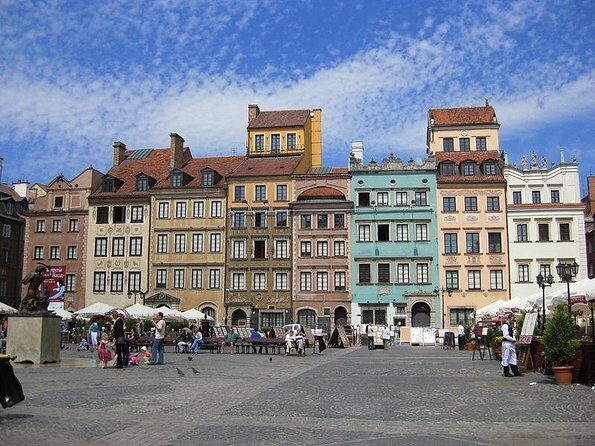
- Chopin’s connection that feels physical, not just musical trivia, including the church where his heart is kept
- Old Town reconstruction details that explain how and why the area was rebuilt after WWII
- Warsaw Uprising landmarks tied to places you can actually stand at and picture in context
- A clear Old to New Town transition, so you don’t just loop around the center
- Free entrances at most stops, with just one major museum not included
What $72.87 buys on a 2-hour Warsaw Old and New Town walk
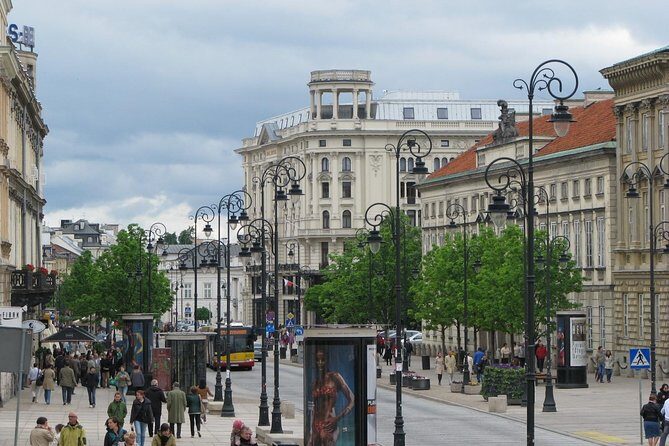
For about $72.87 per person, you’re buying more than walking. You’re buying a guided storyline that connects landmarks with the people and events that shaped them. In a city like Warsaw, that matters, because so much of what you see in the core is a response to what was destroyed and what had to be rebuilt.
This is a licensed group tour (your group only) and it runs about 2 hours. A big plus for value: many stops are listed with free admission tickets, so you mostly pay in time and effort, not entry fees. You’ll also use a mobile ticket, which is handy if you like to keep things simple on a phone.
The trade-off is that it’s not a slow museum day. Expect quick viewpoints, short explanations, and then walking onward. If you hate crowds or prefer to linger, plan a second solo stop later. Also, the Marie Curie Museum is specifically noted as not included, so your total spend may rise depending on what you want to do at that stop.
Other Warsaw Old Town tours and walks


Krakowskie Przedmieście to Chopin’s Heart at Holy Cross Church
Your walk begins near the Nicolaus Copernicus Monument on Krakowskie Przedmieście, with the guide holding a PolinTours sign. This street setting is a smart opener because it gets you into the Warsaw rhythm before you start climbing into the Old Town narrative.
Then you pivot toward what is often the emotional core of this tour: Frédéric Chopin. At Holy Cross Church (Kosciol Swietego Krzyza), you’ll hear the life story of Chopin and the connection that’s not symbolic or abstract. The tour points you to the place where Chopin’s heart rests, and that makes the music feel anchored to the city in a very direct way.
A key practical point: churches can be cool inside, and they can also feel busy depending on the day. Dress for comfort and don’t plan on spending a lot of time photographing unless your guide’s timing allows it. The benefit here is focus: you’re not wandering. You’re getting the context so when you look around, the details mean something.
Also, you’ll be guided by a German-speaking guide while the experience is offered in English. That’s worth noting because you might want to confirm language expectations when booking, especially if you’re sensitive to mixed-language narration.
University of Warsaw and the Tomb of the Unknown Soldier
After Chopin, the tour heads toward the University of Warsaw, specifically the oldest part. This stop is short, but it’s useful because it widens the story beyond war and rebuilding. Warsaw isn’t just a survivor city; it’s an academic and cultural center too. Even with only a few minutes, you’ll get a sense of the university as part of the city’s long continuity.
Next comes a stop that hits a different register: the Grob Nieznanego Zolnierza, the Tomb of the Unknown Soldier. Here, you’re guided to learn more about the estate of the Saxon kings in Poland. That’s a strong pairing, because it connects how power and identity show up in the built environment. You can stand at a memorial and still understand how earlier eras shaped the same geographic stage.
This is one of those places where your guide’s framing makes a difference. Without it, you might read the site as only solemn. With the added background, you start seeing layers: royal Poland, national memory, and the way later generations choose to honor sacrifice.
One drawback to keep in mind: these are quick stops. You don’t get a full, deep-on-the-spot history lesson. You get an orientation and a set of names and themes to carry with you. If you want to go deeper, you’ll be in good shape to do that on your own after the tour.
Presidential Palace, Castle Square, and the rebuilt Old Town magic
Now you move into the postcard center: Palac Prezydencki and then Castle Square (Plac Zamkowy), the heart of the Old Town experience. At the Presidential Palace, you’ll admire the seat of the Polish President and hear about its unusual history. Even if you don’t spend long there, the point is clear: this isn’t just a pretty facade. The area has shifted roles over time, which is one reason Warsaw’s center can feel like a living timeline.
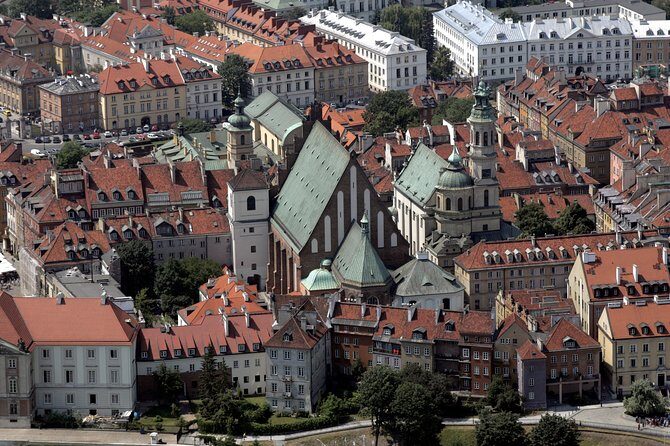
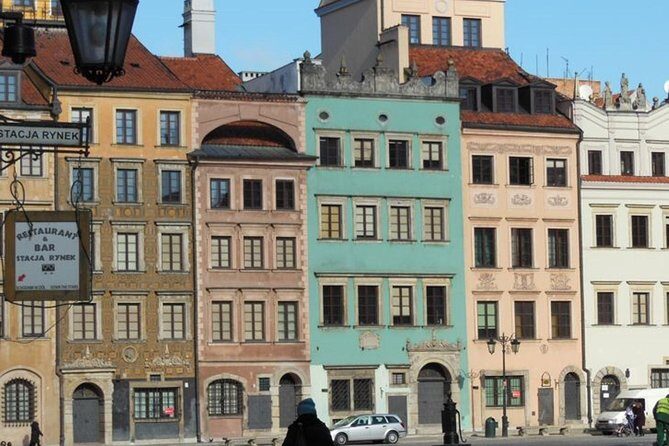
Then comes Castle Square and the Old Town, a UNESCO World Heritage Site. The tour emphasizes something important for your understanding: this Old Town is often called the youngest Old Town in the world, because of how it was reconstructed. That label sounds odd until you understand what was destroyed and how the rebuilding was carried out.
You’ll hear about the financing of the reconstruction and the role of a Venetian painter. You’ll also get the story of the Royal Castle and how the area ties into the first democratic constitution in Europe. Those are big concepts, but the guide’s job is to translate them into street-level meaning.
A practical tip: Castle Square is a place where you’ll want to take a step back for photos, because people tend to gather in the same spots. If you can, do your photos during the quiet moments right after the guide finishes a key explanation. You’ll remember the story when you see the picture later.
From St John’s Archcathedral to the Vistula views and Rynek Starego Miasta
You’ll then visit the Archcathedral Basilica of St John the Baptist, described as the only church in Europe through which the war front ran during the Second World War. This isn’t the kind of fact you forget, because it turns the building into a witness. The tour connects it to the Warsaw Uprising and discusses the role of the Russian army, with a focus on Polish struggle and survival.
The stop is short, so take it in as context, not as a long service visit. If you want to go back later and spend more time reading, you’ll know exactly what to look for because the tour gives you that starting angle.
From there, you head toward Gnojna Góra for a quick look toward the Vistula. Even with only a few minutes, this viewpoint matters. Warsaw’s story isn’t only stone and brick; it’s also geography and how people moved, defended, and rebuilt around the river.
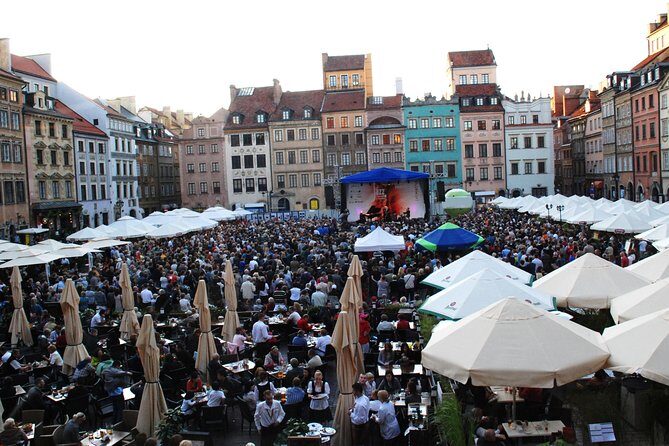
Finally, you reach Rynek Starego Miasta, the main square of the Old Town. This is where you feel the atmosphere of legends and local storytelling. The tour spotlights the picturesque streets and famous corners, and it’s a good moment to slow down just enough to notice patterns: what’s where, why it looks the way it does, and how the square anchors the whole area.
If you’re traveling with time pressure, this is where you’ll feel the tour’s payoff most. You’re not just seeing nice streets. You’re seeing a designed landscape with a reason behind it.




Marie Curie’s Museum and the Field Cathedral at the Warsaw Uprising Monument
After passing through the city gate from the Old Town toward the New Town, the tour brings you to Muzeum Marii Sklodowskiej-Curie for a deeper personal story: the birthplace of Marie Curie. Entrance here is not included, so you decide whether to add it. If you love science and want the human side of discovery, it’s an easy add-on because the tour is already giving you the Warsaw setting.
Even if you choose not to pay for the museum entry, the stop still works as a contrast. The Old Town portion hits war and rebuilding hard. This New Town moment reminds you that Warsaw is also a place of ideas and achievement.
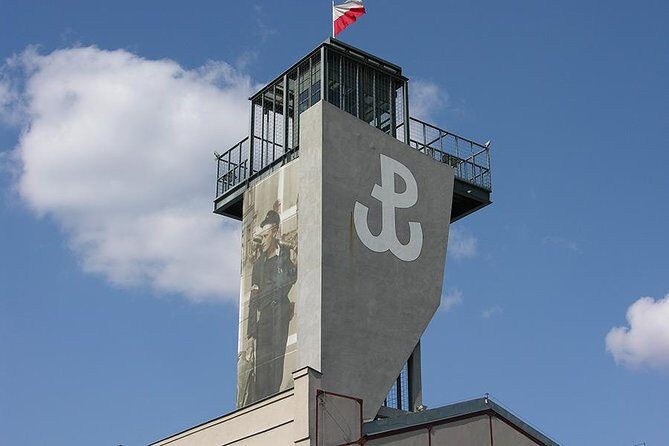
The tour wraps up at the Field Cathedral of the Polish Army and ends at the Warsaw Uprising Monument on plac Krasińskich. That ending matters. It ties the walk together into one final statement: Warsaw’s identity shaped by resistance, loss, and memory.
If you want the cleanest next-step plan for your day, it’s simple: after the tour ends, take 15 minutes to stand near the monument and look outward. The guide’s explanations make it easier to picture the streets and turning points you just walked past.
Should you book this Phoenix-from-the-ashes walk?
Book it if you want a fast, focused introduction to why Warsaw looks like it does: Chopin’s connection, the rebuilt Old Town, and the Warsaw Uprising trail, all tied into a single narrative. The free admissions at most stops also make it a smart pick when you don’t want your day to turn into a ticket counter.
Skip it or add extra time only if you know you like long museum stays. This tour is built for movement and explanation, not for sitting for an hour in one place. If you’re unsure, do this walk first to get your bearings, then plan a return on your own to the spots that tug at you most.
FAQ
How long is the tour?
It’s approximately 2 hours.
Where does the tour start and end?
It starts at the Nicolaus Copernicus Monument on Krakowskie Przedmieście and ends at the Warsaw Uprising Monument on plac Krasińskich.
Is the tour in English?
It’s offered in English, and the guide is described as German-speaking.
Are entrance tickets included?
Most stops are listed as free admission. Muzeum Marii Sklodowskiej-Curie is not included.
Is this a private tour?
It’s listed as a private activity, meaning only your group participates.
How can I get the ticket?
You get a mobile ticket.
Can I cancel for free?
Yes. You can cancel for a full refund if you cancel up to 24 hours before the experience starts.