REVIEW · WARSAW
Guided Tour to Auschwitz-Birkenau from Warsaw
Book on Viator →Operated by Poland Travel · Bookable on Viator
One of Europe’s hardest days, planned well. This guided trip from Warsaw strings together a morning train to Kraków, a guided visit to Auschwitz-Birkenau, then time in Kraków before the return. It’s built for people with limited time in Poland who still want an expert-led experience—not just a drive and a few photos.
I really like two things here. First, the Auschwitz-Birkenau admission ticket is included, so you don’t waste time at the entrance. Second, you get local guidance through both camp sections, with time set aside in each area rather than one rushed loop.
The main drawback is the grind of a very long day. Between early departure, walking and standing, and the later return train timing, you should expect tired feet and limited flexibility.
In This Review
- Key points to know before you go
- Warsaw-to-Kraków: that early train really matters
- Kraków handoff: easy meeting point near the station
- The drive to Auschwitz: plan for the waiting time
- Auschwitz I guided walk: why the first part hits different
- Auschwitz II-Birkenau: scale, weather, and how pacing affects you
- Kraków after Auschwitz: Old Town time is not an afterthought
- Comfort, restrooms, and the long-day checklist
- Price and value: what $167 buys you in real terms
- Who should book this tour (and who should skip it)
- Should you book the Guided Tour to Auschwitz-Birkenau from Warsaw?
- FAQ
- How long is the tour from Warsaw to Auschwitz-Birkenau and back?
- Do I need to buy Auschwitz-Birkenau admission separately?
- What time does the tour start in Warsaw?
- Is the tour offered in English?
- How many people are in the group?
- Is there free time in Kraków?
- What is the cancellation policy?
Key points to know before you go
- Admission included for Auschwitz-Birkenau Museum and Memorial
- Small group size capped at 15 for a more manageable experience
- Two-part camp visit with scheduled time at Auschwitz I and Auschwitz II-Birkenau
- Kraków time included after the museum visit, so you actually see the city
- Very early start (5:30 am) means you need a solid plan for breakfast and comfort
- Pickup coordination may use WhatsApp (one coordinator named Olga was specifically praised for communication)
Warsaw-to-Kraków: that early train really matters
Your day kicks off at Warsaw Central Railway Station (Al. Jerozolimskie 54, 00-024 Warszawa) with a 5:30 am start. The schedule then relies on you taking your own train to Kraków, about 2 hours 30 minutes.
This matters more than you might think. On a day like this, you want to arrive already calm and ready—not chasing connections while your brain is trying to catch up with the meaning of the place you’re going to. Bring layers too. Even in a good season, mornings can feel colder than you expect, and you’ll spend time waiting.
Also, do not underestimate how quickly the day compresses. Many people find the Auschwitz portion is emotionally heavy, and the physical demands (standing, walking, rough ground in places) stack on top of that. The earlier you start, the more you’ll feel it later.
Other Auschwitz day trips from Warsaw
Kraków handoff: easy meeting point near the station
After you reach Kraków, you’re directed to a meeting point that’s about a 7-minute walk from the train station. The idea is simple: get you off the platform, get you oriented, and then get you into the guided portion without complicated transfers.
From the feedback I’ve seen, this part can be either smooth or stressful depending on how closely you follow the plan. Clear communication is key, and when it goes well, you’ll feel taken care of. One organizer named Olga was praised for staying in touch via WhatsApp, which is exactly the kind of thing that helps when you’re tired and the meeting point is not your home turf.
One caution: while the tour is designed to end back at the Warsaw meeting point, there’s a note that rail construction may affect which Warsaw station you return to at the end. That’s not something you can control, so it’s worth taking a screenshot of your exact endpoint details before you go.
The drive to Auschwitz: plan for the waiting time
Once the Kraków portion starts, you take a 1 hour 30 minute drive to Auschwitz-Birkenau. This is where the day turns from travel-mode into memorial-mode.
The good news is that the driving time gives you a buffer to settle your nerves. You’ll be sitting for a while, and that can help if you’re trying to conserve energy for the walking you’ll do later. The not-so-fun news is that this is also part of the long-day math, so you still need to pace yourself.
I’d treat this segment like a preheating period. Eat something, use the restroom when it’s offered, and keep your phone charged. You’re going to be on your feet soon, and you want to avoid digging through your bag for essentials mid-queue.
Auschwitz I guided walk: why the first part hits different
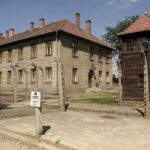
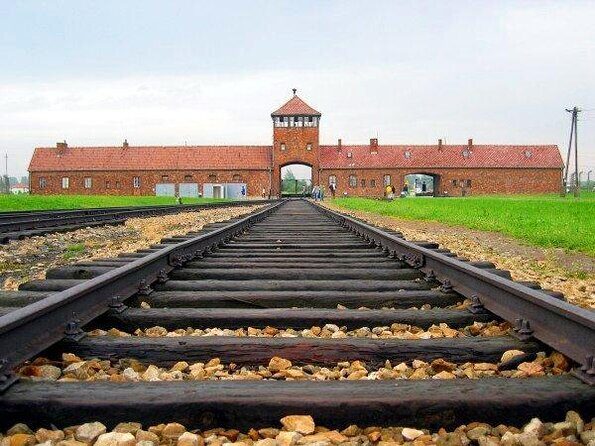
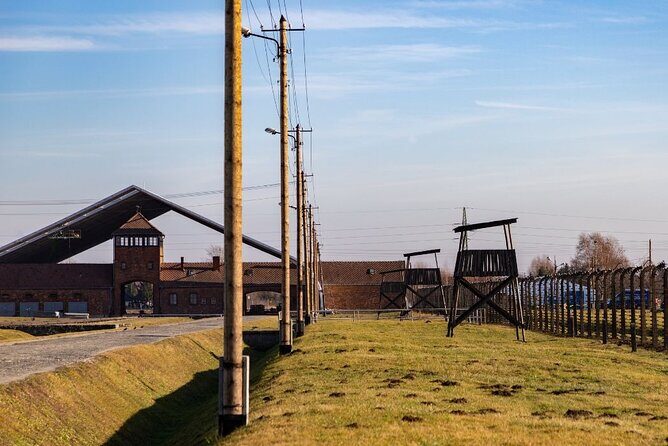
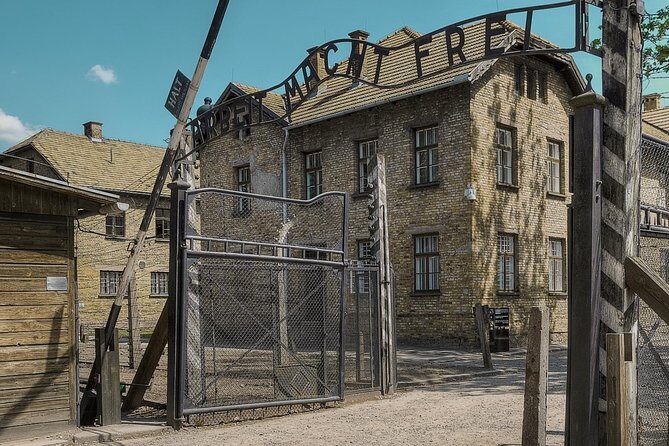
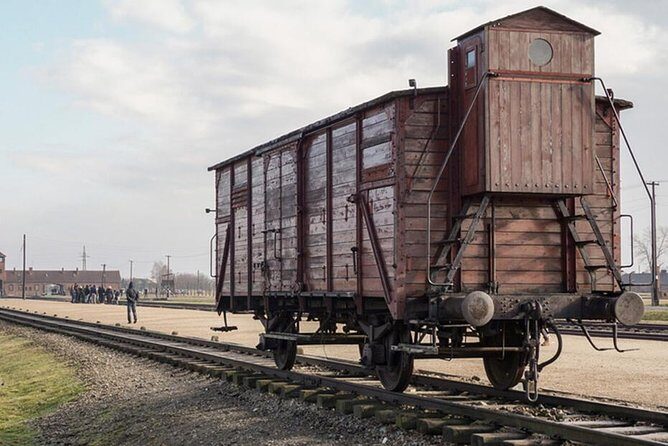
The tour splits the camp visit into two parts. You start with Auschwitz I, described as the section focused mainly on political prisoners. You’ll walk with a local expert guide and see key remains such as barracks, watchtowers, and crematoriums.
The most valuable part of Auschwitz I isn’t just what you see. It’s how the guide frames what you’re looking at. In the best moments, the explanation stays respectful and specific, and it helps you connect details that would otherwise feel like random structures.
You’ll have about 2 hours in Auschwitz I, which is a real chunk of time. Still, this is not a slow museum wander. The site is large, the ground can be uneven, and the guided flow can feel strict about staying together and keeping moving.
Some people also reported that the pace can feel a bit rushed at times and that questions may be limited depending on timing and group management. If you’re the type who needs time to sit with what you’re seeing, you’ll want to mentally prepare for a guided schedule. You can still reflect, but it’ll likely be in short pockets rather than long pauses.
Auschwitz II-Birkenau: scale, weather, and how pacing affects you
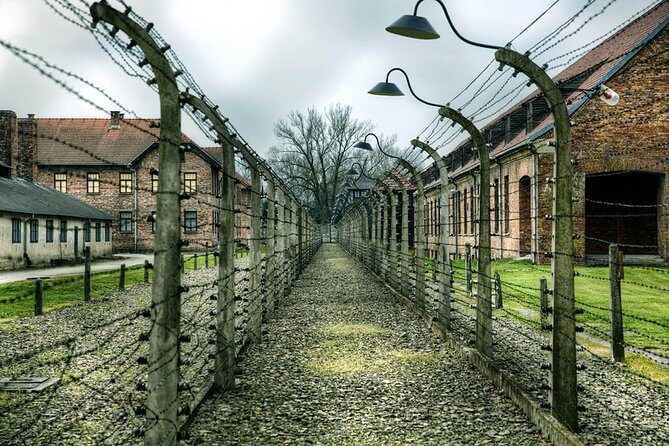
After Auschwitz I, you move to Auschwitz II-Birkenau, mainly tied to Jews and Roma people. This is the larger camp area, and it often hits in a different way—not because the topic changes, but because the scale changes how your brain processes everything.
You’ll spend about 1 hour in Birkenau. That short window is the big trade-off in this format. Birkenau’s openness and distance can make you feel like you need more time, especially if you’re hoping to read every sign or step into every building area.
Weather plays a real role. On very hot days, some guides may have to keep the group moving more quickly, and the experience can feel less contemplative. If you’re planning your trip in summer, consider the impact of heat on your ability to stand and walk. On rainy or windy days, waiting and transit can feel extra long too.
Even with that, Birkenau is often the part people describe as unforgettable because it shows how vast the system was. If Auschwitz I feels like you’re learning a framework, Birkenau often feels like you’re seeing the framework laid out across space.
Other guided tours in Warsaw
Kraków after Auschwitz: Old Town time is not an afterthought
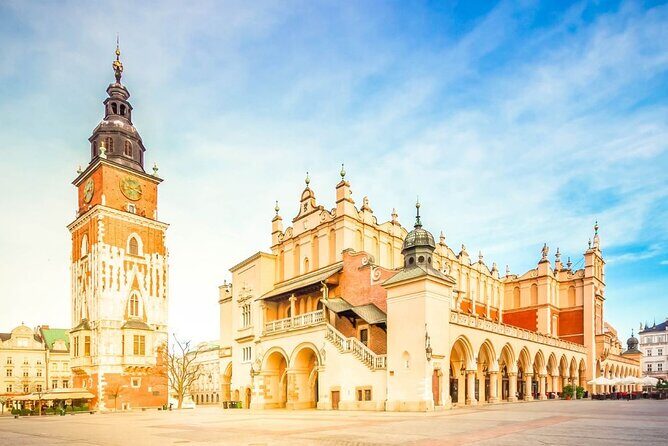
After the camp visit, you head back to Kraków. Then you get about 3 hours of free time in the historic city center, which is a nice counterbalance to the memorial experience.
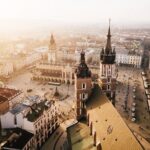
This is not a “you get off the bus and then immediately disappear” kind of break. You actually have time to walk around the Old Market area, including the Main Market Square, which is known for being one of Europe’s largest medieval market squares and a UNESCO World Heritage Site.
Use this time like you would after any emotionally intense visit: move gently, grab food without rushing, and get your bearings in a place that feels alive. Many people like this stop because it turns the trip into more than just transportation to a museum. You leave with a memory of a real city, not only a heavy site.
A practical note from real-world experience: the tour has a structure, so lunch isn’t always built in the way you’d expect. If you tend to get hungry fast, plan for breakfast and carry a small snack if your operator allows it.
Comfort, restrooms, and the long-day checklist
This is a day tour. That sounds obvious, but it’s the part that can make or break your day.
The group limit is 15 travelers, which helps. Still, some vehicles can feel tight depending on how many seats are used. If you have trouble in small vans, consider it in advance and aim for light bags so you can move easily when entering and exiting.
Restrooms are another detail worth planning for. One thing to know: you might pay for restrooms at the car park, and that doesn’t always match what you’ll find at the Auschwitz I area. If you can, treat restroom stops as something to do early, not something you wait for until you’re desperate.
Then there’s the walking. The tour includes guided walking inside both camp areas, plus transit from meeting points. If you have mobility concerns, you’ll want to be honest about what you can handle. Some feedback suggests the walking over rough ground can be tricky for certain mobility needs.
Price and value: what $167 buys you in real terms
At $167 per person, this tour isn’t cheap in the usual sense. But you’re buying structure, not just a ticket.
Here’s what you’re paying for, in practical terms:
- Guided entry to Auschwitz-Birkenau with admission included
- Local expertise during the camp walk (Auschwitz I plus Auschwitz II-Birkenau)
- Transport coordination between Kraków and the camps, plus organized timing
- A built-in Kraków break instead of leaving you scrambling for your own plan
If you tried to build the whole trip yourself, you could often lower the cost. But then you’d also take on the work of booking transport, managing timing, and figuring out exactly how to connect to the guided access once you’re there. This tour’s value is that it reduces decision fatigue on a day when you’re already dealing with a serious emotional load.
That said, some people felt the extra cost wasn’t worth it for the time they spent waiting or for the pacing of the camp visit. If you hate long waits, you may find the return train timing frustrating—some schedules mean sitting around for a while before you can head back to Warsaw.
Who should book this tour (and who should skip it)
This trip is best for you if:
- you’re starting from Warsaw and want to cover Auschwitz-Birkenau in a day
- you want English guidance and included admission rather than DIY logistics
- you also want to see Kraków’s Old Town for a few hours
It may be a poor fit if:
- you hate early starts and long travel days
- you need lots of unstructured time for reflection at the camp
- you’re sensitive to heat or you struggle with walking over uneven ground
- you rely on very tight schedule control and can’t tolerate a little waiting
One small tip: if you’re the type who plans obsessively, bring your patience anyway. Even when everything works, this day has inevitable friction—because of schedules, weather, and the reality of traveling across regions.
Should you book the Guided Tour to Auschwitz-Birkenau from Warsaw?
I’d book it if you want a clear plan and an expert-led visit without stress. The included Auschwitz-Birkenau admission, the structured split between Auschwitz I and Birkenau, and the added Kraków time make it feel like a complete day out rather than a one-stop museum mission.
I wouldn’t book it if your top priority is comfort or freedom of pacing. The day is long, the subject is heavy, and the format can feel strict. If you’re okay with that, you’ll likely feel it was worth it.
One last practical point: this experience is listed as non-refundable and not changeable. So if your plans might shift, double-check your dates before you click buy.
FAQ
How long is the tour from Warsaw to Auschwitz-Birkenau and back?
The full experience is about 15 hours.
Do I need to buy Auschwitz-Birkenau admission separately?
No. Admission to Auschwitz-Birkenau Museum and Memorial is included.
What time does the tour start in Warsaw?
The start time is 5:30 am from Warsaw Central Railway Station.
Is the tour offered in English?
Yes, it’s offered in English.
How many people are in the group?
The group size is capped at a maximum of 15 travelers.
Is there free time in Kraków?
Yes. After the museum visit, you get about 3 hours of free time in Kraków.
What is the cancellation policy?
This experience is non-refundable and cannot be changed for any reason. If it’s canceled because the minimum number of travelers isn’t met, you’ll be offered a different date/experience or a full refund.