REVIEW · WARSAW
Offbeat Warsaw: Explore the Edgy & Artsy Praga District
Book on Viator →Operated by Warsaw City Tours by Lukasz · Bookable on Viator
Praga feels like Warsaw from a different era. This 2-hour walking tour takes you through the historic, stylish grit of the Praga district with guide Łukasz, linking Jewish landmarks, film locations, and street art in one tight route.
I love how the tour stays short-story focused, so the details make sense as you walk. I also like the 10-person cap, which keeps questions easy and gives you time to look closely at murals and old corners around Stalowa.
The main trade-off is that you cover a lot in about two hours, so there’s a steady pace and little time for long breaks. Also, Praga can feel rougher than the Old Town, so daylight works best for comfort.
In This Review
- Key things you’ll notice
- Why Praga Feels More Real Than Most Warsaw Tours
- Price and Group Size: Why This Costs What It Costs
- Starting at plac Weteranów 1863 Roku, Ending at Bohema (Easy Transit Back)
- Stop-by-Stop: Jewish History Sites You Can Actually See in Praga
- St. Florian’s area and the walk into Praga
- Monument to local Praga music bands
- Teatr Baj: the former Jewish Orphanage
- Nożyk Synagogue site: a footprint from the 1830s
- A 19th-century park reset
- From the Chapel of Our Lady of Loreto to a Communist-Era Housing Estate
- Chapel of Our Lady of Loreto: Praga’s oldest monument
- Jagiellońska 44: the first communist-era housing estate
- The Pianist Filming Spot at Mała and Street Life on Stalowa
- Mała: a filming location from The Pianist
- Stalowa: cafes, galleries, bars, and street art
- Pałacyk Konopackiego, Then Bohema: How the Tour Ends With Momentum
- Pałacyk Ksawerego Konopackiego: founder’s residence
- Fabryka Schichta Bohema: post-industrial meets modern use
- Photo Tips That Actually Help (Not Just Pretty Places)
- Who Should Book This Praga Walk (And Who Might Skip It)
- Should You Book Offbeat Warsaw: Praga District?
- FAQ
- How long is the Offbeat Warsaw: Explore the Edgy & Artsy Praga District tour?
- What is the price per person?
- Where does the tour start and end?
- What language is the tour offered in?
- How many people are on the tour?
- Is admission required for the stops?
- Is it easy to get back to Old Town after the tour?
Key things you’ll notice
- Small group, real conversation: capped at 10 people for quick Q&A with Łukasz
- Jewish Warsaw, in surviving fragments: orphanage theater, synagogue sites, and commemorations
- Street art and working-neighborhood scenes: you’ll see the Praga vibe up close
- Pop-culture photo stops: filming locations connected to The Pianist
- A smart finish by transit: the walk ends at Fabryka Schichta Bohema near metro and tram
Why Praga Feels More Real Than Most Warsaw Tours
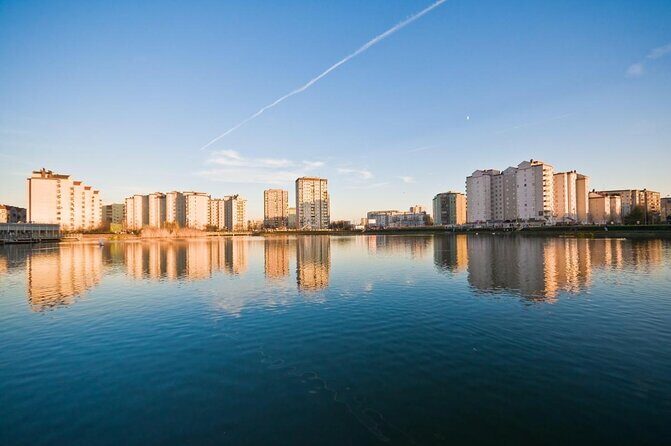
Old Town is pretty, but it’s also curated. Praga has a different energy: more lived-in, more industrial, and more willing to show its scars and its style at the same time. That’s exactly why this walk works. You’re not just sightseeing—you’re learning how this part of Warsaw has changed, stayed itself, and kept layering new meaning over old ground.
What I like most is that the tour mixes big themes with very concrete stops. Jewish history isn’t treated like a museum-only subject, and street art isn’t treated like a wallpaper feature. You’re shown how both fit into daily life in Praga.
And you’ll see the district’s fashion-sense version of Warsaw too: cafes, bars, galleries, and the constant rhythm of people moving through Stalowa. It gives the whole area a modern edge, without skipping the older context.
Other Praga district tours in Warsaw


Price and Group Size: Why This Costs What It Costs
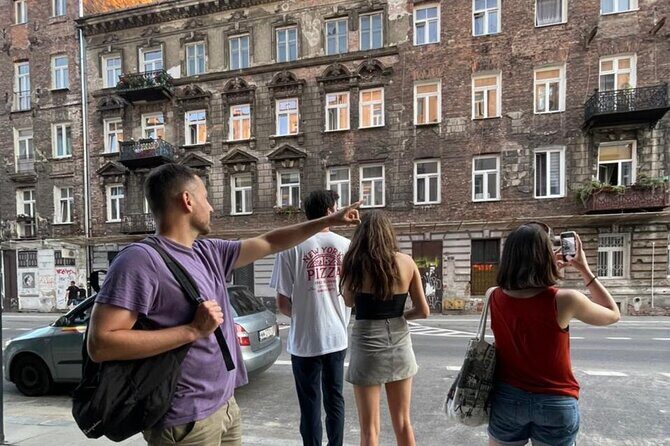
At $42.14 per person for about 2 hours, you’re mostly paying for two things: a local guide who knows where to stand and what to point at, plus a route that strings together multiple key areas without wasting time. The good part is that the stops are free of admission, so you’re not buying a stack of tickets—you’re buying time with an expert who can explain what you’re seeing while you’re walking.
The small group matters here. With a maximum of 10 travelers, it’s easier to ask follow-ups, and the guide can slow down when you’re staring at a mural or trying to photograph a building detail. If you’ve ever been stuck behind a crowd on a big group tour, you’ll appreciate the difference right away.
One practical note: it’s a walking format, and the route packs a lot of sights into roughly 2 hours. If you prefer long pauses and lots of downtime, this may feel quick.
Starting at plac Weteranów 1863 Roku, Ending at Bohema (Easy Transit Back)
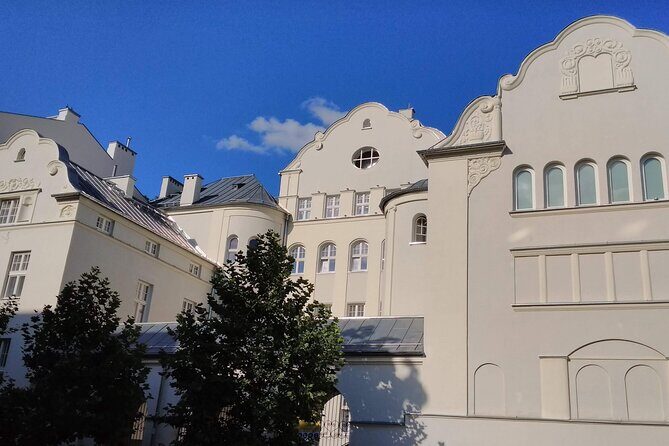
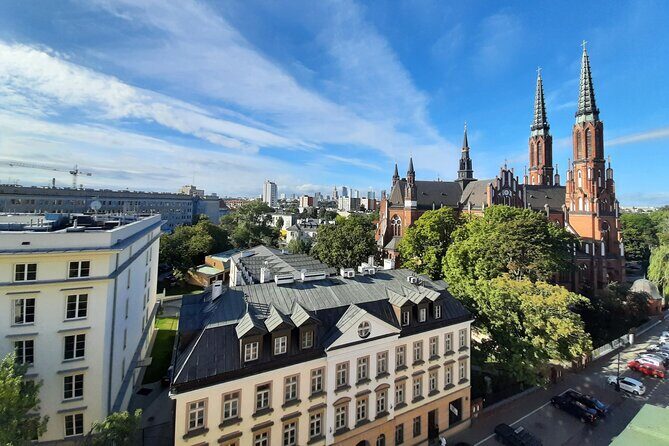
The tour starts at plac Weteranów 1863 Roku. Your meeting point is in front of St. Florian’s, and then you head into Praga with a guide who keeps the story moving along with you. It’s scheduled for 1:00 pm, which usually helps you enjoy the neighborhood in daylight.
The finish is Fabryka Schichta Bohema on Szwedzka 20. This matters because you don’t end up stranded on the edge of nowhere. From there, you can use the nearby Szwedzka metro station to get back toward the city center, or hop on the 23 tram (about 400 meters away) to reach Castle Square in Old Town.
You’ll also get a mobile ticket, which keeps things simple on the day. And because the route includes only free-admission stops, you’re not juggling payments for each location.
Stop-by-Stop: Jewish History Sites You Can Actually See in Praga
This is where the tour gets especially meaningful. Instead of treating Jewish Warsaw as a distant story, you move through places where memory is embedded in real buildings, former functions, and local landmarks.
St. Florian’s area and the walk into Praga
You begin at plac Weteranów 1863 Roku, meeting in front of St. Florian’s. It’s a strong starting point because the guide can frame what Praga became and what it meant to different communities over time, before you start hitting the more specific Jewish sites.




Monument to local Praga music bands
Next is the Pomnik Praskiej Kapeli Podworkowej. This isn’t just a sculpture stop—it’s a reminder that local tradition can be musical and communal, not only religious or political. It’s also an easy moment to spot the neighborhood’s relationship with identity: Praga remembers itself through culture.
Teatr Baj: the former Jewish Orphanage
You’ll visit Teatr Baj, which sits in the former Jewish Orphanage. The big value here is contrast. A site with a serious past is now tied to theater life, so the meaning isn’t frozen in time—you see how the city repurposed space while leaving traces of its origin.
Nożyk Synagogue site: a footprint from the 1830s
Then comes Nożyk Synagogue, noted here as the former site of the Praga Synagogue from the 1830s. Standing near what’s left (and hearing what the area used to hold) helps you understand how communities shrink, rebuild, or disperse—without needing a long lecture.
A 19th-century park reset
Between the heavier stops, the tour includes a 19th-century park. This gives you a breathing moment and a visual break from walls and corners. It’s also a good chance to look around like a local—notice how the neighborhood uses open space.
If you like history that’s tied to actual street layouts, this middle section is a big reason to book.
From the Chapel of Our Lady of Loreto to a Communist-Era Housing Estate
Praga isn’t only about one era. The tour shifts gears into older religious architecture and then into 20th-century housing.
Chapel of Our Lady of Loreto: Praga’s oldest monument
You’ll stop at the Chapel of Our Lady of Loreto, a 17th-century Loretto Chapel described as the oldest historical monument in Praga. Even without going inside for long, it’s the kind of place where the guide’s pointing really helps. You start seeing the district’s long timeline instead of jumping from one period to the next.
Jagiellońska 44: the first communist-era housing estate
Next is Jagiellońska 44, identified as one of the first communist-era housing estates in Warsaw. It was designed by prominent Polish avant-garde architects. This stop is fascinating because it shows how architecture carried ideology—and how neighborhoods were planned to fit a political vision.
The practical benefit: you’ll leave the tour with a better eye for buildings you’d otherwise ignore. In Praga, architecture isn’t background noise. It’s part of the story.
The Pianist Filming Spot at Mała and Street Life on Stalowa
Now you get the fun part that’s still grounded in place. This section helps you connect Praga to pop culture while also showing the real-world atmosphere behind it.
Mała: a filming location from The Pianist
At Mała, you’ll hear about its connection to The Pianist. If you’ve seen the film, this is the moment where the neighborhood becomes familiar in a new way. If you haven’t, you’ll still appreciate the “why this spot” explanation—how street scale and architecture translate to film.
Stalowa: cafes, galleries, bars, and street art
You’ll also walk along Stalowa, described as an important Praga street with popular cafes, bars, galleries, and street art. This is a key photo moment. You’re not hunting for perfect angles in a controlled setting—you’re photographing art in motion, with real shopfronts and people moving through the frame.
It’s also a good place to feel the district’s current vibe. Praga looks retro in places, but it also feels active. The street art doesn’t sit like an exhibit; it lives on the same walls as everyday life.
Pałacyk Konopackiego, Then Bohema: How the Tour Ends With Momentum
You finish with two stops that feel like a payoff: a local residential past and a present-day creative hub built into industrial bones.
Pałacyk Ksawerego Konopackiego: founder’s residence
At Pałacyk Ksawerego Konopackiego, you’ll learn it was the former residence of the founder of the neighborhood. Even if you don’t know the name yet, the stop helps you understand how neighborhoods form around specific people and ideas, not just around buildings.
This is also a nice change of pace. After the intensity of history and film connections, it gives you a quieter moment to absorb the architecture and the street scale.
Fabryka Schichta Bohema: post-industrial meets modern use
The final stop is Fabryka Schichta Bohema, a multi-functional hub combining a 19th-century post-industrial complex with contemporary buildings. It’s a fitting finish because the district itself works like that: old and new mixed, not separated.
The location is also practical. The nearby Szwedzka metro and the 23 tram make it easy to extend your day into Old Town without backtracking across the city.
This finish is more than a drop-off point. It’s where you can reset after a dense walk and decide what you want to do next.
Photo Tips That Actually Help (Not Just Pretty Places)
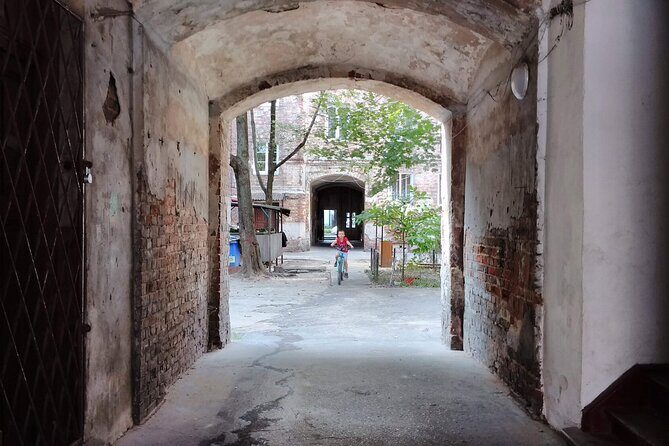
If you care about photos, this tour gives you the kind of variety that stops you from shooting the same scene all afternoon. You’ll have:
- Street art walls on Stalowa where you can frame murals with real storefront context
- Jewish-history context stops where the value is often in the building details and surroundings, not just a single landmark shot
- Filming-location cues at Mała that are fun to photograph if you remember scenes from The Pianist
- The Bohema industrial-modern mix, which is great for wide angles and texture shots
My practical suggestion: start with your wide shots early, while you’re still fresh, then circle back to details later. The route is compact, so you don’t want to burn your best light hunting.
Who Should Book This Praga Walk (And Who Might Skip It)
This tour is a strong fit if you want Warsaw beyond the postcard. It’s also ideal if you like districts that feel like real neighborhoods—where history, art, and daily life share the same street.
You’ll probably enjoy it most if you:
- like guided walking tours with lots of explanation while you’re there
- care about Jewish sites and their modern traces
- want film-location context without treating it like a gimmick
- enjoy street art and photo stops that aren’t staged
The main reason to reconsider is pace. You cover many points in about two hours, and it’s a working district feel. If you need slow, seated sightseeing, you might find it a bit too tight. And if you’re sensitive about neighborhood comfort, stick to the daytime plan.
Should You Book Offbeat Warsaw: Praga District?
I’d book it if you’re the type of traveler who gets bored by repeated highlights and wants a more specific slice of Warsaw. The combination is hard to beat: Jewish history sites you can see in place, film connections for The Pianist, and street art scenes on Stalowa—finished at a transit-friendly creative hub.
It’s also good value for money because admission costs aren’t stacking up, and the small group size keeps the experience interactive. If you want a Warsaw walk that feels like a story with addresses, this one delivers.
If you’re deciding between Praga and another Warsaw neighborhood tour, pick this when your priority is authenticity over classic sightseeing. Praga isn’t trying to be perfect. That’s why it’s memorable.
FAQ
How long is the Offbeat Warsaw: Explore the Edgy & Artsy Praga District tour?
It lasts about 2 hours.
What is the price per person?
The price is $42.14 per person.
Where does the tour start and end?
It starts at plac Weteranów 1863 Roku, meeting in front of St. Florian’s. It ends at Fabryka Schichta Bohema (Szwedzka 20, 03-420 Warszawa).
What language is the tour offered in?
The tour is offered in English.
How many people are on the tour?
The maximum group size is 10 travelers.
Is admission required for the stops?
Admission is listed as free for the stops included in the route.
Is it easy to get back to Old Town after the tour?
Yes. Near Fabryka Schichta Bohema you can use the Szwedzka metro station, and the 23 tram is about 400 meters away for Castle Square in Old Town.