REVIEW · WARSAW
Warsaw: Majdanek Concentration Camp, Lublin Day Trip by Car
Book on GetYourGuide →Operated by Rosotravel Poland · Bookable on GetYourGuide
Majdanek is history you can’t skim. This day trip puts you face-to-face with one of the best-preserved Nazi concentration camps, plus the chance to see Lublin’s Old Town if you choose the longer day. I especially like the 5-star licensed guide approach and the calm, on-the-ground pace that helps you take in what you’re seeing. One thing to consider: you’re looking at heavy subject matter, so come ready to slow down in places, and wear shoes you can stand in.
I also like the private pickup and drop-off in Warsaw, because it removes the usual stress of buses, transfers, and missed schedules. For the 12-hour option, you get a second payoff: historic streets and monuments in Lublin that give the region context beyond the camp. The main drawback is simple—if you book the 8-hour option, you won’t see Lublin’s Old Town, so the value depends on how much you want the city side too.
From the guide experiences shared by past participants, I’m glad this is led by people like Ava and Peter, who are described as friendly, down-to-earth, and professional with good pacing. If you want a single-day trip that’s organized, guided, and respectful without rushing, this is a strong fit.
In This Review
- Key things I’d focus on
- Majdanek Concentration Camp: why this site stays with you
- The on-site walking tour: how to see it without feeling lost
- Warsaw to Lublin by private car: easier travel, less stress
- 8 hours vs 12 hours: choose your balance
- Lublin Old Town highlights (for the 12-hour option)
- Operation Reinhard and the camp’s “industrial” scale
- Price and value: is $401 per person worth it?
- Language options: choose the one you’ll actually understand
- What to bring, and what to expect from your day
- Who should book this trip?
- Should you book it?
- FAQ
- What’s the difference between the 8-hour and 12-hour options?
- Does the tour include entrance to Majdanek?
- Is there pickup and drop-off in Warsaw?
- What transportation will I use?
- Are tickets handled in advance?
- What languages are available for the guide?
- Is lunch included?
- Can I cancel for a refund?
- Is the tour wheelchair accessible?
- What should I bring?
Key things I’d focus on
- Majdanek’s scale and preservation: 227 structures, including 7 gas chambers and 2 wooden gallows
- Operation Reinhard context: the camp’s shift from labor to industrial killing
- Licensed guide storytelling: names like Ava and Peter show up in feedback as standout leaders
- Two itinerary lengths: 8 hours for Majdanek only, 12 hours to add Lublin Old Town
- Private, air-conditioned car: pickup and drop-off at your accommodation in Warsaw
- Practical visit style: skip the ticket line and plan on a walking tour
Majdanek Concentration Camp: why this site stays with you
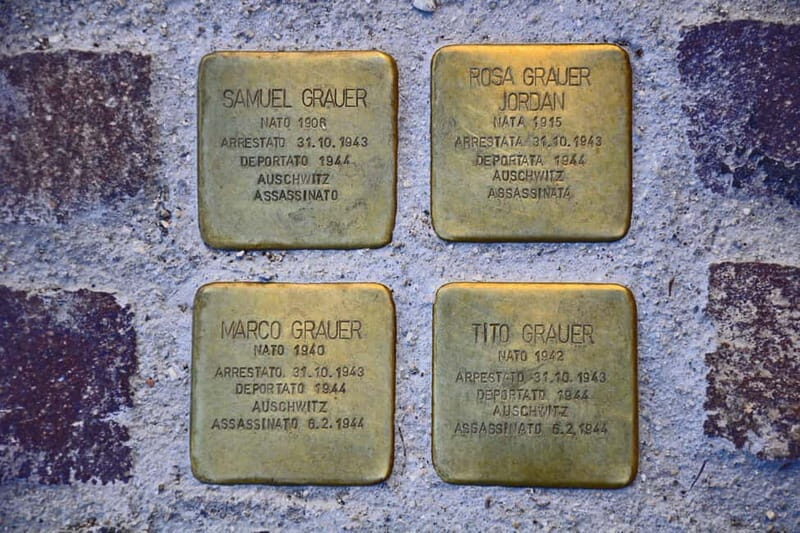
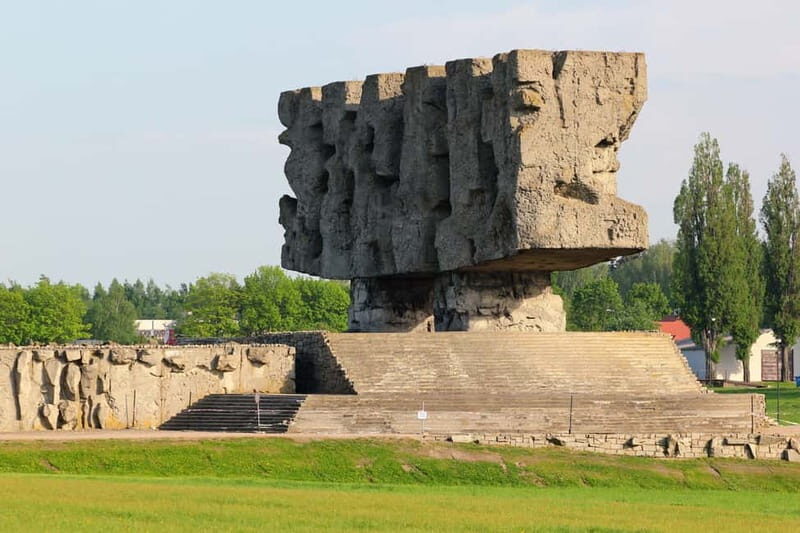
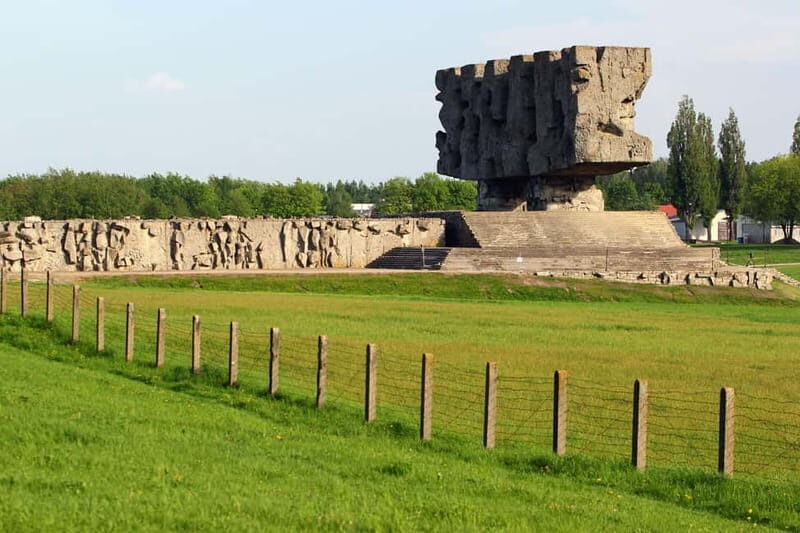
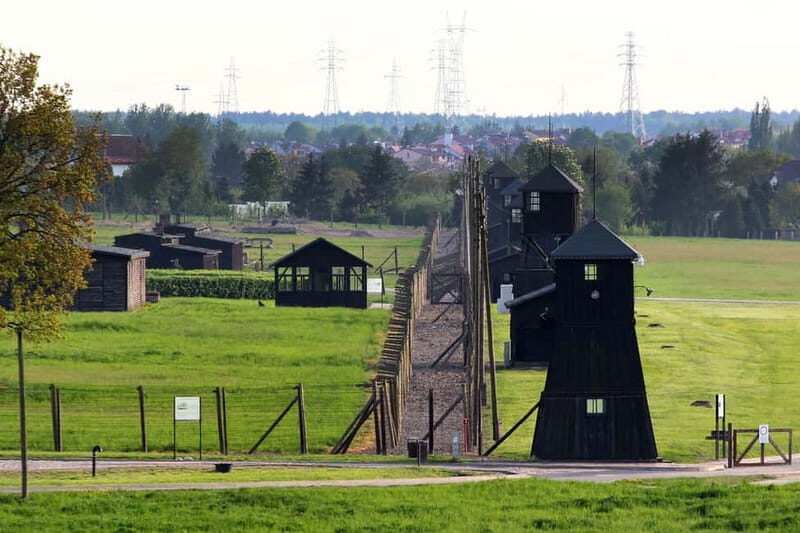
Majdanek State Museum covers one of the largest Holocaust sites, built and run by the SS during World War II. The sheer number of remaining structures—227 buildings—matters. It means the story isn’t just a few preserved rooms. It’s a whole working landscape that helps you understand how the system functioned day after day.
What makes Majdanek especially sobering is how the camp’s purpose is explained on-site. It started as a labor concentration camp, but it was also used for mass killing on an industrial scale during Operation Reinhard. When you hear that shift in plain language, the visible remnants stop being “old things” and start becoming evidence of a process. The walking tour format works well here, because you can’t understand it from a single viewpoint.
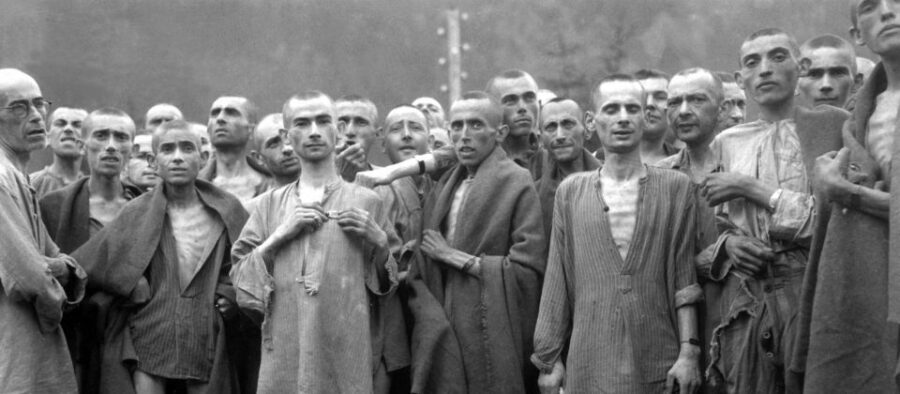
You’ll be guided through the experiences of people held there, including Soviet POW, Poles, and Jews, with explanations tied to forced labor, starvation, disease, and death. That’s the kind of context you want from a licensed guide, not from a rushed audio device. In feedback, guides such as Ava are described as genuinely friendly and knowledgeable, with a well-paced flow—exactly what you want when the content is difficult.
Also, don’t skip the educational exhibit inside one of the barracks. Even if you think you know the basics, it helps you connect what you’re seeing outside with what it meant inside. It’s a useful reset as you move from outdoor structures into the more interpretive parts of the museum area.
A few more Warsaw tours and experiences worth a look


The on-site walking tour: how to see it without feeling lost

This trip is built around an essential walking tour with a licensed guide once you arrive at Majdanek. That’s not just a nice-to-have. It changes how you experience the site.
Without guidance, you might move from building to building and still miss what each part is telling you. With guidance, you get structure: what the SS built, how the camp was organized, and where specific details fit into the larger Holocaust story. The guide’s job is to give you a map for meaning, so you can focus on the humanity of what happened rather than trying to decode every sign by yourself.
You should also plan to take your time at the camp itself. Even if your tour stays “walking tour efficient,” the subject matter needs pauses. Comfortable shoes are included as a simple reminder, but the deeper point is this: you’ll do better if you expect the day to feel longer than the clock says.
Warsaw to Lublin by private car: easier travel, less stress

The experience includes private transfers by car with pickup and drop-off directly at your accommodation in Warsaw. That matters because it keeps your day from fragmenting into logistics.
You’ll ride in comfort in a sedan for groups of 1–4, or a larger van/minibus for groups of 5+. There’s also air-conditioning, which is a practical win in warmer months. It may sound small, but on a day with serious walking and museum time, arriving calm helps.
Since starting times depend on availability, don’t expect a fixed schedule without checking. Still, the overall structure is straightforward: you travel from Warsaw to Majdanek, tour the site, and then head back to your accommodation in Warsaw the same day.
If you’re traveling with family or friends and you want control over the pace, private transport gives you that. It also makes a difference if you’re relying on someone else for timing and routing. This isn’t a self-directed drive with a big search for parking and last-minute ticket handling.
8 hours vs 12 hours: choose your balance
Here’s the key planning decision: the tour length controls what you see in Lublin.
- 8-hour option: focused on Majdanek only. You get the camp visit with the guide and admission, plus the private car from Warsaw.
- 12-hour option: adds a walking tour of Lublin Old Town (and you’ll have more time for city sights and Jewish heritage traces).
If you’re here mainly for Holocaust history, the 8-hour version keeps things concentrated and emotionally manageable. You’re not forced into extra walking in the city after spending time at a difficult site.
If you want the full day—camp plus old streets—go for the 12-hour option. It gives you a wider lens on Lublin as a historic trade city and military stronghold, which helps explain why the Jewish community and other cultural threads mattered there.
Lublin Old Town highlights (for the 12-hour option)
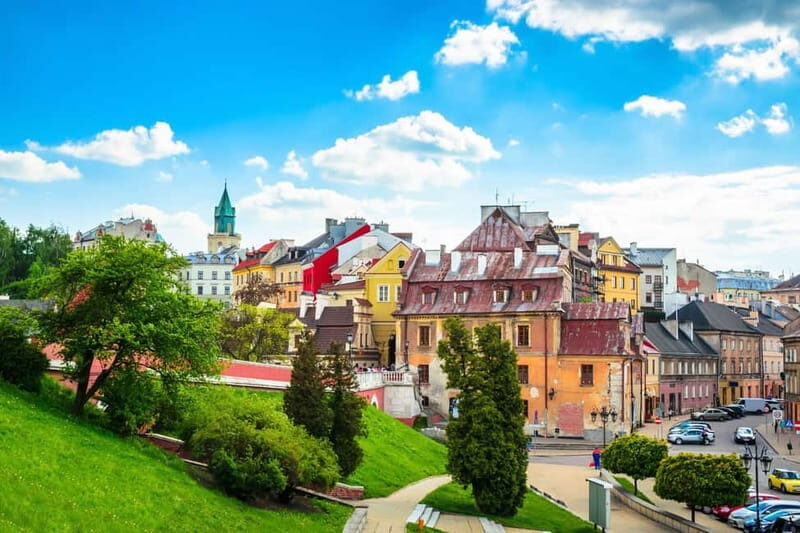
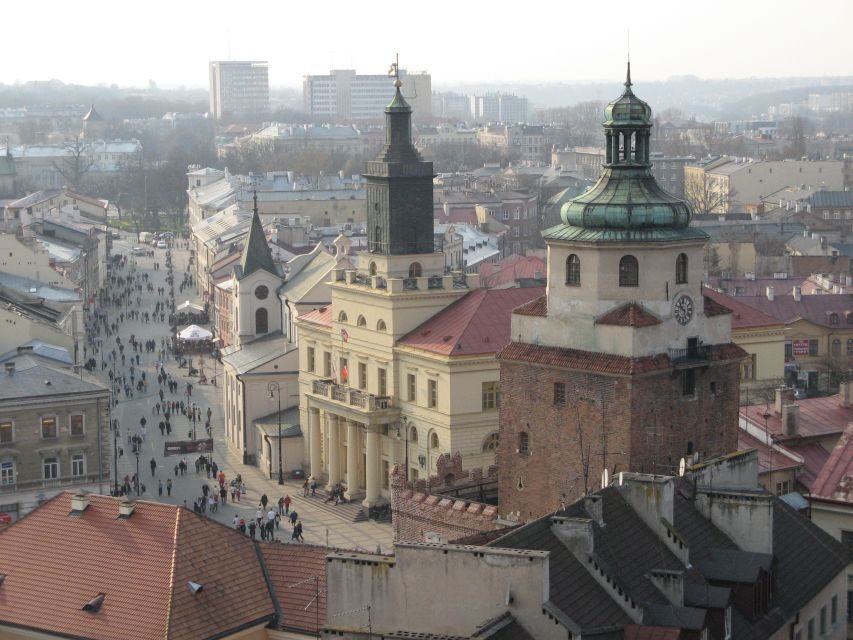
Lublin’s Old Town portion is a walking tour with a private guide, shaped around recognizable medieval and early modern landmarks. It’s not presented as a separate “vacation day.” It’s meant to add context to the region and to connect history layers in a way that feels coherent after the camp visit.
You’ll see Castle Square, with Lublin Castle as part of the scene, and you can stroll through narrow Old Town streets toward the Dominican Abbey. From there, the tour continues to Market Square, where you can view the Old Town Hall, the Fish Gate, and old tenement houses. Those details matter because they show what a trading city looked like—activity, movement, and architecture that shaped everyday life.
Next comes the royal road, Krolewiecka, with stops that include St John the Baptist Cathedral and Trynitarska Tower. Along the way, you’ll also encounter the Stone of Misfortune—and yes, you’ll be guided to resist the urge to touch it. That kind of small instruction helps you keep the tour respectful and intentional, not just photo-focused.
The route also includes Dominican Square, wrapping the Old Town highlights into a satisfying arc. Since the tour is designed around both architecture and historical themes, you’ll get guided learning about notable residents such as Potocki, Kraszewski, and Wieniawski, plus traces of Lublin’s Jewish heritage.
One practical consideration: the 12-hour day is long. The city walking is enjoyable, but it can feel like a lot after Majdanek. If you know you’ll get tired quickly, decide based on your energy level, not just enthusiasm.





Operation Reinhard and the camp’s “industrial” scale
If you leave with just one takeaway, I’d hope it’s this: Majdanek isn’t explained as a distant event. It’s explained as a system with a timeline and a purpose.
The info you’ll hear ties the camp to Operation Reinhard, including how the site was used for killing people on an industrial scale. That phrasing can feel abstract until you connect it to what remains on the grounds. The guide’s job is to bring those historical pieces together so you can understand how the Nazis used labor camps not only for exploitation but also for mass murder.
The on-site museum details help anchor that story. With things like 7 gas chambers and 2 wooden gallows still part of the museum grounds, you don’t have to guess what the structures represent. Still, the guide’s commentary is what turns those physical remnants into an intelligible narrative.
Price and value: is $401 per person worth it?
At $401 per person, you’re paying for more than admission. You’re buying four big things in one package:
- A licensed guide for the camp visit (and Old Town, if you choose the 12-hour option)
- Admission to Majdanek
- Private, air-conditioned transportation with pickup and drop-off in Warsaw
- A smoother experience, including skip-the-ticket-line service
If you were to do it yourself, you’d likely need to solve the language and timing gaps (especially on a day when you want to be respectful and accurate). With a guide, you also get explanations that match what you’re seeing, instead of trying to piece together details while you’re standing in the middle of the site.
Is it a budget-friendly option? Not really. But for a one-day trip that combines serious historical interpretation plus private logistics, the value is solid. The longer option can offer even better value if you’re the kind of traveler who likes to connect your history stops to the city around them.
Language options: choose the one you’ll actually understand
The tour offers live guidance in Spanish, French, Italian, Russian, English, German, and Polish. That’s a big deal here. When the content is hard, precision matters. You’ll get a clearer explanation if you choose a language you can think in comfortably.
If you’re unsure, pick the language where you feel you can ask questions and follow the story without working too hard. That’s how you get the best learning from a walking tour format.
What to bring, and what to expect from your day
Bring comfortable shoes. That’s the practical note, and it’s not overkill. Between the camp walking and the optional Old Town route, your feet will do the heavy lifting.
Expect a day shaped by two kinds of time:
- time moving through the grounds and museum exhibits
- time listening and absorbing guided interpretation
Also check your email the day before the tour for important details. It’s a small step that helps your day run cleanly.
Lunch isn’t included, but lunch/table reservations can be arranged upon request. If you’re taking the 12-hour option, plan your hunger ahead so you don’t end up rushing a meal between stops.
Who should book this trip?
This is a good fit if you:
- want one organized day from Warsaw with private logistics
- prefer a licensed guide for Majdanek instead of going solo
- want either a focused camp visit (8-hour) or a camp + city context day (12-hour)
It’s also a smart choice if you dislike complicated transfers. Private pickup and drop-off reduce friction, which matters when you’re traveling somewhere emotionally heavy.
If you’re very sensitive to long walking or long days, consider the 8-hour option. If you’re curious about how Lublin’s history and heritage connect to the region, go for the 12-hour itinerary.
Should you book it?
I’d book this if you want a respectful, well-guided day that doesn’t force you to guess your way through a major historical site. The private transport is a quality-of-life win, and the licensed guide approach is exactly what you want at Majdanek. If you also want Lublin’s Old Town context, the 12-hour option makes the trip feel more complete.
Just be honest with yourself about energy. The 12-hour version includes more walking, and Majdanek already takes a lot from you. Pick the length that matches your pace, then let the guide do the hard work of giving meaning to what you’re seeing.
FAQ
What’s the difference between the 8-hour and 12-hour options?
The 8-hour option is a guided trip focused on Majdanek Concentration Camp only. The 12-hour option includes Majdanek plus a walking tour of Lublin Old Town.
Does the tour include entrance to Majdanek?
Yes. Admission to the Majdanek Concentration Camp is included.
Is there pickup and drop-off in Warsaw?
Yes. The tour includes pickup and drop-off at your accommodation in Warsaw.
What transportation will I use?
You travel by private car. Sedan service is for groups of 1–4 people, and larger vans or minibuses are used for groups of 5 and more.
Are tickets handled in advance?
Yes. You get a skip-the-ticket-line experience.
What languages are available for the guide?
The guide is available in Spanish, French, Italian, Russian, English, German, and Polish.
Is lunch included?
Lunch is not included, but lunch/table reservations can be arranged upon request.
Can I cancel for a refund?
The tour offers free cancellation up to 24 hours in advance for a full refund.
Is the tour wheelchair accessible?
Yes, the tour is listed as wheelchair accessible.
What should I bring?
Wear comfortable shoes, since you’ll do walking during the camp visit and, for the 12-hour option, the Old Town tour.