REVIEW · WARSAW
From Warsaw: Auschwitz-Birkenau Guided Tour with Fast Train
Book on GetYourGuide →Operated by Time4Poland.com · Bookable on GetYourGuide
This is one of the heaviest days you can book in Poland, and it’s handled with real structure. You get fast train comfort between Warsaw and Krakow, then a guided walkthrough of both Auschwitz Museum I and Auschwitz II-Birkenau, including gas chambers and key original features. The main drawback is that it’s a long, early-start schedule, and the pace can feel tight if you like to linger.
I also like how the tour removes stress from the transit side: pickup, station help, headsets, entry fees, and the guide all included. Still, go in ready for practical annoyances like headset audio quirks and occasional sound issues in very crowded areas, plus a return train that may run longer than the smoothest version of the plan.
In This Review
- Key takeaways before you go
- A long day, wisely packed: Warsaw to Auschwitz by fast train
- Hotel pickup and the station run: what your morning feels like
- Krakow handoff: van ride to Auschwitz and meeting your guide
- Auschwitz Museum I: where the story turns concrete
- The short break and switching to Birkenau
- Auschwitz II-Birkenau: gas chambers, fences, and watch towers at scale
- Headsets, pace, and the group experience you’ll have to manage
- What’s covered on the ground (and what you need to bring)
- Price and value: is $181 worth a 15-hour guided trip?
- Who this tour fits best (and who might struggle)
- Should you book this tour?
- FAQ
- How long is the Auschwitz-Birkenau day tour from Warsaw?
- What transport is included in this tour?
- Are entry fees included?
- Do I need a guide, or is this self-guided?
- What languages are available for the live guide?
- Is food included?
- What should I bring, and what is not allowed?
- Is this tour suitable for children?
- What’s included besides the guide and transportation?
Key takeaways before you go
- Fast train Warsaw–Krakow (about 2.5 hours) keeps your day from collapsing into slow travel
- Two guided stops: Auschwitz Museum I plus Auschwitz II-Birkenau, with a short reset in between
- Original site elements you’ll see on the ground, including fences, watch towers, and gas chambers
- Headsets included, which matters in a place where groups move constantly
- Crowds + timing can mean you need to work with the group pace, not against it
A long day, wisely packed: Warsaw to Auschwitz by fast train
This tour is built around one big idea: you shouldn’t spend your whole day figuring out trains and transfers. Instead, you start with hotel pickup, then a managed run to the station. From there, the fast train gets you to Krakow quickly, and you rejoin a driver for the van ride to Auschwitz.
The upside for you is simple: you get more time at the memorial sites and less time in transit frustration. The overall format also keeps the day coherent, because you’re not juggling tickets, platforms, and meeting points on your own.
The tradeoff is that this is still a 15-hour day. Even with the fast train, you’ll be moving from early morning through late night, which can feel exhausting after a heavy, emotional visit.
Other Auschwitz day trips from Warsaw
Hotel pickup and the station run: what your morning feels like
Your day starts with pickup from your accommodation. The driver doesn’t just point you toward the station and disappear; they’ll drive you there and help you board the train. It’s the kind of detail that sounds small until you’re up early and half-asleep, trying to find the right platform with a group.
You should also plan for a short wait: you’re asked to be in the hotel lobby about 10 minutes before your scheduled pickup. If you’re the type who hates rushing, set an earlier alarm and aim to be ready a bit sooner.
On the train, the day stays comfortable and straightforward, with the key benefit being time. When a tour saves you even an hour of transport, it changes how you experience everything afterward, especially when the visit itself demands mental focus.
Krakow handoff: van ride to Auschwitz and meeting your guide
After about 2.5 hours on the train, you meet your Krakow driver and transfer by van to Auschwitz Museum. This segment matters because it acts like a buffer between the travel day and the site day. You’re not immediately dropped into the memorial with zero transition.
Once you arrive, your guided visit begins with a licensed Auschwitz guide. You’ll learn about the concentration camp complex and its role in the Holocaust, and you’ll be guided through the memorial in a way that’s meant to be clear and structured.
One practical note: the tour is offered in German, English, and French. If you’re choosing between languages, pick what you can understand without strain. In a place like this, you want your attention on the meaning, not on deciphering the sound.
Auschwitz Museum I: where the story turns concrete
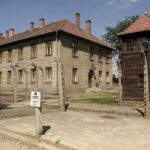
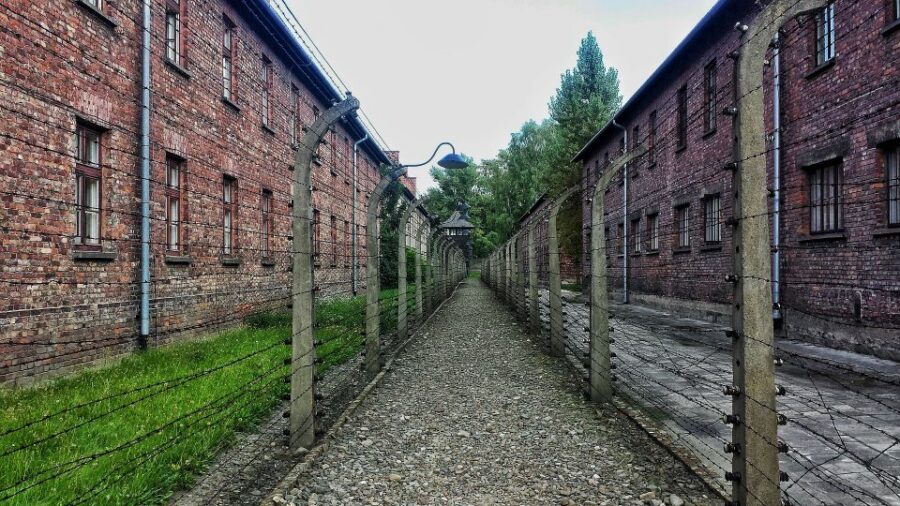
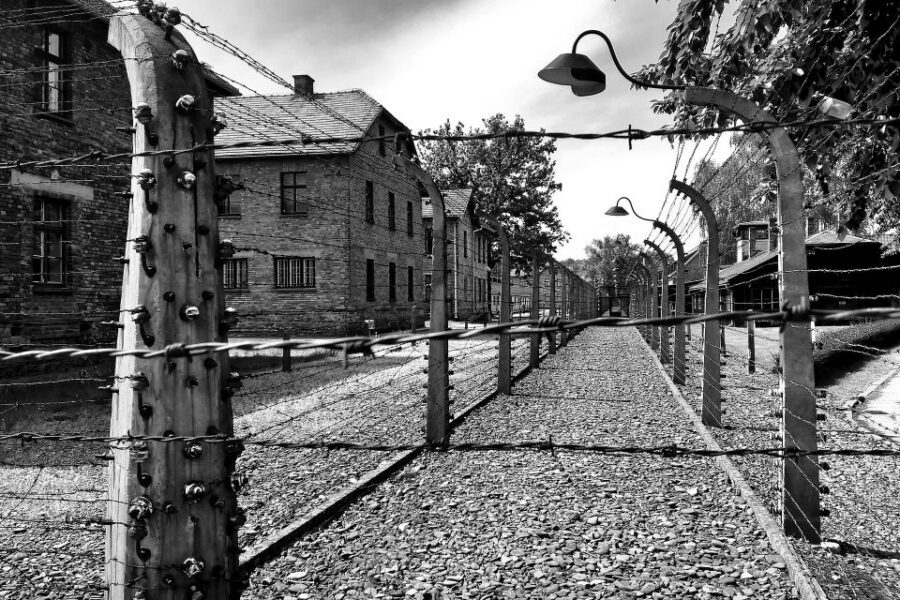
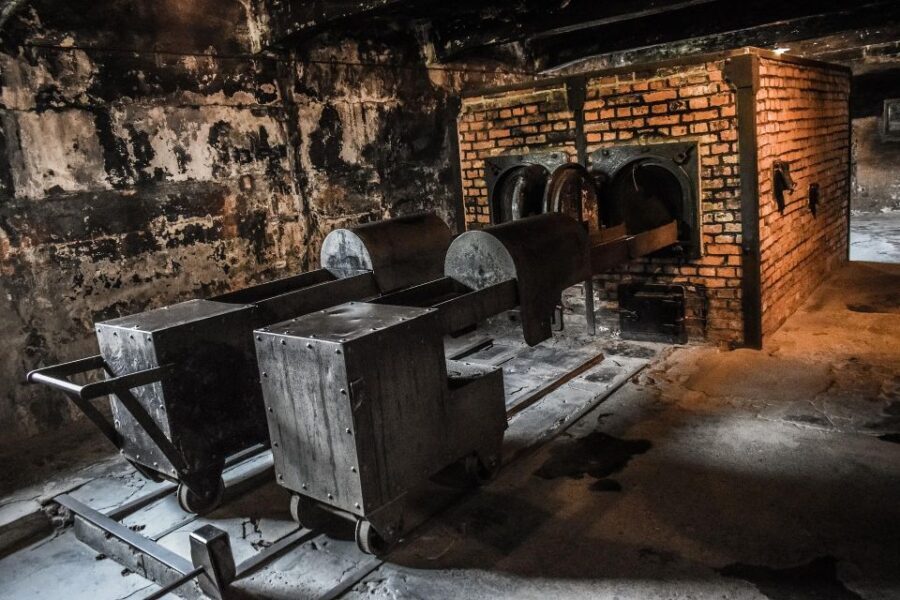
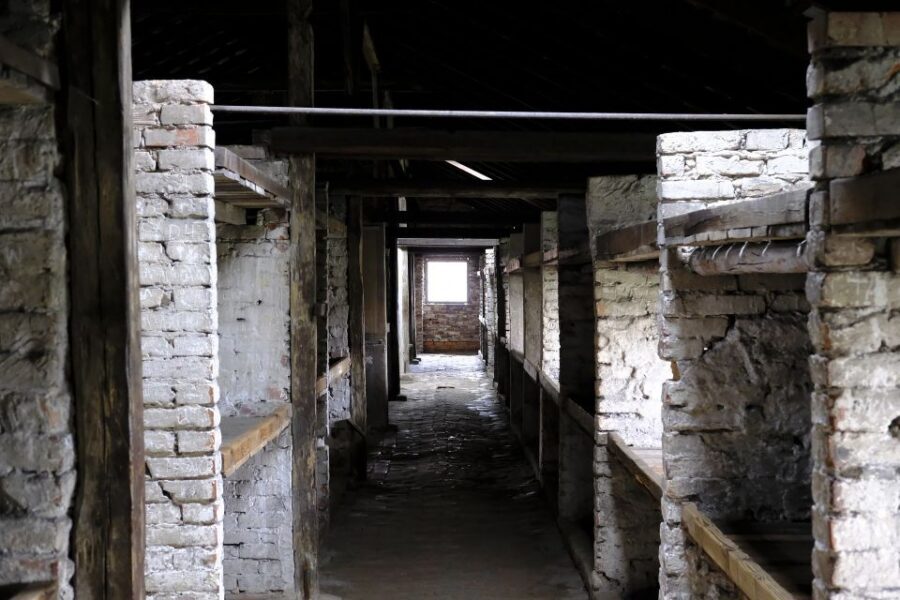
Auschwitz Museum I is where the history becomes extremely physical. You’re not just hearing about events in the abstract. You see the original layout elements like roads, fences, watch towers, and the gas chambers as part of the guided explanation.
This is also where the museum part hits hardest: you’ll spend time with the exhibits and somber displays, including items associated with prisoners. The emotional weight comes from the combination of guided context and the fact that the objects and spaces are not replicas.
What I think you’ll appreciate is the rhythm. The guided approach keeps the information organized, and the museum format makes it possible to follow the narrative instead of bouncing randomly through rooms. If you prefer to understand before you wander, this structure is a win.
Possible drawback: the pace can be brisk. One experience described the visit as too fast to really observe each section. If you’re someone who likes slow looking—pausing, stepping back, reading every label—know that your group schedule may not let you do that for long stretches.
The short break and switching to Birkenau
After Museum I, you get about a 15-minute break before moving to Auschwitz II-Birkenau. That short gap is intentional. It’s long enough to reset your body—water, restroom, posture—without letting the emotional intensity fade.
This switch is also important for how you understand the site. Museum I helps you grasp the concentration camp complex’s function through its museum exhibits and surviving structures. Then Birkenau shifts the scale and layout, which is part of why the experience feels different.
Don’t treat the break as a full lunch moment. Food isn’t included, and food is not allowed during the visit area restrictions. Plan ahead: you can bring what you need for your day outside the restricted zones, but you should expect tight rules once you’re inside.
Other guided tours in Warsaw

Auschwitz II-Birkenau: gas chambers, fences, and watch towers at scale
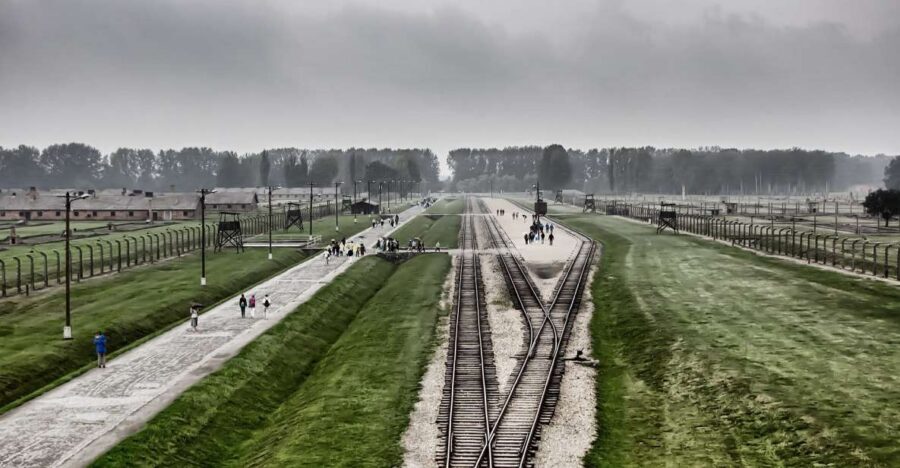
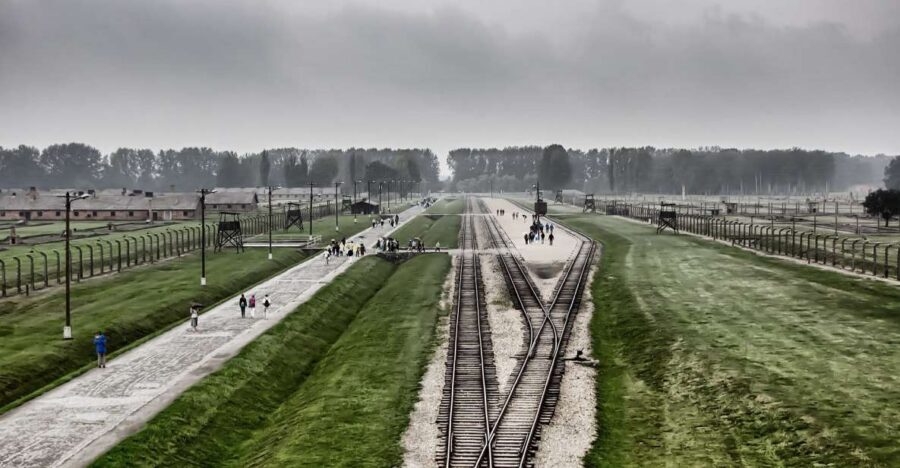
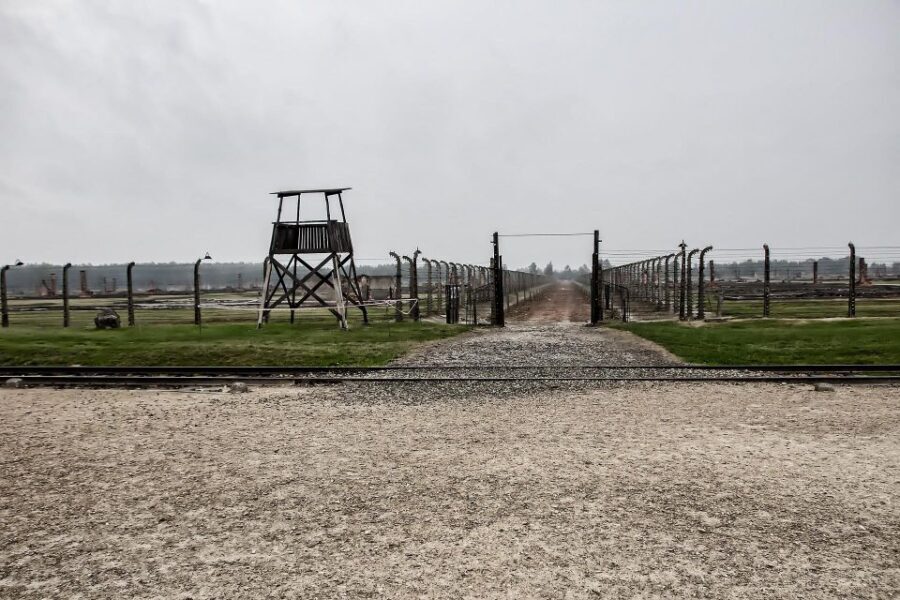
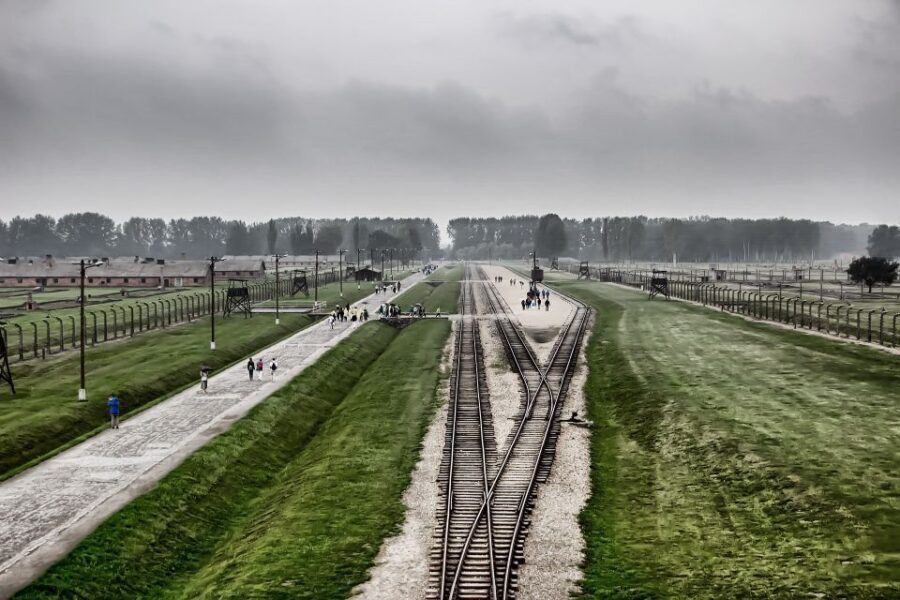
Birkenau is the biggest shock to your sense of scale. The tour takes you through Auschwitz II-Birkenau with a focus on the largest sub-camp at the complex, and you’ll see the original features that define the place: fences, watch towers, and the gas chambers.
In practical terms, this is where group movement and crowd density become real factors. Birkenau often means more walking and more people in a shared space. That’s also where audio challenges can show up. One account noted that the guide didn’t have a microphone in the Birkenau portion, so listening was harder until they could get closer. If you want the narration clearly, try to position yourself where you can hear the guide as the group moves.
Even with headsets provided, the best experience happens when you combine audio with eye-level attention. When you look at an original fence line or a watch tower from the angle the guide suggests, the site stops being a historical photo and becomes a lived setting with layout and distance you can actually sense.
Headsets, pace, and the group experience you’ll have to manage
This tour includes headsets. That’s a big deal because it helps you follow the guide even when the group is moving. I’d still advise you to treat the headset as a first thing to check right away. One experience described some headset problems early on—getting a functioning pair and dealing with sound quality issues.
If you notice audio problems, don’t wait. Ask quickly. In a guided setting, a five-minute fix is worth it.
Then there’s pace. You’ll likely be balancing three things at once: walking between key areas, listening, and taking in what you see. One account also described the pace as too sustained, with not enough time to observe. That doesn’t mean the guide did anything wrong. It means the tour is designed for coverage in a single day.
My practical advice: decide ahead of time what you want most. If it’s maximum information and you can handle less time per object, you’ll do great. If it’s slow observation and personal reflection, you might feel rushed.
What’s covered on the ground (and what you need to bring)
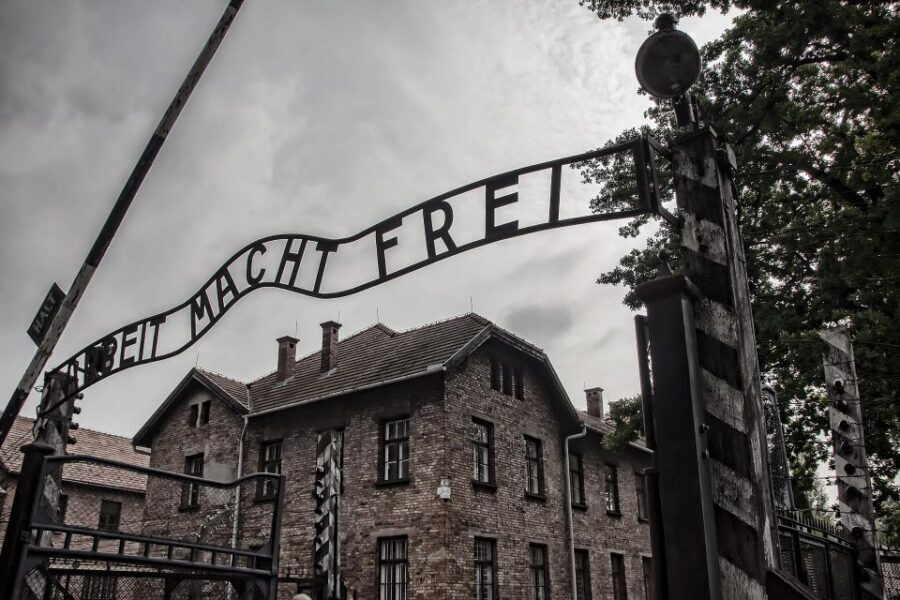
From the way the tour is structured, you’re not doing a quick photo-stop version. You’ll see original elements—roads, fences, watch towers, and gas chambers—and you’ll also get museum coverage at Auschwitz Museum I and the memorial experience at Birkenau.
You’ll also have clear constraints on what you can bring and wear. You should bring a passport or ID card. You should also plan your clothing: shorts and sleeveless shirts aren’t allowed. You also can’t bring luggage or large bags, and you can’t bring backpacks.
Those rules change how you pack for the day. Keep it simple. Wear comfortable shoes because you’ll be walking for most of the experience. Bring only what you need for the day outside the restricted areas, and expect that your bag options are limited.
Food and drinks are not included, and you should assume restrictions apply on-site. So treat this as a day-trip where your meals are outside the memorial areas, not inside.
Price and value: is $181 worth a 15-hour guided trip?
At $181 per person, this is not a budget day. But it also isn’t just a ticket and a bus. You’re paying for a package that handles the hard parts: hotel pickup and drop-off, roundtrip transport, the licensed Auschwitz guide, entry fees, and headsets. The fast-train segment also reduces the total fatigue factor, which is a real part of “value” when you’re spending the day under emotional pressure.
Here’s how I’d think about value for you:
- If you’re traveling independently from Warsaw and trying to line up trains, transfers, timed entry, and a guided Auschwitz visit, the hassle can easily erase any savings.
- If you want the logistics handled and you’re okay with a long day, this bundle is likely the most efficient way to do both Auschwitz Museum I and Auschwitz II-Birkenau in one go.
One more value reality check: the advertised fast train works in the morning. One account said the return train was closer to four hours, which is a noticeable difference after a long day on the move. Even so, roundtrip transport is still included, and the plan gets you home.
Who this tour fits best (and who might struggle)
This is best for adults and teens 14 and up. It’s not recommended for children under 14.
It also fits you if you want:
- A guided explanation from a licensed Auschwitz guide
- Both Museum I and Birkenau in one day
- Managed transport so you don’t build your own itinerary from scratch
It might be harder for you if:
- You need long, quiet solo time and you dislike group pacing
- You are sensitive to audio issues in crowds and can’t easily reposition
- You want a relaxed day with lots of spare time
If you’re planning your trip from Warsaw and you only have limited days in Poland, this is one of those “efficient, exhausting, meaningful” options that actually makes sense. You’re trading comfort of pace for completeness of experience.
Should you book this tour?
I’d book it if you want a guided, structured way to see both parts of Auschwitz-Birkenau without losing time to train logistics. The combination of hotel pickup, fast-train efficiency, included entry fees, and a licensed guide is where the value lives.
I’d pause before booking if you know you struggle with long days, tight schedules, or crowd noise. The visit is heavy and the pace can be demanding. If you’re expecting a slow, reflective walk with unlimited stops, this tour may feel too scheduled.
If you do book, go in prepared: comfortable shoes, ID/passport ready, no restricted clothing, and check your headsets early so you’re not fighting the audio when the guide’s explanation matters most.
FAQ
How long is the Auschwitz-Birkenau day tour from Warsaw?
The total duration is listed as 15 hours.
What transport is included in this tour?
It includes roundtrip transportation. You take a fast train from Warsaw to Krakow (about 2.5 hours) and then travel by van from Krakow to Auschwitz with an English-speaking driver. The tour also includes hotel pickup and drop-off.
Are entry fees included?
Yes. Entry fees are included in the tour price.
Do I need a guide, or is this self-guided?
This is a guided tour with a licensed Auschwitz guide.
What languages are available for the live guide?
The live tour guide is available in German, English, and French.
Is food included?
No. Food and drinks are not included.
What should I bring, and what is not allowed?
Bring a passport or ID card. Shorts, sleeveless shirts, luggage or large bags, backpacks, and alcohol and drugs are not allowed. Food and drinks are also not allowed.
Is this tour suitable for children?
It is not recommended for children younger than 14 years old.
What’s included besides the guide and transportation?
Headsets are included, along with skip-the-ticket-line entry. Hotel pickup and drop-off are also included.