REVIEW · WARSAW
From Warsaw: Guided Tour of Treblinka Camp
Book on GetYourGuide →Operated by AB Everest Travel · Bookable on GetYourGuide
Treblinka is a name you can’t shake. It’s a guided day trip from Warsaw into a forest setting where the horror of Operation Reinhard still echoes through what is missing, not what remains. I especially love the skip-the-line entry and the fact that you get pickup from your accommodation, so the logistics don’t steal attention from the memorial.
What makes this tour stand out is the way the guide builds the story with the site in front of you: the museum explains daily life and camp architecture, then you walk through ruins that turn history into place. One consideration: you only have about six hours total, so there’s limited time on-site if you want to linger or cover every corner at a slow, reflective pace.
In This Review
- Key points worth knowing before you go
- Treblinka in the woods: getting out of Warsaw and into the memorial
- The drive, the guide, and why this works better with a team
- Entering Treblinka: what the museum teaches before you walk the ruins
- Penal Labour Camp ruins: the staged walk tied to 20,000 inmates
- The August 1943 uprising: 840 prisoners who dared
- Skip-the-line and timing: why six hours feels short and still works
- Price and value for $134: what you’re buying besides transportation
- What to bring and how to pace a visit like this
- Who should book this Treblinka day trip from Warsaw
- Should you book this tour or not?
- FAQ
- How long is the Treblinka camp guided tour from Warsaw?
- What is included in the price?
- Is food included?
- Where is Treblinka located?
- What language is the tour guide?
- Is the tour wheelchair accessible?
- What should I bring?
- Are skip-the-line tickets included?
- Can I cancel for a full refund?
Key points worth knowing before you go
- Forest location near Warsaw: you travel north-east into the Masovian Voivodeship, close to the Treblinka train station area.
- Museum + miniature model: you get a clear view of camp design before you walk the remains.
- Ruins you can walk through: you’ll see the Penal Labour Camp area and experience a staged walk tied to inmate numbers.
- Revolt story with specific numbers: you’ll hear about the August 1943 uprising involving 840 prisoners.
- Skip-the-line entry: less waiting, more time for the serious work of understanding.
- Guides that personalize: reviews highlight guides like Jan, Janusz, Leszek, and Marek who remember names and answer questions without rushing.
Treblinka in the woods: getting out of Warsaw and into the memorial
This is the kind of trip where you’ll feel the day’s purpose the moment you leave Warsaw. Pickup happens right at your accommodation, and after a quick meet-and-greet you’re on an air-conditioned ride out of the city. Before you even reach the camp, your guide typically frames what you’re about to see—so the drive doesn’t feel like wasted transit time.
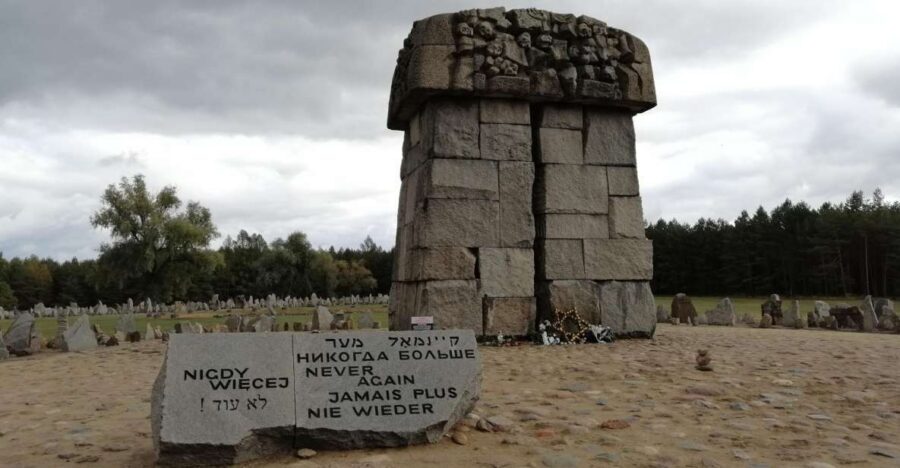
Treblinka was an extermination camp operated by Nazi Germany in occupied Poland during World War II. It sat in a forest north-east of Warsaw, about 4 kilometers south of the Treblinka train station, in what is now the Mazovian Voivodeship. The camp operated from 22 July 1942 to 19 October 1943 as part of Operation Reinhard, and it was one of the deadliest phases of the Final Solution.
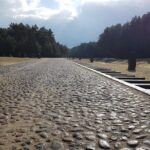
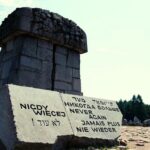
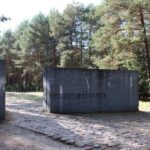
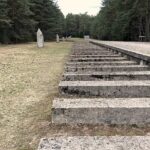
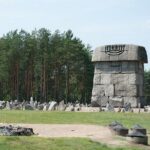
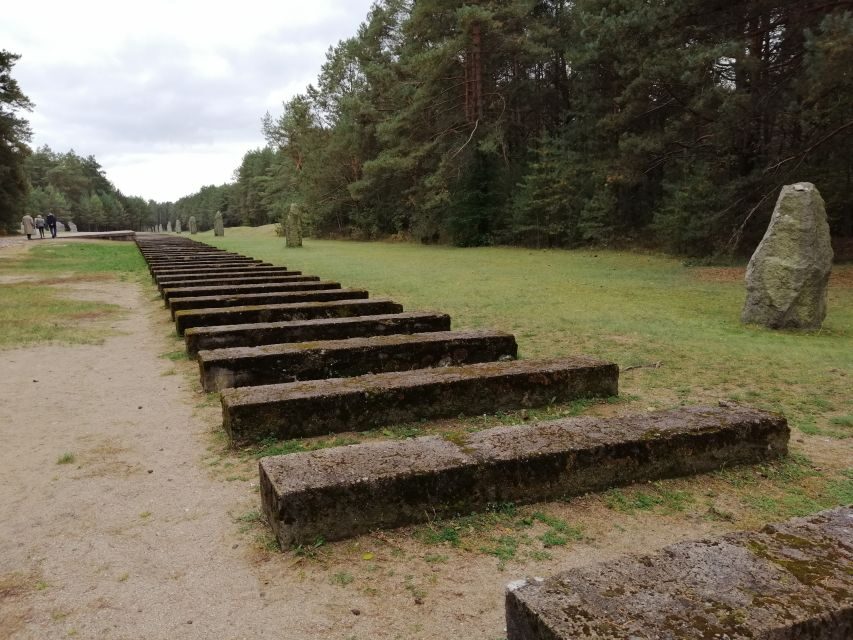
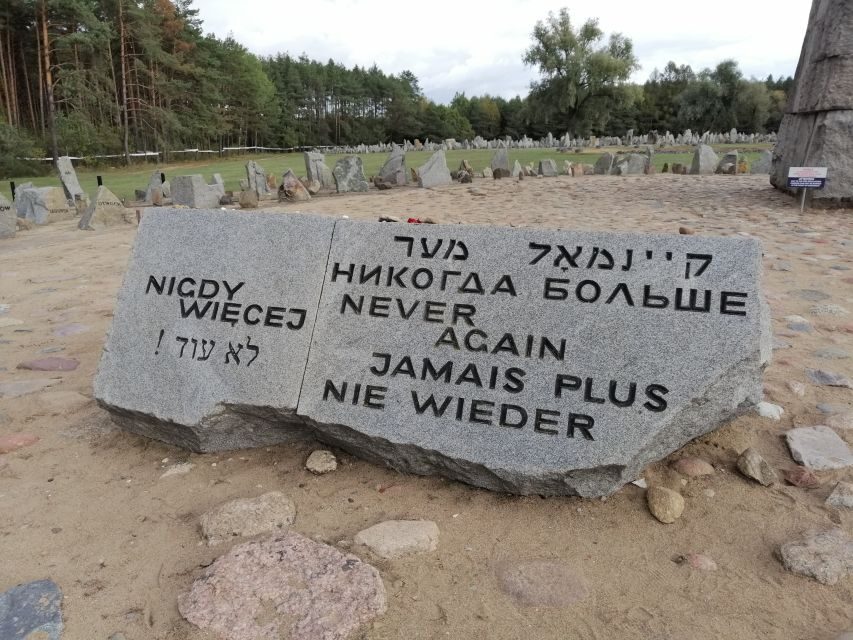
Here’s the thing that hits hardest when you arrive: little physical camp structure remains. The place was flattened to erase evidence of atrocities. You’re left with memorial works, reconstructed elements (including train-station related reconstructions based on testimony), and the quiet power of absence. That isn’t a flaw in the experience. It’s the point, and a good guide keeps the focus on meaning without turning it into theater.
Other Treblinka tours from Warsaw
The drive, the guide, and why this works better with a team
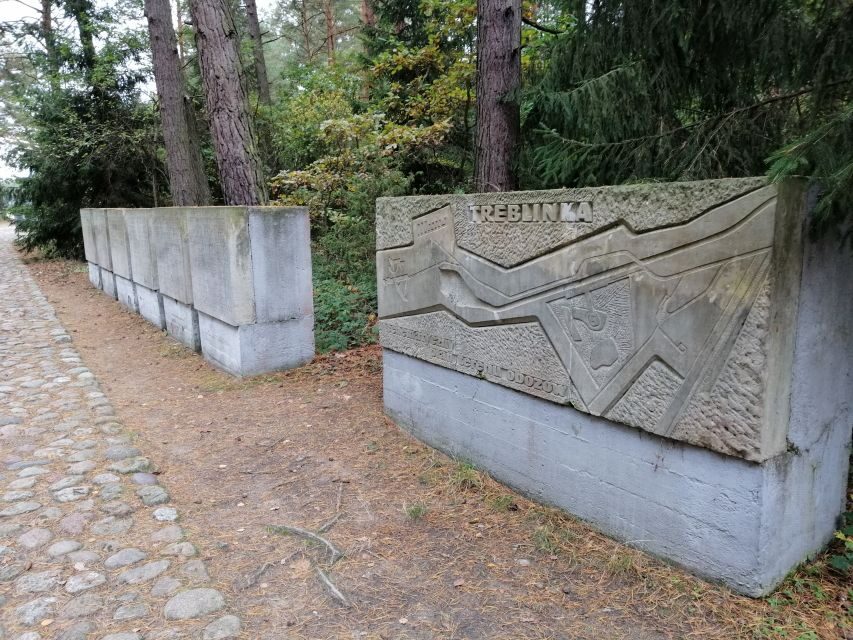
Treblinka is not a casual half-day stop. It’s heavy history, and the difference between understanding and just seeing can come down to how the guide handles questions and context.
The tour provides an English-speaking driver, and the guided portion is led by an English-speaking guide. Reviews repeatedly praise guides for being personal rather than robotic. Names that come up include Jan (Janusz in at least one case), Leszek, Leschek, Mark, Marek, and others—often described as patient, deeply informed, and able to answer anything from basic geography to the mechanics of deportation and camp organization. One review highlights a guide who used maps, memoirs, and a seminar-style briefing approach before visiting the site, which is exactly what you want for a place where “what you’re looking at” matters.
You might also notice that the transportation piece is handled like a real service, not a shared-van scramble. Many reviews mention smooth rides, punctual pickup, and comfortable vehicles (including a Mercedes minibus mentioned in a review). One person even noted water bottles provided, which sounds tiny until you’re sitting for hours in a serious day.
Finally, one practical bonus: because the tour is organized, skip-the-line access helps you avoid losing the best minutes of your visit to queues. When the subject is a memorial, waiting in line feels like the wrong job for your time.
Entering Treblinka: what the museum teaches before you walk the ruins
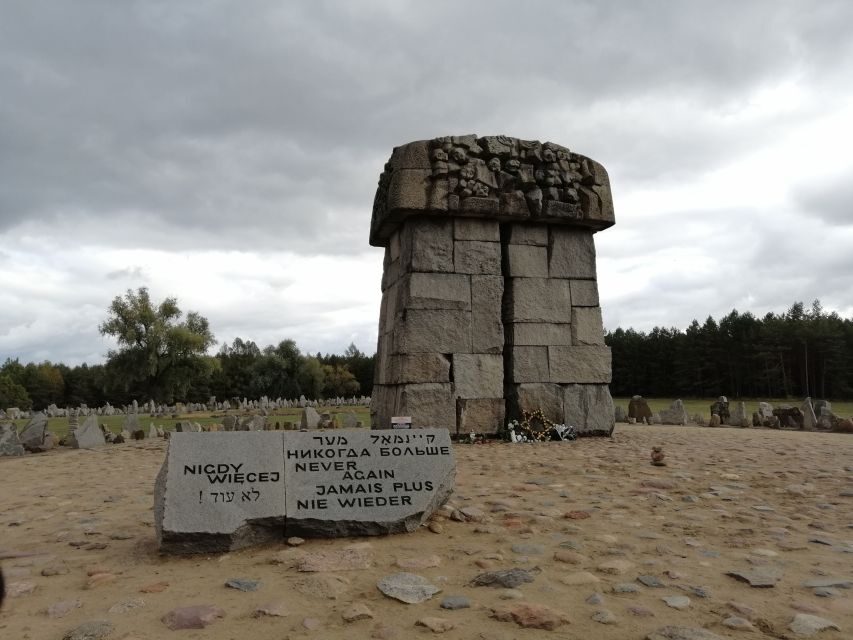
Your time at Treblinka typically starts with the museum. This matters more than you might think, because the site itself can look confusing at first. There isn’t much to “read” visually, and if you arrive cold you’ll miss how the camp worked and why the layout mattered.
The museum includes insights into the daily life of inmates, and it also features a miniature version of the camp architecture. That small model is a powerful tool. It gives you a mental map before you move into the ruins, so you can connect names, functions, and spatial choices to what you’re seeing. Instead of just walking through scattered remains, you’re tracing a system.
There’s also mention in reviews of watching the films inside the museum. If that’s offered during your visit, it’s worth your time. The stories connect the numbers and dates to human experience, and it helps you process the site in the right order: first understanding, then walking through.
The museum also anchors the scale of what happened. At Treblinka, between 700,000 and 900,000 Jews were estimated to have been killed in the gas chambers during the camp’s operation, and around 2,000 Romani people were also killed. More Jews were killed at Treblinka than at any other Nazi extermination camp except Auschwitz. Those numbers aren’t trivia. A good guide uses them to explain why this site is not a footnote.
Penal Labour Camp ruins: the staged walk tied to 20,000 inmates
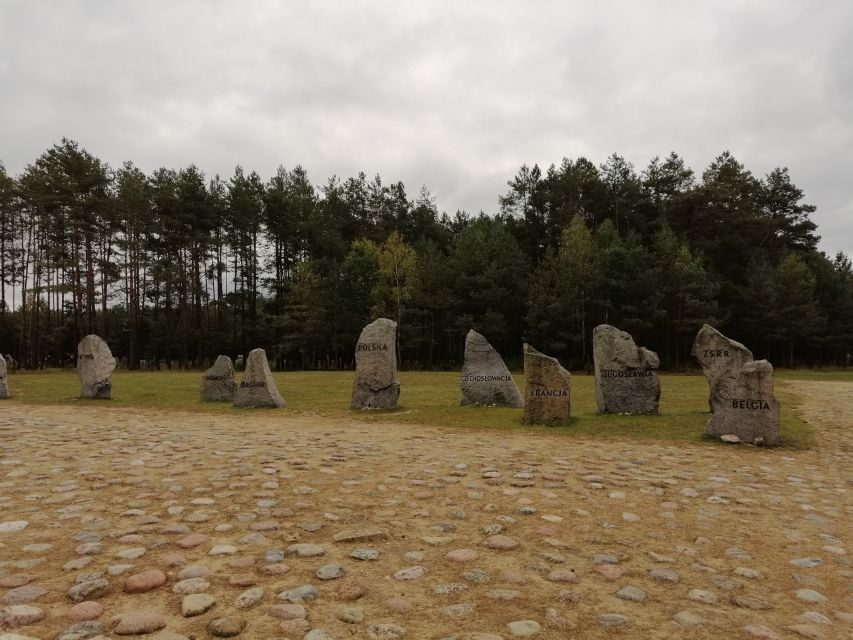
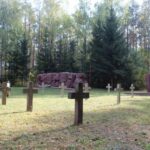
After the museum, you move into the Penal Labour Camp area and walk among the ruins. This part is designed to make the site feel more concrete. The tour includes a section where you walk among the ruins and get in the shoes of about 20,000 inmates held there between 1941 and 1944.
Now, let’s be honest about what “in the shoes of” means here. You’re not re-enacting anything. Instead, you’re meant to slow down and mentally track the human cost behind the space. It’s a respectful form of interpretation that guides your attention to the questions the ruins raise: where people were held, how labor was organized, and what everyday confinement looked like even in a camp built for extermination.
This is also where a good guide earns their fee. Without them, ruins can turn into an unclear photo stop. With them, you’ll hear practical explanation: what each ruin line is pointing to, why the architecture is shaped the way it is, and what the memorial is trying to communicate through the remaining structures.
If you prefer a very quiet visit with lots of silent time, plan for that by wearing comfortable shoes and taking it one step at a time. The tour is only six hours total, but the site requires concentration. Don’t rush it. If you feel overwhelmed, pause, breathe, and let your guide know you need a moment.
The August 1943 uprising: 840 prisoners who dared
One of the most affecting parts of the tour is the focus on resistance inside the camp. You’ll hear stories of the desperate courage of 840 prisoners who rebelled in August 1943. This is often where people shift from shock to something like stunned respect. It’s not just a history lecture. It’s a reminder that victims were not passive in every story, and that courage existed even in a system built to destroy choice.
Why does this section matter for you? Because it prevents Treblinka from becoming only a place of statistics. Yes, the camp is defined by scale and method. But a well-run guided visit also makes room for the human actions that punctured the Nazis’ attempt to control every outcome.
A strong guide will connect this uprising to the broader logic of deportation, imprisonment, and the rapid destruction of evidence. Even though Treblinka no longer shows you much in terms of preserved structures, the story gives those missing pieces weight.
Other guided tours in Warsaw




Skip-the-line and timing: why six hours feels short and still works
The tour lasts about six hours, including the pick-up and drop-off. That’s long enough to do museum time plus a guided walk, but short enough that you’ll need to accept that this is a focused introduction, not an all-day deep survey of every memorial element.
That timing balance is part of the value equation. You’re paying for coordination: pickup from your accommodation, air-conditioned transport, skip-the-line tickets, and a guided tour in English. You’re also getting a structured path through a site where self-guided wandering can leave you feeling lost.
Still, there’s one consideration based on real feedback: if your goal is maximum time at Treblinka itself, you may wish you had longer on-site. A couple of visitors felt the day’s schedule elsewhere in Warsaw reduced the time they would have preferred at the camp. In practice, some tours may include brief stops connected to how people were transported from Warsaw; if that’s the case during your departure, keep your expectations flexible and use the guide’s explanations to make those minutes count.
Price and value for $134: what you’re buying besides transportation
At $134 per person, this tour sits in the mid-range for Holocaust memorial trips from Warsaw. The price makes more sense when you look at what’s included:
- Hotel pickup and drop-off
- English-speaking driver
- Skip-the-line tickets to Treblinka
- Guided tour in Treblinka Camp
What you’re really buying is time and context. Instead of figuring out tickets, transit, and a sensible route through the museum and ruins on your own, you’re paying for a guide who can connect geography, architecture, and historical sequence. Given that many reviews highlight guides who answer detailed questions and make the experience personal, the guided piece is where the value shows up.
The one thing not included is food and drinks. That’s important. If you’re doing six hours with a museum visit and a lot of walking, you’ll want a plan—pack something simple or plan to buy food near where you’re dropped back.
What to bring and how to pace a visit like this
This tour is straightforward in what it asks from you: bring comfortable shoes, and bring food and drinks. The shoes part isn’t optional. You’ll spend time moving through museum spaces and walking among ruins, and the site demands careful steps.
Pacing is your real task here. Don’t try to absorb everything at once. Let the museum provide your map, then let the ruins correct your assumptions. If you get emotionally drained, that’s normal. Take breaks when you need them, and use your guide’s presence for questions you might otherwise keep inside.
Also, listen for audio clarity. One review noted that a microphone would have helped hearing the guide while driving. That’s not a deal-breaker, but if you know you rely on clear audio, sit where you can hear easily and ask if your guide can repeat anything important.
Who should book this Treblinka day trip from Warsaw
This tour is a strong fit if you want:
- a guided, English-language explanation rather than a self-guided visit
- structured time at the museum, miniature model, and ruins
- skip-the-line entry so you spend time where it counts
- a day trip that includes pickup and drop-off rather than renting or arranging transit
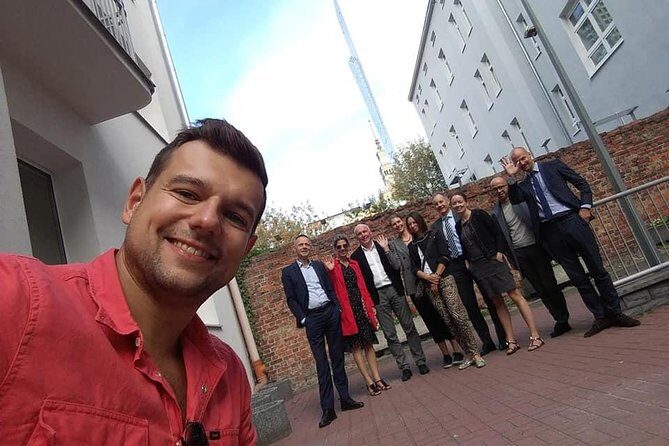
It’s especially good for history-minded travelers who care about memorial interpretation and the politics of evidence—because Treblinka is defined by absence as much as by any surviving structure. It’s also a good match if you prefer small-group dynamics. One review mentioned a group of 7 (8 including the guide), and that size often makes it easier to ask questions and feel seen.
If you’re going with kids, keep in mind that this is a Holocaust extermination camp. It can be emotionally intense and factual in a way that isn’t “kid-friendly,” even with a respectful guide. For most families, it’s best when the child is old enough to handle the material and the parents can manage their own emotional pacing.
Should you book this tour or not?
Yes, I think you should book it if you want Treblinka handled with structure and guidance. This isn’t just a location swap from Warsaw—it’s a guided meaning-making day: museum context first, then ruins, then resistance stories like the August 1943 revolt involving 840 prisoners.
Book it with the expectation that six hours is a focused introduction. If you want to spend extra time reading every panel slowly or lingering silently in one zone, you might feel a bit constrained. But for most people, the combination of pickup, skip-the-line access, and a guide who can answer hard questions is exactly what turns the day from overwhelming to deeply understood.
If you can, choose a departure time that leaves you unhurried afterward. You’ll come back affected, and you’ll want space for dinner, rest, and time to process.
FAQ
How long is the Treblinka camp guided tour from Warsaw?
The tour duration is 6 hours.
What is included in the price?
It includes hotel pickup and drop-off, an English-speaking driver, skip-the-line tickets to Treblinka, and a guided tour in Treblinka Camp.
Is food included?
No. Food and drinks are not included, so you’ll want to bring them or plan to purchase them separately.
Where is Treblinka located?
Treblinka is in the forest north-east of Warsaw. It is about 4 kilometers south of the Treblinka train station, in what is now the Masovian Voivodeship.
What language is the tour guide?
The tour guide and experience are in English.
Is the tour wheelchair accessible?
Yes, the tour is wheelchair accessible.
What should I bring?
Wear comfortable shoes, and bring food and drinks.
Are skip-the-line tickets included?
Yes, skip-the-line tickets to Treblinka are included.
Can I cancel for a full refund?
Free cancellation is available up to 24 hours in advance for a full refund.