REVIEW · WARSAW
Life Behind the Iron Curtain Warsaw Walking Tour
Book on Viator →Operated by Warsaw UnDiscovered · Bookable on Viator
This walk makes Warsaw feel painfully recent. You’ll connect the big buildings and street layouts of the Polish People’s Republic to how everyday life actually worked, from shortages to censorship. I like how it moves fast but stays clear: free stops plus one optional pay-as-you-go finale at the Palace of Culture and Science.
Two things I especially appreciate are the practical visual flow (you see the power centers in the street order they sit in) and the guide’s human touch, including Olivia and Agnieszka who share personal family-linked context. If you’re hoping for lots of interior visits, plan differently: most stops are outside, and the big view costs extra.
Keep your walking shoes ready, because this is about 2.5 hours on foot and it’s not recommended if you have issues with long distances. Still, with a small group (max 10), you get room for questions and explanations without feeling rushed.
In This Review
- Key highlights you should know before you go
- Why this Warsaw walk works: street-level history you can read
- Constitution Square (plac Konstytucji): where the new center was planned
- Marszałkowska Street: a parade boulevard with a purpose
- Socialist realism at the Ministry of Agriculture: how style meant control
- Mysia 3 and the Free Speech Memorial: censorship you can point to
- Nowy Świat 6/12: the Party HQ feeling you get from the location
- Cedet Central Department Store: the everyday struggle behind the shelves
- Rail stations: traveling under a system with borders and rules
- Palace of Culture and Science: symbol, controversy, and the optional terrace view
- Guides and pacing: why a small group feels better here
- Price and value: what $28.57 buys you in real terms
- Who this tour suits best (and who should skip it)
- Tips to get more out of your walk
- Should you book Life Behind the Iron Curtain Warsaw Walking Tour?
- FAQ
- How long is the Life Behind the Iron Curtain Warsaw Walking Tour?
- Where does the tour start and where does it end?
- What language is the tour offered in?
- What’s included in the tour price?
- Are entrance tickets included?
- Is there a mobile ticket?
- How big is the group?
- Is the viewing terrace fee the only extra cost?
- What’s the cancellation policy?
- Is it accessible for people who have trouble walking long distances?
Key highlights you should know before you go
- Small group, max 10 people, so the guide can slow down when something matters to you.
- English tour with a mobile ticket, making it easy to check in and stay flexible.
- All key sites are outside, which means you can learn the story without waiting in line for most stops.
- Socialist realism in real scale, using the Ministry building as a style lesson you can actually see.
- Censorship and surveillance points tied to specific street locations, not abstract talking.
- One optional viewpoint at the Palace terrace for 28 PLN if you want the skyline angle.
Why this Warsaw walk works: street-level history you can read
Warsaw is the kind of city where you can walk past major political power and not notice what it’s doing to your senses. This tour fixes that. You get a street-by-street way to understand why the Polish People’s Republic built certain places large, central, and highly visible.
I also like that the tour feels built for real decision-making. Most stops have free admission, so you’re not constantly budgeting for tickets. And the length is a sweet spot: long enough to feel you learned something real, short enough to keep your afternoon open.
Finally, the guide style matters here. You’ll hear straightforward explanation plus personal context from guides including Olivia and Agnieszka, who bring the era to life through stories tied to how people lived and what changed after.
Other walking tours we've reviewed in Warsaw


Constitution Square (plac Konstytucji): where the new center was planned
You start at Konstytucja Square (plac Konstytucji), a fitting first stop because it shows how regimes try to reshape a city’s identity. This square was meant to be the new center of the Polish People’s Republic, which tells you a lot before you even get to the buildings.
The lesson here is layout. When you see a planned center, you can start understanding how power wants to guide movement—where crowds gather, where ceremonies happen, and where the state wants your attention.
This first segment is also a good warm-up. You’ll get your bearings fast and understand the logic of the walk before the story gets sharper.
Marszałkowska Street: a parade boulevard with a purpose
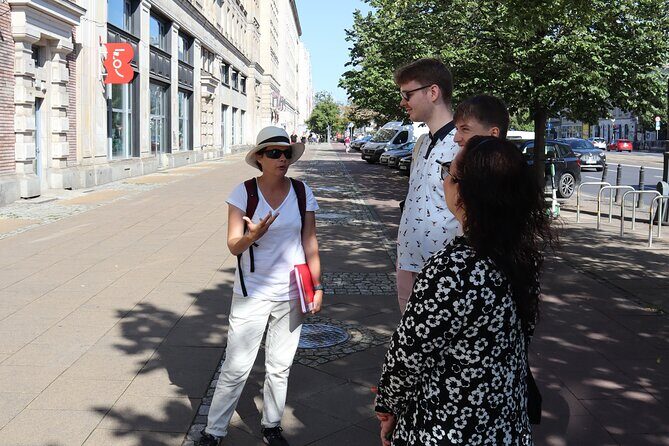
From the square, you head along the wide Marszałkowska Street, a road designed for marches and parades. That detail isn’t trivia. A broad avenue like this is a stage: it makes mass movement look orderly and makes the state feel in control.
Then you get the iconic state-era sights that sit along the route. Even if you only catch them in passing, you’ll learn what they meant and how that meaning has been reused—or reinterpreted—over time.
Practical tip: keep your phone camera ready, but also look up. On a street like this, the point is often in the scale and symmetry, not just a single plaque.
Socialist realism at the Ministry of Agriculture: how style meant control
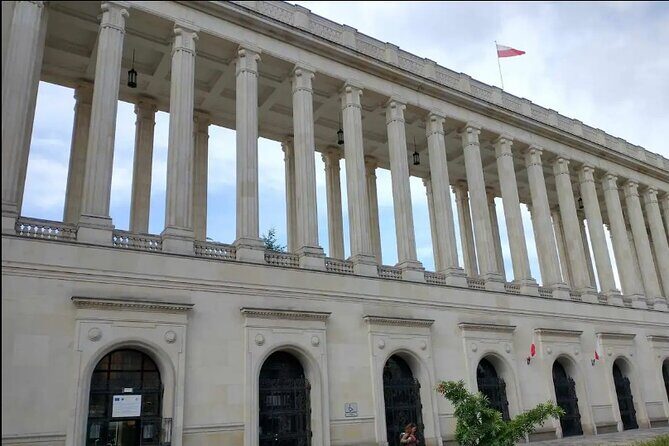
Next up is the Ministry of Agriculture and Rural Development, a stop that’s specifically about socialist realism. You’ll look at the building as an example of a style that wasn’t only aesthetic. It was political messaging in stone: the look was meant to say stability, authority, and permanence.
This part works well because the guide translates design into language you can understand quickly. You’ll learn what characters define socialist realism and why buildings were pushed toward this look.
A small drawback: since this is an outside stop, you won’t get an interior museum experience. But that’s also the point—the exterior design is your “text.”
Mysia 3 and the Free Speech Memorial: censorship you can point to
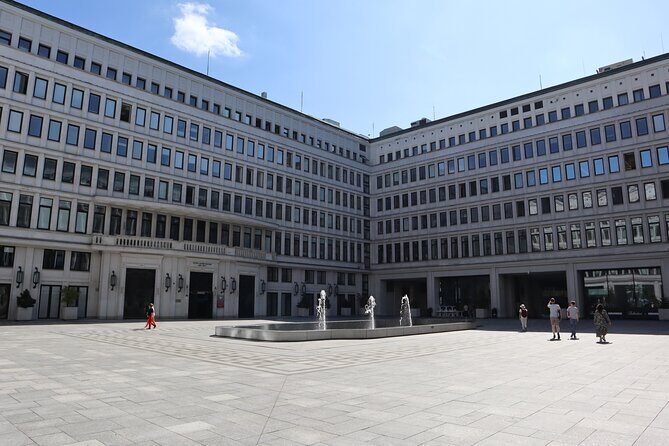
On Mysia Street, the tour shifts from grand architecture to the darker mechanics of state power: censorship and espionage. You’ll see the Free Speech Memorial, and the story centers on how speech was controlled and why that mattered.
This is often the emotional heart of the walk. Once you’ve seen the parade-space and the rule-by-design buildings, this stop explains the human cost behind them. It turns the era from a set of “old buildings” into a lived system where information could be dangerous.
If you tend to get quiet on heavy topics, give yourself permission. This is one of the few places on the route where the guide’s explanation is meant to land, not just inform.
Other walking tours we've reviewed in Warsaw

Nowy Świat 6/12: the Party HQ feeling you get from the location
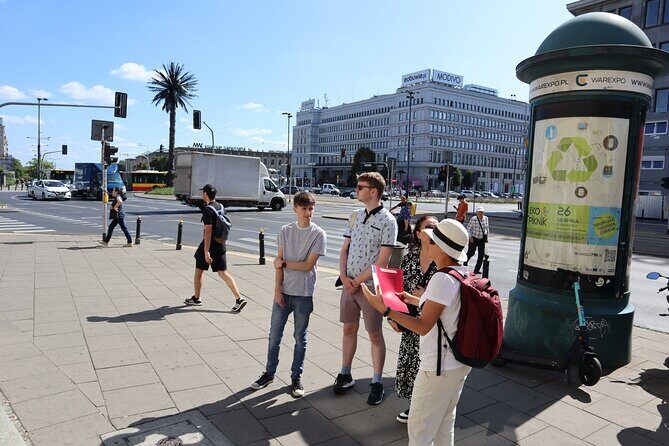
At Nowy Świat 6/12, you’ll stand where power was run from during the Polish People’s Republic. Today it houses the Banking and Finance Center, but the address itself carries weight: it was the place that helped manage the country, including the Communist Party HQ.
I like this stop because it teaches the idea of reuse. Buildings don’t always change meaning right away, even when they get new tenants. The tour helps you notice how state infrastructure can get repurposed while still keeping a trace of its original role.
This is also a good place to ask yourself a question: when a government is run from a single hub, what kind of city life forms around it? You’ll leave this stop with a clearer answer.
Cedet Central Department Store: the everyday struggle behind the shelves
Then comes one of the most relatable parts of the era: buying everyday things. You’ll visit the area in front of the former Central Department Store Cedet, and the guide connects the building to the stresses people faced.
This isn’t “hardship for drama.” You learn why everyday purchasing could be challenging and what that says about how the system worked. It’s the kind of stop that makes you understand why politics wasn’t only about speeches and ministries—it was also about daily friction.
One practical note: this stop is quick (about 15 minutes), so stay present. If you start mentally sprinting to the next photo, you can miss the point.
Rail stations: traveling under a system with borders and rules
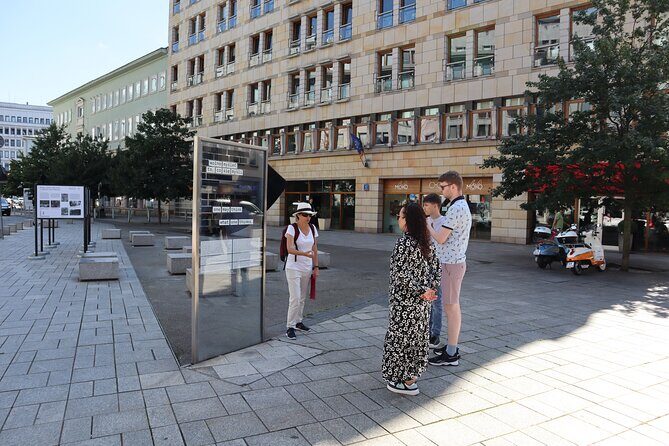
Next, you look at Warsaw Central Railway Station and the Downtown Railway Station and connect them to local, regional, and international travel during the communist period.
Rail is a great topic because it’s both physical and psychological. Physical, because trains shape routes and schedules. Psychological, because governments influence movement—who can go where, and how travel is experienced.
This stop also helps you connect the era’s logistics to Warsaw today. Even if the track networks have changed, the way the city moved under older rules still shapes how you read the transport map.
Give yourself a moment here. Watch how the station functions now, then compare it to what you’re learning about how it was used before.
Palace of Culture and Science: symbol, controversy, and the optional terrace view
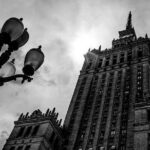
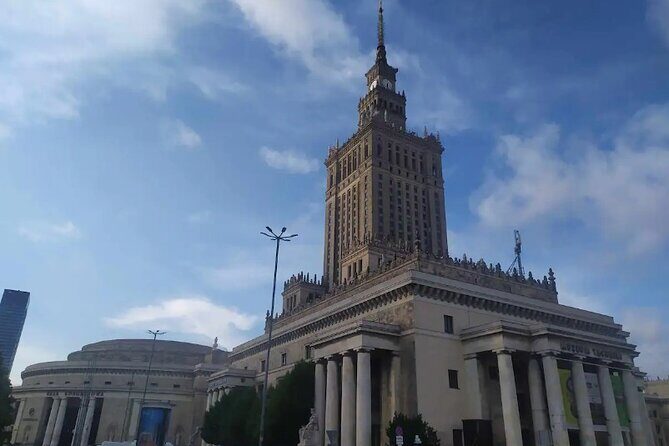
You end at the Palace of Culture and Science, a building that’s symbolic and controversial all at once. You’ll get the key points you need to understand why it became such a charged landmark.
The finale runs about 30 minutes, and this is where you decide if you want the skyline view. The tour fee includes everything except the viewing terrace entry, which costs 28 PLN.
If you want value, think of it like this: the terrace is not required for learning. It’s a bonus if you enjoy city-scale perspectives and want to see how neighborhoods sit against each other. If you’re short on time or budget, you can still get the main story from the outside.
Practical tip: if you do the terrace, check your timing so you don’t feel rushed. The tour ends near Emilii Plater 54, so plan your next activity accordingly.
Guides and pacing: why a small group feels better here
The tour caps at 10 travelers, which changes the vibe. You’re not just listening to a script—you can ask questions and the guide can react to what you’re curious about. In a subject like the Iron Curtain era, that matters.
I also like the pacing: short stops keep you from losing energy, but the guide still covers themes like socialist realism, censorship, and everyday life. That mix keeps the story from turning into one long lecture.
Two guide names also make this easier to trust if you see them at booking time. Olivia is often praised for clear explanations and family-linked accounts that make the era feel personal. Agnieszka is also repeatedly noted for cheerful, story-driven delivery that stays informative without getting heavy-handed.
Price and value: what $28.57 buys you in real terms
At $28.57 per person for about 2 hours 30 minutes, this tour is priced like a “solid intro” rather than a museum deep-dive. And that’s a good fit for many visitors because it gives you orientation plus context.
Most key stops are free admissions, and the tour includes an information pack with useful links and recommendations for what to do next. You’re also paying for a guide who connects the buildings to how life worked, not just for the right photo angles.
The only obvious extra cost is the Palace terrace at 28 PLN if you choose it. I treat that as an optional upgrade, not a catch. If a terrace view isn’t your thing, you can still finish the tour with the full story.
Who this tour suits best (and who should skip it)
This tour is a smart pick if you want a fast, meaningful way to understand Warsaw during the Polish People’s Republic—without hopping across the whole city for each random site.
It’s also a good match if you like guided interpretation. The stops are well-chosen, but the real payoff is the explanations: why the spaces look the way they do, and what that meant for people.
It’s not recommended if you have problems with walking long distances. The route is spread across multiple city blocks and takes about 2.5 hours.
If you’re traveling with service animals, they’re allowed, and the route is near public transportation, which helps if you need a quick escape point.
Tips to get more out of your walk
Plan for a day where this is the centerpiece of your morning or early afternoon. Once you understand how the state shaped the city, it changes how you see Warsaw’s later layers.
Wear shoes you can trust. Even though the tour is not labeled as a strenuous hike, you will still be on your feet for a while.
And when the guide points out a specific street or building feature, pause. Those details are the kind that vanish the moment you keep walking, and the whole point is learning to read the city.
Should you book Life Behind the Iron Curtain Warsaw Walking Tour?
If you want a clear, street-level understanding of communist-era Warsaw, this is an easy yes. The small group size, English availability, and the strong theme-based route make it feel focused rather than scattered.
Book it if you like guided context that connects buildings to how people lived—especially if you’re curious about censorship, control, and everyday friction like buying basic goods.
Skip it only if walking is a problem for you or if you’re looking for lots of indoor access. Most of what you’re learning is built into the street view and the buildings you see from outside. For that style of experience, you’ll get excellent value.
FAQ
How long is the Life Behind the Iron Curtain Warsaw Walking Tour?
It’s about 2 hours 30 minutes.
Where does the tour start and where does it end?
The meeting point is Constitution Square (plac Konstytucji), 00-647 Warszawa and the tour ends near Emilii Plater 54, 00-901 Warszawa by the Palace of Culture and Science.
What language is the tour offered in?
The tour is offered in English.
What’s included in the tour price?
You’ll get a full info pack about Warsaw (FAQ, useful links, and more), visual aids, and recommendations for places to visit and where to eat or drink.
Are entrance tickets included?
Most stop-related admissions are free, but the viewing terrace at the Palace of Culture and Science is not included and costs 28 PLN.
Is there a mobile ticket?
Yes, the tour uses a mobile ticket.
How big is the group?
The tour has a maximum of 10 travelers.
Is the viewing terrace fee the only extra cost?
Based on the details provided, the main extra is the Palace of Culture and Science viewing terrace entry at 28 PLN.
What’s the cancellation policy?
You can cancel for a full refund if you cancel at least 24 hours before the experience start time. Free cancellation is available within that window.
Is it accessible for people who have trouble walking long distances?
It’s not recommended for travelers who have problems with walking long distances. Service animals are allowed, and the tour is near public transportation.