REVIEW · WARSAW
Must-do sites in Warsaw: retro car private tour with hotel pickup
Book on Viator →Operated by Warsaw Behind the Scenes · Bookable on Viator
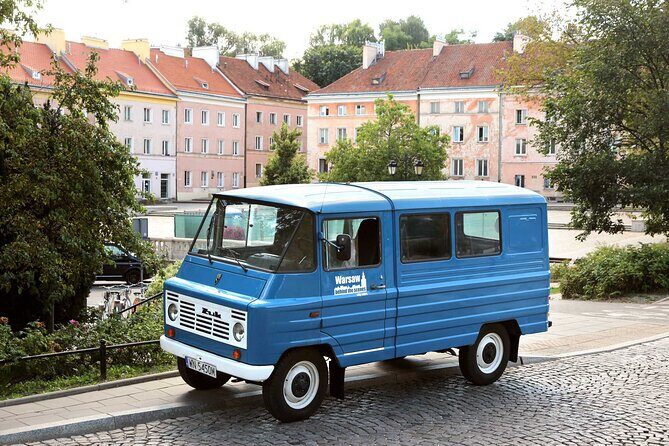
Retro rides make Warsaw history easy to follow. This private tour uses a retro minibus plus hotel pickup to connect major classic sights, then shifts to walking in the places cars can’t go. You get a tight 3-hour plan that covers both royal landmarks and the scars of 20th-century Warsaw.
I especially like two things: the hotel pickup and drop-off that saves you time, and the way the guide turns each stop into a clear story you can actually remember. On my favorite style of this tour, guides like Art and Adam (and even a Żuk ride highlighted with Mariusz) make the history feel like a guided “map” in your head, not a lecture you forget by dinner.
One thing to consider: the classic minibuses are not air-conditioned, and some may not have seat belts. In hot weather or if you’re sensitive to bumps and tight seating, that’s worth planning for.
In This Review
- Key highlights worth marking on your map
- How the retro minibus changes the Old Town pace
- Price and value for a 3-hour private classic-sights plan
- Hotel pickup that saves time, plus the transfer reality check
- Castle Square (Plac Zamkowy): where the story starts
- King Sigismund’s Column: small marker, big message
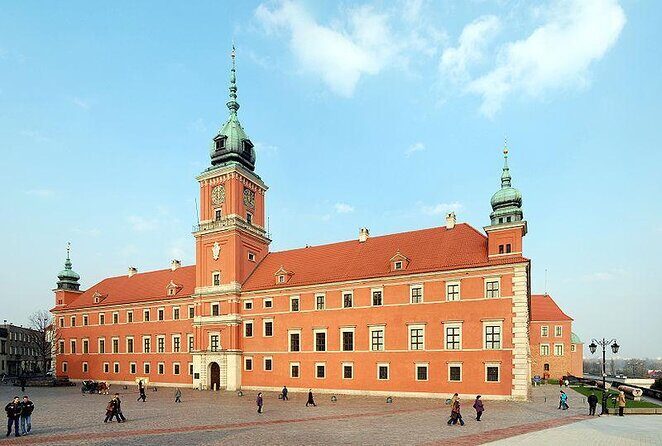
- The Royal Castle exterior: a war story you can see
- St. John the Baptist Archcathedral: royal ceremonies and a national pantheon
- Gnojna Góra viewpoint: the quiet stop that adds context
- Rynek Starego Miasta: the Old Town Market Square in plain language
- Warsaw Barbican and the defensive walls: where the city protected itself
- Krasiński Square and the Warsaw Uprising Monument
- Piłsudski Square and the Tomb of the Unknown Soldier
- Guides and pacing: the difference between a trip and a learning arc
- What to wear and expect from the vehicle ride
- Who this tour suits best (and who might want something else)
- Should you book this retro minibus private tour?
- FAQ
- Is hotel pickup and drop-off included?
- How long is the tour, and where does it start and end?
- Is this a private tour?
- Are entrance tickets included?
- What’s the vehicle like and is it air-conditioned?
- Can children join, and are seat boosters needed?
Key highlights worth marking on your map
- Retro minibus + private group: your own group, small-vehicle feel, less waiting around.
- Hotel pickup saves daylight: transfers count toward the total time, so timing matters.
- Old Town walking segments: cars don’t go where you’ll want to look closely.
- Top classics in one loop: Castle Square, St. John’s Archcathedral, the Barbican, and key memorials.
- English-speaking guide: clear explanations at each stop, including why each place survived or changed.
- No admission hassle at listed stops: the itinerary lists free admission tickets for the stops.
How the retro minibus changes the Old Town pace
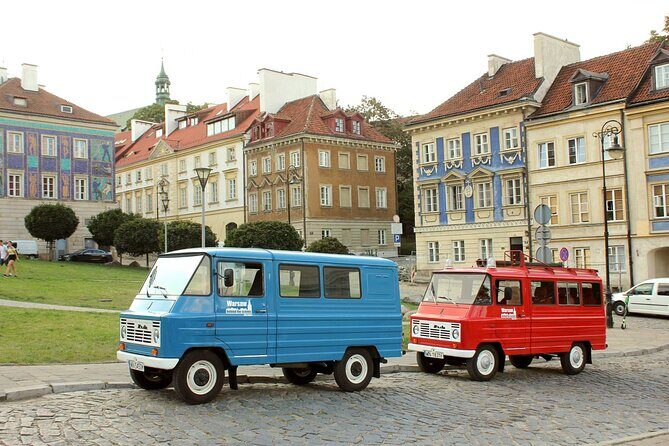
Warsaw’s Old Town looks best when you can slow down and glance from a doorway to a courtyard to a church spire. This tour helps because the classic minibus does the “getting there” work, then you switch to walking where the streets are meant for people.
It also helps psychologically. When you ride in something intentionally old-school, you’re already in “history mode,” so the guide’s stories land more naturally. The ride isn’t the point by itself, but it sets the tone—especially when the vehicle is a Żuk-style classic (you’ll see this mentioned in guide/vehicle experiences) and not a modern shuttle that feels anonymous.
Because it’s private, the pace tends to match your group. If your group wants photos, you can usually take them without turning the whole thing into a sprint. If you want to move on quickly, you can. That flexibility is hard to get with big group buses.
Other private tours in Warsaw


Price and value for a 3-hour private classic-sights plan
At $168.58 per person for about 3 hours, you should think of this as paying for three things: (1) hotel pickup and drop-off, (2) a truly private group experience, and (3) an English-speaking guide who does the connecting-the-dots work.
You’re not just paying to be “near” sights. You’re paying to have someone explain why Castle Square matters before you stand in it, why the Barbican existed where it did, and why Warsaw’s postwar rebuilds weren’t random—they were intentional.
Value gets better if you’re a family or a small party sharing the cost across your group. The tour can run with a minibus sized for up to 8 passengers, and there’s a fleet available if you’re not the same group size as someone else. Translation: you’re likely to feel like you’re doing this with your own little crew, not squeezed into a large crowd.
The one cost add-on to remember is simple: tips or gratuity are not included.
Hotel pickup that saves time, plus the transfer reality check
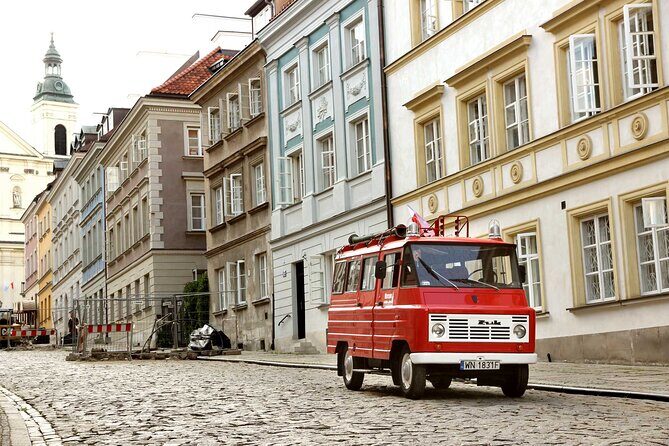
Hotel pickup is a big deal in Warsaw, because “near the center” is different than “actually close.” The tour notes that transfer time from and to your hotel counts in the total experience time. So if your hotel is far out, you may spend more of the 3 hours riding and less standing.
My practical advice: if you’re staying a long way from the Old Town core, you can ask whether meeting in the city center would shorten the ride time. The tour specifically points out that sometimes it’s better to meet in the center rather than burn minutes on pickup transfers from a far-located hotel.
Also check the vehicle conditions. These vintage minibuses may have no seat belts on some units (historic vehicles are permitted that way), and there’s no air conditioning. Heating is provided for winter, which is a comfort plus if you’re touring in colder months.
Castle Square (Plac Zamkowy): where the story starts
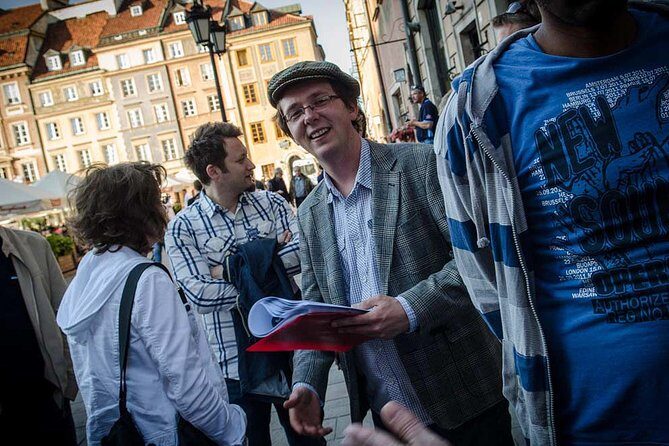
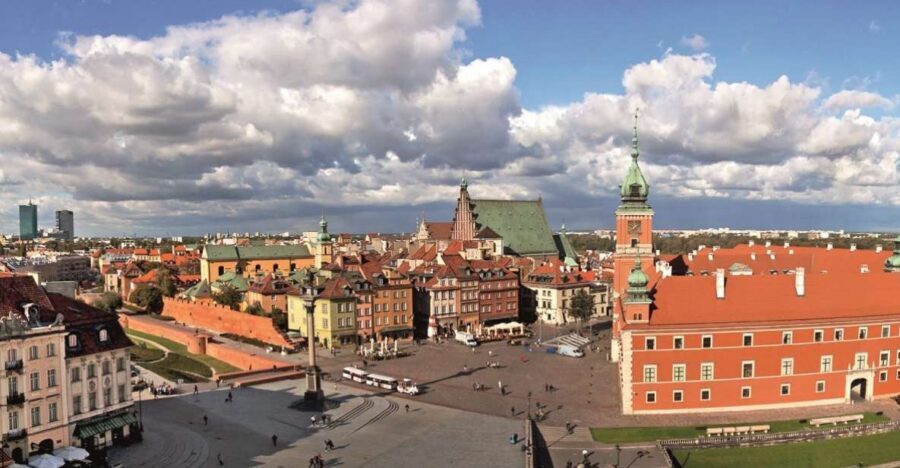
Most “Old Town” tours jump around. This one starts at the symbolic heart: Castle Square. After pickup, you head into the Old Town area on foot because cars aren’t permitted there. That means your first 15 minutes are spent getting your bearings in the exact place Warsaw wants you to begin.
Castle Square is presented as more than a pretty starting point. It’s tied to Warsaw’s origins—over 700 years of symbolism—plus the royal and state power story that shaped the capital. The guide sets up the why before you start sightseeing, and that’s what makes the rest of the tour feel coherent.
King Sigismund’s Column: small marker, big message
In the center of Castle Square stands King Sigismund’s Column. It commemorates the monarch who moved the capital from Kraków to Warsaw, and it also carries a survival/rebuilding story tied to destruction and reconstruction.
A column might sound like a quick stop, but the guide uses that few minutes to explain how power and decision-making changed the city’s direction. In practice, that context makes your later visits—church, market square, defensive walls—feel like different chapters of the same city.
Other Warsaw tours with hotel pickup


The Royal Castle exterior: a war story you can see
You won’t walk through the Royal Castle on this route, but you do get to see it from the outside. That matters because you’re looking at a symbol that was once the official residence of Polish kings and later became a powerful marker of state continuity.
The tour frames the exterior visit with the Warsaw reality that many places share: the castle was looted and destroyed during World War II, and it was meticulously rebuilt later as an act of national determination and historical continuity.
Even from outside, it’s a useful lesson in how architecture can be political. You’re not just seeing walls. You’re seeing what people decided was worth restoring and why.
St. John the Baptist Archcathedral: royal ceremonies and a national pantheon
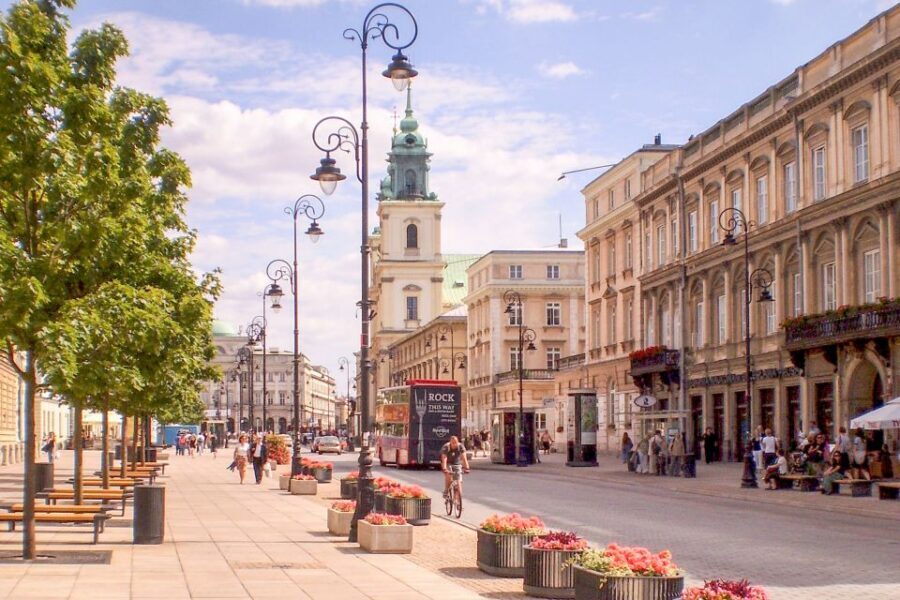
From Castle Square you head along Świętojańska Street to the Archcathedral Basilica of St. John the Baptist. The tour treats this as Warsaw’s oldest church and one of Poland’s national pantheons, so it’s not just a stop for your photo roll.
Expect about 20 minutes here. The focus is on why the church is tied to monarchy and state ceremonies, and why it matters to the Polish–Lithuanian Commonwealth story.
If you like churches as “timeline anchors,” this one works well. You can’t always read a century off a building, but a guided explanation turns it into something you can track.
Gnojna Góra viewpoint: the quiet stop that adds context
Then there’s Gnojna Góra, a more off-route viewpoint. It’s short—around 10 minutes—but it gives you something many Old Town loops skip: a sense of everyday life and practical urban logic.
The guide’s framing here connects defensive systems and river trade routes to how Warsaw worked when it wasn’t just a museum district. You step slightly away from the main route, look out, and suddenly you understand why the city’s layout made sense.
It’s a smart pacing tool too. After concentrated landmarks and war stories, a viewpoint helps your brain rest while still learning.
Rynek Starego Miasta: the Old Town Market Square in plain language
Next is Rynek Starego Miasta, about 15 minutes in the heart of the Old Town Market Square. The square is surrounded by colorful townhouses rebuilt after World War II, so it visibly carries the “lost and restored” theme.
This is also where the guide tells the legend of the Warsaw Mermaid, and it’s tied to the square’s role as the center of civic life for centuries. In other words, it’s not only about legend or only about architecture. It’s about community.
If you like markets because they feel real, this square delivers that mix—open space, street energy, and history that’s visible in the rebuilding.
Warsaw Barbican and the defensive walls: where the city protected itself
The tour then walks you to the Barbakan Warszawski. This is one of the best stops for people who want “how did the city work?” instead of only “what happened here?”
Expect about 15 minutes. The Barbican is described as a fortified gateway that once protected the city. The guide explains Warsaw’s fortifications and the extraordinary postwar reconstruction that returned this area to its historic appearance.
This stop also pairs nicely with the earlier viewpoint at Gnojna Góra. Together, you get both the strategy and the placement. Defensive planning becomes less abstract when you can picture it in space.
Krasiński Square and the Warsaw Uprising Monument
After the Old Town portion, you travel outside to Krasiński Square to see the Warsaw Uprising Monument. This is an important shift in tone, and the tour gives you time to absorb what the uprising represents—an armed fight in 1944 against Nazi occupation and the massive sacrifices made by city residents.
This stop is about remembrance. It also makes the earlier “reconstruction” stories feel less like trivia and more like moral and civic choice.
Even if you know a lot already, it’s one of those places where the emotional weight shows up fast. The guide keeps it grounded and helps you connect the monument to the wider Warsaw story.
Piłsudski Square and the Tomb of the Unknown Soldier
The tour finishes at Piłsudski Square, with the Tomb of the Unknown Soldier. It’s described as one of Poland’s most important national memorials, and you’re given a moment to reflect.
The finish location works well because it’s central, ceremonial, and easy to continue your day afterward. If you’re pairing this with dinner nearby, you’ll find it much easier than ending in a far-off area.
Guides and pacing: the difference between a trip and a learning arc
What makes this experience consistently good is the people running it. In different accounts, guides like Art and Adam are praised for being engaging and for doing a strong overview before you even start the main walking portion.
That first “orientation” moment matters. When a guide takes a minute to reset your knowledge—like framing the history from partitions forward—you don’t get lost in details later. You understand what you’re seeing, even at stops you didn’t know much about going in.
Also, guides are keeping kids interested mentioned in some experiences. Even if your group includes tweens or teens, the structure helps: ride, walk, stop, story, photo, move on.
Finally, remember this is a private tour/activity. Only your group participates, so you’re not waiting for strangers to catch up or juggling a loud crowd.
What to wear and expect from the vehicle ride
This is mostly walking, so comfortable shoes are your best upgrade. The tour itself emphasizes comfortable clothing and suitable footwear because you’ll be stepping in and out along a route with several short stops.
For the vehicle: no air conditioning, some historic units without seat belts, and heating for winter. If you’re touring in warm weather, dress for heat and keep water handy. If you’re going in cold season, you’ll likely be okay thanks to heating, but you’ll still want layers.
If you’re sensitive to bumpy rides, know that classic minibuses don’t feel like modern vans. It’s part of the charm.
Who this tour suits best (and who might want something else)
This tour is a strong fit if you want a clear “must-do Warsaw” route without stress. It’s also ideal if you like your history delivered step-by-step at actual places, not as a scatter of random stops.
It’s especially good for:
- First-time visitors who want top classics covered fast
- Families who prefer a structured route and shorter walks
- People staying in hotels that make transit annoying without pickup
It may be less ideal if:
- You hate historical memorial stops and want only light sightseeing
- You require air-conditioned transportation
- You dislike walking segments, even if they’re short
Should you book this retro minibus private tour?
I’d book it if you want a tight 3-hour loop of Warsaw’s top sites with hotel pickup, an English-speaking guide, and a ride that feels part of the experience. The best reason is the pacing: the tour doesn’t just list sights. It connects them into a readable story from royal power to wartime destruction to postwar rebuilding and national memorials.
If you’re choosing between this and a standard group bus, the private setup and pickup are the practical wins. And if you’re choosing between this and a walking-only plan, the retro minibus plus short transit breaks help you handle the Old Town without turning it into an exhausting day.
If the lack of air conditioning would bother you, plan your timing and clothing accordingly. But in the right season, this is one of those Warsaw tours that leaves you with both photos and clarity.
FAQ
Is hotel pickup and drop-off included?
Yes. The tour includes hotel/apartment pickup and drop-off. If your pickup location isn’t listed in the selection box, you’ll need to send your address to the tour operator. Transfer time from and to your hotel counts toward the tour’s total duration.
How long is the tour, and where does it start and end?
It runs for about 3 hours. After pickup, you begin exploring the Old Town on foot starting at Castle Square, and the tour concludes at Piłsudski Square with the Tomb of the Unknown Soldier.
Is this a private tour?
Yes. It’s a private tour/activity, and only your group participates.
Are entrance tickets included?
The itinerary lists admission ticket free for the stops, including Castle Square, King Sigismund’s Column, St. John’s Archcathedral, Rynek Starego Miasta, and the Warsaw Barbican.
What’s the vehicle like and is it air-conditioned?
The classic vintage minibuses are not equipped with air conditioning. Some vehicles may not have seat belts (which is permitted for historic vehicles). All vehicles have heating for winter.
Can children join, and are seat boosters needed?
The tour can be booked for adults and children over 150 cm (4 ft 9 in). For children under 150 cm, seat boosters are mandatory under Polish law, so you should contact the tour operator in advance to check availability.