REVIEW · WARSAW
Private Warsaw City Tour by Retro Minibus with Hotel Pickup
Book on Viator →Operated by Warsaw Behind the Scenes · Bookable on Viator
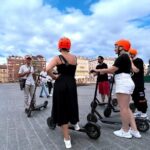
Warsaw moves faster in a tiny retro bus. This private tour uses a retro Żuk minibus and a real local guide to help you understand Warsaw’s past and present without wasting time figuring things out. I love the design-your-own feel—your guide can steer the balance between big sights and the details you care about most.
The two best parts for me are the free hotel pickup and drop-off and the fact that you’re not stuck in a rigid script. You also get a lot of orientation fast: Old Town, the Royal Route, a river-side slice of Praga, plus WWII-era neighborhoods. One thing to consider: it’s not “sit-and-watch” sightseeing; there’s walking at every stop, and the vintage minibus isn’t air-conditioned.
In This Review
- Key things that make this private tour worth your time
- The retro Żuk minibus and a truly private guide
- Old Town and Castle Square: your fast start in Warsaw
- The Royal Route: Krakowskie Przedmieście and Nowy Świat
- Praga on the east bank: river views and WWII survival
- Łazienki Royal Gardens: peacocks, squirrels, and a calmer Warsaw
- Muranów and the Warsaw Ghetto: a neighborhood that explains tragedy
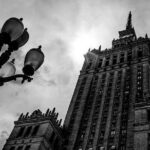
- Palace of Culture and Science: communist Warsaw through the decades
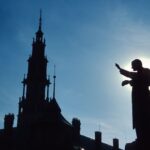
- Warsaw Uprising Monument: when the guide slows down your questions
- How much walking and comfort should you plan for?
- Price and value: what $167.76 buys you in practice
- Who should book this private Warsaw tour?
- Should you book the Private Warsaw City Tour by Retro Minibus?
- FAQ
- How long is the private Warsaw city tour?
- Is hotel pickup and drop-off included?
- Is this a private tour?
- What language is the tour offered in?
- Do I need to pay admission tickets during the tour?
- What should I wear?
- Is the retro minibus air-conditioned?
- Can I cancel for a full refund?
Key things that make this private tour worth your time
- Hotel pickup included, so you start sightseeing with zero friction
- Your itinerary, your pace, guided by someone who can adjust on the fly
- Retro Żuk vehicle feel, where the ride itself becomes part of the story
- A smart mix of districts, not just the postcard center
- WWII stops with clear context, built for people who want real understanding
- Short entry calls, most admission is free, with one notable exception
The retro Żuk minibus and a truly private guide
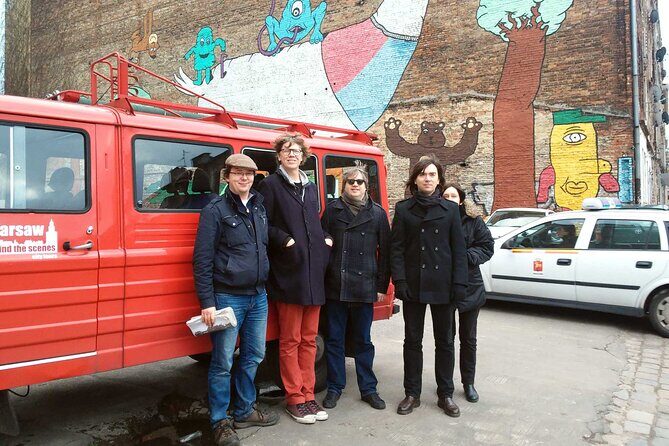
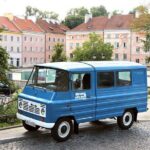
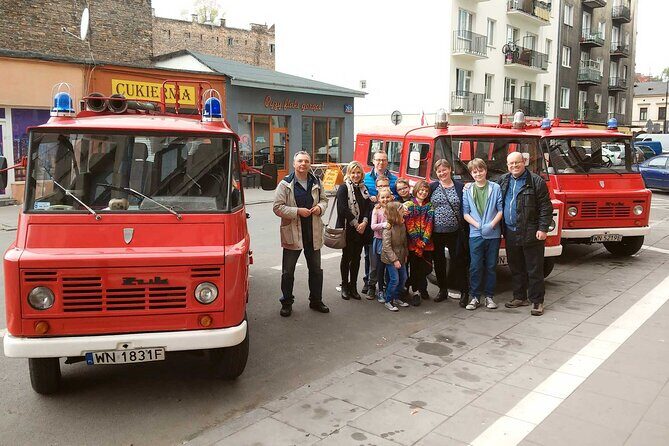
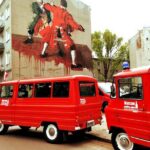
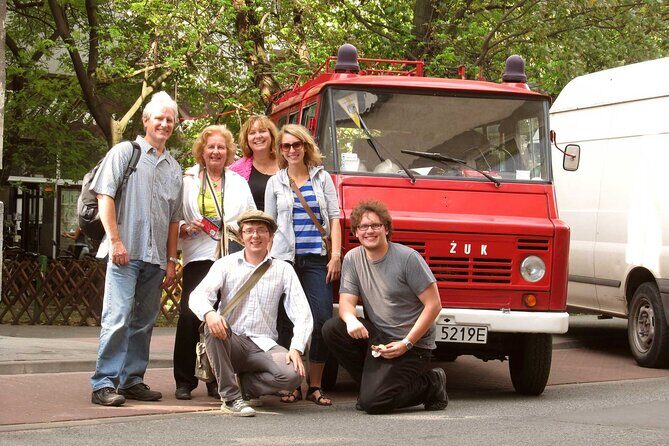
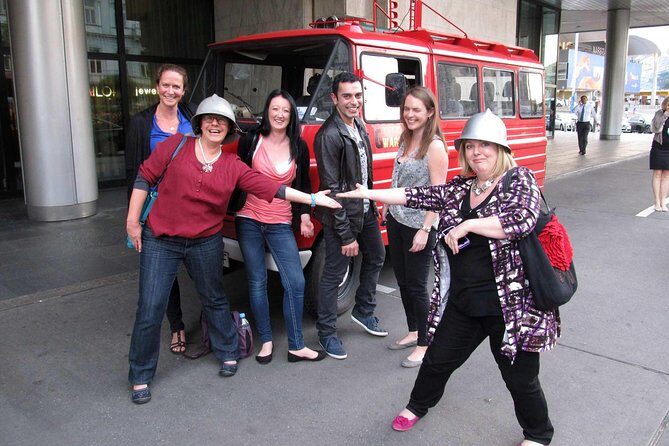
This is a private tour, meaning it’s only your group—no mixing, no losing your moment when everyone suddenly needs the same restroom. The minibus itself is the point. It’s a classic communist-era Żuk (the beetle), with a wooden floor and no modern “comfort tech” vibe.
That retro setup changes how the day feels. The guides don’t just talk at you while you stare out a window. You’re rolling through Warsaw in a vehicle that feels of the times you’re learning about—especially when you get to the communist-era sights later in the route.
A practical note: the minibuses are heated for winter, but they’re not air-conditioned, and some historic vehicles may not have seat belts (which is allowed for historic vehicles). If you’re sensitive to heat or want extra comfort, plan around the season and dress accordingly.
Other Retro Fiat city tours in Warsaw

Old Town and Castle Square: your fast start in Warsaw
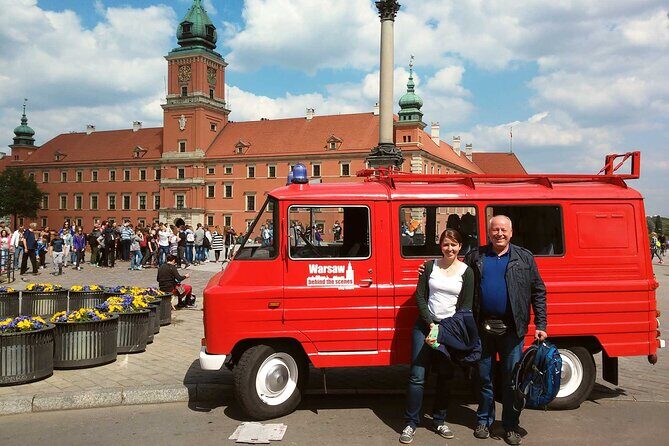
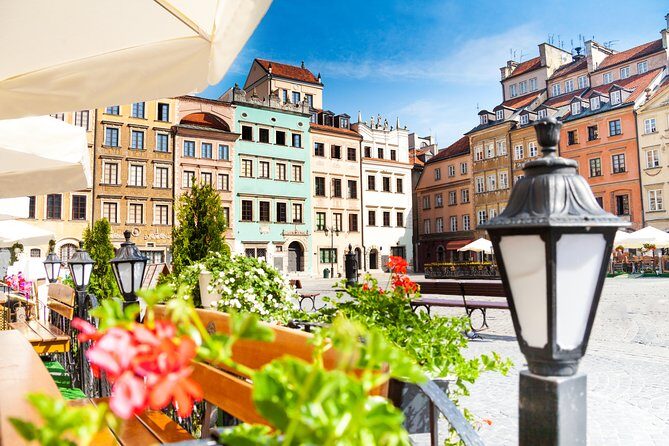
You’ll begin in the Warsaw Old Town, one of the best places to get your bearings. The walk starts at Castle Square, where Warsaw’s story is framed back more than 700 years—so even if you don’t know the timeline yet, the guide helps you place it.
From there, you’ll move through:
- Castle Square landmarks and old trading routes
- Gothic cathedral views
- Tight side streets with older tenement-style housing
- A riverside viewing point
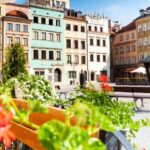
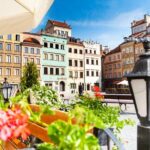
- The Market Square, ringed with colorful tenements and restaurants
What I like about this start is that it’s not just pretty buildings. The Old Town is where your guide can show you how Warsaw rebuilt itself, layer by layer. It also gives you a clear visual map for the rest of the day: you’ll look at streets later and recognize where you started.
Potential drawback: this portion can take time because you’ll be walking. If your ideal day is mostly vehicle riding, you’ll want to be clear with your guide early about where you want to spend your feet.
The Royal Route: Krakowskie Przedmieście and Nowy Świat
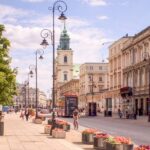
Next comes one of Warsaw’s most prestigious corridors: Krakowskie Przedmieście, part of the Royal Route. This street connects the Old Town area with the Royal Castle zone, and it’s lined with major civic and historic sites.
What you can expect here:
- Historic palaces, churches, and manor-houses
- Key institutions along the route, including the Presidential Palace and Warsaw University
- A stop in the orbit of the Staszic Palace, home to the Polish Academy of Sciences
- Continuing southward toward Nowy Świat, with the famous palm tree as a visual landmark
This is where the tour turns from “where am I?” into “how does Warsaw function?” The guide can point out how power, culture, and education all sit next to each other in the city’s layout. It’s also a nice change of rhythm from Old Town’s narrower streets—wider sightlines, more formal architecture, and easier walking.
Praga on the east bank: river views and WWII survival
Crossing the Vistula by minibus, you’ll see the river from a different angle than most first-time visitors get. Then you land in Praga, often described as less polished for tourists and more connected to local life.
Why Praga matters: it’s one of the districts that survived WWII in a way that preserves parts of a pre-war look. You’ll see belle-epoque style buildings and the feeling of small, busy courtyards—exactly the type of texture that gives a city personality.
After a heavy set of stories earlier or later (depending on how your guide sequences things), Praga can feel like a breather. The guide’s explanation helps you understand why it became “the other Warsaw”: a place that had time to keep living instead of resetting entirely.
What to watch for: this is a district stop, so there’s less “single attraction” energy. You’ll get more value if you’re the type who enjoys street-level atmosphere and guided context more than waiting for one big photo spot.
Łazienki Royal Gardens: peacocks, squirrels, and a calmer Warsaw
Then the tour shifts to nature and culture at Łazienki Royal Gardens. This park began in the 17th century as a baths park for nobleman Stanisław Herakliusz Lubomirski. Later, in the 18th century, Poland’s last monarch, Stanislaus II Augustus, reshaped it into a setting for palaces, villas, classicist follies, and monuments.
By 1918, it became an official public park. Today it’s known for music, arts, and culture—plus the very practical reality that you’ll likely see peacocks and plenty of squirrels.
This stop is valuable because it resets your eyes. After dense architecture and WWII-era neighborhoods, the gardens give you space. Even if you only have an hour, the guide can help you notice scale: how the park’s design makes it feel like a whole world inside the city.
Other Warsaw tours with hotel pickup
Muranów and the Warsaw Ghetto: a neighborhood that explains tragedy
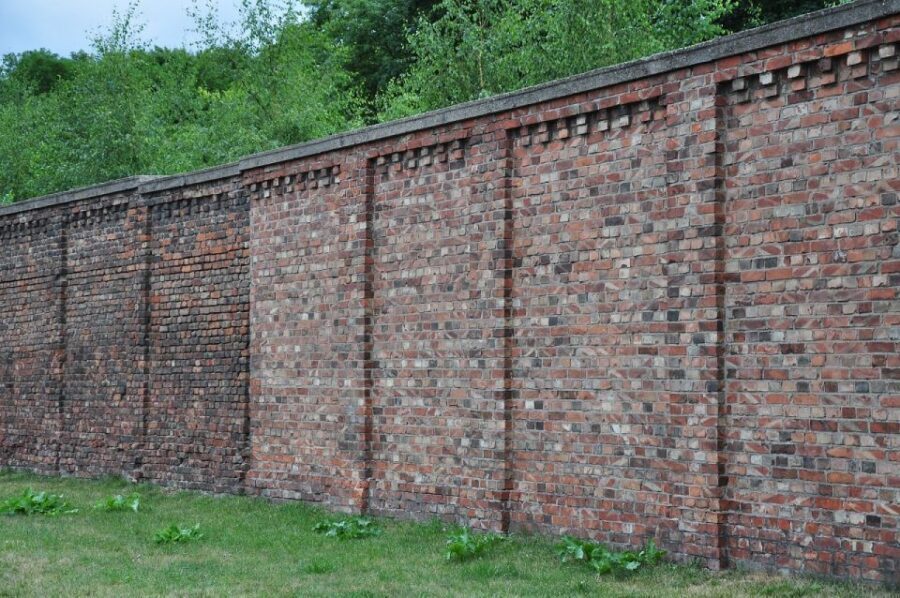
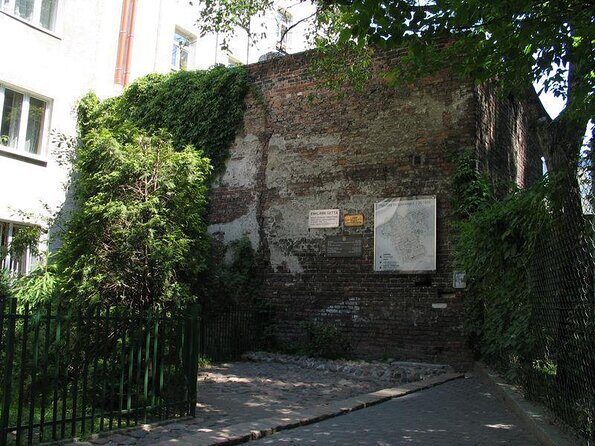
One of the most important stops is in the Muranów area, connected to the Warsaw Jewish Ghetto. At first glance, it can look like ordinary residential blocks. The guide’s job is to change what you see by adding the missing layer: this neighborhood witnessed the creation and later destruction of the ghetto under German Nazis in 1940.
A key moment in the story is 1943. When the final portion of the Jewish community was being deported to extermination camps, underground resistance formed and an insurrection started against the oppressors. This fighting lasted three weeks and led to the demolition of the Jewish district in Warsaw.
This is not a stop built for casual browsing. You’ll want to go in with a mindset for remembering and understanding. If you prefer tours that keep things light, you might find this heavy. If you want clarity on what happened—and why it still matters in the city—this stop delivers.
Practical tip: wear comfortable shoes. You’ll be walking through areas where the guide helps you “read” the present alongside the past.
Palace of Culture and Science: communist Warsaw through the decades
The tour then reaches the Palace of Culture and Science, one of Warsaw’s most recognizable structures—and a symbol tied to the communist period. Admission for this stop is noted as not included, so you should be ready to cover any ticket costs if you choose to go inside.
Why this stop works in this tour format: it isn’t treated like a standalone monument. It’s framed as an arc. You’ll hear about post-WWII reconstruction and the decades that followed, including the rough period of the 1960s and 1970s. The story is tied to how people lived inside a centrally steered economy, and it moves toward the first free elections in 1989.
This is where the retro minibus becomes more than a gimmick. The vehicle’s communist-era feel pairs with the guide’s explanations, so the day doesn’t just “mention history”—it helps you connect it to physical Warsaw.
Warsaw Uprising Monument: when the guide slows down your questions
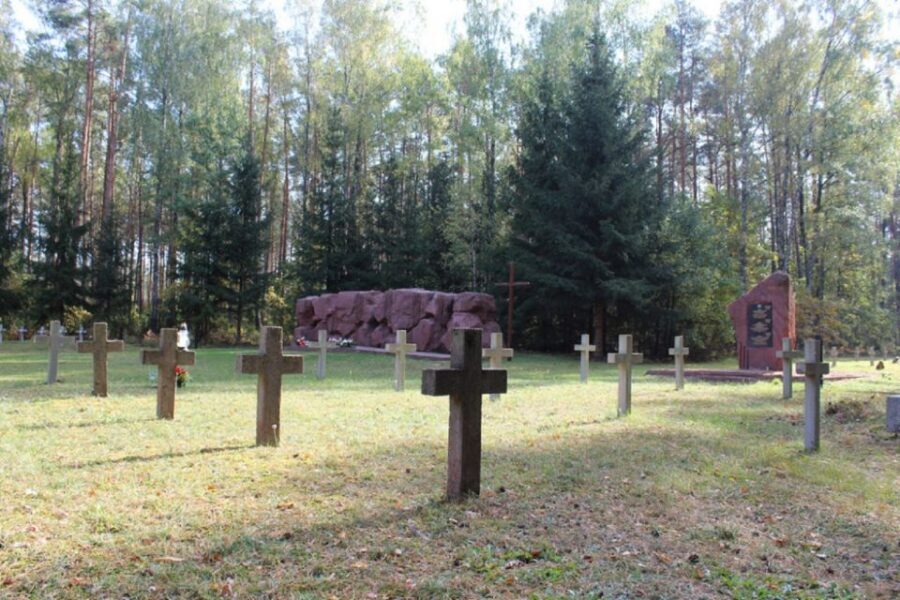
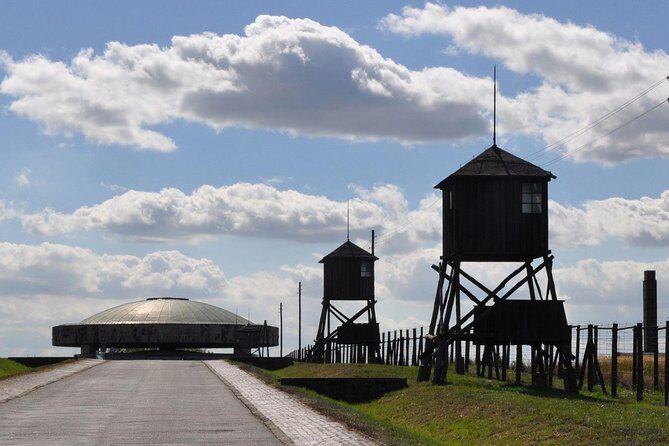
For people who care most about WWII, the tour includes a stop connected to the Warsaw Uprising Monument. This portion is explicitly aimed at those who want the WWII story in detail.
You’ll hear about:
- The brutal reality of the Nazi occupation
- Resistance and uprising fighting
- The idea of liberation by the Soviets in 1945, described as part of the shifting political situation in the region
- How the consequences of war hit Poland and Europe
The tour also leans into “place-based history.” The guide points out visible reminders: buildings that may show battle damage like bullet holes, ricochets, rubble, and traces connected to the WWII story, alongside archival photographs and the retro vehicle setting the tone.
If you’re trying to decide whether you want the emotional weight, here’s my advice: if you can handle serious history, this is one of the strongest parts of the day because it gives you a story with structure. If you’re trying to avoid heavy material, you can ask your guide to adjust depth or time.
How much walking and comfort should you plan for?
This is a private, vehicle-assisted tour with walking segments at each stop. Old Town, Royal Route, and the garden areas can each involve enough walking that you’ll want proper footwear.
Also, the minibuses are vintage and may not have seat belts. Even though they’re historic vehicles (and heating is included), comfort depends on the season. In winter, heating helps. In summer, think twice if you’re sensitive to heat since there’s no air-conditioning.
If you’re traveling with kids, the tour can include children over 150 cm (4 ft 9 in). For children under 150 cm, seat boosters are mandatory by Polish law, so you’ll need to check availability with the operator in advance.
Price and value: what $167.76 buys you in practice
At $167.76 per person for a private experience lasting about 3 hours, the value comes from the whole package—not one single attraction.
You’re paying for:
- Private guide time (only your group)
- Hotel pickup and drop-off, which saves time and stress
- A guided route that hits multiple districts you’d otherwise need separate tickets and planning for
- Live commentary on board that keeps explanations flowing during transfers
- A vehicle that makes the ride itself part of the “why” behind the sights
There’s also the small but real advantage that most admission is free for the stops listed, which helps you avoid surprise costs. The one clear exception is the Palace of Culture and Science, where admission is not included.
If you’re traveling as a couple or small group, private tours can be a good deal because you don’t have to coordinate schedules with strangers. If you’re solo and want the cheapest possible option, there may be cheaper group tours—but you’d lose the flexible, “tell me what you want to see” advantage.
Who should book this private Warsaw tour?
This fits best if you:
- Want a fast orientation plus real context, not just photo stops
- Like guides who adjust to your interests during the day
- Want Warsaw’s center and its off-center districts, including Praga and Muranów
- Are okay with serious WWII themes if the guide slows down to explain them
It might be less ideal if you:
- Want a mostly seated ride with minimal walking
- Prefer tours with air-conditioned vehicles no matter the season
- Want a light, casual overview only (this tour includes heavy material)
Should you book the Private Warsaw City Tour by Retro Minibus?
I’d book it if you want the best mix of “where things are” and “what they mean,” in a format that feels local rather than tour-bus generic. The retro Żuk ride adds personality, and the free hotel pickup makes the experience start clean and simple.
I’d think twice only if you hate walking or you need modern vehicle comfort like air-conditioning. Otherwise, this is a strong first-Warsaw move, especially because it pairs classic highlights (Old Town, the Royal Route, Łazienki) with districts that explain harder parts of the city.
FAQ
How long is the private Warsaw city tour?
It runs for about 3 hours.
Is hotel pickup and drop-off included?
Yes. Free hotel pickup and drop-off are included, and the operator will contact you to confirm the pickup details.
Is this a private tour?
Yes. It’s private, and only your group participates.
What language is the tour offered in?
The tour includes live commentary in English.
Do I need to pay admission tickets during the tour?
Admission is listed as free for most stops. The Palace of Culture and Science has admission not included.
What should I wear?
Wear comfortable clothing and suitable footwear, since there are walking segments at each stop.
Is the retro minibus air-conditioned?
No. Classic vintage minibuses are not equipped with air conditioning, though they do have heating for winter.
Can I cancel for a full refund?
Yes, free cancellation is available. You can cancel up to 24 hours in advance for a full refund.