REVIEW · WARSAW
Private Warsaw Old Town & Royal Route Walking Tour – Bestseller
Book on Viator →Operated by Warsaw Tourist Guide Łukasz Benedykciński · Bookable on Viator
Warsaw’s scars show up in every stop. This private walking tour ties together the Old Town highlights and the Royal Route with clear, story-driven stops you can actually remember later, not just photos. You’ll start at the Nicolaus Copernicus Monument area and finish near the Warsaw Mermaid, with a guide who keeps the route moving and the facts straight.
I love how Chopin’s heart becomes a real mystery with a human backstory, not a random trivia point. I also like the way the walk explains how Warsaw was rebuilt after WW2, including why some major buildings were spared and why others took years to return.
One consideration: the itinerary is tight, so you’ll spend only minutes at each landmark (often 5–10), meaning it’s less for slow museum-style wandering and more for getting the big picture fast.
In This Review
- Key points to know before you go
- Private Old Town and Royal Route in about 2.5 hours
- Where you meet, how pickup works, and how to plan your arrival
- Holy Cross Church: Chopin’s heart and the smuggling question
- Krakowskie Przedmieście: why Warsaw rose, plus coffee history on the move
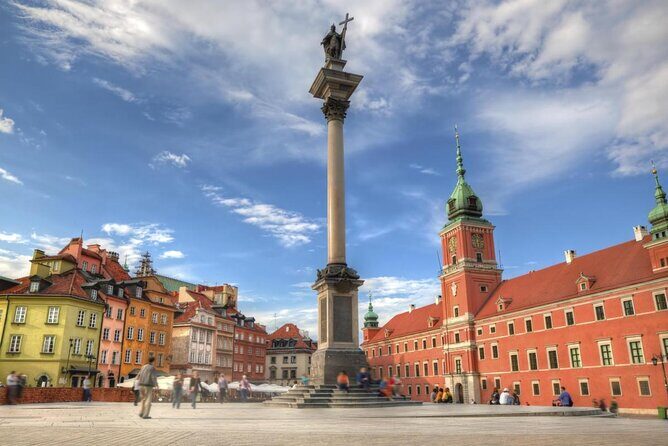
- Plac Marszalka Józefa Pilsudskiego: skyline views and what survived
- The Presidential Palace and the Royal Castle story that stretches across years
- Warsaw’s most important church: built twice, explained in context
- Tomb of the Unknown Soldier: a short stop with big meaning
- Kanonia: from cemetery history to the small Amsterdam nickname
- Rynek Starego Miasta: seeing the market square through rebuilding photos
- Barbakan and Gnojna Góra: city walls, padlocks, and why romance needs history
- Old Town treasures: Piwna Street, the Pigeon Lady, mermaid lore, and WW2 stories
- Price and value: what $258.88 per group buys you
- Who should book this tour, and who might not love it
- Should you book the Private Warsaw Old Town & Royal Route Walking Tour?
- FAQ
- Where does the tour start and end?
- Is pickup available?
- How long is the walking tour?
- Is it a private tour, and what group size is it for?
- What language is the tour offered in?
- What is the cancellation policy?
Key points to know before you go
- Private group of up to 15 means less crowd-pressure and more room for questions.
- Chopin’s heart at Holy Cross Church is a standout stop tied to a surprising origin story.
- WW2 rebuilding explanations show up repeatedly, so the Old Town makes more sense as you walk.
- A strong Royal Route line links skyline views at Pilsudski Square with core monuments.
- Old Town “small stories” include places like Piwna Street and the mermaid lore, not just the postcard stops.
- Hotel pickup is possible, so you can reduce stress on arrival day.
Private Old Town and Royal Route in about 2.5 hours
This is a focused walk through some of Warsaw’s most important spaces, done in a practical time window: roughly 2 hours 30 minutes. The value here is not that you visit a long list—it’s that the guide uses those stops to tell a connected story of identity, war, and rebuilding.
You’re traveling as a private group of up to 15 people, which changes the vibe. In a small group you can ask follow-ups, and the guide can adjust pacing if someone needs a slower moment. That matters on a walking route like this, especially when the details are the point.
Price is listed as $258.88 per group. That can be a steal if you fill it up, and a bigger spend if you’re a very small group. As a quick math check: if you had 10 people, you’re around $25–$26 per person; if it’s only 2 people, it’s closer to $129 per person. For many people, that’s worth it when you compare it to the cost of doing multiple separate tours or spending time piecing together your own route.
Other Warsaw Old Town tours and walks


Where you meet, how pickup works, and how to plan your arrival
Your tour start is at the Nicolaus Copernicus Monument on Krakowskie Przedmieście. You’ll end at the Warsaw Mermaid Statue (Pomnik Syrenki) at Rynek Starego Miasta 18i. If you like symmetry, that end point is a big reason: the mermaid sits right where Old Town’s center energy starts.
Pickup is offered at your hotel. The guide can meet you at reception and then either walk, use public transport, or take a taxi to reach the starting point. If you’d rather avoid extra steps on arrival, hotel pickup is one of the most practical parts of this experience.
The tour is scheduled within broad hours (listed 7:00 AM–9:00 PM), which gives you options. I’d still pick a time when you’re not rushed—Warsaw Old Town stories land better when you have a calm start rather than a sprint to the next stop.
Holy Cross Church: Chopin’s heart and the smuggling question
The first stop is Holy Cross Church (Kosciol Swietego Krzyza), and it’s built around one specific legend: Fryderyk Chopin’s heart. The tour frames it as a request made before he died abroad—his sister being asked to bring his heart back to Warsaw. Then the guide explains how it was smuggled and points you to where it’s located.
This is more than a musical shrine stop. It’s a lesson in how people carry identity across borders, even when travel and politics are against them. You’ll walk in expecting “Chopin stuff,” and you leave thinking about family, loyalty, and the lengths people go to preserve memory.
Admission here is listed as free, with a short stop time (about 10 minutes). That means you’ll see the key things and get the story, but you won’t have a long, slow visit. If you’re the type who always wants to sit quietly inside, plan for extra time on your own later.
Krakowskie Przedmieście: why Warsaw rose, plus coffee history on the move
Next you head onto Krakowskie Przedmieście Street, described as one of Warsaw’s most representative streets. The guide keeps the walking section active by attaching it to three themes:
- why Warsaw became the capital of Poland
- where the oldest coffee place in Warsaw is, and how Polish people connect to European coffee history
- why the street is named Krakowskie Przedmieście, meaning tied to the suburbs of Kraków
This is a great example of how a walking tour should work. You’re not just passing buildings. You’re getting the “why this matters” layer, so the street starts making sense in your head.
One practical note: a street walk can get long if you’re expecting big photo-ops every 30 seconds. Here, the guide’s job is to keep you oriented with stories, so you’ll want to stay mentally present. If you do, you’ll enjoy this section because it feels like Warsaw’s logic is unfolding in real time.
Plac Marszalka Józefa Pilsudskiego: skyline views and what survived
At Plac Marszalka Jozefa Pilsudskiego, you get one of the tour’s “pause and look” moments. The stop includes a quick entry into the square and a magnificent view for the Warsaw skyline.
But the square isn’t just a viewpoint. The tour connects it to the fact that after WW2, about 70% of Warsaw was destroyed, yet the Presidential Palace of Poland was spared. The guide explains why, and that’s a key part of making sense of Warsaw’s rebuilt geography. Buildings that survived are like anchors in a map of trauma and recovery.
This stop is short (about 10 minutes), so plan to enjoy it in the moment and keep moving. If you want to linger for photos from multiple angles, you may need to do that after the tour ends, since the route is designed for flow.
Other walking tours we've reviewed in Warsaw






The Presidential Palace and the Royal Castle story that stretches across years
The route then moves into the heart of Warsaw’s WW2 timeline. You’ll hear why the Presidential Palace survived when so much else didn’t. That’s one side of the story: survival.
Then comes the more complicated one: the Royal Castle (Zamek Królewski). The tour explains how Adolf Hitler ordered soldiers in 1939 to blow it up. The story says they drilled holes for dynamite in 1939, but the explosives were only filled in 1944, five years later. You’ll also hear why it took additional 40 years to rebuild the Royal Castle after the war.
That long timeline is easy to miss when you only see a restored building standing today. The guide’s explanation helps you understand that reconstruction is not quick by default—it’s tied to politics, priorities, and the slow work of rebuilding a country that was physically and psychologically broken.
This segment is powerful because it turns a common sight into a timeline. You stop seeing the castle as just architecture and start seeing it as proof that history doesn’t end when the war ends.
Warsaw’s most important church: built twice, explained in context
Another major stop on the route focuses on the most important church of Warsaw, and the key detail is that it was built twice. The guide’s job here is to explain why, and that’s the kind of question that makes a walking tour more than sightseeing.
A church rebuilt means the city decided what to preserve and what to rebuild, even when the original was gone. You’re likely to come away thinking about faith in a practical way: not just religion, but what a community chooses to restore when rebuilding resumes.
Because the stop time is not specified in the same way as others, plan for a short explanation and a focused look rather than a long interior visit. If you want more, treat this as the orientation stop that tells you where to spend your own time later.
Tomb of the Unknown Soldier: a short stop with big meaning
The Tomb of the Unknown Soldier is next. You’ll see the monument and listen to the history of it in a short window (about 5 minutes).
This is one of those places where a guide’s words matter because the symbolism can feel abstract if you don’t know what to look for. Even in five minutes, you can pick up the main meaning: why the monument exists, what it represents, and how it fits into Warsaw’s postwar identity.
If you’re the kind of person who prefers quiet over narration, you’ll still get value here, because the stop is brief. The tour gives you the context quickly and doesn’t keep you standing around.
Kanonia: from cemetery history to the small Amsterdam nickname
After that, the tour hits Kanonia, which locals currently call the small Amsterdam. There’s even a wishing bell at Kanonia Square, adding a playful touch to the area.
Then the tour pulls you back to what was here for hundreds of years: a cemetery. The guide explains what happened to it, and the contrast is the point. Warsaw’s Old Town spaces often carry more than one layer of meaning, and Kanonia is a good example of how “pretty” and “heavy” can share the same corners.
This stop is about 10 minutes. You’ll get enough story to understand why the square feels a bit different from a typical tourist spot—more personal, less staged.
Rynek Starego Miasta: seeing the market square through rebuilding photos
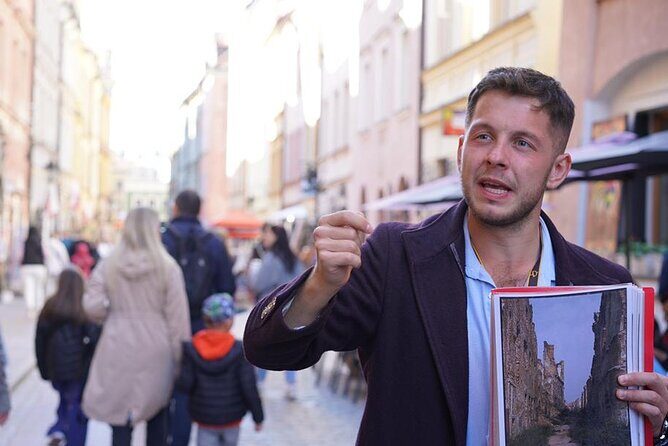
The next highlight is Rynek Starego Miasta, the Market Square of Warsaw’s Old Town. The guide shares photos of the area before and after WW2 and talks about the process of rebuilding Warsaw after the war.
This is one of the most valuable kinds of tour work: helping you understand what you’re looking at by showing what used to be there. Old Town can feel like it’s always existed the way it looks now. The tour gently forces reality back into the picture—Warsaw didn’t just recover; it rebuilt with intention.
The stop time is about 10 minutes, which again means you’ll learn and orient, then continue. If you’re a photographer, make sure you take a moment to stand in the center area and absorb the square’s scale. Then, when the tour moves on, you’ll still have a mental frame for how the space works.
Barbakan and Gnojna Góra: city walls, padlocks, and why romance needs history
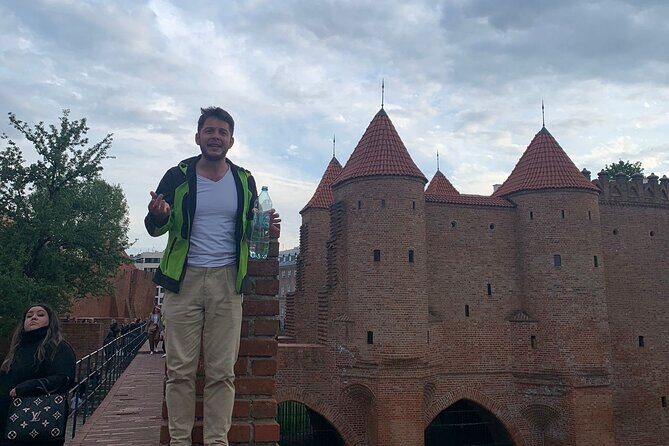
Barbakan is next. The tour explains it as part of Warsaw’s city walls, but here’s the twist: when it was built, it had no military importance. The guide also covers who built it, why, and who used it.
That’s a useful mental switch. Many people automatically assume walls were built for combat. If the facts point elsewhere, your understanding of the city changes. The story makes the structure feel less like a leftover and more like a purposeful piece of urban design.
Then you move to Gnojna Góra, described as currently one of the most romantic places in Warsaw. Locals even lock love padlocks there, and the scenery is part of the appeal. But the guide adds a caution: you might not want to do the padlocks here because of the place’s history. You’ll hear that story instead of just letting the romance take over.
This pairing works well on a walk tour because it flips your expectations twice: first about walls, then about a “love” spot. By the end, you’ll notice the city doesn’t separate beauty from memory.
Both of these stops are short (each around 10 minutes), so the emphasis stays on explanation and key viewing points rather than long downtime.
Old Town treasures: Piwna Street, the Pigeon Lady, mermaid lore, and WW2 stories
The final stretch is dedicated to Old Town, with about 40 minutes to explore the area’s “hidden treasures” and listen to stories tied to everyday sights.
Key moments you’ll hear about include:
- Piwna Street, often called the beer street
- the Pigeon Lady
- the mermaid of Warsaw
- WW2 in Warsaw, explained through the streets and places you’re seeing
You’re not just getting a list of landmarks. The guide helps you connect street names and icons to meaning, so the mermaid at the end point doesn’t feel random. By the time you reach the Warsaw Mermaid Statue, you already know why it’s there and what lore surrounds it.
This is also a nice pacing choice. After several short history stops, the Old Town portion gives you more time to walk slowly, take pictures, and let the stories settle. If you enjoy wandering with purpose, this section is where you’ll feel the most satisfaction.
Price and value: what $258.88 per group buys you
Let’s talk value in a real way. At $258.88 per group (up to 15 people), your cost depends on how many friends or family you bring. But the bigger value question isn’t the math—it’s what you get packed into 2.5 hours.
You’re getting:
- a route that links the Old Town with the Royal Route themes
- free admission stops where listed (like Holy Cross Church)
- an English-speaking guide, Łukasz Benedykciński
- hotel pickup options, if you want less stress at the start
- a storytelling approach tied to Chopin, WW2, and rebuilding
The best part is the way the tour uses short stops to build a coherent understanding. Instead of spending your day jumping between individual attractions and guidebooks, you get an organized narrative you can follow.
There’s one trade-off, though. Because stops are short, you won’t get deep time in any one location. If your top priority is long interior visits, you might prefer a slower tour or add extra self-guided time after.
Who should book this tour, and who might not love it
I think this tour fits best if you:
- want a quick, coherent Old Town orientation
- care about why buildings and streets matter, not just what they look like
- like historical stories that connect multiple locations
- want to reduce planning stress with a route you can trust
It may be less ideal if you:
- want a slow, linger-everywhere day with long museum time
- need a lot of flexibility to step away without disrupting the schedule
- prefer purely scenic walks without history context
Also, it’s a private tour, and that’s a perk if you’re traveling in a small group that wants attention. If you’re traveling solo and still want a private guide, it can still work well, but the per-person cost will reflect that.
Should you book the Private Warsaw Old Town & Royal Route Walking Tour?
If you want Warsaw to make sense fast—especially the Old Town and the WW2 rebuilding story—this is an excellent pick. The itinerary is designed to answer real questions while you’re standing in the right places: Chopin’s heart, why Warsaw’s capital story matters, what survived, what took years to rebuild, and how icons like the mermaid fit the city’s memory.
I’d book it if you’re comfortable with a walking pace and you want stories you can carry into the rest of your trip. I’d hesitate only if you’re looking for long interior time at each site, because many stops are intentionally brief.
The good news is simple: with a guide like Łukasz Benedykciński and a strong focus on clear history and practical city understanding, you’ll leave with a mental map that feels far more accurate than a grab-bag of photos.
FAQ
Where does the tour start and end?
The tour starts at the Nicolaus Copernicus Monument on Krakowskie Przedmieście and ends at the Warsaw Mermaid Statue at Rynek Starego Miasta 18i.
Is pickup available?
Yes. The guide can meet you at your hotel reception, then walk, take public transport, or use a taxi to reach the starting point.
How long is the walking tour?
It runs about 2 hours 30 minutes.
Is it a private tour, and what group size is it for?
Yes, it’s private. Only your group participates, with a group size of up to 15 people.
What language is the tour offered in?
The tour is offered in English.
What is the cancellation policy?
You can cancel for a full refund up to 24 hours in advance. If you cancel less than 24 hours before the start time, the amount you paid is not refunded.