REVIEW · WARSAW
Skip-the-Line Warsaw Royal Castle Private Guided Tour
Book on Viator →Operated by Rosotravel - Things to do in Warsaw · Bookable on Viator
Old Town turns into a living timeline. This private skip-the-line Royal Castle experience pairs a licensed guide with a focused walk through Warsaw’s key sights, from Plac Zamkowy to the Vistula waterfront. You’ll hear the story of Polish monarchs and medieval Poland while the buildings around you explain the plot.
What I love most is how the pacing works: you get a guided museum visit in the Royal Castle plus plenty of stops in the Old Town that you can actually see up close. The tour style also seems built around real people and clear explanations—guides like Natalia, Eva, and Czeslaw are described as on time, friendly, and especially good at room-by-room context. One thing to consider: the route is packed with many outdoor sights, and some places (like church interiors or certain viewpoints) may be possible only if you request it and timing works with the schedule and castle security.
In This Review
- Key things that make this tour worth your time
- Royal Castle skip-the-line: how you save real time
- The meeting point: starting at Sigismund’s Column, not by guesswork
- Old Town on foot: cobblestones, churches, and merchant squares
- Old Town streets and the reconstruction story
- Rynek Starego Miasta: the merchant-square rhythm
- Castle Square (Plac Zamkowy) and the Zygmunt III column
- Royal Castle Museum: what to expect inside and why it’s special
- St. Anne’s Church bell tower: the view you can earn in minutes
- Churches, coronations, and calm interiors (when you can go in)
- St. Anne’s Church (if you want the interior)
- Archikatedra Sw. Jana Chrzciciela: royal coronation connection
- Holy Cross Church and Chopin’s heart
- Church of Jesuits: exterior drama, interior surprise
- Church of St. Mary and the Vistula steps nearby
- Defensive walls and WWII memory markers
- Warsaw Barbican: a fortress with a gatekeeper role
- Warsaw Uprising Monument and the Little Insurgent statue
- Krakowskie Przedmiescie: the Road of Kings feel
- Monuments, courtyards, sculptures, and palace exteriors
- Warsaw Mermaid: a legend hidden in plain sight
- The Wishing Bell: bronze in a courtyard
- Adam Mickiewicz Monument
- Chopin’s Bench: music via modern storytelling
- New Town Square and Sobieski’s victory connection
- Krasinski Palace and the presidential palace exterior look
- Napoleon’s lamp story and the “Road to Old Town” feeling
- Price and value: is $150.59 per person fair?
- Who this tour suits best (and who might want something else)
- Quick itinerary feel: the route you’ll actually walk
- Should you book this Warsaw Royal Castle private tour?
- FAQ
- How long is the Skip-the-Line Warsaw Royal Castle private guided tour?
- What language is the tour offered in?
- Is this a private tour?
- Where do I meet the guide?
- Where does the tour end?
- Do I need to arrive on time?
- Will the tour include the same museum items in November?
- Is there free cancellation?
Key things that make this tour worth your time
- Skip-the-line focus so the Royal Castle Museum visit doesn’t eat your day
- Licensed guide in English for clear context on Polish monarchy and the castle’s rebuild
- Old Town “reconstruction” story in real space after WWII devastation
- Views baked into the plan, including the St. Anne’s Church bell-tower observation terrace
- A lot of iconic stops in a short window, from the Barbican to Chopin-linked sites
Royal Castle skip-the-line: how you save real time
Warsaw’s Royal Castle is the kind of place where timing matters. You’re not just looking at a pretty building—you’re walking into a site rebuilt to represent how it looked and functioned centuries ago. The value of the skip-the-line part is that it reduces the waiting time pressure, so you spend more energy on what you came for: the rooms and the story.
This is also a private tour, meaning your guide can adapt the flow for your pace. If you like to stop and read plaques, you can. If you prefer quick looks and moving on, you can do that too. With a 2 to 3 hour window, that flexibility matters.
One practical note that affects how smoothly the visit goes: the castle follows an entry schedule tied to security rules. Arrive on time at the meeting point, and if anything delays you, contact the guide as soon as you can. This isn’t the kind of attraction where arriving late turns into a casual “no worries.”
Other private tours in Warsaw



The meeting point: starting at Sigismund’s Column, not by guesswork
You start at Sigismund’s Column (Plac Zamkowy)—a strong visual anchor in Old Town. This is helpful because Warsaw’s Old Town streets can look similar at first glance, and having a landmark start keeps you oriented from minute one.
From there, you walk into the heart of the reconstructed historic center—cobblestones, Gothic street shapes, church spires, and the layered feel of centuries stacked on top of each other. Even if you’ve been to other European Old Towns, this one hits differently because of the way the post-WWII rebuilding shaped what you see today.
Old Town on foot: cobblestones, churches, and merchant squares
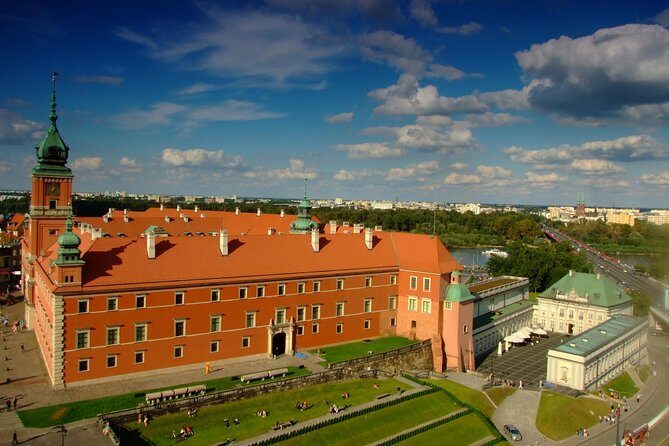
The tour’s Old Town portion is designed like a guided orientation. You don’t just see famous postcard points—you also learn how the neighborhood was rebuilt, and why that matters.
Old Town streets and the reconstruction story
One stop takes you through the feel of the area after it was leveled when German forces left. The point isn’t only to admire architecture—it’s to understand that many streets and buildings were reconstructed to recreate the atmosphere of earlier days. That context changes how you read the stones under your feet.
You’ll likely notice how Gothic street patterns, baroque facades, and church forms sit side by side. With a guide, it becomes easier to tell what you’re looking at and why it’s there.
Rynek Starego Miasta: the merchant-square rhythm
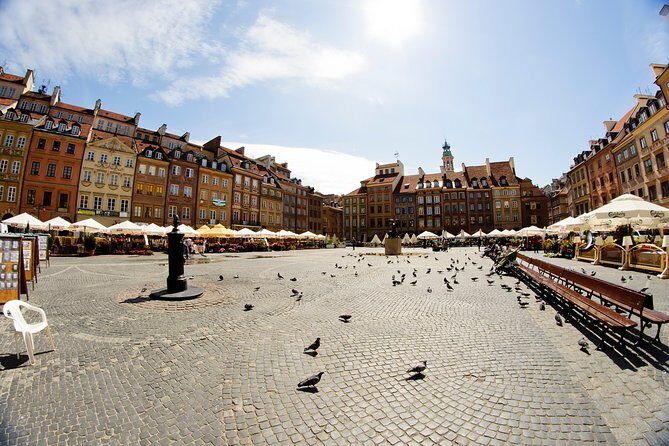
Then you step into Rynek Starego Miasta, the lively square surrounded by 17th- and 18th-century merchants’ houses. This is where cafes, shops, galleries, and street vendors bring the square back to life.
The downside of squares like this is time drift—one coffee becomes two, and suddenly your museum slot is breathing down your neck. The tour helps you keep it under control by using the square as a structured visual stop instead of a free-for-all.
Other Warsaw Royal Castle and palace tours



Castle Square (Plac Zamkowy) and the Zygmunt III column
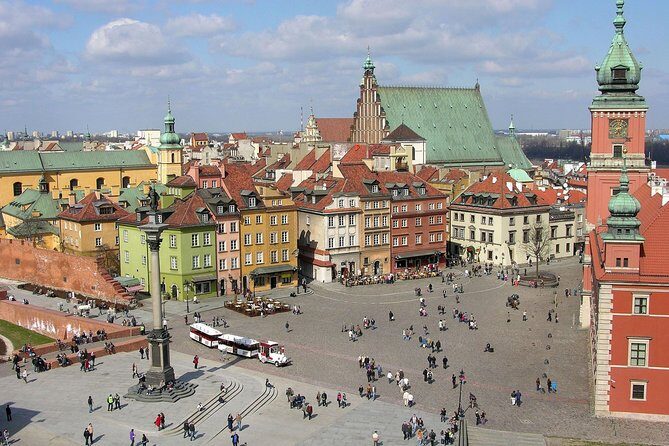
At Castle Square (Plac Zamkowy), you’ll see the King Zygmunt III column placed right in the open plaza. It’s a landmark you can orient around, and it also connects the walk to the monarchy theme that keeps showing up again inside the castle itself.
This stop is short, but it’s a key stitch that ties your exterior walk to what you’ll learn later in the Royal Castle rooms.
Royal Castle Museum: what to expect inside and why it’s special
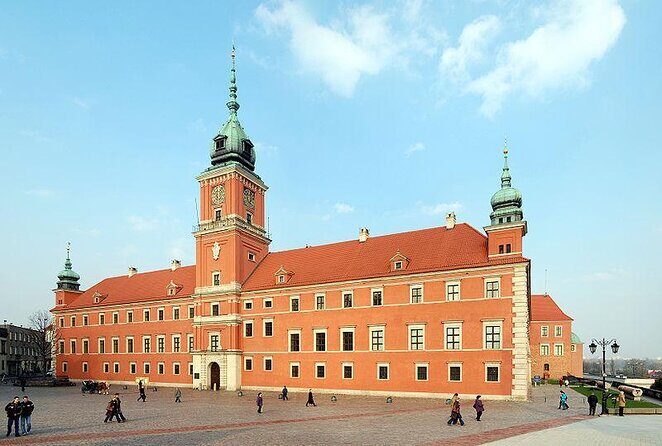
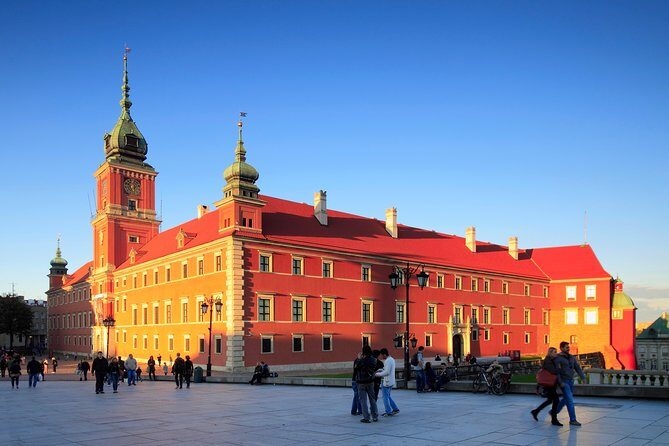
The Royal Castle Museum is the anchor stop. The building served as the central site of the Polish Commonwealth for centuries, and it was heavily damaged during WWII—dynamited by German troops after the Warsaw Uprising. The rebuilt version aims to recreate the original 17th-century architecture and interiors, which means you’re seeing a carefully designed historical reconstruction, not just a surviving ruin.
That changes how you should look at the museum. Instead of thinking only about what is old versus new, think about the intention. This is a castle built to communicate identity—political power, royal ritual, and the daily life of a commonwealth that used the castle as a stage.
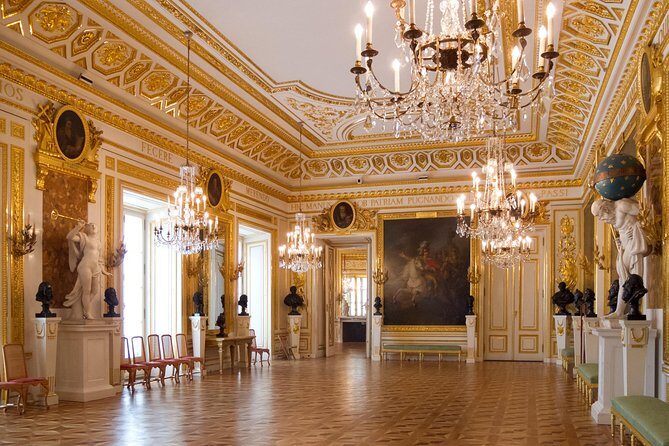
Your licensed guide leads the visit, and the best part is how the tour connects rooms to story. Guides are described as strong at room-by-room explanations and answering questions in a natural way. If you like history that feels concrete—who ruled, what the rooms were for, how power worked—you’ll probably find the museum portion the highlight.
One scheduling note: if you visit in November, special castle events can mean the itinerary excludes the Lanckoroński Gallery. You won’t be left totally empty-handed, but it’s smart to be ready for a slightly different museum mix.
St. Anne’s Church bell tower: the view you can earn in minutes
After the castle museum, the route includes the observation terrace on the bell tower of St. Anne’s Church. The payoff here is practical: you get a close-up Old Town look and a view toward the city center.
The plan also notes that this is possible to do for request. So if tower views are your thing, flag it early with your guide. You’ll get the most satisfaction if you treat it as your photo and orientation moment before the walk continues.
Even if you don’t go up, St. Anne’s Church is worth stopping at because it’s one of the structures that shapes the Old Town skyline.
Churches, coronations, and calm interiors (when you can go in)
The tour includes multiple church stops, and that’s where your experience can range from quick looks to optional interior time.
St. Anne’s Church (if you want the interior)
St. Anne’s Church is included as a stop with the option to enter for request. When you can get inside, you’ll see structure and altars with a richer feel than what you catch from outside. The vibe is described as peaceful, which matters because Old Town walking can wear you out fast.
Archikatedra Sw. Jana Chrzciciela: royal coronation connection
Next is Archikatedra Sw. Jana Chrzciciela, described as one of Warsaw’s most distinguished churches. It dates back to the 13th century and was the site of royal coronations and national celebrations.
This is another stop where a guide can make the difference. A church becomes more than architecture when you know what ceremonies happened there and why the location mattered.
Holy Cross Church and Chopin’s heart
One of the most memorable stops on this route is Holy Cross Church (Kosciol Swietego Krzyza). This church houses the heart of Chopin. You also get a detail about the entrance: the Holy Cross at the entrance survived bombings, which adds a strong emotional layer to the visit.
It’s listed as possible to enter for request again. If that matters to you, build in a bit of flexibility and don’t plan a tight follow-on appointment right afterward.
Church of Jesuits: exterior drama, interior surprise
Church of Jesuits gets called out for its imposing red exterior and ornate interior that feels higher than you expect. If you’re the kind of person who likes stepping into places and being surprised by scale, this one fits.
Church of St. Mary and the Vistula steps nearby
St. Mary’s Church (Kosciol Najswietszej Marii Panny) includes the chance to see a small park behind it with steps down toward the Vistula. That’s one of those “short detour, big reward” moments, especially if you want river energy without adding a whole separate outing.
Defensive walls and WWII memory markers
Warsaw doesn’t only do beauty—it does memory. This tour includes several stops that anchor the story in the 20th century.
Warsaw Barbican: a fortress with a gatekeeper role
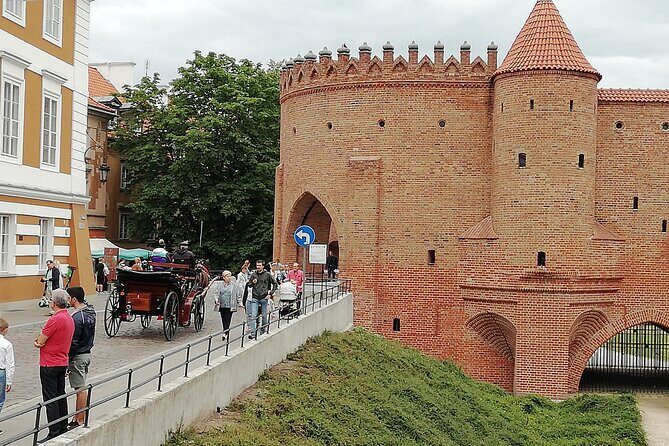
The Warsaw Barbican (Barbakan Warszawski) is a 16th-century fortress tied to the medieval fortifications around the city. It used to guard the northern entrance at the Novomejska Gate area.
If you like medieval defense logic—how cities controlled access—this stop is a quick but satisfying lesson. It also helps you understand why the Old Town layout looks the way it does.
Warsaw Uprising Monument and the Little Insurgent statue
The Warsaw Uprising Monument is described as one of the most moving monuments in the city. The architecture is said to show effort, strength, and sacrifice.
Then there’s the Statue of the Little Insurgent, a small but deeply emotional bronze sculpture commemorating children who lost their lives during the Warsaw Rising. It’s the kind of stop where your guide’s framing can make it easier to absorb without rushing past it.
Krakowskie Przedmiescie: the Road of Kings feel
The walk shifts into a broader royal corridor with Krakowskie Przedmiescie, a 2.5-mile “Road of Kings” lined with older, fascinating buildings. Even if you don’t walk every inch of it, being on the route helps you feel how Warsaw historically linked power, visitors, and ceremonial movement.
This is also the part of the tour where the focus can shift from quick landmark spotting to a more coherent sense of how the city used to function.
Monuments, courtyards, sculptures, and palace exteriors
Not everything here requires stepping inside. Several stops are designed to keep momentum while still giving you recognizable icons.
Warsaw Mermaid: a legend hidden in plain sight
A Warsaw Mermaid sculpture sits in a nice square and waits for admiration. It’s mentioned as having an interesting hidden legend, and a guide can be the difference between seeing it as just another statue versus understanding why it’s there.
The Wishing Bell: bronze in a courtyard
The Wishing Bell is a 17th-century bronze bell placed in the middle of a pretty courtyard. It’s the kind of small stop that becomes memorable because you’re not just looking at a big landmark—you’re seeing a human-sized ritual object in a tucked-away space.
Adam Mickiewicz Monument
The Adam Mickiewicz Monument is described as impressive, with decorations, steps, and surrounding sculptures. If you like public art that’s more than a name on a plaque, this is worth your time.
Chopin’s Bench: music via modern storytelling
Chopin’s Bench uses multimedia to present Chopin’s music. It’s a modern installation, but it stays tied to the city’s identity. If you’re visiting when you want something lively but not overly long, this fits.
New Town Square and Sobieski’s victory connection
New Town Square is linked to John III Sobieski, who founded it to celebrate his 1683 victory over the Turks. It also has Renaissance architecture and the baroque church of the sisters of the Holy Sacrament. This stop adds variety from the more royal/castle-heavy mood of the route.
Krasinski Palace and the presidential palace exterior look
You’ll also get exterior viewing stops like Krasinski Palace and Palac Prezydencki (the presidential palace). The presidential palace area is described as heavily guarded, and that’s exactly what you should expect when you’re near it—pay attention to what you can see, not to what you can’t.
Napoleon’s lamp story and the “Road to Old Town” feeling
One of the more fun narrative stops is Carmelite Church – Our Lady of the Assumption, next to the presidential palace. The exterior has characteristic details like double pillars and grand stone lampions. There’s also a story attached: people mention Napoleon said he’d like to move it to Paris by his own hands. Even if you take the story with a grain of salt, it gives you a reason to look closely.
Price and value: is $150.59 per person fair?
At $150.59 per person, this isn’t a budget Old Town stroll. It’s a paid experience with a licensed guide and a skip-the-line Royal Castle Museum entry focus. That’s the key value argument.
If you’re a traveler who likes to understand what you’re seeing—why buildings look the way they do, what events shaped them, and what rooms were built for—this price starts to make sense. A self-guided walk can still be beautiful, but you’d be missing the connecting tissue between stops: monarchy to rebuilding to wartime memory.
Also, this tour is booked about 43 days in advance on average. That timing can help if you want a specific slot without leaving everything to last-minute stress. And the tour offers group discounts, which can reduce the per-person cost if you travel with others.
Who this tour suits best (and who might want something else)
This tour is ideal for you if:
- You want Old Town + Royal Castle in one managed plan within 2–3 hours.
- You care about the castle’s WWII destruction and the intention behind the rebuild.
- You want a private guide who can respond to your questions, not just recite a script.
It might feel less ideal if:
- You prefer long, free wandering with no tight timing around security schedules.
- You only want indoor time. A lot here includes outdoor views and optional entries for request.
Quick itinerary feel: the route you’ll actually walk
Here’s the “shape” of the experience so you can picture it:
You start at Sigismund’s Column / Plac Zamkowy, move through Old Town streets and Rynek Starego Miasta, then return to the Castle Square area. After the Old Town orientation, the Royal Castle Museum is the centerpiece. From there, you move outward again: St. Anne’s Church bell-tower view, several church stops, monuments tied to the Warsaw Uprising, the Barbican, and then more sculpture and palace exterior moments. The route finishes in a different location than it starts, so your confirmation details will matter for final logistics.
Should you book this Warsaw Royal Castle private tour?
I think you should book it if you want a guided, time-respecting way to see Warsaw’s most important Old Town story points—especially the Royal Castle Museum and the context behind the rebuilding. At $150.59 per person, the value comes from the licensed guide and the way the plan connects sites instead of treating them like checkboxes.
If you’re the type who loves views, churches, and monuments, this tour fits like a well-worn walking shoe: it’s practical, it keeps you moving, and it gives you enough context to make the city feel personal. Just don’t try to cram a demanding schedule right after—if you want any interior entries or tower time, build in a little breathing room.
If you tell me your travel dates and whether you care more about museum rooms or church interiors, I can help you decide if this 2–3 hour format matches your style.
FAQ
How long is the Skip-the-Line Warsaw Royal Castle private guided tour?
It lasts about 2 to 3 hours.
What language is the tour offered in?
The tour is offered in English.
Is this a private tour?
Yes. Only your group participates.
Where do I meet the guide?
The meeting point is at Sigismund’s Column, Plac Zamkowy, 00-001 Warszawa, Poland.
Where does the tour end?
It ends in a different location than where it starts. Your booking details should provide the specific ending point.
Do I need to arrive on time?
Yes. There is an entry schedule tied to castle security rules, so arriving on time is important. If you’re delayed, you should inform the guide as soon as possible.
Will the tour include the same museum items in November?
The itinerary excludes the Lanckoroński Gallery in November due to special events.
Is there free cancellation?
Yes. You can cancel up to 24 hours in advance for a full refund.