REVIEW · WARSAW
Warsaw City Tour – PRIVATE (4h)
Book on Viator →Operated by PT Team · Bookable on Viator
Four hours can feel like a whole century. This private Warsaw tour packs the city’s story into smart stops, from the rebuilt core to the quieter green spaces of Lazienki Park. You get a professional guide and hotel pickup, so you spend less time sorting maps and more time seeing what matters.
I like two things a lot: the history you can actually see, not just hear, and the way the route mixes famous landmarks with the small symbols that help Warsaw click in your head. A good guide makes the difference, and in past tours I’ve seen names like Anya, Grazyna, and Karolina tied to friendly, solid explanations and practical pacing.
One drawback to plan for: part of this day is still walking, especially in the Old Town area, and car access can be restricted. If your group hates steps, gets overheated easily, or has tight mobility needs, ask your guide to adjust the order on the spot.
In This Review
- Key Points at a Glance
- Private 4 Hours: What This Tour Feels Like
- King Sigismund’s Column: Warsaw’s Symbol Starts Here
- Old Town (UNESCO): Seeing Rebuilding Up Close
- Royal Castle Story: Power, Loss, and Reconstruction
- St. John the Baptist and the 4 PM Organ Concert Factor
- Rynek Starego Miasta and the Barbican Walls You Can Feel
- Warsaw Uprising Monument, Miodowa Street, and Theatre Square
- Tomb of the Unknown Soldier: A Quiet Minute That Hits
- Following the Royal Route to Nowy Świat Street
- Lazienki Royal Park: The Green Break and Chopin’s Stage
- Palace of Culture and Science, PGE Narodowy, and the Copernicus Bonus
- Price and Logistics: Getting the Most From the Private Format
- Should You Book This Warsaw City Tour?
- FAQ
- How long is the Warsaw City Tour?
- Is this tour private or shared?
- Does the tour offer hotel pickup and drop-off?
- What language is the guide available in?
- Is transportation included, and is it air-conditioned?
- Are admission tickets included?
- Where does the tour include UNESCO Old Town?
- Are there music events at St. John the Baptist Cathedral?
Key Points at a Glance
- Old Town (UNESCO) on a tight time budget: you’ll get the big-picture reconstruction story without wandering for hours.
- Royal sights with political meaning: Sigismund’s Column, the Royal Castle story, and St. John’s Cathedral connect to Poland’s turning points.
- Green break at Lazienki Park: short, peaceful downtime with the famous Chopin piano concerts (seasonal).
- History plus modern Warsaw: Palace of Culture and Science, PGE Narodowy, and the Copernicus Science Centre add variety.
- Private format: only your group participates, with pickup and drop-off from your hotel.
Private 4 Hours: What This Tour Feels Like
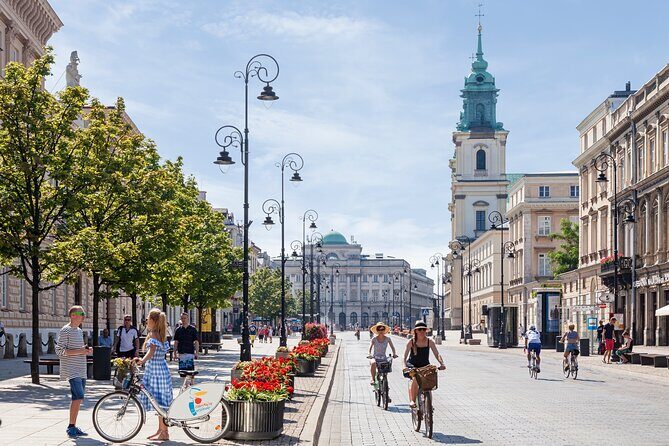
This is a true private tour, designed for a half-day hit of Warsaw. You’ll have a local guide and hotel pickup and drop-off, plus private transportation (including an air-conditioned vehicle). In practice, that means you can cover more ground than a self-guided walk, while still spending time on foot where the streets are the point.
The price is $195.18 per person, which is high compared with group tours. The value comes from three things: time saved by not hunting transit, a guide who can connect monuments to events, and the flexibility of a private circuit. If you’re traveling with someone who likes structure, this format usually pays off.
Expect a mix: short stops, brief orientation walks, and longer pauses for the biggest sights. The schedule is packed, but it’s not the kind of tour where you rush through everything and forget it ten minutes later.
Other city tours we've reviewed in Warsaw
King Sigismund’s Column: Warsaw’s Symbol Starts Here
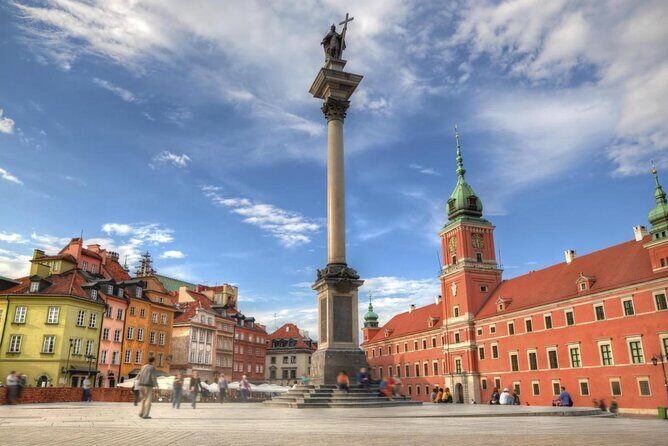
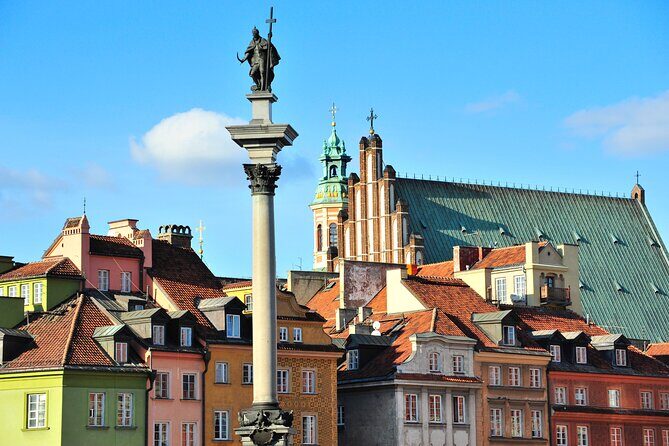
You begin at King Sigismund’s Column, one of the city’s key landmarks. It’s the oldest public memorial in Warsaw, but there’s an extra layer that’s easy to miss if you just glance at it: the column wasn’t always standing in its current position. It has been moved, first when street axes changed in the 19th century, and later again after World War II during development of the WZ route.
Then comes the wartime detail that makes the column feel more than decorative. On September 2, 1944, German troops brought it down. Reconstruction finished in 1949, so the monument is literally part memorial, part proof of rebuilding.
This stop is also a fast orientation moment. Warsaw’s capital symbolism shows up again and again on the route, and you’ll spot that pattern with the mermaid later.
Old Town (UNESCO): Seeing Rebuilding Up Close
Old Town is the centerpiece. Warsaw’s Old Town grew because it sat on a trade-friendly river route between the Baltic Sea and the Black Sea. That helped merchants and craftsmen build wealth quickly, and the city evolved from wooden structures to masonry tenement houses, and from earth ramparts to stone walls.
But the reason this UNESCO site hits so hard is what happened in 1944. About 90 percent of the Old Town area was razed. The reconstruction took many years and ultimately earned UNESCO status—meaning you’re not just looking at pretty squares; you’re looking at a city that was rebuilt with careful intent.
What you’ll do here is slow enough to absorb it: a guided stroll through key town-space moments, plus time at the marketplace later. If you like your history visual—streets, stone walls, and architecture tied to events—this is the part of the tour that earns its time.
Royal Castle Story: Power, Loss, and Reconstruction
A major stop is the Royal Castle, and the castle’s timeline is basically a crash course in Poland’s modern struggles. It became a royal residence in the 16th century when the Masovia region joined the Crown. Over the centuries it was destroyed and rebuilt multiple times, including during events like the Deluge and later conflicts tied to Poland’s annexation.
Then World War II hits. The castle was bombed early in the conflict, nearly destroyed by fire, and many priceless works were removed in time. Still, what remained was plundered, and in 1944 the castle was blown up in retaliation for the Warsaw Uprising.
Reconstruction didn’t happen right away. The decision came later, in 1971, and the work was funded mostly through community support. The castle opened to visitors in 1984 and was later placed on UNESCO’s World Heritage List as an example of faithful restoration.
Even if you don’t go deep into museum rooms, the guided explanation helps you understand what you’re looking at: not just architecture, but a deliberate return of identity.
St. John the Baptist and the 4 PM Organ Concert Factor
Next up is the Archcathedral Basilica of St. John the Baptist, one of Warsaw’s oldest churches. It’s not only about age; it’s about events. A big one is the Constitution of May 3 oath—the first of its kind in Europe—linked to this church.
You’ll also hear about what’s below ground: the crypt holds tombs of historical figures, including the Chapel-Mausoleum of the Primate of the Millennium. If you like meaningful interiors and sacred spaces, this is where the tour adds depth without adding extra hours.
There’s a practical seasonal detail too. From July to September, there are International Organ Music Festival concerts here every Sunday at 4 PM. If your dates line up, you might catch that atmosphere as part of your day, even though the tour itself is still a structured circuit.
Other private tours in Warsaw



Rynek Starego Miasta and the Barbican Walls You Can Feel
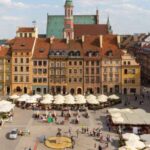
The tour spends time at Rynek Starego Miasta (Old Town Marketplace). This square is surrounded by tenement buildings that now host restaurants, cafes, clubs, galleries, and museums. But the “square-as-stage” layout is the real draw: it’s where you understand how the town worked socially and economically.
In the middle of the square you’ll see a statue tied to the city’s identity—the Warsaw Mermaid. That’s Warsaw’s symbol, the one that comes up as the main rival to the column as the city’s recognizable mark of itself.
Nearby is another “you can almost see the past” moment: Warsaw Barbican (Barbakan Warszawski). Built in 1548 as part of defensive ramparts (about 4,000 feet worth of them), it’s now a place for artistic street-life vibes: painters exhibit and musicians help you enjoy the Old Town walk.
From May to October there’s an inside exhibition, with historical photos and models of defensive lines and towers that no longer exist. Even if you don’t see every exhibit detail, comparing old plans to the Old Town layout is one of those mental exercises that sticks with you.
Warsaw Uprising Monument, Miodowa Street, and Theatre Square
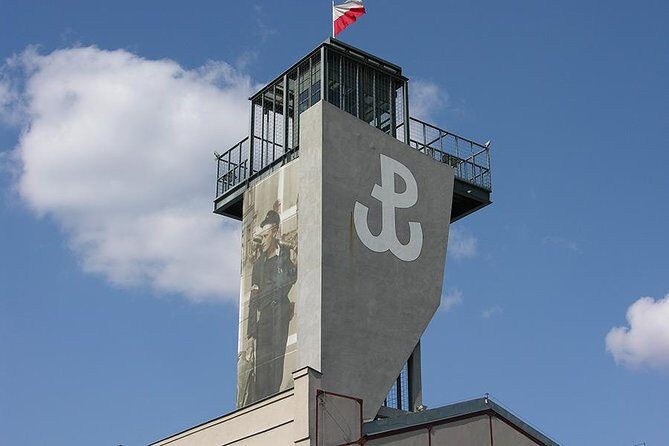
This section is emotionally heavier, and the tour handles it with good pacing. The Warsaw Uprising Monument depicts insurgents during battle. The Uprising ended in defeat and the death of 200,000 Poles, making it one of the most painful moments in Poland’s modern history.
Next you’ll pass Krasiński Palace (Palace of the Republic), once the residence of Jan Krasiński. Today it hosts special collections for the National Library. It’s also regarded as Warsaw’s most enchanting Baroque structure, with reliefs inspired by antique works. There’s a park behind it that works as a breather.
Then you’re into Miodowa Street, a narrow, living corridor lined with older, high-status residences. Here you’ll get a few “spot the story” facts:
- Number 24 hosted the Collegium Nobilium, the first school for the ruling elite, and now it houses the Academy of Theatre.
- Number 17 is the residence of the Primate of Poland (the Palace of Warsaw’s Archbishops), erected in the 18th century.
- Number 16 is Warsaw’s only Eastern Catholic Church.
- You can also see the Monument of Warsaw’s Heroes, often called the Monument of Nike.
After that, the tour reaches Theatre Square, framed by Late Baroque Blank Palace and Jabłonowski Palace, which used to function as the city hall before World War II. The wartime destruction was severe, and the rebuilding in the 1990s left mainly the façade and clock tower from the original design. Still, you can walk through the gate under the tower to see 19th-century foundations.
The Grand Theatre and National Opera/Theatre area is the showstopper visually: a huge Classicist building with interiors that include cut glass chandeliers, a spacious foyer with columns, and floor tiling. If you catch an actual performance, that’s a separate plan—but even a quick look helps you appreciate the scale.
The square ends with the Petrykus Tenement House (1821), now filled with restaurants and clubs that keep the area feeling lived-in.
Tomb of the Unknown Soldier: A Quiet Minute That Hits
The Tomb of the Unknown Soldier is one of those stops where you should pause even if the tour schedule is moving. It commemorates millions of soldiers who sacrificed their lives for Poland’s freedom. Inside, it holds ashes of a defender of Lvov and an urn with soil from World War I battlefields, and today it contains urns from every battlefield where Polish troops fell in the last century.
There’s an eternal flame beside it, maintained continuously. A military honour guard watches the tomb, with a daily change at noon. Even if you don’t see the ceremony, the setting is powerful because it’s simple and deliberate.
For many people, this becomes the emotional anchor of the route.
Following the Royal Route to Nowy Świat Street
A big portion of the day explores the Royal Route, stretching from Zamkowy Square to Trzech Krzyży Square. This is Warsaw as it wanted to present itself: political power, education, culture, and grand streets that connect major institutions.
Your guide will point out standout stops, including:
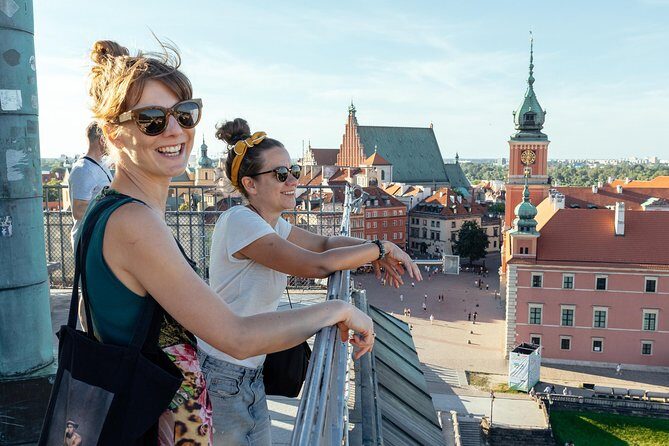
- St. Anne’s Church and the view from its tower
- Polonia House, linked to the period when Maria Skłodowska-Curie worked there
- Radziwiłł Palace, now the current residence of the President of Poland
- Warsaw University campus with Kazimierzowski Palace
- Czapski Palace, tied to the Academy of Fine Arts
- Nowy Świat Street, with elegant shops and restaurants as an extension of Krakowskie Przedmieście Street
This part works well because you’re not just learning facts—you’re building a mental map. If you want to explore on your own later, the Royal Route gives you a spine to navigate the city.
Lazienki Royal Park: The Green Break and Chopin’s Stage
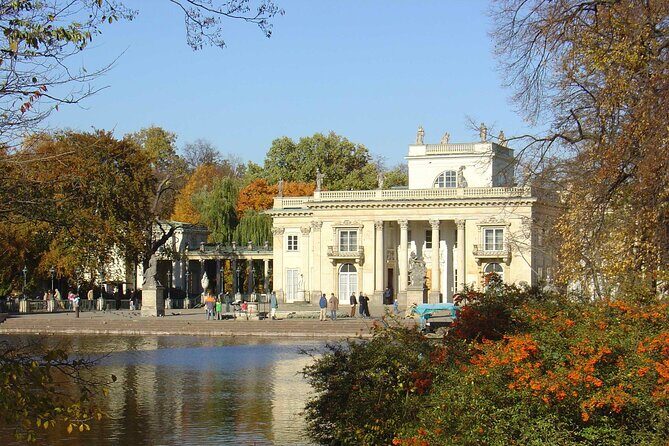
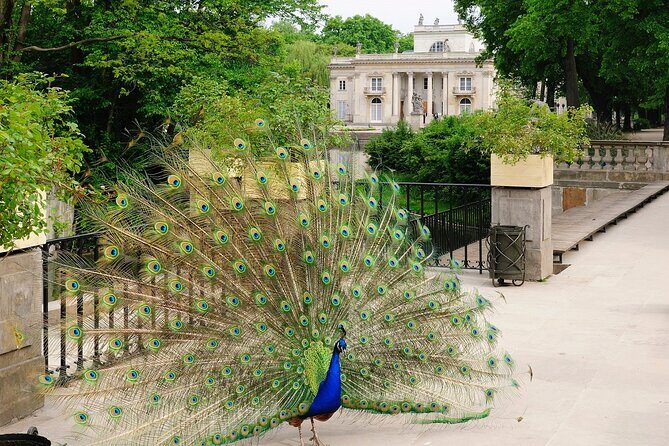
Then comes the release valve: Lazienki Krolewskie (Royal Łazienki Park). This is described as one of the most beautiful palace and garden complexes in Europe, and the key word is mix—monuments plus a park that was once wild forest.
You’ll have time for a relaxing walk while your guide explains the cultural importance of the area. A practical detail that makes this stop special: for 50 years, there have been free piano concerts on summer weekends next to the monument of F. Chopin. It’s a known gathering point for both tourists and local classical music lovers.
Even if you miss the exact concerts, the atmosphere makes sense. The park is a slower pace after squares and stone monuments, and it gives your brain room to digest what you learned earlier.
Palace of Culture and Science, PGE Narodowy, and the Copernicus Bonus
The tour doesn’t stop at old stones. It also includes major modern landmarks, which gives Warsaw a fuller feel.
You’ll see the Palace of Culture and Science, built between 1952 and 1955 as a gift from the Soviet people to Poland. At 230.5 m (42 floors), it’s the tallest building in the country. The standout feature is the large observation deck on the 30th floor—great for reading the city from above. The palace includes lots of services and public institutions, including a post office, cinema, museums, libraries, theatres, a café, and more.
Then you’ll go to PGE Narodowy, the large modern stadium built for the 2012 European Football Championship. It’s located on the site of the historic Tenth Anniversary Stadium, which hosted big sporting events in the post-war era, including international football matches, Polish cup finals, Warsaw Derby games, and the Peace Race. There were also huge propaganda rallies, and after 1989 the area around the stadium saw the big Jarmark Europa market.
Finally, the tour includes Copernicus Science Centre. This is the most different kind of stop: modern, interactive, and hands-on. Opened in November 2010, it aims to spark curiosity and support independent learning through dialogue on scientific issues. You can expect hundreds of attractions, including an earthquake simulator and a magic carpet. There’s also a roof garden for observation decks, plus nearby features like an art gallery, climbing wall, and a park with art exhibits. Admission isn’t included here, so you’ll decide on the spot if you want to pay for entry.
If you’re traveling with kids—or just like doing something physical while you learn—this stop is often the perfect payoff at the end of a history-heavy morning/afternoon.
Price and Logistics: Getting the Most From the Private Format
At $195.18 per person, the value depends on how you want to spend your limited time. You’re paying for three practical things: private transport, a local guide, and hotel pickup/drop-off. That’s especially worth it if you’re not staying right on the main sights or you’d rather not spend your day figuring out transit.
One thing to watch: car access and walking realities. Even with private transportation, Old Town and some pedestrian-heavy areas can limit vehicle movement. That means you should expect to walk more than you would on a pure-drive itinerary, especially around the UNESCO core and the central pedestrian zones on the Royal Route.
My advice is simple:
- Wear comfortable shoes. Even “short” stops add up fast in a half-day schedule.
- If your group is heat-sensitive or has mobility limits, ask for a lighter pace early. A good guide can adjust—like swapping longer walking for seated explanations or changing the order so you’re not stuck in sun too long.
- If Copernicus or another ticketed site matters most to you, mention it at the start. The tour can still move through free stops, but you’ll want your guide to time the paid option well.
Also, note what’s included vs optional. The big sights on the route are generally free to view, and admission fees are listed as optional. Copernicus Science Centre specifically is not included, so plan your budget if you want that part.
Should You Book This Warsaw City Tour?
Book it if you’re in Warsaw for a short time and want a guide to help you connect the dots between scars, symbols, and city planning. This route is ideal for first-timers who want Old Town (UNESCO), the Royal Castle, the solemn monument stops, a classic “royal street” orientation, and a payoff with modern Warsaw and Lazienki.
Skip it or adjust expectations if you hate walking, want lots of museum time inside buildings, or are hoping for a mostly drive-and-stay-seated day. Also, if Copernicus matters to your group, verify you have time and budget for the ticket since it’s not included.
If you do book, I’d pick this tour for one simple reason: it’s structured like a story. You start with a symbol, move through the rebuilt heart of the city, pause for remembrance, then finish with park calm and modern landmarks—so you leave with Warsaw making sense.
FAQ
How long is the Warsaw City Tour?
The tour runs about 4 hours.
Is this tour private or shared?
It’s a private tour/activity, meaning only your group participates.
Does the tour offer hotel pickup and drop-off?
Yes. Your guide will meet you at your hotel lobby with your name and bring you back after the tour.
What language is the guide available in?
The tour is offered in English.
Is transportation included, and is it air-conditioned?
Yes. It includes private transportation and an air-conditioned vehicle.
Are admission tickets included?
Entry or admission fees are listed as optional, and Copernicus Science Centre admission is not included.
Where does the tour include UNESCO Old Town?
Old Town is included as a stop, and the tour includes time to stroll there.
Are there music events at St. John the Baptist Cathedral?
Yes. Concerts as part of the International Organ Music Festival take place every Sunday at 4 PM from July to September.