REVIEW · WARSAW
Jewish heritage in Warsaw
Book on Viator →Operated by Renata Kopczewska · Bookable on Viator
Warsaw has one tour that saves your brain. This route strings together Jewish heritage landmarks tied to World War II, with hotel pickup and a guide to keep the story straight while you hop between sites. You’ll see major memorial locations and even film-linked spots connected to The Pianist—without having to build a plan from scratch.
I especially like the tight, meaningful route. You cover the ghetto area, the Jewish Cemetery, Umschlagplatz, Nozyk Synagogue, and then extend into Praga with surviving Jewish-era buildings. I also like the door-to-door transport, because it turns a half-day of researching into a half-day of focused looking and asking questions.
One drawback to consider: the car can feel small for long legs. If you’re tall or sensitive to cramped seating, plan for a slightly uncomfortable ride during the 5-hour stretch.
In This Review
- Key points to know before you go
- Why this route is so effective across Warsaw
- Price and logistics: what $270 really means for value
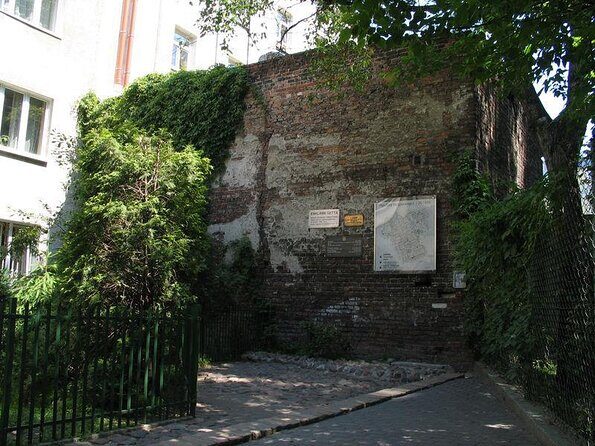
- Stop 1: Former Warsaw Ghetto landmarks, Rappaport, Mila 18, and the memorial trail
- Stop 2: The Jewish Cemetery (Cmentarz Żydowski) and what you can learn from matzevots
- Stop 3: Umschlagplatz—where deportations began, with 300 names
- Stop 4: Nozyk Synagogue—WWII survival and still-practiced Jewish life
- Stop 5: Praga-Północ—Jewish Warsaw beyond the ghetto line
- Stop 6: Jewish Historical Institute and the Judaistic Library traces
- The guide matters: what Renata Kopczewska brings to the story
- What to expect from the pacing and walking
- Who this tour fits best
- Should you book this Jewish heritage tour?
- FAQ
- What’s the duration of the Warsaw Jewish heritage tour?
- How much does the tour cost?
- Is hotel pickup and drop-off included?
- Are there entrance fees included for the museums or sites?
- Which major sites are included on the route?
- Is the Jewish Cemetery open every day?
- Is Nozyk Synagogue open on Saturdays?
- Is this tour private?
- Can I cancel for a full refund?
Key points to know before you go
- A packed half-day focused on the most important Jewish sites in Warsaw, not a random sightseeing mix
- Hotel pickup and drop-off so you don’t burn time on transit planning
- Nozyk Synagogue: the only synagogue in Warsaw said to have survived WWII and still functions today
- Umschlagplatz: the deportation site marked with 300 first names for those who started their last journey
- Praga-Północ adds Jewish Warsaw beyond the ghetto area, including student life linked to Menachem Begin
- Renata Kopczewska runs the tour, with an approach that keeps your questions in the spotlight
Why this route is so effective across Warsaw
Warsaw can feel big and complicated on your own, especially when you’re trying to connect places that are spread out both geographically and emotionally. This tour gives you a guided spine. You don’t just see points on a map—you get the sequence that makes sense: Warsaw Ghetto area first, then the cemetery, then Umschlagplatz, and finally surviving Jewish institutions and buildings.
The other big advantage is time. With a 5-hour format, you’re not stuck bouncing between half-read guidebooks and uncertain opening hours. You’re in motion with a driver and a guide, and the stops are arranged to keep the theme tight.
You also get a good mix of places: outdoor memorials and preserved traces, plus still-active Jewish life at Nozyk Synagogue. That balance matters. It keeps the story from becoming only about destruction.
Other POLIN and Jewish heritage tours in Warsaw


Price and logistics: what $270 really means for value
The price is listed as $270 per group (up to 4). That’s the key number to understand. The per-person cost depends entirely on how many people you bring.
- If you fill the group with 4 people, it’s $67.50 each for a 5-hour private tour with pickup and drop-off.
- If it’s just 2 of you, it’s $135 each, which is more of a splurge but still often compares well to piecing together taxis plus paid guide time.
For this kind of subject, value isn’t only about saving money. It’s about saving effort and mistakes. When you try to plan Jewish heritage sites on your own in Warsaw, you can easily end up with the wrong route, missed closures, or sites that don’t connect the story for you. Here, your route is pre-built, and you get the benefit of round-trip transport and a guide to handle the logic.
The tour is private, with only your group participating. That tends to make a difference when you have questions—there’s no pressure to keep quiet and no awkward shuffle when you want extra context.
The timing also helps: the experience runs daily from 9:00 AM to 1:00 PM. That means you can choose a morning or early-afternoon slot and still have the rest of your day for the rest of Warsaw.
Stop 1: Former Warsaw Ghetto landmarks, Rappaport, Mila 18, and the memorial trail
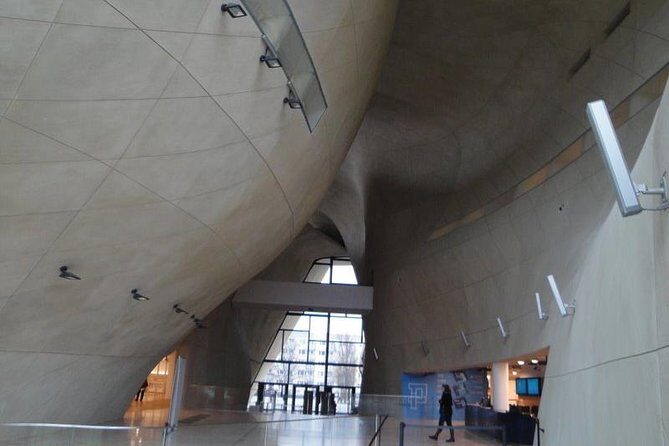
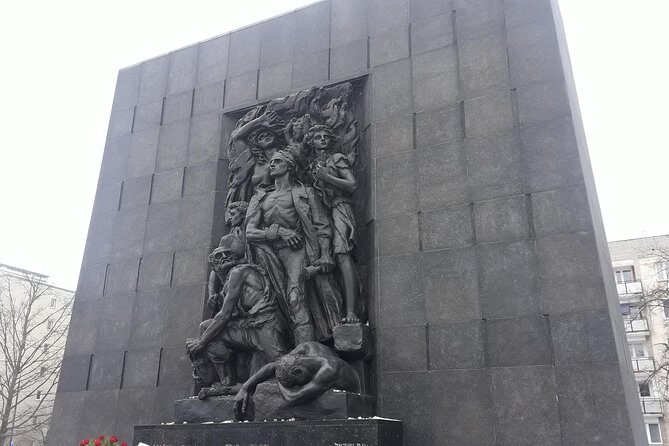
Your first stop focuses on the Warsaw Ghetto area and the memorial points connected to it. Even though the ghetto itself was destroyed after the collapse of the uprising, the area is marked in ways that keep names and places from disappearing.
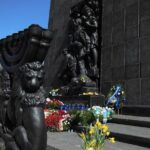
You’ll spend about an hour on this segment, anchored by the Rappaport monument dedicated to Heroes of the ghetto. Then the route continues to key named points such as Mila 18 and the Shmul Zygelbojm memorial. Umschlagplatz also fits into this broader first stretch of your day, so you’ll begin to see how the locations connect.
One of the practical benefits of doing it first is mental calibration. When you start with the ghetto area, the later stops like the cemetery and Umschlagplatz feel like chapters in the same book. If you did it the other way around, the story can feel more scattered.
Another perk: you’ll see filming locations connected to The Pianist as part of this general area. Even if you’re not a film buff, this helps you recognize what you might otherwise walk past—places tied to a visual record that many visitors have already seen on screen.
Possible consideration: this is heavy subject matter and it’s concentrated. If you’re the type who needs a small decompression break, plan for it at the next transfer rather than forcing yourself to rush.
Stop 2: The Jewish Cemetery (Cmentarz Żydowski) and what you can learn from matzevots
Next comes the Jewish Cemetery, where you’ll spend about 45 minutes. This stop is important because it shifts the focus from wartime events to community memory—through preserved matzevots (tombstones) and their inscriptions.
You’ll look at preserved stones and learn how Jews in Warsaw contributed to Polish literature, science, and art. That detail matters because it reminds you that this community wasn’t only a tragedy; it was also culture, scholarship, and everyday life.
There’s also a section related to WWII: mass graves from the war, plus symbolic stones dedicated to people who perished in Treblinka. That combination—personal inscriptions, memorial sections, and reference points—helps you understand the scale and the structure of remembrance.
Two practical notes from the tour info:
- Admission to the cemetery is not included.
- The cemetery is closed on Saturdays.
So if you’re visiting on a Saturday, your schedule needs to fit. If you’re not sure which day you’ll be there, ask when you book so you’re not stuck with a timing conflict.
The cemetery stop is also a place where you’ll likely want a slower pace. Even within the 45 minutes, you’ll get more out of it if you pause to read what you can and let the guide explain what’s hard to notice at first glance.
Stop 3: Umschlagplatz—where deportations began, with 300 names
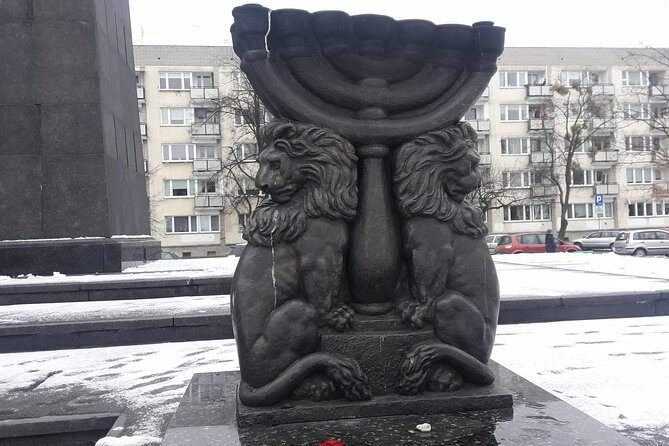
After the cemetery, Umschlagplatz hits hard, and it does it quickly. You’ll have about 15 minutes here, but it’s built for impact rather than lingering.
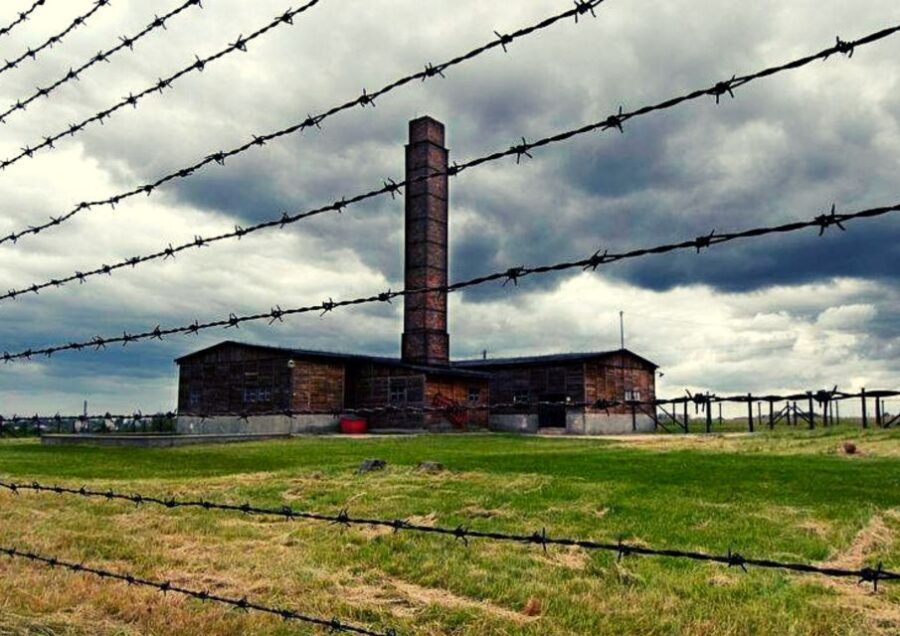
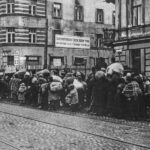
Umschlagplatz is located at the former railway station area from which around 300,000 Jews from the Warsaw ghetto were deported to death camp in Treblinka in summer 1942. The site is marked with a symbolic inscription listing 300 first names in alphabetical order of those who started their last journey.
That matters because memorials can become abstract. Here, the structure of the names makes it feel less like a statistic and more like an actual population. It’s also very easy for a guide to bring this to life because the location is so specific.
The tour notes that admission is free for this stop. So you’re mostly paying with your time and attention, which is exactly how it should be.
If you’re someone who likes to process quietly, this is the stop where you might choose to spend an extra minute just standing and taking it in. The guide can still explain the context, but you can control your pace.
Other historical tours in Warsaw




Stop 4: Nozyk Synagogue—WWII survival and still-practiced Jewish life
Nozyk Synagogue is the one that feels almost miraculous on the itinerary. It’s described as the only synagogue in Warsaw that survived World War II and is still functioning today. It was built at the beginning of the 20th century.
You’ll spend around 15 minutes here, which is short, but it’s enough to set the contrast. After ghetto and deportation sites, you’re standing inside a place that continued to exist rather than only being remembered in ruins.
The tour info adds an important detail for planning: admission is not included, but on Saturdays the synagogue is opened only for prayers. On those days, there is no admission fee charged.
So, depending on when you go, your experience at Nozyk Synagogue may be more about observing ongoing worship than touring like a museum.
Also, this is where a good guide helps you avoid a common trap: visitors often see surviving places and assume they’re unchanged. You’ll get context for what survived and what that survival means in Warsaw’s Jewish story.
If you’re a person who likes architecture or sacred spaces, this stop usually lands well even if you’re short on time.
Stop 5: Praga-Północ—Jewish Warsaw beyond the ghetto line
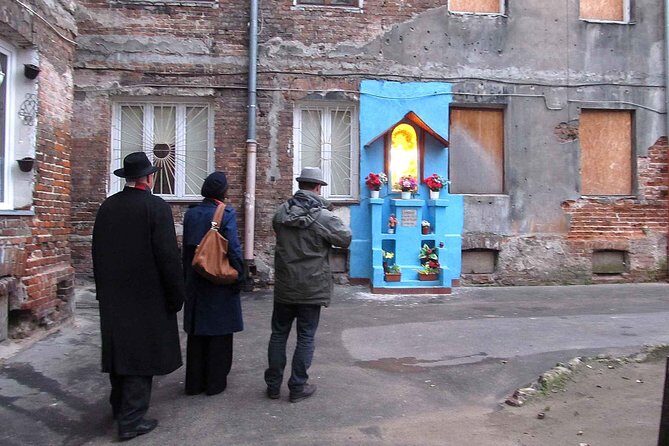
After you’ve covered the main WWII-linked sites, the tour expands into Praga-Północ. This is where Warsaw stops being only a WWII map and starts feeling like a living city with Jewish traces that remained in different neighborhoods.
You’ll spend about 30 minutes in this area, and the tour highlights several specific survivors of the period:
- A students’ dormitory where Menachem Begin lived as a student
- A shelter for poor people and orphans, now a puppet theater
- A former mikveh, now a high school
What I like about adding Praga-Północ is that it gives you evidence of continuity and adaptation. These buildings didn’t freeze in time; they changed functions while still preserving the bones of Jewish communal life.
The tour lists many parts of this as free admission, which helps you keep the day flowing without digging through ticket booths.
Possible consideration: this segment is shorter than the ghetto or cemetery stops. So come ready to absorb quickly. If you want deeper detail, you may want to come back on your own later, now that the big picture is in place.
Stop 6: Jewish Historical Institute and the Judaistic Library traces
The final stop is the Jewish Historical Institute, set in what used to be the Judaistic Library. The pitch here is not just that the library survived; it also includes physical traces connected to nearby destruction.
The tour notes that because of the vicinity of the Great Synagogue, which was blown up, you can see traces of the fire on the floor. That kind of detail is hard to pick up on your own from the outside, but it gives you a tangible sense of how the building endured.
You’ll also see a map of prewar Poland with former shtetles, plus an exhibition connected to ghetto archives that survived. It’s the kind of stop that rounds out the tour by showing documentation, not only memorials.
You’ll spend about 45 minutes here. Admission is not included, so budget accordingly if you’re comparing overall costs, but the time at this stop is valuable because it helps you leave with more than locations—you leave with objects, maps, and surviving records.
This is also the most logical place to ask broad questions at the end of the day: how archives survive, how communities record themselves, and how Warsaw’s Jewish past has been preserved and reconstructed.
The guide matters: what Renata Kopczewska brings to the story
Renata Kopczewska leads this tour. The strongest praise for this experience is about her ability to connect the dots and answer questions as you go.
I like that the format gives you space for real dialogue rather than a one-way lecture. When someone knows how to explain why a particular monument is placed where it is, you start noticing things on your own after the stop is over.
You’ll likely appreciate the way the guide keeps the story organized across multiple locations, which can be hard for visitors doing it on their own. And because this is private, your questions don’t get cut short by other groups.
One review-specific detail worth noting: people found they saw more sites than expected, and that the tour lasted about 5 hours as described. That’s exactly what you want from a paid heritage tour: a complete day slice that feels efficient without feeling rushed.
What to expect from the pacing and walking
This is a 5-hour tour with multiple stops spread across different parts of Warsaw. It’s listed for people with moderate physical fitness, which usually translates to some walking and standing, plus time spent at memorial sites and indoor/outdoor points.
Plan for a mix of:
- outdoor memorial areas where you’ll likely stand and look
- cemetery time where you move slowly
- synagogue and institute time where you slow down mentally
The tour includes hotel pickup and drop-off, which reduces the most tiring part of “heritage tourism”: getting from place to place with bags, timing, and transit.
Also keep in mind the schedule window: it runs 9:00 AM to 1:00 PM. If you hate early starts, choose a later start within that window.
Who this tour fits best
This is a strong fit if you want a structured, high-signal walk through Warsaw’s Jewish heritage tied to WWII. It’s especially good for people who:
- want the major sites in one organized half-day
- prefer a guide to explain connections instead of reading everything on your own
- care about both remembrance sites and surviving Jewish institutions like Nozyk Synagogue
- like to ask questions and get answers in context
It may be less ideal if you’re uncomfortable with crowded seating in a small vehicle, or if you need very long pauses at each stop. The route is focused and time-boxed, so it’s designed for people who like momentum with context.
Should you book this Jewish heritage tour?
If your goal is to see the key WWII-linked Jewish sites in Warsaw without building a complex itinerary, I’d book it. The value is strong for a private group, and the tour’s structure does the hard part for you: it connects locations so the day feels coherent, not like a checklist.
The two reasons to hesitate are also clear: the car comfort can be tight, and the cemetery closure on Saturdays can affect how your day lands. If you’re mindful of those points, this becomes an efficient, thoughtful way to understand Warsaw’s Jewish story in just a few hours.
FAQ
What’s the duration of the Warsaw Jewish heritage tour?
It runs for about 5 hours.
How much does the tour cost?
It costs $270 per group (up to 4 people).
Is hotel pickup and drop-off included?
Yes. The tour includes hotel pickup and drop-off, along with a driver/guide and a fuel surcharge.
Are there entrance fees included for the museums or sites?
No. Lunch isn’t included, and entrance fees to museums are not included. Some stops are listed as free, while others are not included.
Which major sites are included on the route?
The stops include the Warsaw Ghetto memorial area, the Jewish Cemetery, Umschlagplatz, Nozyk Synagogue, Praga-Północ Jewish landmarks, and the Jewish Historical Institute.
Is the Jewish Cemetery open every day?
No. It is closed on Saturdays.
Is Nozyk Synagogue open on Saturdays?
On Saturdays, it is opened only for prayers. The tour info also says there is no admission fee charged on Saturdays.
Is this tour private?
Yes. It’s a private tour/activity, and only your group participates.
Can I cancel for a full refund?
Yes. Free cancellation is available if you cancel up to 24 hours in advance for a full refund.