REVIEW · WARSAW
Warsaw History and Reality Walking Tour
Book on Viator →Operated by Mona_be_your_guide · Bookable on Viator
Warsaw’s past hides in everyday corners. This 2.5-hour walk with Mona connects the Mermaid coat-of-arms story to WWII, and you get a payoff stop at the Warsaw University Library rooftop terrace. I love the WWII context behind Pomnik Syreny and I love the rooftop garden views over the Vistula. The only catch: it’s a steady walk and it depends on good weather, so plan for real street time and wear decent shoes.
The vibe here is small and personal: the group is capped at 10 people, and the guide can flex the pace when the group wants more detail. If you like getting your bearings fast, this is a smart way to see what makes Warsaw feel both historic and rebuilt-after-everything.
In This Review
- Key highlights
- A 2.5-hour walk that turns landmarks into real context
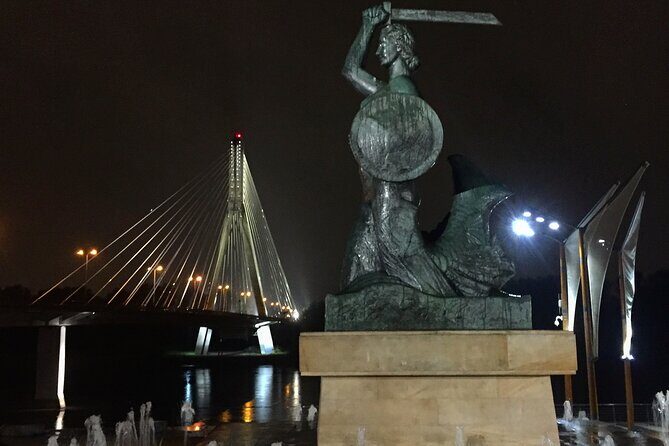
- Pomnik Syreny: the Mermaid, her sculptor’s model, and a WWII story
- Warsaw University Library rooftop garden (season matters)
- The WWII rebuilt district: how Warsaw centered workers
- St. Anne’s Church and the Royal Castle square: baroque beauty with a reconstruction lens
- Old Town lanes: cobblestones, churches, and a lovers’ corner
- Krakowskie Przedmieście Royal Route: 2.5 miles of power, culture, and details
- Pilsudski Square and the Saxon Garden: meetings, memorials, and a green reset
- Price and what you actually get for $114.39
- Who should book this tour—and what to bring
- Should you book this Warsaw History and Reality walking tour?
- FAQ
- FAQ
- How long is the Warsaw History and Reality Walking Tour?
- Is the tour offered in English?
- What’s the group size limit?
- Where do I meet, and where does the tour end?
- What’s included in the price?
- Does the University of Warsaw Library rooftop garden require season timing?
- Is the tour dependent on weather?
- Is free cancellation available?
Key highlights
- Pomnik Syreny’s Mermaid: why she’s on Warsaw’s coat of arms, plus the WW2 thread in the story
- Warsaw University Library rooftop terrace: views from above the river and the city
- WWII-era reconstruction focus: you’ll see how the city rebuilt for the workers who made it move again
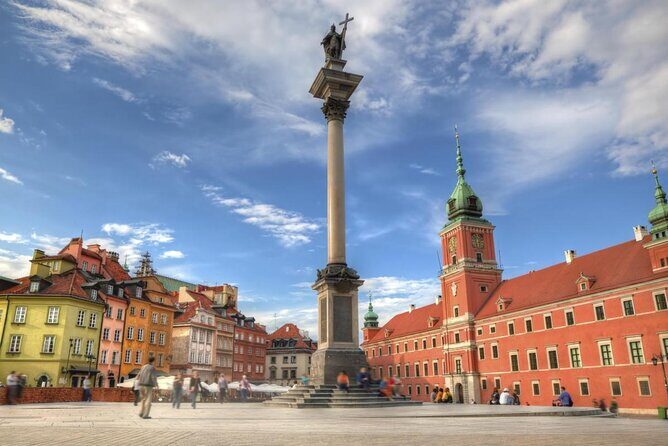
- St. Anne’s Church + Royal Castle square: baroque beauty right alongside a “look-how-it-was-rebuilt” feel
- Krakowskie Przedmieście Royal Route: Chopin’s early public performance, plus the famous four lions
- Pilsudski Square + Saxon Garden: memorial energy with a green reset behind it
A 2.5-hour walk that turns landmarks into real context
This isn’t just a checklist of famous buildings. The best part is how the route links three big themes in Warsaw: how the city remembers, how it rebuilds, and how power and culture show up in street-level details.
You start at the Mermaid monument area, then move toward the rebuilt core of Warsaw and end along Krakowskie Przedmieście. Along the way, you’ll hear stories that make the architecture make sense—why certain buildings were restored the way they were, and what Warsaw chose to preserve after WWII.
Also, with a tour length around 2 hours 30 minutes, you’re not signing up for a whole day of marching. It’s long enough to connect the dots, short enough that you can still enjoy the afternoon on your own.
Other walking tours we've reviewed in Warsaw


Pomnik Syreny: the Mermaid, her sculptor’s model, and a WWII story
You’ll begin at Pomnik Syreny (the Mermaid statue), and this is a great opening choice because it’s visual, local, and story-driven. You’ll learn why the Mermaid appears on Warsaw’s coat of arms—plus who served as the sculptor’s model. That alone gives you a “wait, really?” detail that sticks.
Then the tour shifts from myth to history. There’s an important WWII-related story tied to this area, so the monument doesn’t feel like decorative symbolism. Instead, it becomes a clue to how Warsaw’s identity survived war and occupation and still shows up today in public space.
Practical tip: since you’re starting here, give yourself a little buffer to find the meeting point on time. The area is central, and it’s easy to lose a minute or two without realizing it.
Warsaw University Library rooftop garden (season matters)
Next comes a smart, modern contrast: the University of Warsaw Library and its rooftop garden concept. The rooftop garden is open April–October, so your experience of this stop will depend on the time of year. If you’re traveling outside those months, you’ll still get the story and the building context, but you may miss the full rooftop-garden feel.
What you’ll like here is simple: you get a high vantage point. From the rooftop viewing area, there’s a nice view on the river and the city, and the design ties into the shape of the Vistula embankment. The message is clear even if you don’t speak Polish: Warsaw’s rebuilding didn’t only bring back old streets—it also made room for modern plans that respect the river’s lines.
This stop also connects well to the opening Mermaid story. You’re basically seeing Warsaw’s identity from two angles: myth/history down on the street, then modern city planning above the river.
The WWII rebuilt district: how Warsaw centered workers
After that rooftop reset, the tour heads into an area tied to WWII rebuilding. You’ll walk through the first district in Warsaw rebuilt after WWII, designed to serve the workers involved in the Old Town reconstruction.
That detail changes how you read the streets. Instead of thinking only about restored monuments, you start noticing the practical side of recovery: people had to live, eat, commute, and work while the city was being rebuilt around them. The tour uses this theme to explain the “real Warsaw” angle—what the city looks like when survival and rebuilding are part of everyday life, not just museum labels.
If you care about how cities bounce back, this is one of the most meaningful sections of the route.
St. Anne’s Church and the Royal Castle square: baroque beauty with a reconstruction lens
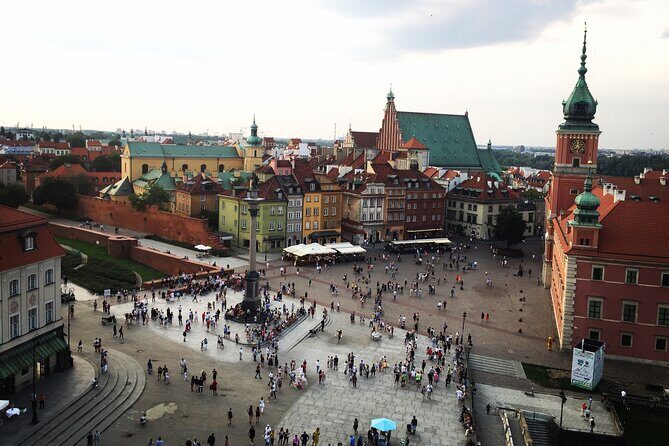
St. Anne’s Church is one of those places where even a quick look feels rewarding. You’ll spend time at St. Anne’s Church (Kosciol Swietej Anny), and you’ll get a sense of why it’s considered one of the most beautiful baroque churches in Warsaw.
What makes this stop more than pretty architecture is what you see in the surrounding area. You’ll also look toward Royal Castle square and at beautifully reconstructed tenement houses that shape the Old Town streetscape.
It’s a good moment for photos, but it’s also a good moment to slow down and look at how the church and the reconstructed buildings relate. The story of Warsaw is written in layers here—some older, some restored, and some rebuilt in a way meant to bring back an atmosphere.
Other walking tours we've reviewed in Warsaw





Old Town lanes: cobblestones, churches, and a lovers’ corner

Old Town is where the route most directly turns you into a slow walker. You’ll stroll cobblestone Gothic streets and alleyways, and you’ll see lots of churches and tiered burghers’ tenement houses—restored to recreate the feel of the past.
The tour frames Old Town not as a single postcard, but as a maze of textures: facades, street levels, and the rhythm of historic buildings clustered close together. And yes, you’ll also see a favorite place of lovers, which adds a touch of modern life right in the middle of the historic scene.
Two tips so you enjoy this more:
- Keep your camera ready, but don’t rush the street views. The best details are on the facades.
- Expect some uneven ground. Cobblestones look romantic; they also slow your feet.
Krakowskie Przedmieście Royal Route: 2.5 miles of power, culture, and details
Then you hit one of Warsaw’s big connectors: Krakowskie Przedmieście, described as the 2.5-mile Royal Route. This section is about seeing important buildings and monuments in sequence, like a long story told block by block.
A highlight here is the Presidential Palace, a neo-classic building where the Polish president resides. You’ll also hear about the stone guardians: four lions sculpted by Camilio Laudini, and they’re said to be more than 200 years old. Those lions are small in the grand scheme, but they’re the kind of detail you’ll remember long after you’ve left the square.
Music lovers get a special moment too: 8-year-old Frederic Chopin played there for the first time publicly. That’s the sort of historical detail that makes the street feel personal, not just official.
If you only have one evening in Warsaw, this route segment helps you quickly understand why locals take this corridor seriously. It’s where the city shows its history, its government, and its cultural pride all at once.
Pilsudski Square and the Saxon Garden: meetings, memorials, and a green reset
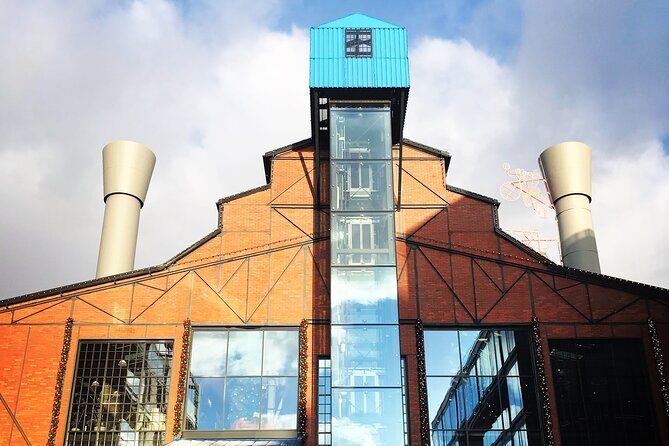
Your walk concludes at Plac Marszalka Jozefa Pilsudskiego. This is a parade-style square with a memorial for the Unknow Soldier, and it’s an important meeting place for concerts and events.
Behind the memorial is the Saxon Garden, and that’s a smart ending choice. After walking through monuments and reconstructed streets, you get a visual and mental reset—more breathing room, more greenery, and a place to pause before you head off to dinner.
This is where you’ll likely feel the tour’s real goal: Warsaw isn’t just one style or one century. It’s history you can walk through, plus spaces designed for how people actually use the city.
Price and what you actually get for $114.39
The price is $114.39 per person for about 2.5 hours, offered in English, with a mobile ticket. The biggest value point is not that every stop requires payment—most of the sights listed are marked as admission free.
The part you’re paying for is the entrance ticket for a viewing terrace. In practical terms, that means the cost is tied to a specific experience you’ll probably want: the rooftop viewing stop at the University of Warsaw area.
A small-group size cap of 10 travelers also matters. On a route like this—where timing and street positioning affect what you can see—smaller groups typically mean less waiting and more chances to ask questions.
Booking timing: the tour is commonly reserved about 88 days in advance. That’s a clue that good slots go quickly. If your dates are firm, I’d book early.
Who should book this tour—and what to bring
This walking tour is a great fit if you want:
- Context, not just sightseeing
- A route that mixes WWII reconstruction with major landmarks
- A short day plan that still covers several key areas
It may not be the best match if you want long sitting breaks or you dislike walking on uneven surfaces. The tour runs as a continuous city walk, and it depends on good weather.
What to bring:
- Comfortable shoes (Old Town cobblestones aren’t forgiving)
- Weather layers (a rooftop stop means you’ll feel wind)
- A light curiosity about how the past shows up in everyday city design
Also, the tour is near public transportation, and service animals are allowed, which is helpful for planning.
Should you book this Warsaw History and Reality walking tour?
If you’re trying to understand Warsaw beyond the main highlights, I’d say yes. This route gives you the kind of links that make a city feel coherent: Mermaid symbolism tied to WWII, a modern library viewpoint above the Vistula, and Old Town reconstructed in a way meant to restore an atmosphere—not just buildings.
Book it if you enjoy walking with a guide who tells stories with purpose and can tailor the pace for the group. Skip it only if you need a super relaxed, low-walking format or you’re traveling during a stretch when weather is often poor.
FAQ
FAQ
How long is the Warsaw History and Reality Walking Tour?
It runs for about 2 hours 30 minutes (approx.).
Is the tour offered in English?
Yes, it’s offered in English.
What’s the group size limit?
The tour has a maximum of 10 travelers.
Where do I meet, and where does the tour end?
You start at the Mermaid Statue area (Generała George’a Smitha Pattona, 00-390 Warszawa). The tour ends at the Roman Catholic Church of the Visitants on Krakowskie Przedmieście 34, 00-325 Warszawa, near the Cardinal Stefan Wyszyński statue.
What’s included in the price?
The price includes an entrance ticket for a viewing terrace.
Does the University of Warsaw Library rooftop garden require season timing?
Yes. The rooftop garden is listed as open April–October.
Is the tour dependent on weather?
Yes. The experience requires good weather; if canceled due to poor weather, you’ll be offered a different date or a full refund.
Is free cancellation available?
Yes, you can cancel up to 24 hours in advance for a full refund.