REVIEW · WARSAW
Private tour: Jewish heritage in Warsaw
Book on Viator →Operated by Polish Wonders · Bookable on Viator
History here hides in plain sight. This private Jewish heritage in Warsaw tour in the Muranów district links the present to the Warsaw Ghetto through memorial landmarks, a rare surviving synagogue, and street art you’d likely miss on your own. I especially love how it starts where daily life sits on top of tragedy—Muranów was built on the ruins of the Warsaw ghetto—and I also like that it’s private, so you can ask lots of questions as you walk.
One consideration: it’s a walking route, and while most stops are free, Nozyk Synagogue admission isn’t included, so you’ll want to budget a bit extra if you plan to go inside.
In This Review
- Key things that make this tour worth your time
- Walking Warsaw’s Jewish heritage through Muranów’s streets
- Start at Kino Muranów: the city built on ghetto ruins
- Cinema Muranów street art: where names and memory meet the walls
- Pomnik Bohaterow Getta: seeing the uprising story at the starting point
- Umschlagplatz: from deportation point to memorial space
- A fragment of ghetto wall in a backyard: history up close
- Nozyk Synagogue: the only WWII survivor still in Warsaw
- What makes a private tour work especially well for this topic
- Street art dedicated to Jewish community memory: how to look at it
- Price and value: $161.95 per group for up to 10
- Practical timing and what to bring for a smooth 2.5-hour walk
- Who should book this private Jewish heritage tour
- Should you book this private Jewish heritage in Warsaw tour?
- FAQ
- How long is the Jewish heritage in Warsaw private tour?
- Where does the tour start and end?
- What’s the group size for a private tour?
- What ticket format do I receive?
- Are there any admission fees included?
- Is Nozyk Synagogue on the tour?
- How much does the tour cost?
- Where are the main memorial stops during the walk?
- Is the tour near public transportation?
- Can I get a full refund if I change my plans?
Key things that make this tour worth your time
- Muranów’s street art with memorial meaning instead of just decoration
- The exact spot associated with the Warsaw Ghetto Uprising’s start in the guide’s storytelling
- Umschlagplatz as a real place turned memorial, not just a plaque on a map
- A fragment of ghetto wall tucked into a backyard for an up-close, personal moment
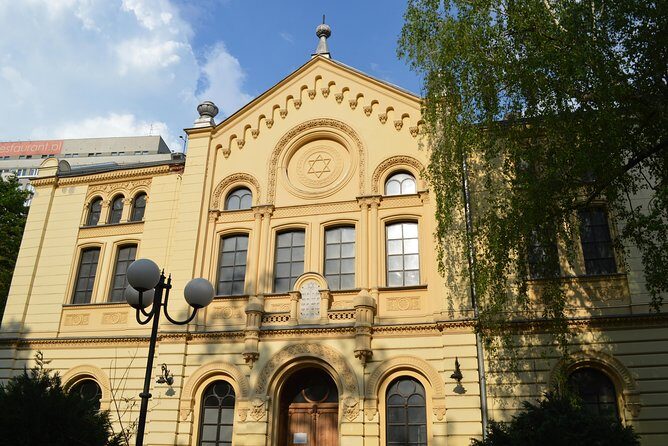
- Nozyk Synagogue as the only synagogue surviving WWII in Warsaw, giving the route a living, architectural anchor
- Private pacing for questions, with a group size that stays small (up to 10)
Walking Warsaw’s Jewish heritage through Muranów’s streets
Warsaw’s story is written in layers, and this tour is a smart way to read those layers on foot. You’ll move through the Muranów district, where the built environment sits on the ruins of the Warsaw ghetto—so the walk itself becomes the lesson.
I like that the route doesn’t only point at big monuments. It also slows down for the small, human details: street art that commemorates people who used to live here, memorial markers, and preserved remnants that make the history feel specific instead of generic.
Because this is a private tour for up to 10 people, it’s also easier to keep your questions flowing without feeling rushed. If something the guide mentions sparks curiosity, you can steer the conversation for a moment and then get back to the route.
Other private tours in Warsaw


Start at Kino Muranów: the city built on ghetto ruins
Your meeting point is Kino Muranów (Gen. W. Andersa 5), and the first stop is the perfect opener. Cinema Muranów sits in the Muranów area, and the guide sets the stage by explaining how this district was built on the ruins of the Warsaw ghetto.
This matters because it changes how you look at the street. You’re not just seeing buildings and murals—you’re seeing the contrast between then and now. The guide also points out street art that memorializes residents from the area (most of them were Polish Jews), which helps you connect the artwork to real people instead of treating it as background.
One practical plus: this stop is time-friendly. You’ll spend about 40 minutes here, and admission for the visit is free, so you can use that chunk of time to settle in and start paying attention to details.
Cinema Muranów street art: where names and memory meet the walls
Street art can be hit-or-miss on tours—sometimes it’s just colorful photos for a route. Here, it’s used as an interpretive tool. The guide doesn’t treat murals as decoration; the artwork is tied to commemoration, helping you understand that public art can be a form of remembrance.
As you walk, I suggest you do two things:
First, pause and read what you can from the imagery and symbols before moving on. Second, let the guide connect those visuals to the history of people who lived in this exact neighborhood.
If you’re the kind of visitor who likes to look closely, this part of the tour is where you’ll get the most satisfaction.
Pomnik Bohaterow Getta: seeing the uprising story at the starting point
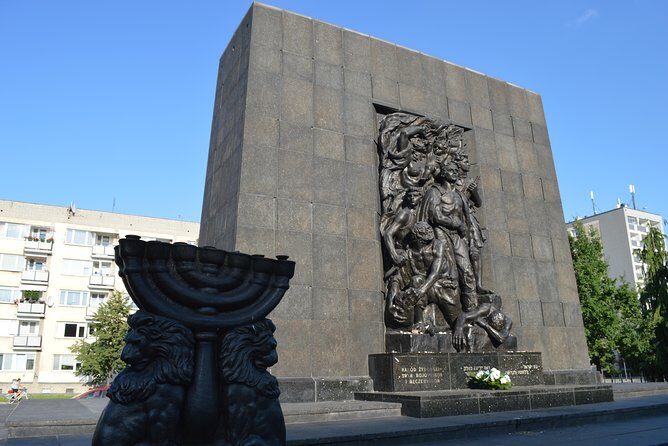
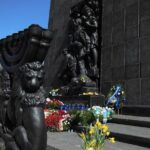
Next comes Pomnik Bohaterow Getta (Monument to the Ghetto Heroes). This stop is short—about 20 minutes—but it’s heavy. The guide brings you to the place associated with where the ghetto uprising started and explains what happened in 1942 and 1943, including the deportations to Treblinka and the heroic fighting by the Jewish insurgents against the Nazis.
A good monument has a job: to anchor the big events in a specific location. That’s exactly what you get here. Even if you already know the outline, standing at this site helps the timeline stop feeling like a list and start feeling like a sequence of choices and losses.
Because the stop is free, it’s easy to take it seriously without feeling like you’re constantly managing paid admissions.
Umschlagplatz: from deportation point to memorial space
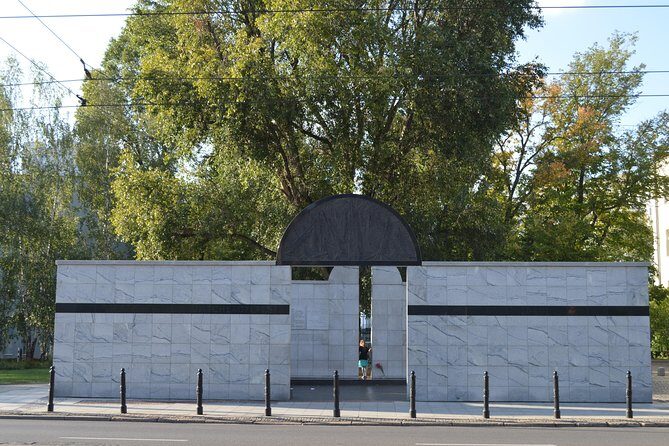
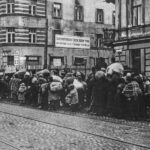
After that, you head to Umschlagplatz, where the story becomes even more direct. The guide explains that this is the place from which thousands were deported to Treblinka in 1942, and you’ll see that today there’s a memorial there.
You’ll have about 20 minutes for this stop. That’s enough time to let it land—especially if you’re open to the idea that a memorial doesn’t ask you to speed-read it. It asks you to take in how a public space can hold grief and historical record at the same time.
This stop is often the one that people remember most clearly, not because it’s theatrically dramatic, but because it’s so specific. You’re looking at a place that used to function in the machinery of deportation, now re-framed as remembrance.
Other POLIN and Jewish heritage tours in Warsaw




A fragment of ghetto wall in a backyard: history up close
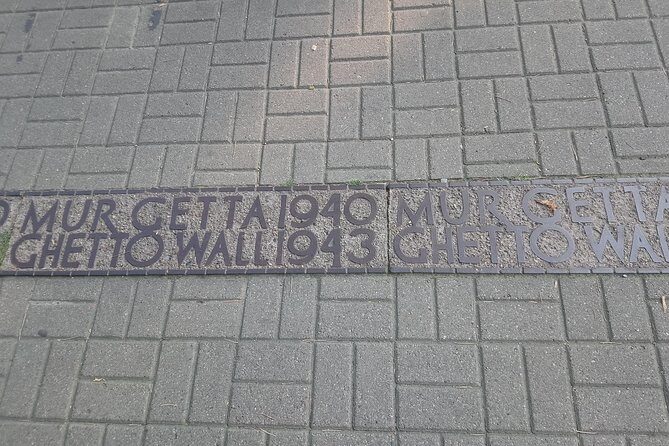
Then the tour gets unexpectedly intimate. You’ll visit a fragment of the ghetto wall hidden in a backyard, with about 15 minutes set aside for this moment.
This kind of stop is valuable because it breaks the rhythm of the big-view monuments. When you see a wall fragment placed in a quiet, almost ordinary setting, it forces you to imagine how history didn’t stay in one museum room—it broke into daily life, then got swallowed up and reappeared in partial traces.
It’s free, and it’s short, but it’s the kind of stop that can make the rest of the route click into focus. If you’re the type who likes physical evidence, this is a highlight.
Nozyk Synagogue: the only WWII survivor still in Warsaw
The final major historical stop is Nozyk Synagogue. You’ll spend about 15 minutes here, and this is the point where the tour shifts from surviving traces to surviving community space.
The big detail is that it’s described as the only synagogue that survived WWII in Warsaw. Even if you don’t catch every architectural feature in a brief visit, the significance of that survival matters. It turns the route from a story of destruction into one of continuity.
Important for budgeting: Nozyk Synagogue admission is not included, so plan to pay the entrance fee separately if you want to go inside.
What makes a private tour work especially well for this topic
This is one of those tours where private format is not just a luxury—it’s the tool that makes the information usable. The route deals with heavy material: ghetto life, deportations, the uprising, and how Warsaw marks those events today. A private guide lets you ask follow-up questions as you go.
In the feedback connected to this experience, Anna comes up repeatedly for being both informed and easygoing, and for answering questions clearly. One reviewer even appreciated how the guide stayed flexible, including the simple human need to stop for a cool drink in warm weather. That matters more than people expect, because it keeps the walk comfortable enough for you to stay present.
Also, because the tour is for only your group (up to 10 people), it tends to feel like a guided conversation instead of a scripted march.
Street art dedicated to Jewish community memory: how to look at it
A big promise of this tour is the street art component, and it’s worth knowing what you’re signing up for. This isn’t a street-art crawl with random murals. The artwork here is presented as commemoration tied to the Jewish community that lived in this area.
When you see street art on a heritage route, your instinct might be to photograph first. I’d do the opposite. First look, then listen, then take photos. Let the guide interpret what you’re seeing, especially since the tour is specifically designed to help you notice what you might not find on your own.
If you’re a bit skeptical about street art on history tours, give this one a chance. The tour frames it as memory in public space, which makes it more meaningful than a quick visual stop.
Price and value: $161.95 per group for up to 10
The price is listed as $161.95 per group (up to 10) for about 2 hours 30 minutes. That’s a solid structure if you’re traveling with family or friends, because the cost spreads across multiple people instead of becoming a per-person premium.
Where value really shows up is in the mix of stops you get. You’re visiting multiple memorial sites connected to the Warsaw Ghetto and the uprising (including the Monument to the Ghetto Heroes and Umschlagplatz), plus a preserved ghetto wall fragment, plus Nozyk Synagogue. Most of those stops are free admissions, and only the synagogue’s entrance is not included.
So you’re paying mainly for the guidance and the storyline that connects each stop. If you’ve ever walked through memorials feeling like you need an extra layer of context, this format is a practical way to get it without turning the day into a museum marathon.
Practical timing and what to bring for a smooth 2.5-hour walk
The full tour is approximately 2 hours 30 minutes, and the route is spaced so you don’t feel stuck at any one point. You’ll have dedicated time blocks for each stop, starting at Kino Muranów and ending at Plac Grzybowski.
The walking itself is the main activity, so choose shoes you’ll be comfortable in for repeated short segments. It’s also smart to bring water, especially in warm weather. One review praised the guide’s flexibility to stop for a cool drink, which is a good reminder that comfort helps you absorb the history instead of rushing through it.
You’ll also use a mobile ticket, which is convenient. The route is described as near public transportation, so it’s easy to fit into a broader day in Warsaw. And if you’re traveling with a service animal, service animals are allowed.
One more practical note: since Nozyk Synagogue admission is not included, check your plan for payment so you’re not scrambling at the end of the tour.
Who should book this private Jewish heritage tour
I think this tour is a great fit if you want a structured walk through major Warsaw Jewish heritage sites—without doing it alone. It’s ideal if you care about understanding the links between the ghetto’s past and the present-day city, especially through the combination of monuments and street art.
It’s also a strong option if your group includes people with different interests. Some will focus on the memorial locations tied to the uprising and deportations. Others will enjoy the street art and the meaning behind the visuals. And everyone gets a chance to ask questions.
If you prefer only indoor museum time or you’re looking for a long, sit-down visit, you might find the pacing too focused on walking. But if you like moving through a neighborhood and learning as you go, this tour hits the sweet spot.
Should you book this private Jewish heritage in Warsaw tour?
Yes, you should seriously consider booking if you want a guided, stop-by-stop route through Muranów’s ghetto-linked sites, Umschlagplatz, and Nozyk Synagogue—with street art used as part of the storytelling. The private format helps a lot here, because the subject deserves questions and careful explanations, not just a quick glance at plaques.
If your budget is tight and you’re only interested in one or two landmarks, you might feel the cost more than a solo traveler would. But if you have a small group (up to 10) and you want one coherent story from start to finish, this is a practical way to get more meaning out of a limited amount of time.
FAQ
How long is the Jewish heritage in Warsaw private tour?
It runs for about 2 hours 30 minutes.
Where does the tour start and end?
It starts at Kino Muranów, Gen. W. Andersa 5, and ends at Plac Grzybowski, Pl. Grzybowski.
What’s the group size for a private tour?
It’s a private tour for your group only, with up to 10 people.
What ticket format do I receive?
You get a mobile ticket.
Are there any admission fees included?
Admission tickets for the listed stops are free for several parts of the route, but Nozyk Synagogue admission is not included.
Is Nozyk Synagogue on the tour?
Yes, it’s one of the stops, and it’s described as the only synagogue that survived WWII in Warsaw.
How much does the tour cost?
The price is $161.95 per group (up to 10).
Where are the main memorial stops during the walk?
You’ll visit the Monument to the Ghetto Heroes, Umschlagplatz, and a fragment of the ghetto wall.
Is the tour near public transportation?
Yes, it’s described as near public transportation.
Can I get a full refund if I change my plans?
Yes. You can cancel for a full refund up to 24 hours before the experience starts, and cancellation is free. If you cancel within 24 hours, the amount paid is not refunded.