REVIEW · WARSAW
Warsaw: Jewish Heritage 4-Hour Private Tour
Book on GetYourGuide →Operated by PT Team · Bookable on GetYourGuide
Some places hit you in the gut fast. Warsaw’s Jewish Heritage tour does that, while also showing why this city was a major center of Jewish life long before World War II. In just 4 hours, you trace the trail of monuments tied to everyday culture, ghetto history, and remembrance at sites like Umschlagplatz.
I especially like the way the stops stay connected, so you’re not just collecting landmarks. Two standout parts for me are the walk through the ghetto area with the Monument to the Ghetto Heroes and the solemn tribute moments at Umschlagplatz, and then the shift to Okopowa Street for the Jewish Cemetery with major names like Ludwik Zamenhof and Ischok Leib Perec. You’ll also see how the physical city layout reflects the past, including ghetto boundary markings and surviving synagogue architecture.
One possible drawback: this is not light sightseeing. The tour deals directly with deportation and murder, so if you prefer upbeat history, you may find it emotionally heavy.
Key highlights and why they matter
- Hotel-lobby pickup plus a private route keeps the pacing calm and focused.
- Umschlagplatz ties the deportation story to a physical memorial with engraved names.
- Ghetto Heroes and the 1943 uprising give context to resistance inside the Warsaw ghetto.
- The Jewish Cemetery on Okopowa Street connects history to real people and real graves.
- Footbridge of Remembrance and ghetto boundary fragments show how the city split the community.
- A guide who can adjust to your interests can make the time feel even more personal.
In This Review
- A 4-hour private walk through Warsaw’s Jewish memory
- Próżna Street: where Jewish Warsaw still breathes through the blocks
- Ghetto history on foot: Monument to the Ghetto Heroes and the 1943 uprising
- Umschlagplatz: the deportation site memorial that names victims
- Okopowa Street and the Jewish Cemetery: Zamenhof, Perec, and Janusz Korczak
- Chłodna Street and Nozyk Synagogue: bridges, boundaries, and surviving architecture
- POLIN Museum option: extending the story if you have more time
- What makes the guide matter: pacing, flexibility, and real empathy
- Price and value: $42 for a private 4-hour route with transport
- Who should book this tour, and who might skip it
- Should you book Warsaw: Jewish Heritage 4-Hour Private Tour?
- FAQ
- How long is the Warsaw Jewish Heritage private tour?
- What is included in the price?
- Is pickup included?
- Is this a private tour?
- What languages is the live guide available in?
- Can I cancel for a full refund?
- Is there an option to visit POLIN Museum?
A 4-hour private walk through Warsaw’s Jewish memory
This tour is built around one core idea: Warsaw’s Jewish story lives in the streets. The route is designed so you can move from the “before” (community life and culture) to the “during” (ghetto confinement and deportations) to the “after” (survival, loss, and remembrance). You’re in the city, not in a classroom, and that matters.
With private group format and transportation included, you’re not burning time figuring out how to connect sites. The guide meets you at your hotel lobby and keeps the flow tight. At 4 hours, it’s short enough to fit into a busy itinerary, but long enough to hit multiple major anchors of the story.
And yes, you’ll spend time on memorial sites. Expect that shift in tone. Some stops are quiet, some are reflective, and some are designed to make the scale of what happened feel real.
Próżna Street: where Jewish Warsaw still breathes through the blocks
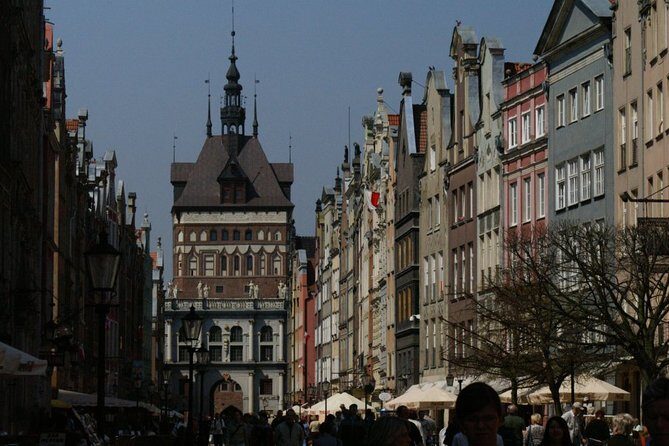
The tour begins by setting the stage: before the war, Warsaw was one of Europe’s biggest centers of Jewish life, with a population only larger in the whole world than New York. You don’t have to be a history expert to feel the point. The guide helps you see how Jewish traditions showed up in daily life and how that influence shaped the look and rhythm of the capital.
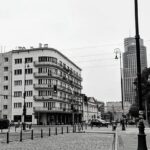
One of the practical reasons I like starting around the preserved atmosphere of Jewish Warsaw on Próżna Street is that it prevents the story from becoming one note. You’re reminded that communities weren’t just victims or statistics. They were neighbors, shoppers, writers, teachers, families—people whose culture took up space in the city.
This also helps later stops hit harder. If you’ve already grasped that there was a real world here, then the ghetto and deportation sites don’t feel like an abstract chapter. They feel like a break in a living story.
Other private tours in Warsaw
Ghetto history on foot: Monument to the Ghetto Heroes and the 1943 uprising
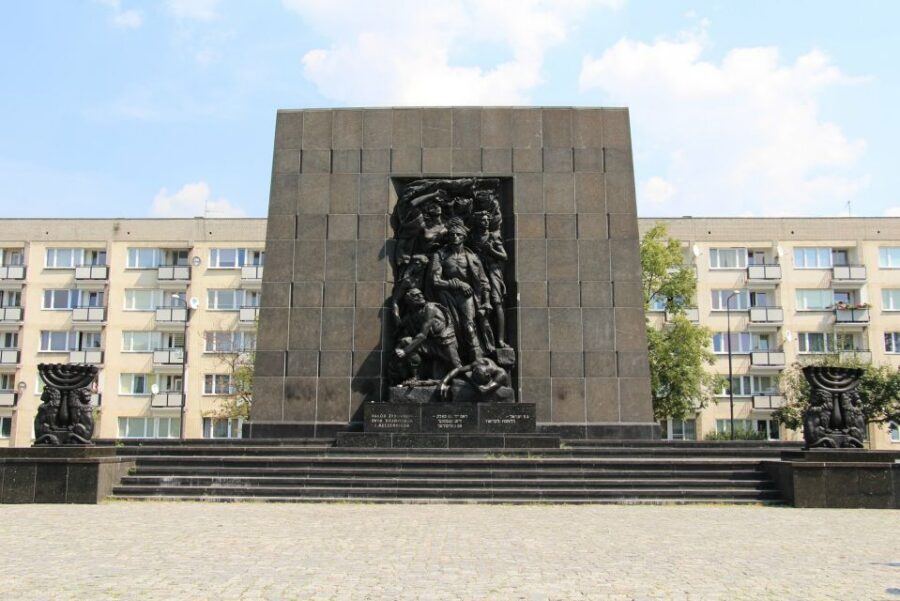
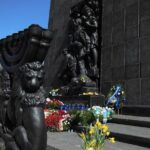
From there, the tour moves into the ghetto narrative with monuments that do more than mark locations. You’ll see the Monument to the Ghetto Heroes, commemorating those who fought and died in the Warsaw ghetto. The guide ties this to the Ghetto Uprising of 1943, when a small number of fighters went up against overwhelming Nazi force, including heavy artillery and dive bombers.
I like that the tour doesn’t just say uprising happened. It explains why it mattered in context—how resistance grew in a place built for destruction. Even though the uprising was doomed, the act of resisting carries weight. It’s history with moral consequence, not just dates on a timeline.
Along the route, you’ll also pass points connected to the memorial path known as the Memorial Route of the Martyrdom and Struggle of Jews. The guide points out commemorative stones that highlight key figures of the Warsaw ghetto. For me, that’s an important detail: it keeps the story from feeling like a faceless crowd.
If you’re the kind of traveler who wants to ask questions, this is where your questions will land. You can follow the logic of the guide’s story and point to what you see in front of you.
Umschlagplatz: the deportation site memorial that names victims
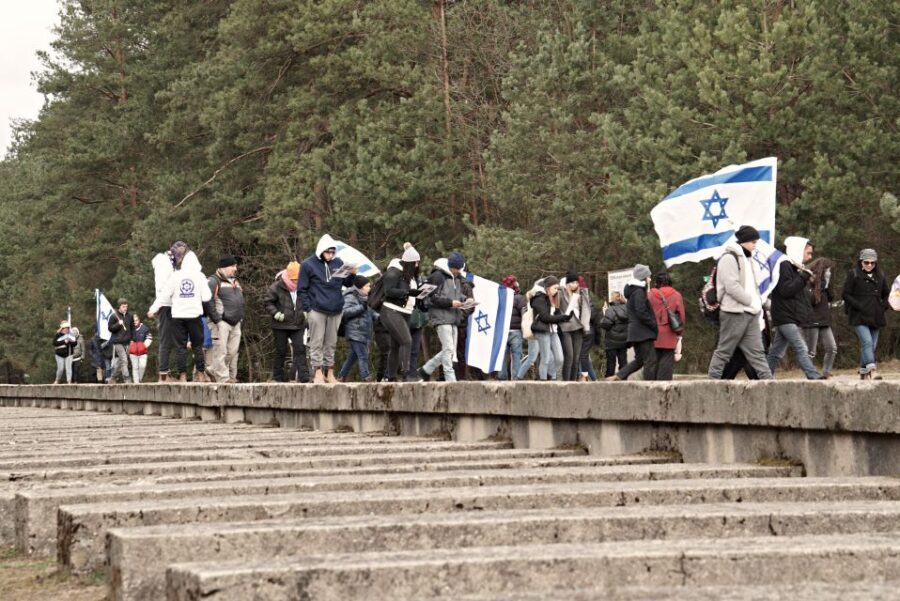
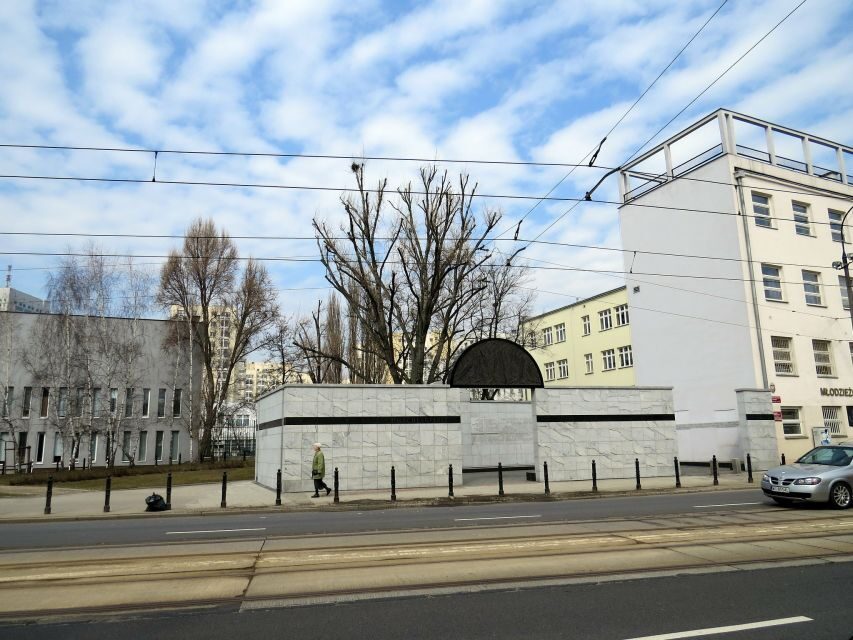
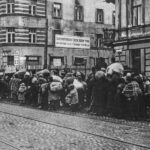
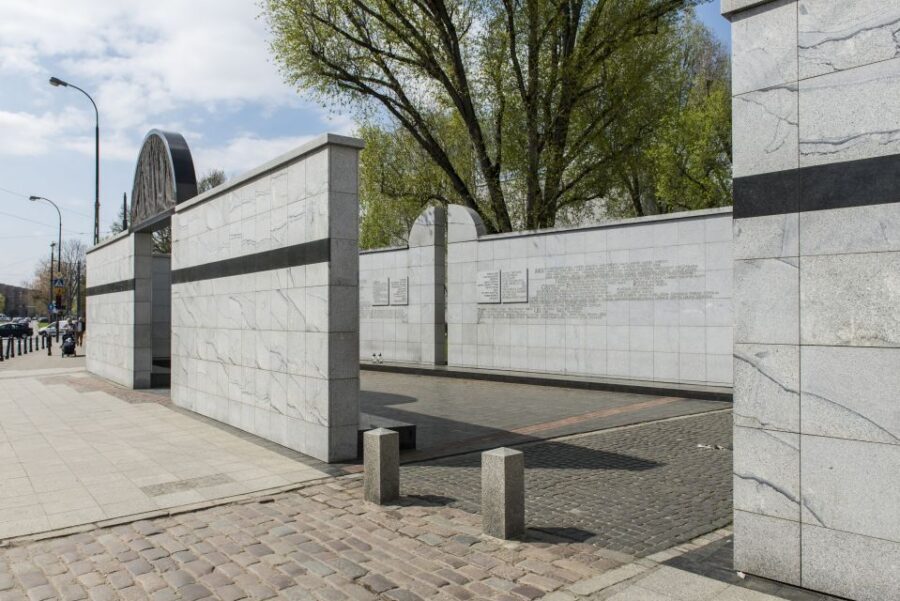
Then comes Umschlagplatz, one of the most emotionally powerful stops on the route. The guide takes you to the monument and describes the idea of prayer and tribute for those sent to the extermination camps and who never returned.
The design is striking in a way that’s hard to shake. The monument’s shape resembles the walls of the ghetto and a railway wagon. On the walls, you’ll see more than four hundred engraved names of victims. It turns mass tragedy into individual identity. That doesn’t make the suffering smaller, but it makes it harder to dismiss.
Practical note: this stop tends to put people in a quiet, reflective mode. If you want photos, go easy—this is one of those moments where you’ll likely feel better just taking it in.
Also, the tour connects Umschlagplatz to the ghetto struggle route, so you don’t jump suddenly from one theme to another. The story stays continuous.
Okopowa Street and the Jewish Cemetery: Zamenhof, Perec, and Janusz Korczak
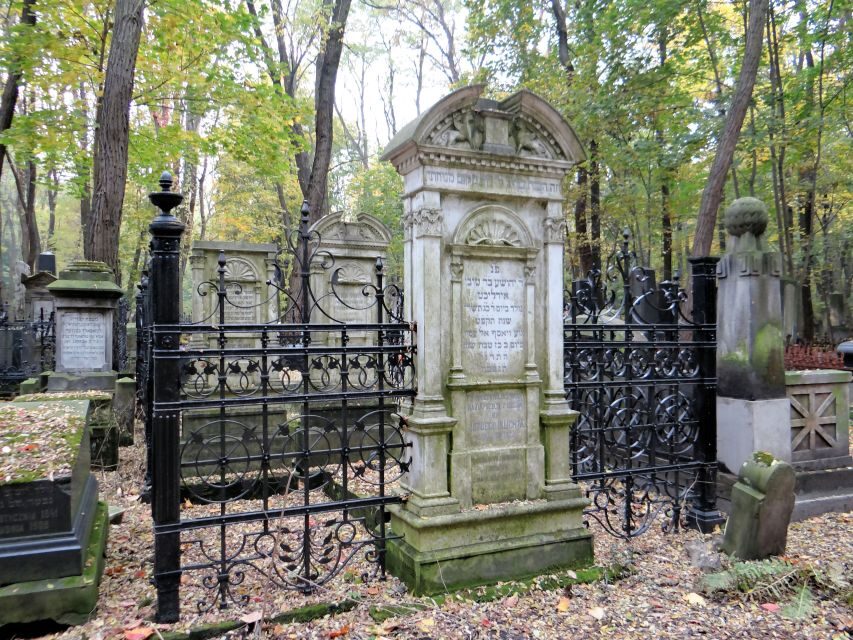
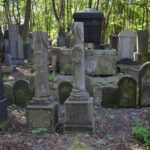
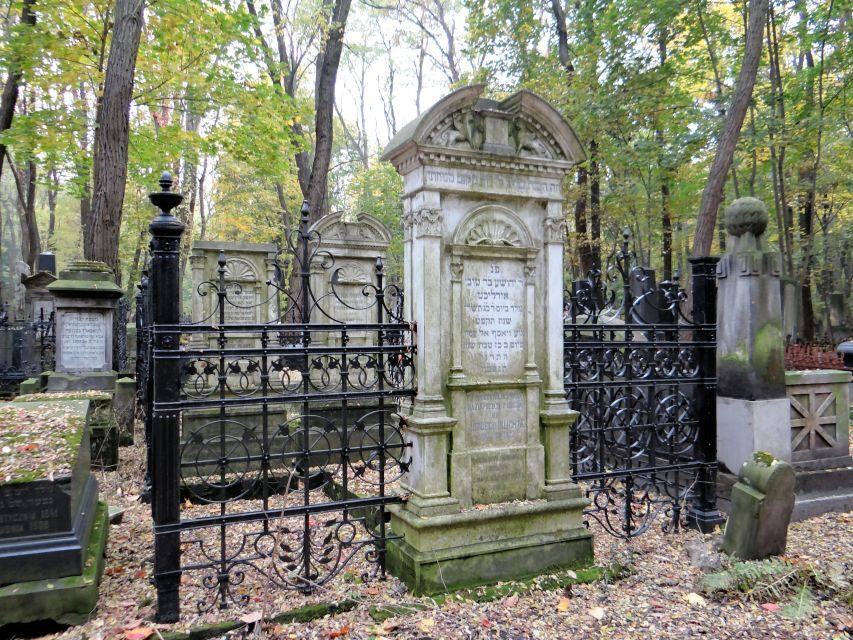
After the ghetto-focused section, the tour makes a deliberate shift to Okopowa Street and the Jewish Cemetery. This is one of the largest kirkuts in Europe, and it’s not hard to see why people go there to understand scale and memory.
The guide points out that many prominent people are buried here, including Ludwik Zamenhof, the founder of Esperanto, and the writer Ischok Leib Perec. What I like about this part is how it restores full cultural dimension. You see that the Jewish community wasn’t only defined by what was destroyed. It produced thinkers, writers, and global ideas.
Then comes one of the most specific and moving moments on the tour: the symbolic grave of Janusz Korczak. He’s presented as a protector of children, and the guide connects his wartime fate to murder in Treblinka along with the children in his care in a gas chamber.
Even if you know the name already, the way a symbolic grave works can hit differently than reading about it. You’re physically at a place of remembrance, and the guide explains why that remembrance matters.
In terms of pacing, this stop gives you a chance to slow down. If you can, take a minute to stand back and look at the cemetery as a whole before focusing on individual names. That’s often the difference between seeing it and understanding it.
Chłodna Street and Nozyk Synagogue: bridges, boundaries, and surviving architecture
One of the tour’s clever touches is showing how the city’s structure carried the ghetto’s division. You’ll see fragments of the Jewish Ghetto wall and iron slabs set into the pavement marking the former ghetto boundaries. This turns the street into a map you can walk.
Crossing into this visual language, you’ll also admire the Footbridge of Remembrance over Chłodna Street, which connects the so-called small and large ghetto. The bridge includes a multimedia art installation designed to remind you of the tragic events of the period. Even if the technology aspect isn’t your thing, it helps the past feel closer, not sealed in a book.
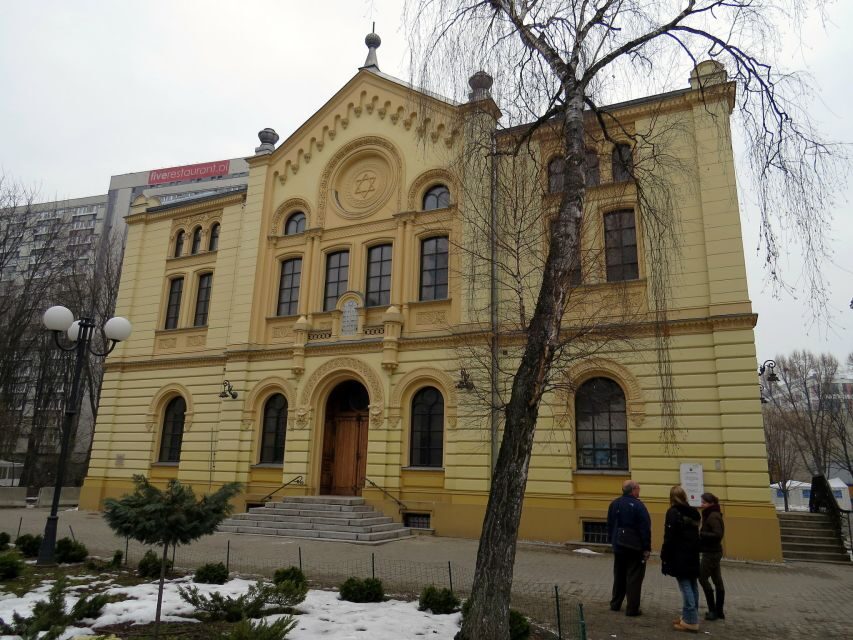
The tour also includes Nozyk Synagogue, built in a Neo-Romanesque style. The guide notes that it survived the Holocaust period. I appreciate this inclusion because it interrupts the assumption that everything related to Jewish life in Warsaw was erased. Surviving buildings are proof that some threads continued, even through catastrophe.
For many visitors, this section is a turning point: you stop thinking only in terms of memorial plaques and start thinking in terms of architecture, street geography, and what endured.
Other POLIN and Jewish heritage tours in Warsaw

POLIN Museum option: extending the story if you have more time
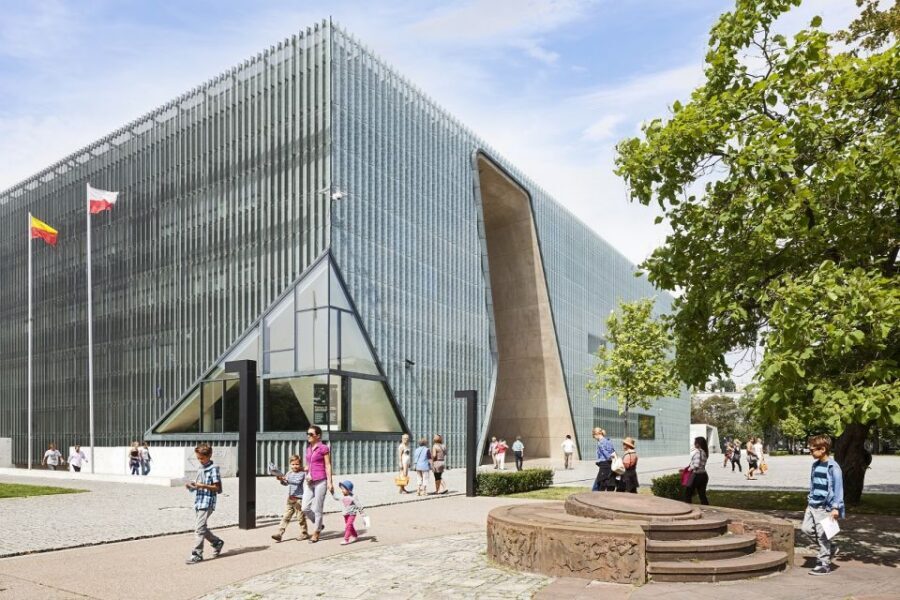
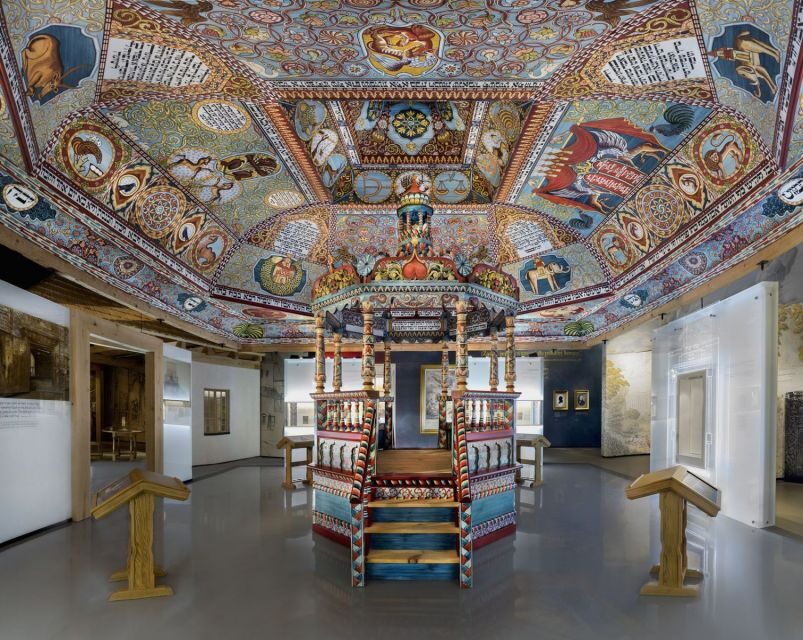
If you want to keep going after the 4-hour walk, the tour can connect you to POLIN Museum of the History of Polish Jews. The guide can explain what else you can discover on your own after the tour. It’s a smart add-on because POLIN helps you step from local Warsaw memorials into a broader, curated national story.
This is also a good strategy if you like having time to choose your own pace inside a museum. You’re not forced to cram everything into the tour time.
One more practical angle: if you’re the type who gets emotional during memorial stops, a museum can feel like the right next setting. It gives you space to process, not just move from site to site.
What makes the guide matter: pacing, flexibility, and real empathy
This is a private tour, so the guide’s approach is a big part of what you get. The experience language you’ll hear is the difference between listing facts and making the story legible.
In particular, I’ve seen how guides such as Wojciech and Ziggy can shape the tone. The common thread in their approach is adapting to your pace and interests instead of treating everyone like a single script. When you can slow down at the sites that hit you hardest, the tour feels more like a conversation than a schedule.
The best guides also stay sensitive with the material. This tour includes sites linked to genocide and deportation, so the way a guide holds the story matters. You want careful, respectful explanation—not sensational storytelling.
If you plan to ask questions, bring them. If you don’t, you can still let the guide do the work. Either way, this tour’s value is tied to that human element.
Price and value: $42 for a private 4-hour route with transport
At $42 per person for 4 hours, the pricing sits in the “worth it if you care” zone. Here’s why it can feel like good value.
You’re paying for:
- a local guide for 4 hours
- transportation included
- private group format
- pickup from your hotel lobby
What’s not included is entry or admission fees, so if you decide to add something with a ticket, you’ll pay separately. But for the memorial walk-and-talk structure, you usually don’t need paid access to benefit from what you see.
And the real value is time. A self-guided approach could work, but you’d have to piece together context across multiple locations. On this tour, the guide connects each stop so the story doesn’t feel fragmented.
If you’re traveling as a pair or small group, private format also means fewer schedule compromises. You can move when your energy allows, not just when the next group is ready.
Who should book this tour, and who might skip it
This tour is ideal if you want:
- a street-level understanding of Warsaw’s Jewish heritage
- a route that covers ghetto history, deportations, and remembrance
- key sites like Umschlagplatz, the Jewish Cemetery, and Nozyk Synagogue
- a guide who can adapt to your pace
It’s also a strong pick for visitors who appreciate context as they walk. If you like seeing how buildings, monuments, and street markings communicate history, you’ll feel satisfied.
You might think twice if:
- you want a lighter, more upbeat city tour
- you’re uncomfortable with heavy Holocaust-related content
- your schedule is so tight that you can’t pause when a memorial moment asks for it
Should you book Warsaw: Jewish Heritage 4-Hour Private Tour?
Yes, you should book it if you’re going to Warsaw specifically for history you can see in the real city. The combination of Próżna Street atmosphere, ghetto-area monuments, Umschlagplatz remembrance, and the Jewish Cemetery makes the story feel complete in a short time.
The tour also shines when you care about the “how” of learning. With private format, hotel-lobby pickup, and transportation included, you can focus on the meaning of each stop instead of logistics.
If you do one thing, make sure you bring a few spare minutes inside yourself. This route isn’t just information. It’s memory you walk through.
FAQ
How long is the Warsaw Jewish Heritage private tour?
It lasts 4 hours.
What is included in the price?
The tour includes a local guide for 4 hours and transportation. Entry or admission fees are not included.
Is pickup included?
Yes. The guide will wait for you at your hotel lobby with your name.
Is this a private tour?
Yes. It’s a private group experience.
What languages is the live guide available in?
The live guide is available in Spanish, English, German, Russian, Polish, French, Italian, Portuguese.
Can I cancel for a full refund?
Yes. Free cancellation is available up to 24 hours in advance for a full refund.
Is there an option to visit POLIN Museum?
If you have more time, you can explore POLIN Museum of the History of Polish Jews after the tour, with guidance on what you can discover on your own.